Overview
Methodology
At Ateneo de Manila University, responsible water stewardship is an essential component of our commitment to sustainability and care for our common home. The University continuously develops and implements initiatives that promote the efficient use, conservation, and protection of water resources while supporting the long-term health of surrounding ecosystems.
Through campus-wide programs and infrastructure improvements, Ateneo advances sustainable water management practices that encourage resource efficiency, environmental protection, and resilience. These efforts are complemented by measures that safeguard natural habitats, enhance green spaces, and minimize the environmental impact of campus operations.
Guided by the principles of ecological responsibility and sustainable development, Ateneo remains committed to fostering a campus environment where water resources and ecosystems are valued, protected, and responsibly managed for present and future generations.
| Highlights: |
|---|
| 1.) Water-efficient Appliances View more ▼ |
|
Water Efficiency Through Green Building Design at the University
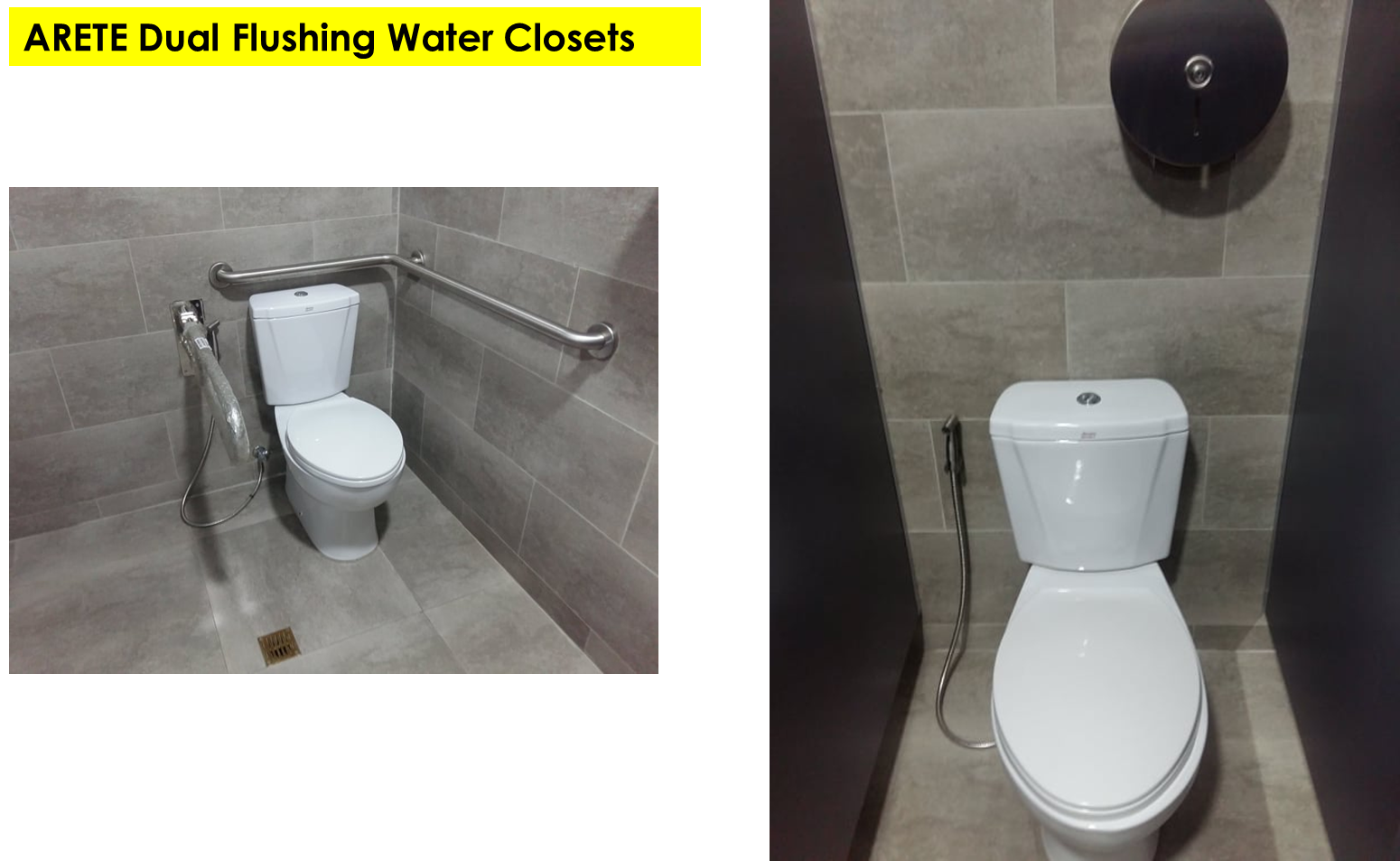
The University integrates green tropical building principles and innovative technologies in the design and construction of its campus infrastructure. As part of its commitment to sustainability, it implements building standards aimed at reducing water consumption. These include the installation of efficient water fixtures such as dual-flush water closets and aerated faucets. These measures help minimize water use across facilities, with available data currently focused on water closet efficiency. ↑ Return to Top |
| 2.) Consumption of Treated Water View more ▼ |
|
Nature-Based Solutions for Wastewater Treatment and Water Conservation
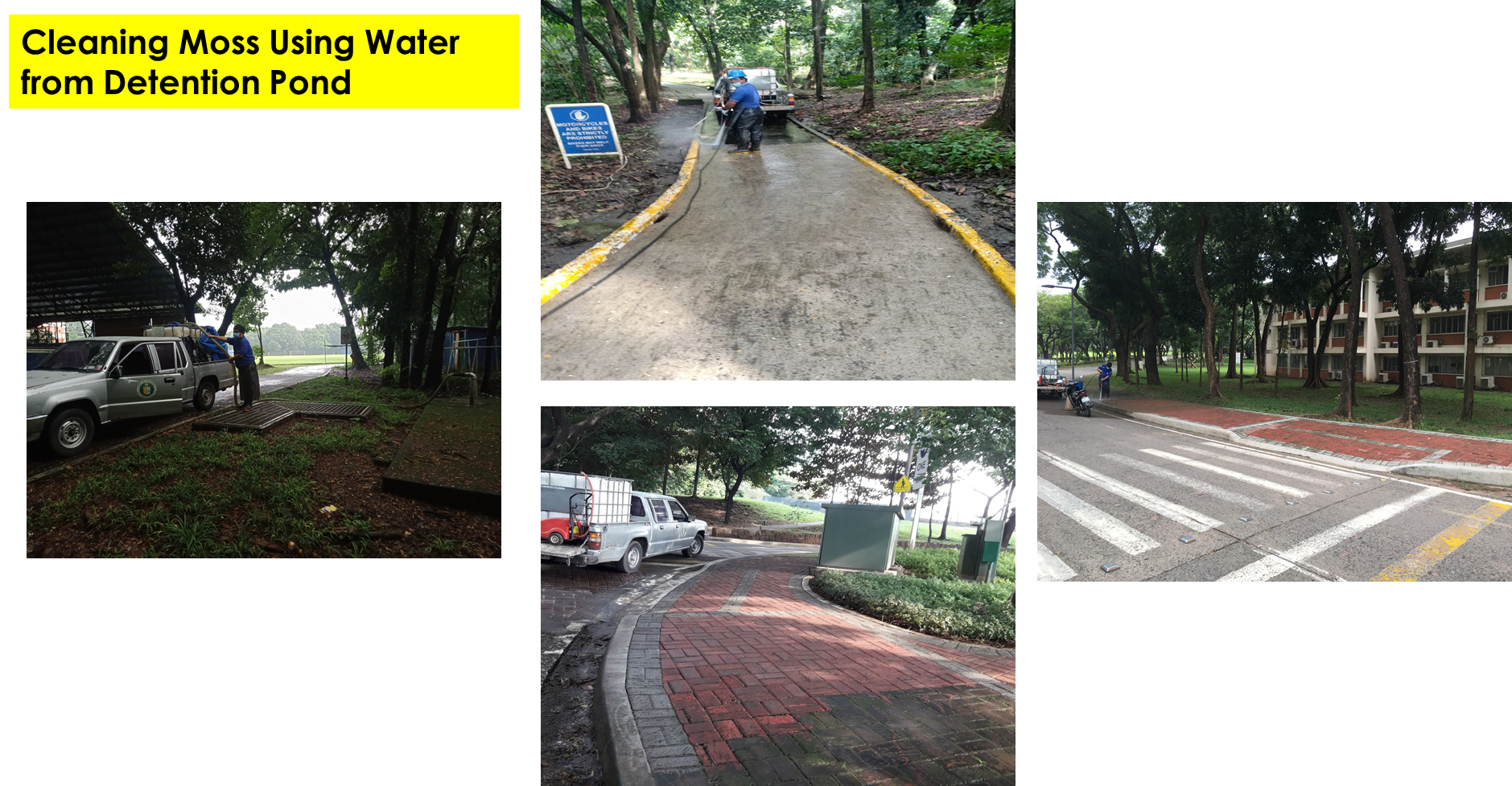
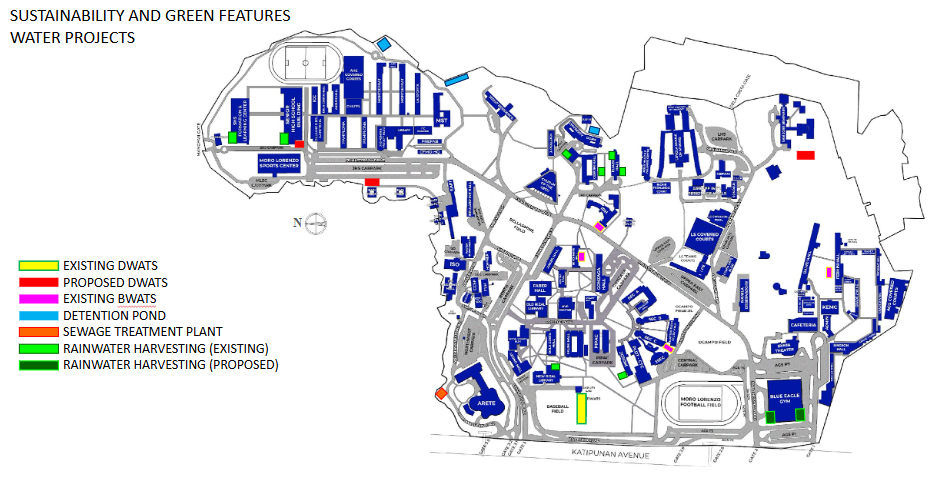 The University employs nature-based solutions and decentralized systems for wastewater treatment and pollution prevention across campus. Facilities such as DEWATS, BWATS, and the sewage treatment plant treat wastewater through aerobic and anaerobic processes, reed beds, and ponds that operate without chemicals or electricity while complying with DENR-EMB water quality standards. Treated wastewater is reused for irrigation, cleaning, and maintenance activities, alongside harvested rainwater used for toilet flushing and outdoor use in selected buildings. 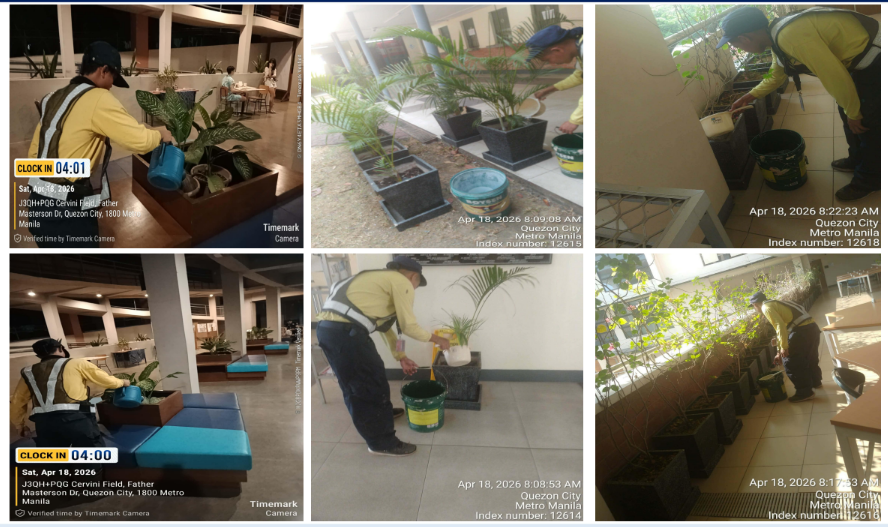 Supporting these systems, rainwater detention ponds and harvesting facilities help reduce runoff and provide additional water for non-potable uses, while permeable red brick pavers enhance groundwater recharge and reduce flooding. Together, these integrated systems promote sustainable water management and pollution prevention across the campus. ↑ Return to Top |
| 3.) Water Pollution Control in Campus View more ▼ |
|
Water Pollution Control and Monitoring Systems at the University
The University implements a comprehensive water pollution control and monitoring program across campus in accordance with Republic Act 9275 (Philippine Clean Water Act of 2004) and applicable DENR-EMB and LLDA regulations. Regular water quality sampling is conducted at wastewater discharge points, including monitoring stations such as Baranka Creek–Marikina River Station, to assess and manage potential impacts on nearby water bodies. 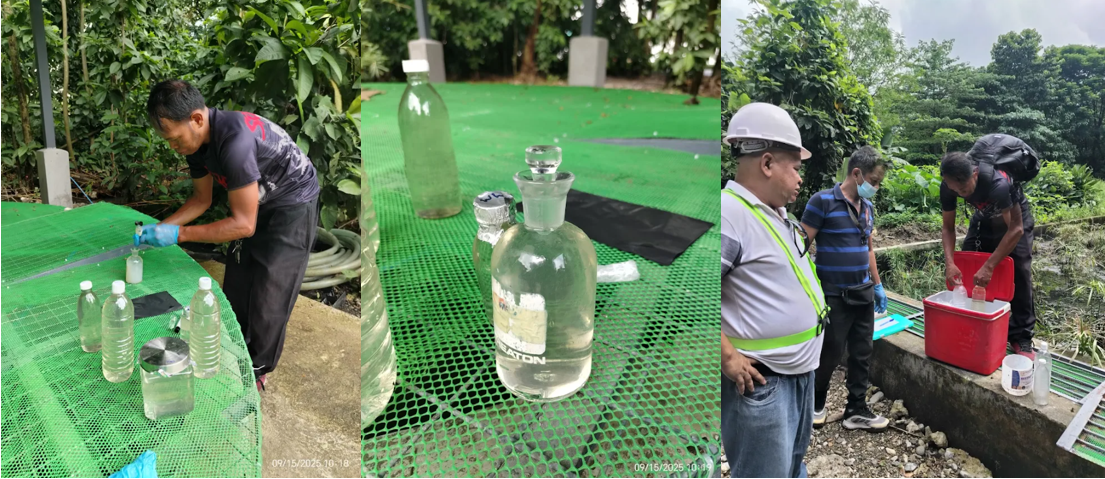 Quality sampling and monitoring at Wastewater Discharge Points 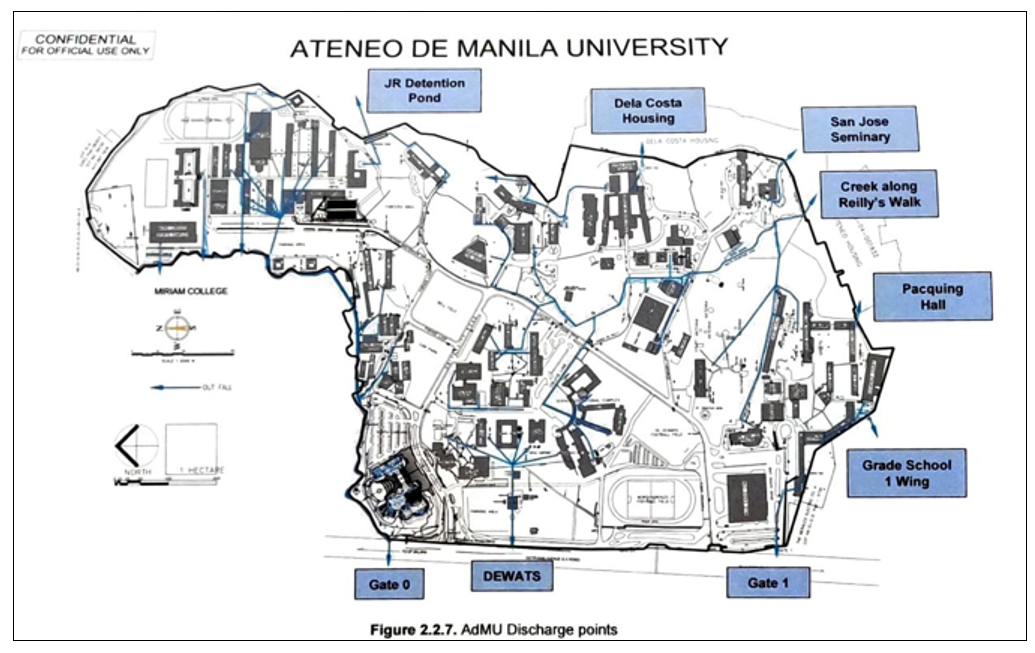 Wastewater is treated through decentralized and centralized systems, including DEWATS, BWATS, and the Sewage Treatment Plant, with additional microfiltration for secondary and tertiary treatment. Treated effluent is reused for irrigation, cleaning, and grounds maintenance, supported by infiltration systems and storage capacities integrated into campus water infrastructure. 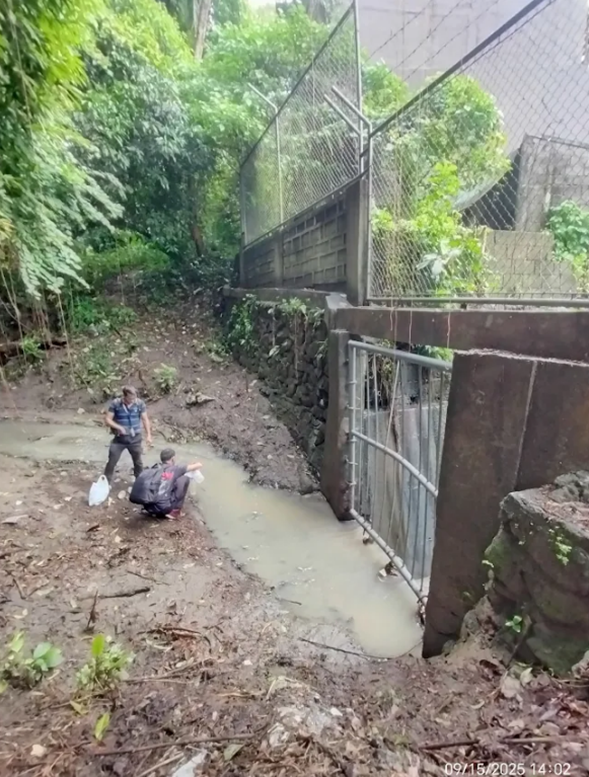 Area Monitoring and Water Sampling |