Overview
Methodology
At Ateneo de Manila University, sustainable mobility plays a vital role in creating a campus that is environmentally responsible, accessible, and people-centered. The University recognizes that transportation choices have significant impacts on carbon emissions, air quality, and the overall well-being of the community.
Ateneo continues to foster a culture of sustainable movement by supporting transportation systems and infrastructure that prioritize accessibility, safety, and environmental sustainability. Through integrated mobility initiatives, the University seeks to enhance campus connectivity while encouraging more efficient and responsible travel options for students, faculty, staff, and visitors.
As part of its broader sustainability agenda, Ateneo remains committed to advancing mobility solutions that contribute to a healthier campus environment, reduced environmental impact, and a more resilient future for the communities it serves.
| Highlights: |
|---|
| 1.) Campus Sustainable Mobility: Shuttle Services View more ▼ |
|
Enhancing Eco-Friendly Transit and Efficiency Through the Expanded Ateneo E-Jeep System
Inside the Loyola Heights campus of Ateneo de Manila University, internal mobility is anchored by a primary electric shuttle system managed by the Campus Safety and Mobility Office. Operating as a crucial mode of sustainable transportation for students, faculty, and staff, the system currently utilizes a fleet of twelve operational e-jeeps. In September 2025, the fleet's capacity was significantly strengthened through the donation of two new 13-seater e-jeeps by Arthaland. This expansion has successfully reduced passenger waiting times, increased overall transit capacity, and further advanced the University’s commitment to lowering its carbon footprint. 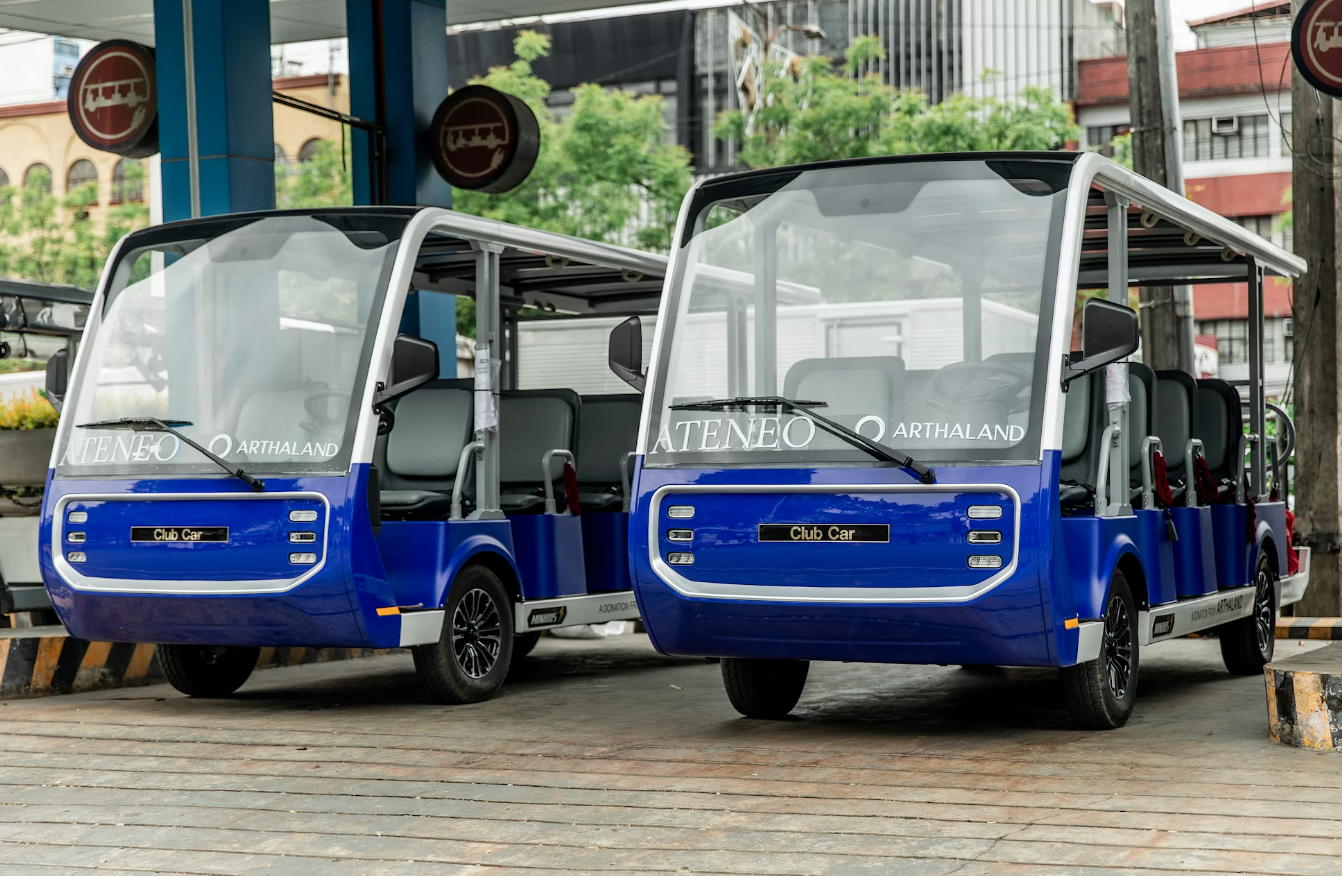 The e-jeeps operate along two main internal routes, designated as Line A and Line B, which are strategically designed to ensure comprehensive campus coverage and seamlessly connect key academic and administrative hubs. Outside of designated service hours, all units are stationed at charging docks to prepare for the next deployment cycle. 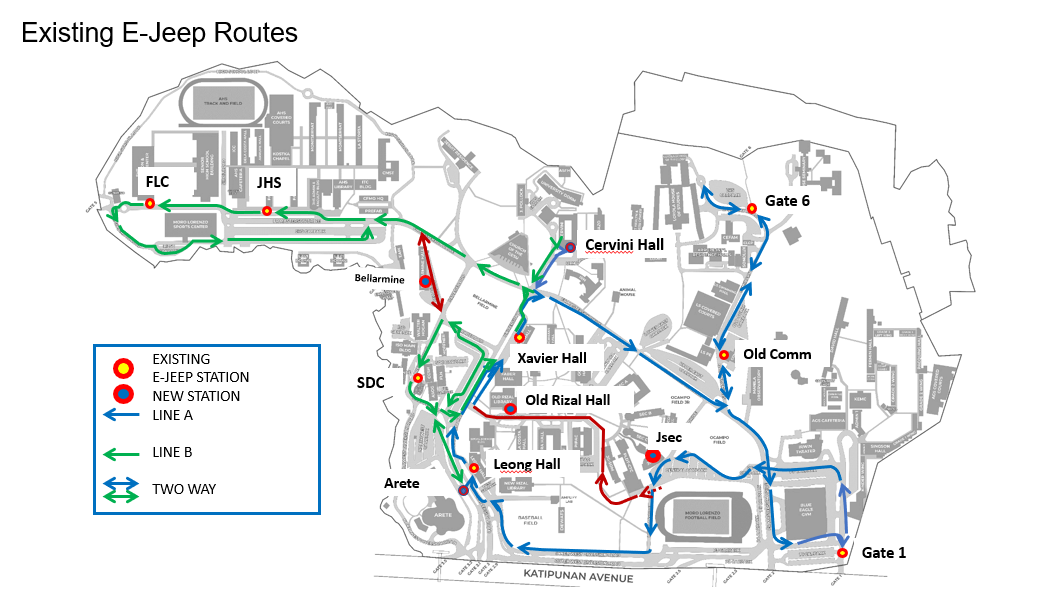 To enhance commuter efficiency and accessibility, the system is integrated with the digital Ateneo eJeep Tracker, powered by Tramigo GPS Data. This platform allows the Ateneo community to monitor the real-time location of vehicles, with each e-jeep clearly identified according to its assigned route and operating schedule. The fleet completes a combined total of 25 shuttle service trips each day. Overall, this 12-unit, zero-emission shuttle system serves as a tangible reflection of Ateneo de Manila University’s dedication to sustainable campus transport and the active reduction of greenhouse gas emissions. ↑ Return to Top |
| 2.) Active and Eco-Friendly Campus Transit: Multi-Pronged Initiatives to Minimize Private Vehicle Dependence View more ▼ |
|
Fostering a Low-Carbon Environment Through Infrastructure, Policy, and Alternative Mobility Solutions
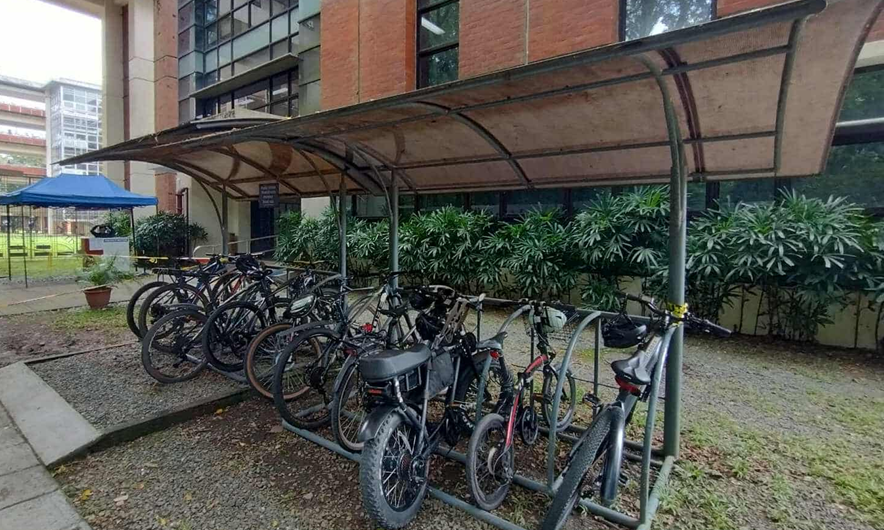
Ateneo de Manila University prioritizes a people-centric, sustainable campus environment that actively mitigates greenhouse gas emissions and reduces reliance on private vehicles. Driven by a collaborative effort among the Ateneo Institute of Sustainability, the Campus Safety and Mobility Office, and the Central Facilities Management Office, the University advances active transport, ridesharing, and zero-emission vehicles. This holistic strategy integrates policy with robust infrastructure development, featuring an expansive network of covered walkways that enhance pedestrian comfort, along with widely distributed bicycle lanes and strategically located bike racks that firmly position cycling as a preferred on-campus option. The University’s multimodal transit strategy actively lowers vehicle congestion through several targeted transportation programs. Central to this effort is the ongoing deployment and scaling of low-noise, zero-emission electronic jeepneys, which operate along dedicated point-to-point routes and express lanes. To maximize the efficiency of alternative transit, these services are complemented by data-backed traffic management frameworks and proactive carpooling initiatives. On an operational level, the campus maintains a daily average of 500 Zero Emission Vehicles—including bicycles and electric cars—representing a vehicle-to-population ratio of 0.03 relative to the total university community. 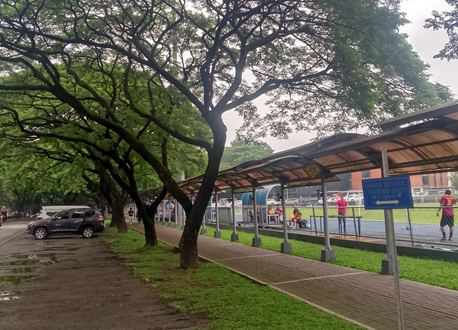 Backing these physical changes are long-term institutional policies and green-space protection guidelines that prioritize inclusive design, including dedicated PWD-accessible spaces and eco-friendly infrastructure. Furthermore, strategic external alliances, such as partnerships with corporate leaders like Meralco and Arthaland, help provide the vital resources needed to scale the University's integrated transit network. Finally, this environmental commitment is balanced by flexible operational governance; by establishing hybrid work-from-home frameworks and digital learning days during critical periods, the administration reduces necessary commuting altogether, ensuring academic continuity while optimizing the university’s overall carbon footprint. ↑ Return to Top |