Overview
Methodology
At the core of Ateneo de Manila University’s campus development framework is a strong commitment to sustainable land use, resilient infrastructure, and the protection of natural systems within the university environment. The campus is viewed not only as an academic space but also as a living ecosystem where built structures, open areas, and ecological features are planned and managed in balance.
Ateneo’s campus landscape prioritizes the integration of green spaces, tree cover, and permeable environments that support biodiversity and environmental health. These spaces are designed to enhance walkability, encourage low-impact mobility, and maintain a healthy microclimate that benefits the university community.
Guided by long-term sustainability principles, Ateneo continues to strengthen its stewardship of land and infrastructure through thoughtful campus planning. This includes maintaining open spaces, optimizing land use efficiency, and ensuring that development projects align with environmental resilience and sustainable growth objectives.
| Highlights: |
|---|
| 1.) Campus Sites View more ▼ |
|
a.) Ateneo Loyola Campus
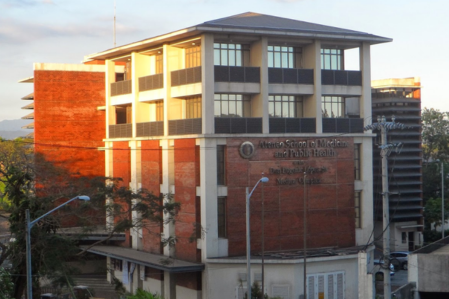
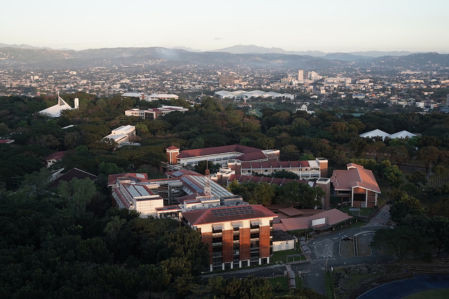 b.) Ateneo School of Medicine and Public Health
 c.) Ateneo Graduates School of Business / Ateneo School of Law
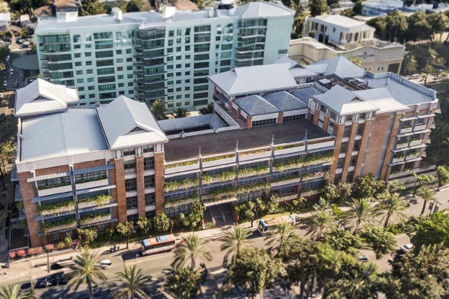 d.) Ateneo Salcedo Campus - Center for Continuing Education
|
| 2.) Campus Area View more ▼ |
|
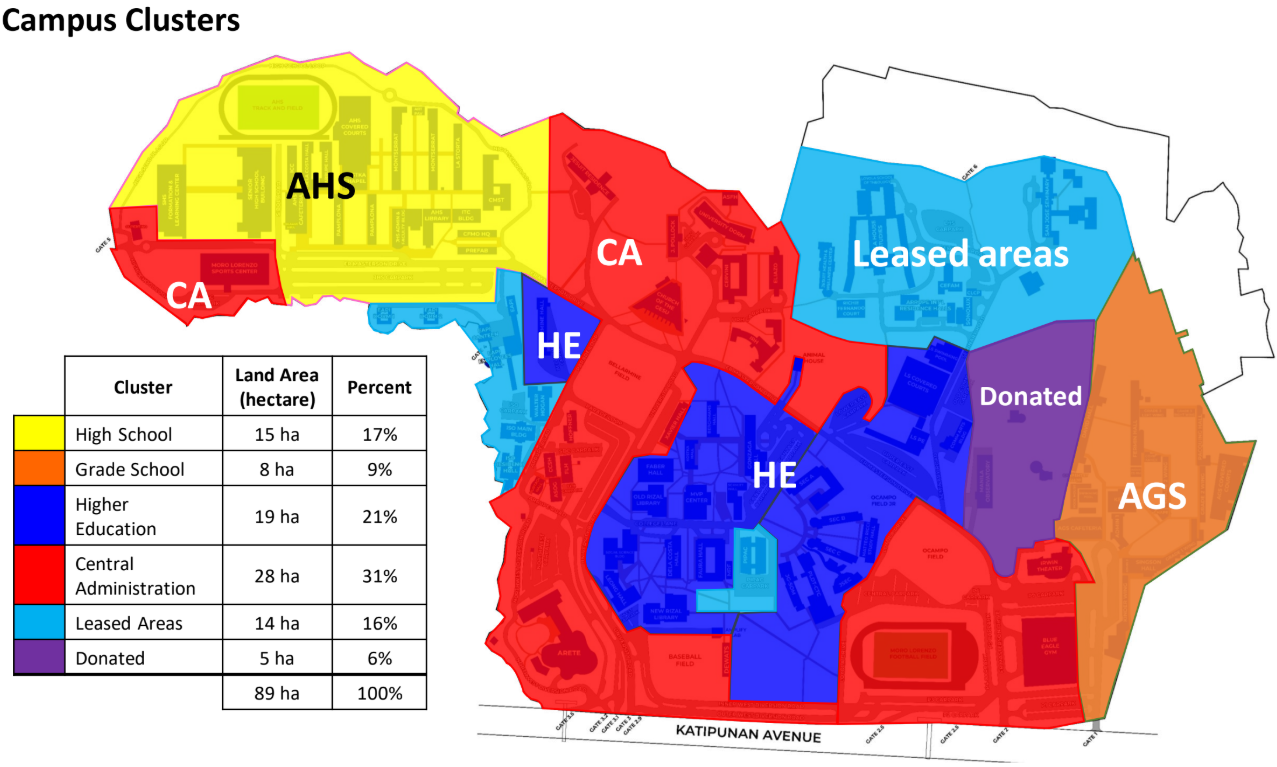
a.) Ateneo Loyola Campus
 b.) Ateneo School of Medicine and Public Health 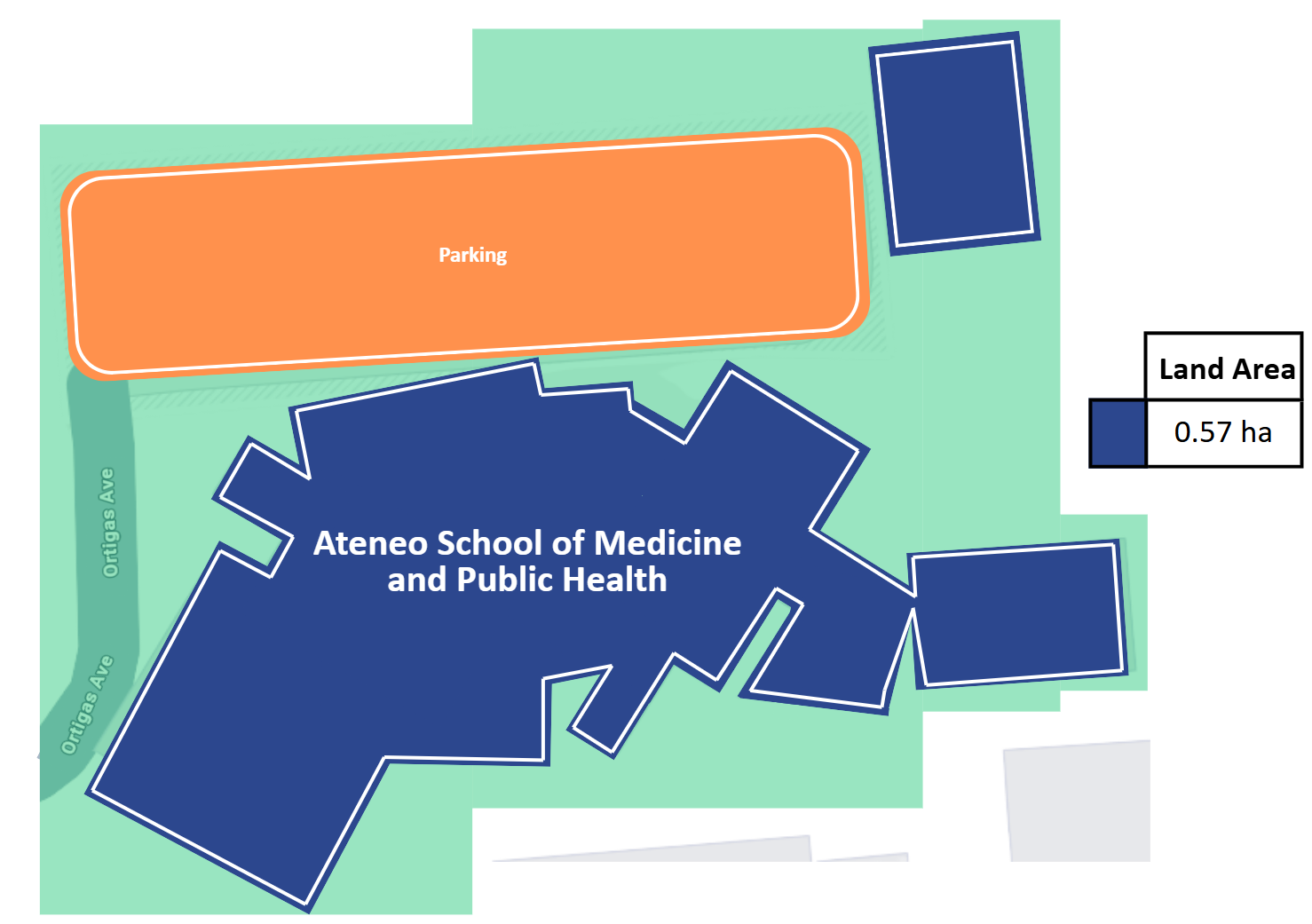 c.) Ateneo Graduates School of Business / Ateneo School of Law 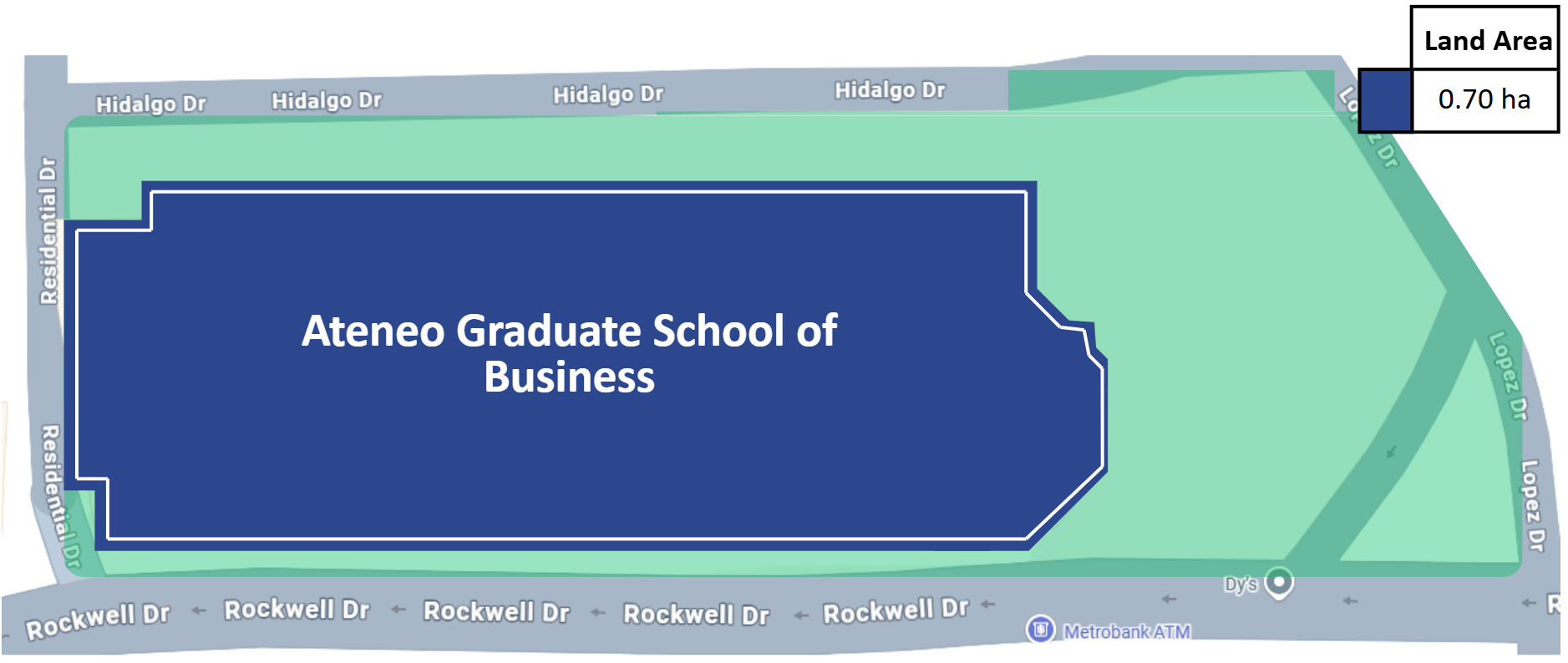 d.) Ateneo Salcedo Campus - Center for Continuing Education |
| 3.) Open Space Area View more ▼ |
|
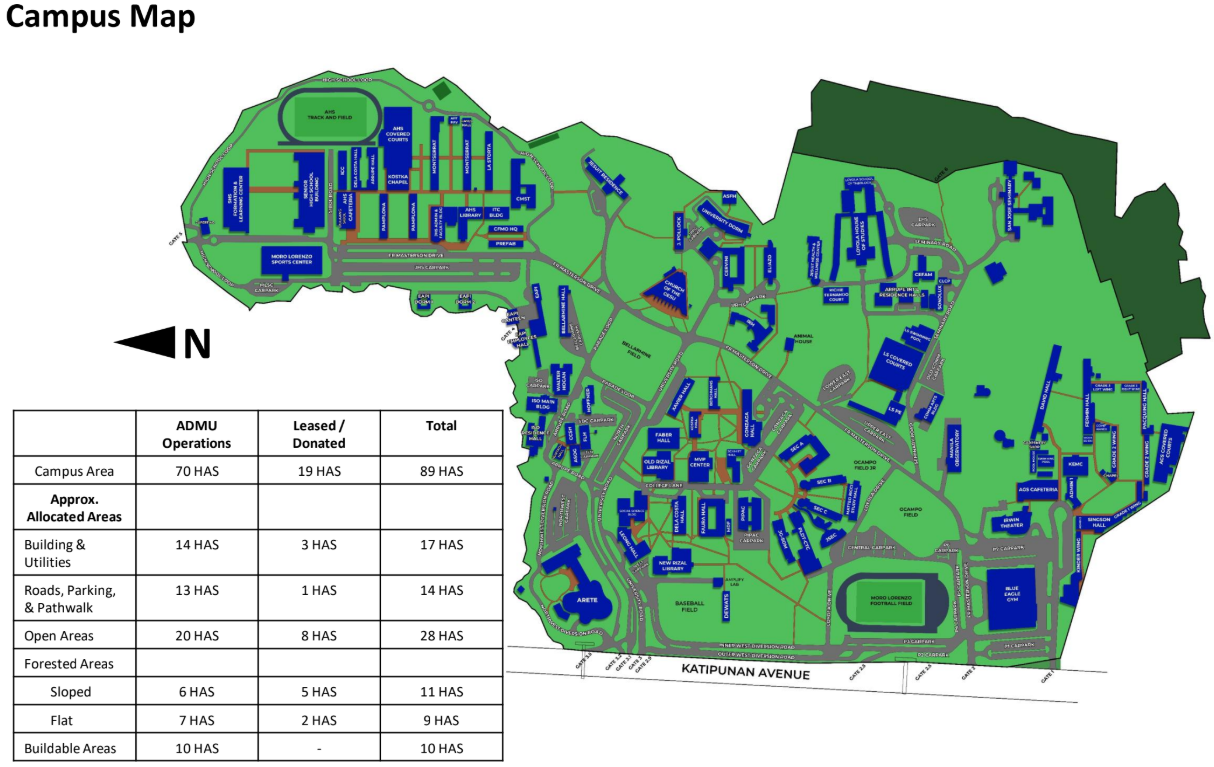
The University’s Higher Education campuses, excluding Basic Education, have a combined total area of 671,501.00 sqm. The Loyola Heights Campus and its affiliates comprise 631,018.00 sqm and serve as the main academic and administrative center, recognized for their expansive green spaces that support ecological learning and holistic formation. The professional schools are distributed across the APS Salcedo Campus with 6,962 sqm, the Ortigas Campus with 5,748 sqm, and the Rockwell Campus with 27,254 sqm. In addition, the University maintains satellite campuses with a combined area of 519 sqm that support various academic and institutional functions.
↑ Return to Top |
| 4.) Area on campus covered in forest vegetation View more ▼ |
|
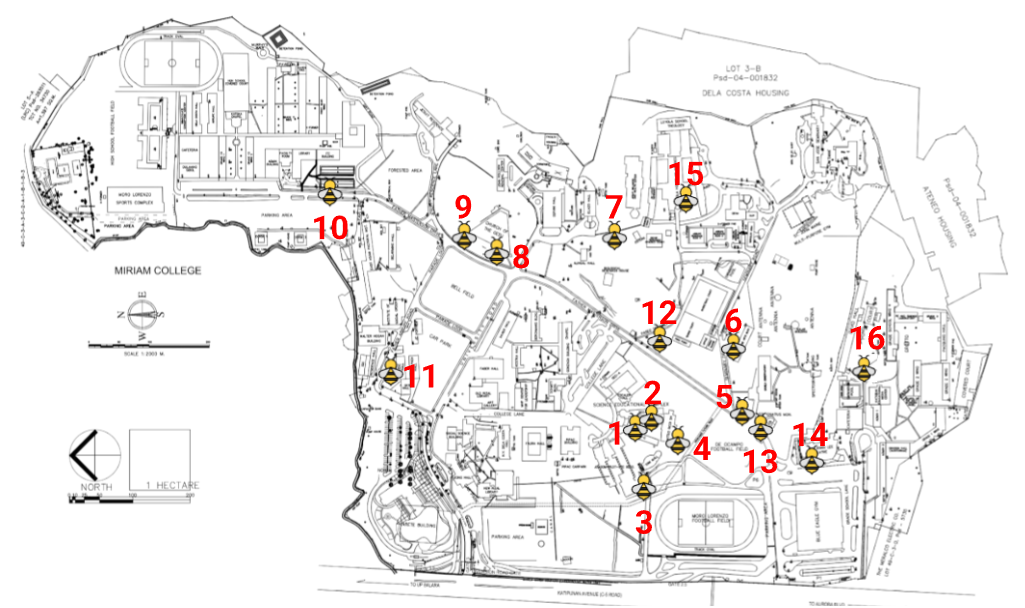
Map of the sixteen (16) Pollinator Pockets
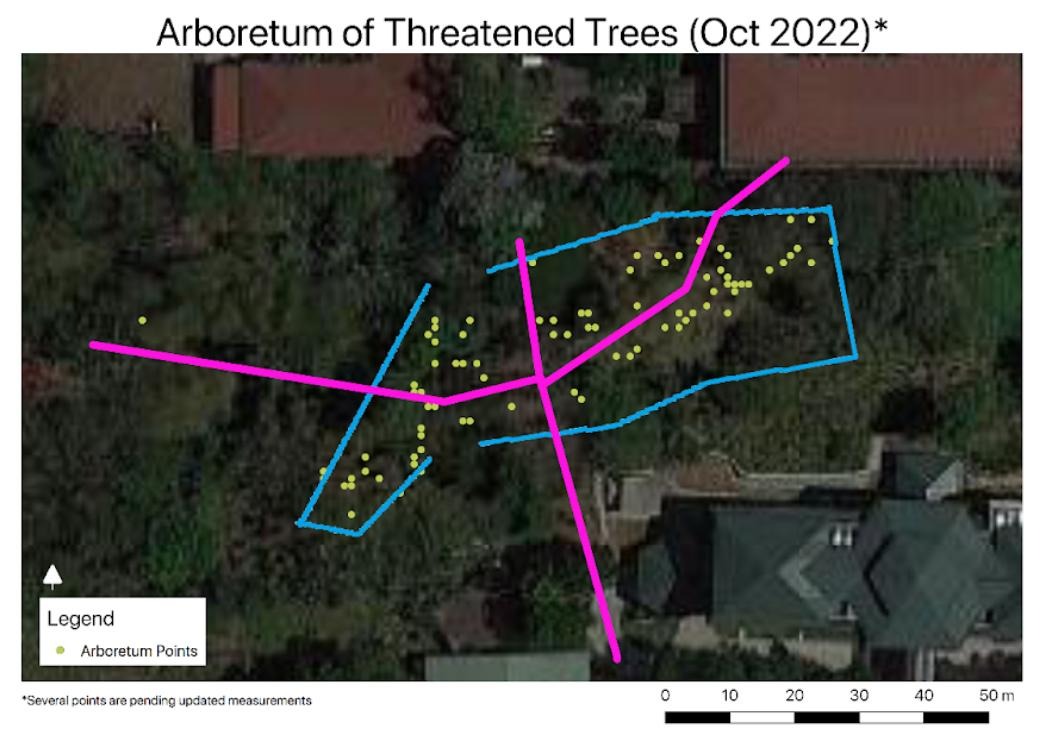
Ateneo de Manila houses 16 pollinator pockets all over the campus grounds. These patches of land serve as safe haven for pollinators. The presence of pollinators and flowering plants are being assessed quarterly by the Ateneo Institute of Sustainability and volunteer students as part of engaging the university community. Map of 101 Arboretum of Threatened Philippine Trees in partnership with Energy Development Corporation BINHI Program
Established in partnership with the Energy Development Corporation BINHI Program, and with the support of the Manlapaz Family. The arboretum supports over 20 species of endangered Philippine trees, with the hopes of someday nurturing these future mother trees whose seeds may be used by the University and its partners for reforestation projects. ↑ Return to Top |
| 5.) Security and Safety Facilities View more ▼ |
|
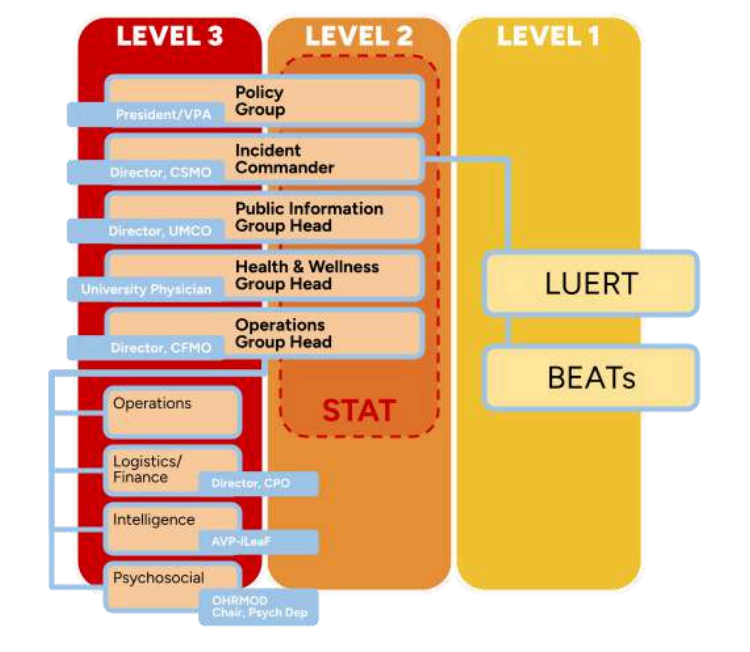
The Campus Safety and Mobility Office (CSMO) oversees security operations by coordinating with outsourced security agencies. The following elements are strictly implemented and monitored, to address the different security needs or scenarios.
|
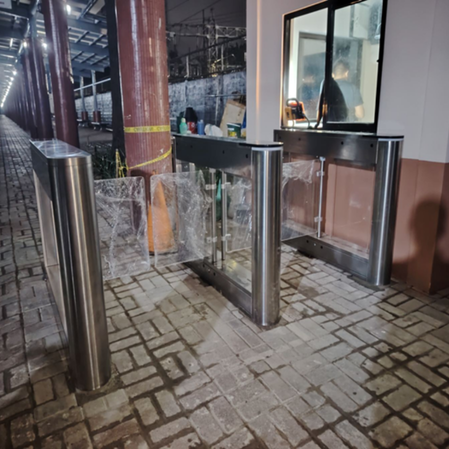 Access Control
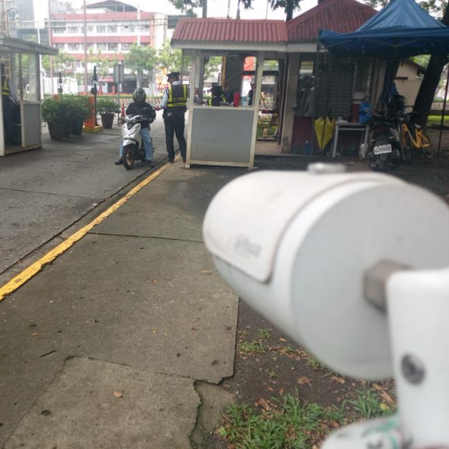 Surveillance
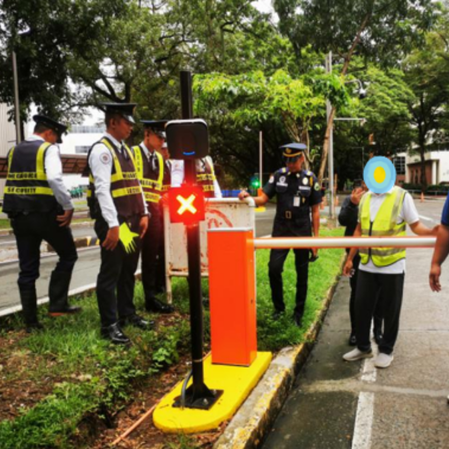 Perimeter Security