
Overview
Methodology
Waste management is an integral part of our commitment to sustainable campus operations and environmental responsibility. Ateneo de Manila University actively works to minimize waste generated from daily activities through prevention strategies, responsible consumption practices, and efficient resource use across all campuses.
Ateneo’s approach prioritizes the principles of reduce, reuse, and recycle, supported by ongoing efforts to limit paper and plastic consumption and strengthen segregation practices. Complementing these are systems for the proper treatment and disposal of both organic and inorganic waste, as well as the safe handling of hazardous materials in accordance with environmental standards.
Sewage management and pollution control measures are also embedded in campus operations to ensure that waste outputs are properly treated and responsibly managed. Through these initiatives, Ateneo continues to advance a culture of accountability and sustainability in its institutional practices.
↑ Return to Top
| Highlights: | ||||||||||||||||||||||||||||||||||||||||||||||
|---|---|---|---|---|---|---|---|---|---|---|---|---|---|---|---|---|---|---|---|---|---|---|---|---|---|---|---|---|---|---|---|---|---|---|---|---|---|---|---|---|---|---|---|---|---|---|
| 1.) Paper and Plastic Produced as of SY 25-26 View More ▼ | ||||||||||||||||||||||||||||||||||||||||||||||
|
Current Version as of 2025 - 2026
During SY 2025–2026, Ateneo de Manila University generated a total of 483.872 kg of paper and plastic waste. This includes 474.16 kg of residual (non-recyclable) paper and plastics, 9.215 kg of recyclable paper, and 0.497 kg of recyclable plastics. Recyclable materials are properly endorsed for treatment and recycling, supporting the University’s resource recovery and waste management efforts. Proceeds from recyclable materials are shared with maintenance personnel, reinforcing proper waste segregation while contributing to sustainability initiatives.
↑ Return to Top |
||||||||||||||||||||||||||||||||||||||||||||||
| 2.) Paper and Plastic Produced as of SY 24-25 View More ▼ | ||||||||||||||||||||||||||||||||||||||||||||||
|
Current Version as of 2024 - 2025
During SY 2024–2025, Ateneo de Manila University generated a total of 295.802 tons of paper and plastic waste, consisting of 284.15 tons of residual paper and plastics (non-recyclables), 10.47 tons of recyclable paper, and 1.182 tons of recyclable plastics. All collected paper and plastic waste was endorsed for appropriate treatment and/or recycling. Revenue generated from recyclable materials is shared among the University's maintenance personnel, supporting both waste diversion efforts and employee welfare initiatives.
↑ Return to Top |
||||||||||||||||||||||||||||||||||||||||||||||
| 3.) Program to Reduce the Use of Paper and Plastic on Campus View More ▼ | ||||||||||||||||||||||||||||||||||||||||||||||
|
Paper and Plastic Usage Reduction Initiatives
Ateneo de Manila University implements a comprehensive waste reduction and resource recovery program anchored on sustainability policies, behavioral change initiatives, and campus-wide engagement. Through measures such as the Food Packaging Primer, BYOB (Bring Your Own Baon/Bag), No to Single-Use Plastics (NTSUP), CLAYGO, paperless systems, and proper waste segregation, the University actively minimizes waste generation and promotes responsible consumption. These efforts are reinforced through education, infrastructure improvements, staff training, Green Nudges, and the integration of waste management principles into academic and operational practices. Guided by the Ateneo Sustainability Master Plan 2050, the University continues to strengthen its commitment to ecological waste management and the reduction of campus waste in support of sustainable development goals. ↑ Return to Top |
||||||||||||||||||||||||||||||||||||||||||||||
| 4.) Organic Waste Produced as of SY 25-26 View More ▼ | ||||||||||||||||||||||||||||||||||||||||||||||
|
Current Version as of 2025 - 2026
During SY 2025–2026, Ateneo de Manila University generated a total of 99.48 tons of organic waste, consisting of 1.80 tons of food waste collected through JSA for vermicomposting, 9.84 tons of food waste from concessionaires (including kitchen scraps, trimmings, peelings, leftovers from dining areas, and used oil), 83.64 tons of green or yard waste (such as leaves, twigs, and pods), and 4.20 tons of other organic waste from sewage. Approximately 30% of the University's organic, green, and yard waste is collected and converted into compost for use as organic fertilizer in gardening, landscaping, and tree care activities within the campus. The remaining 70% is hauled and processed off-campus by Ateneo-accredited service providers registered with the local environmental authorities, where it is utilized for various greening initiatives and other beneficial purposes.
↑ Return to Top |
||||||||||||||||||||||||||||||||||||||||||||||
| 5.) Organic Waste Produced as of SY 24-25 View More ▼ | ||||||||||||||||||||||||||||||||||||||||||||||
|
Current Version as of 2024 - 2025
During SY 2024–2025, Ateneo de Manila University generated a total of 95.524 tons of organic waste, composed of 1.508 tons of organic food waste, 22.592 tons of food waste from concessionaires (including kitchen scraps, trimmings, peelings, leftovers from dining areas, and used oil), and 71.424 tons of green or yard waste (such as leaves, twigs, and pods). Approximately 30% of the total organic, green, and yard waste generated is collected and processed into compost, which is used as organic fertilizer for the University’s gardening, landscaping, and tree care requirements. The remaining 70% is hauled outside the campus and utilized for other greening initiatives or donated for multi-purpose use through an Ateneo-accredited service provider registered with the local environmental authorities (CENRO/DENR).
↑ Return to Top |
||||||||||||||||||||||||||||||||||||||||||||||
| 6.) Treated Organic Waste View More ▼ | ||||||||||||||||||||||||||||||||||||||||||||||
|
Current Version as of 2025 - 2026
For SY 2025–2026, Ateneo de Manila University generated a total of 99.48 tons of organic waste, consisting of 1.80 tons of food waste collected through JSA for vermicomposting, 9.84 tons of food waste from concessionaires (including kitchen scraps, trimmings, peelings, leftovers from dining areas, and used oil), 83.64 tons of green or yard waste (such as leaves, twigs, and pods), and 4.20 tons of other organic waste from sewage. Approximately 30% of the organic, green, and yard waste generated is collected and processed into compost, which is utilized as organic fertilizer for the University’s gardening, landscaping, and tree care requirements. The remaining 70% is hauled outside the campus and utilized for other greening activities or donated for multi-purpose use through an Ateneo-accredited service provider registered with the local environmental authorities (CENRO/DENR).In addition, organic waste from sewage is siphoned and treated through a University-accredited and DENR-registered service contractor to ensure proper treatment and environmental compliance.
↑ Return to Top |
||||||||||||||||||||||||||||||||||||||||||||||
| 7.) Program to Treat Organic Waste View More ▼ | ||||||||||||||||||||||||||||||||||||||||||||||
|
Ateneo's Organic Waste Composting Process
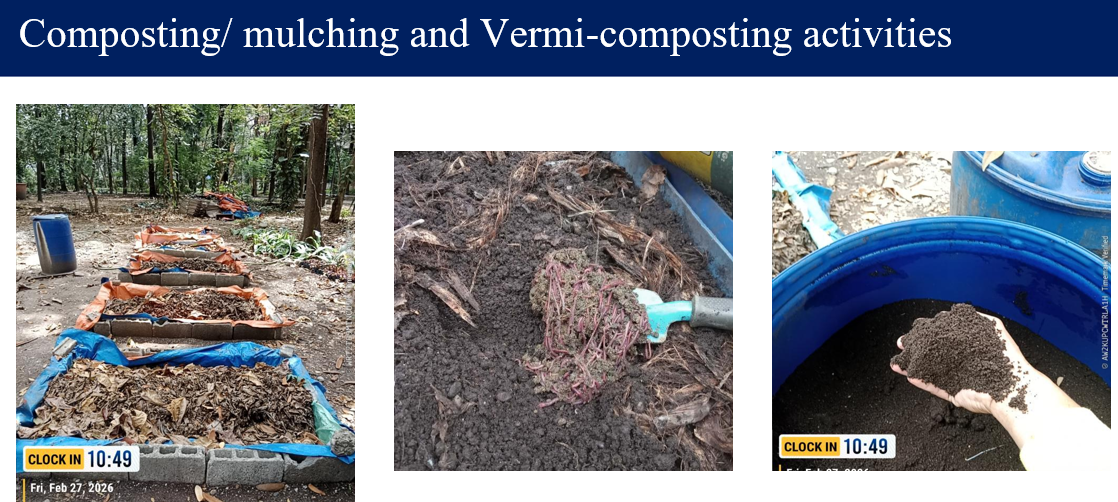 Ateneo de Manila University implements an integrated organic waste management system covering food waste from canteens and cafeterias as well as green waste from campus landscaping and grounds maintenance. These are managed through coordinated efforts of the University Business Affairs Office, Food Safety and Quality Assurance Office, and Central Facilities Management Office, in alignment with institutional environmental policies. 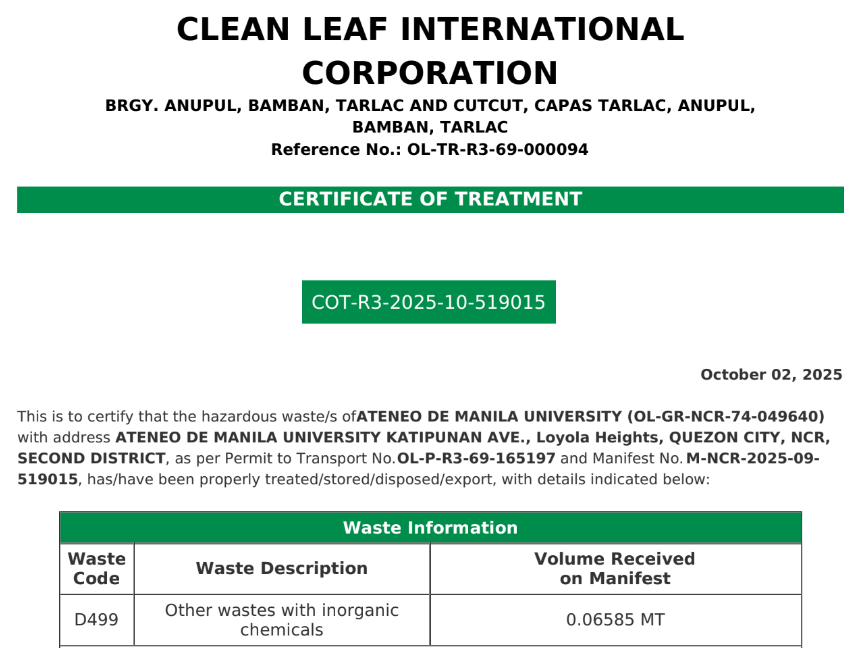 Food waste is handled through accredited waste haulers and treatment providers under service agreements, with costs shared among canteen concessionaires. Meanwhile, green and yard waste, such as leaves, branches, and plant debris, is collected by accredited service contractors. Around 30% of this waste is processed internally through composting and mulching for use in campus gardens and landscapes, while the remaining 70% is treated or repurposed externally through DENR-registered partners. Through this system, Ateneo ensures that all organic waste is properly diverted from landfills and transformed into useful resources, supporting circular economy practices, reducing environmental impact, and maintaining a sustainable campus ecosystem. ↑ Return to Top |
||||||||||||||||||||||||||||||||||||||||||||||
| 8.) Inorganic Waste Produced as of SY 25-26 View More ▼ | ||||||||||||||||||||||||||||||||||||||||||||||
|
Current Version as of 2025 - 2026
Ateneo de Manila University recorded a total of 488.30 tons of inorganic waste for School Year 2025–2026, managed through accredited waste haulers, recyclers, and treatment partners as part of its campus waste diversion system.The majority of the waste was residual (474.165 tons), consisting of non-recyclable materials such as contaminated plastics and laminated packaging, which were properly collected and treated by accredited providers. A smaller portion was recyclable waste, totaling 14.135 tons, including paper, plastics, metals, and other recoverable materials that were diverted to partner recyclers for resource recovery.Overall, the university’s waste management system ensures proper segregation, treatment, and recycling to minimize landfill disposal and support sustainable resource recovery practices.
↑ Return to Top |
||||||||||||||||||||||||||||||||||||||||||||||
| 9.) Inorganic Waste Produced as of SY 24-25 View More ▼ | ||||||||||||||||||||||||||||||||||||||||||||||
|
Current Version as of 2024 - 2025
Ateneo de Manila University generated a total of 298.859 tons of inorganic waste in 2025, managed through accredited haulers, recyclers, and waste trading partners as part of its sustainability and waste diversion initiatives.Most of the waste was residual (284.15 tons), consisting of non-recyclable materials such as contaminated plastics and laminated paper, which were collected and treated through accredited disposal services. The remaining portion was recyclable waste, including paper (10.47 tons), plastics (1.182 tons), metals (3.057 tons), and other materials, all of which were properly segregated and diverted to recycling and recovery channels.Overall, the university’s system ensures proper waste segregation and maximizes resource recovery while reducing environmental impact.
↑ Return to Top |
||||||||||||||||||||||||||||||||||||||||||||||
| 10.) Treated Inorganic Waste View More ▼ | ||||||||||||||||||||||||||||||||||||||||||||||
|
Inorganic Waste Reduction Initiatives
Ateneo de Manila University recorded 486.19 tons of inorganic waste treated in 2026, higher than the 298.86 tons in 2025, reflecting ongoing campus operations and strengthened waste management systems. Most of the waste consisted of residual materials, 474.16 tons in 2026 versus 284.15 tons in 2025, comprising non-recyclable items such as plastics and contaminated paper, all properly handled through accredited waste service providers. Recyclable waste was also consistently diverted for recovery, including paper, plastics, metals, and other materials processed through partner recyclers, with volumes generally lower in 2026 compared to 2025. Overall, the university maintained structured waste segregation, treatment, and diversion practices to ensure responsible handling and continued environmental stewardship. ↑ Return to Top |
||||||||||||||||||||||||||||||||||||||||||||||
| 11.) Program to Treat Inorganic Waste View More ▼ | ||||||||||||||||||||||||||||||||||||||||||||||
|
Treatment Initiatives for Inorganic Waste
 Ateneo de Manila University implements an Ecological Solid Waste Management (ESWM) system that promotes proper segregation, recycling, reuse, composting, and compliant waste treatment across campus. Supported by unit-based facilities and coordinated reporting to DENR, the system ensures efficient waste tracking and management. Recyclable and reusable materials are recovered through accredited partners, compostable waste is processed through vermicomposting, and residual waste is properly treated for disposal. 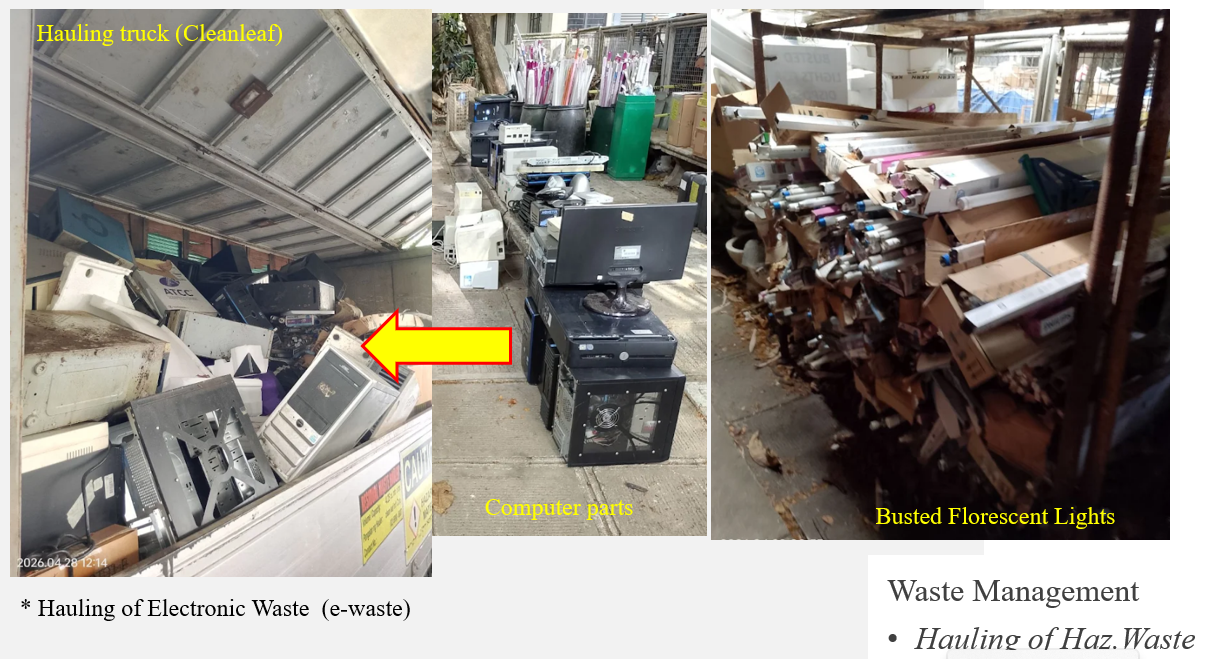 Hazardous waste and e-waste are managed separately through DENR-accredited facilities to ensure safe and compliant handling. Overall, the university strengthens circular waste management and reduces environmental impact through integrated and responsible waste diversion practices. ↑ Return to Top |
||||||||||||||||||||||||||||||||||||||||||||||
| 12.) Toxic Waste Produced as of SY 25-26 View More ▼ | ||||||||||||||||||||||||||||||||||||||||||||||
|
Current Version as of 2025 - 2026
Ateneo de Manila University recorded a total of 2.112 tons of toxic and hazardous waste for the current reporting year, managed under strict compliance with Republic Act No. 6969 and the regulations of the Department of Environment and Natural Resources–Environmental Management Bureau (DENR-EMB). These wastes include a range of chemical, infectious, electronic, and industrial materials generated mainly from laboratories, medical facilities, kitchens, and equipment-related operations across campus units. All hazardous wastes were properly segregated, stored, transported, treated, and disposed of through DENR-accredited transporters and treatment, storage, and disposal (TSD) facilities. The university maintains monitoring systems and regular reporting mechanisms to ensure full regulatory compliance and safe handling throughout the waste lifecycle, thereby reducing environmental risks and supporting sustainable campus operations. |
||||||||||||||||||||||||||||||||||||||||||||||
| 13.) Toxic Waste Produced as of SY 24-25 View More ▼ | ||||||||||||||||||||||||||||||||||||||||||||||
|
Current Version as of 2024 - 2025
For SY 2024–2025, Ateneo de Manila University generated a total of 4.65773 tons of toxic and hazardous waste, consisting of laboratory chemicals, PCB waste, electronic waste, used oils and grease, and a small amount of clinical waste. These waste streams are properly categorized and managed according to DENR regulations to ensure safe handling, treatment, and disposal. The university implements a comprehensive hazardous waste management system aligned with RA 6969 and DENR–EMB requirements, covering segregation, labeling, storage, transport, and disposal through accredited facilities. Major sources include science and engineering laboratories, medical facilities, clinics, kitchens, and equipment-related operations across campus units. Through strict compliance and monitoring systems, the university minimizes environmental and health risks while promoting responsible chemical management, sustainability practices, and environmental awareness across the academic community. |
||||||||||||||||||||||||||||||||||||||||||||||
| 14.) Treated Toxic Waste View More ▼ | ||||||||||||||||||||||||||||||||||||||||||||||
|
Current Version as of 2025 - 2026
For the reporting period, a total of 2.11221 tons of toxic and hazardous waste in 2025, using DENR-accredited facilities in compliance with RA 6969 and DENR–EMB regulations. These wastes included laboratory chemicals, electronic waste, solvents, corrosive substances, used oils, and minimal clinical waste, all processed through appropriate treatment methods such as chemical treatment, thermal destruction, distillation, and immobilization. Hazardous waste management was carried out in partnership with Cleanleaf International Corporation, ensuring proper segregation, storage, transport, and disposal supported by official manifests and Certificates of Treatment. Through these regulated systems, the university minimizes environmental and health risks while maintaining full compliance and promoting sustainable and responsible hazardous waste management practices. |
||||||||||||||||||||||||||||||||||||||||||||||
| 15.) Program to Treat Toxic Waste View More ▼ | ||||||||||||||||||||||||||||||||||||||||||||||
|
Ateneo's Toxic Waste Treatment Process
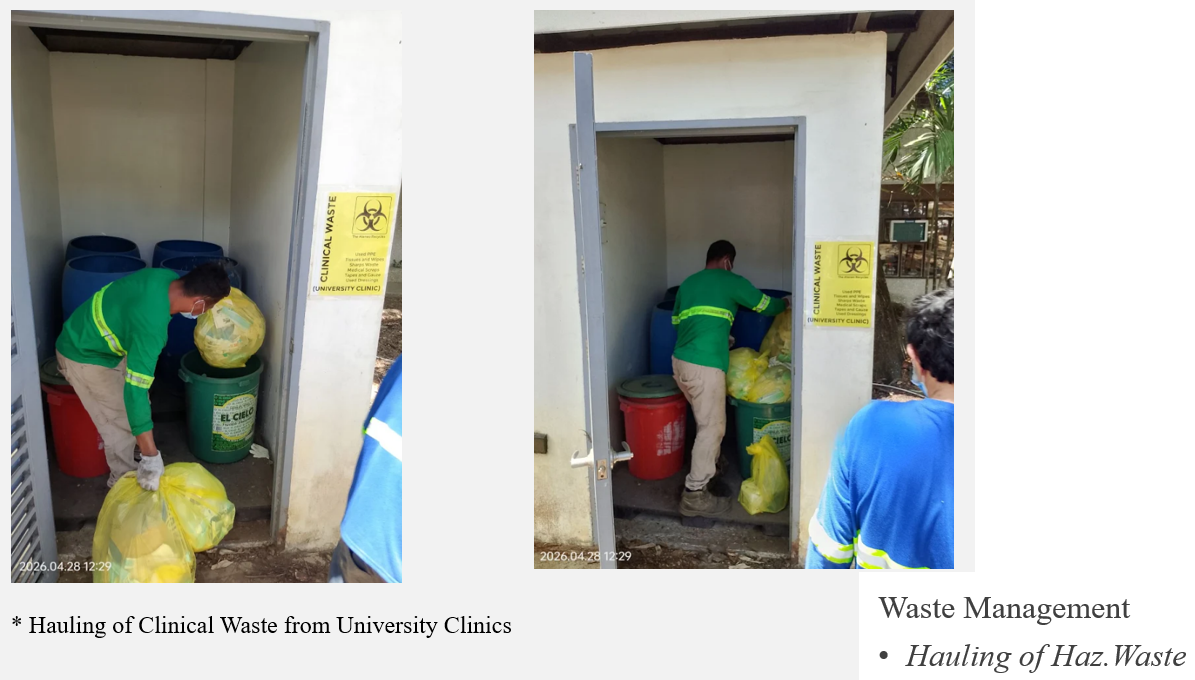
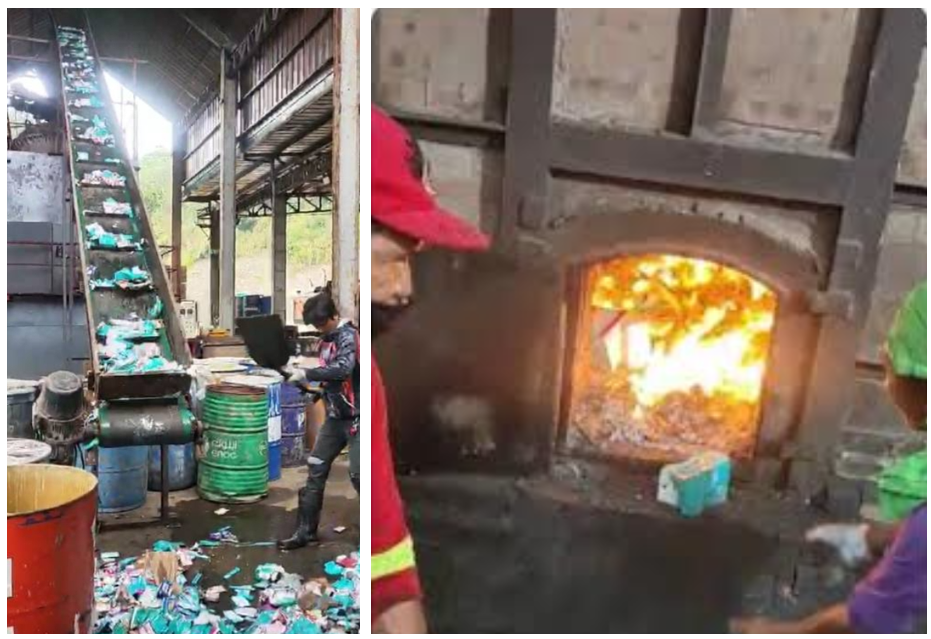 Ateneo de Manila University implements a comprehensive Hazardous Waste Management Program through its Central Facilities Management Office (CFMO), in compliance with DENR Administrative Order 36, s. 2004 and DAO 92-29. The program ensures proper identification, labeling, storage, documentation, and reporting of hazardous waste across all university units in accordance with national environmental standards. A designated team composed of trained safety and pollution control personnel oversees implementation and submits quarterly waste inventories to the DENR. Hazardous wastes are classified based on their properties, ignitable, corrosive, reactive, or toxic, and stored in compliant facilities equipped with safety systems and proper segregation measures. All hazardous waste is handled only by DENR-accredited transporters and disposal facilities, with strict emergency protocols in place to manage spills, fires, and other incidents, ensuring environmental protection and campus safety. ↑ Return to Top |
||||||||||||||||||||||||||||||||||||||||||||||
| 16.) Sewage Disposal View More ▼ | ||||||||||||||||||||||||||||||||||||||||||||||
|
Ateneo De Manila University Sewage Treatment Plant
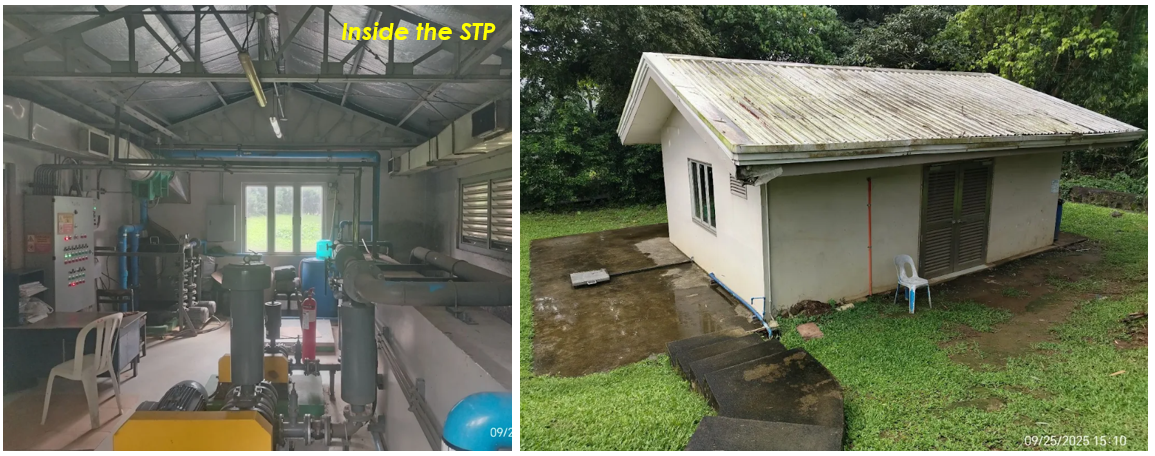 Ateneo de Manila University operates its own Sewerage Treatment Plant (STP) to ensure that all wastewater generated within the campus is properly collected, treated, and safely reused. The treated effluent is recycled for non-potable applications such as maintenance activities and facility operations, including use in buildings like the Areté, which supports the university’s culinary arts programs. 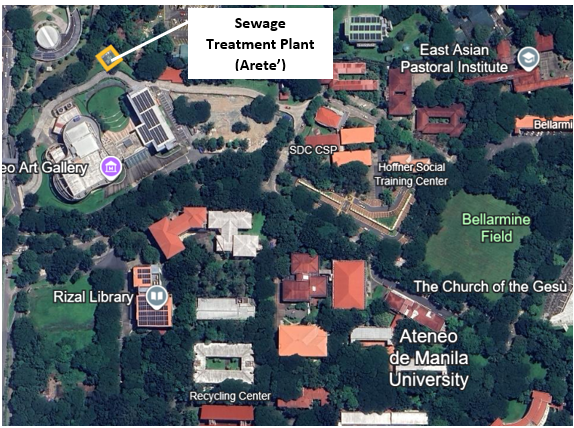 With a treatment capacity of up to 150 cubic meters per day, the STP plays a key role in reducing freshwater demand and promoting sustainable water management. This system reflects the university’s commitment to environmental protection, resource efficiency, and responsible campus operations through effective wastewater treatment and reuse practices. Decentralized Wastewater Treatment System DEWATS – Loyola Campus
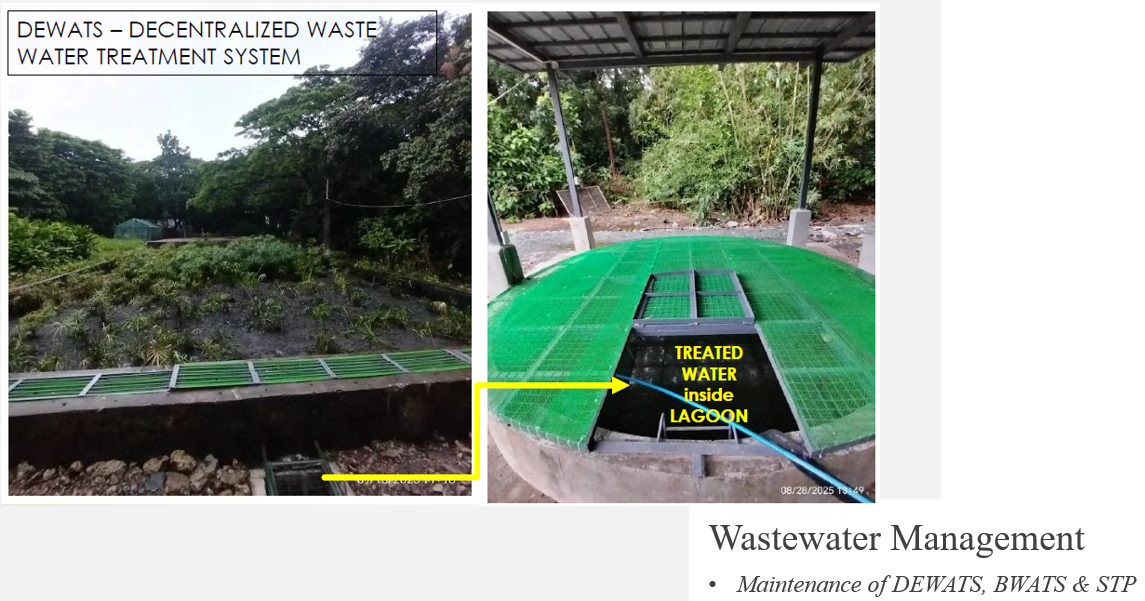 The university also implements a Decentralized Wastewater Treatment System (DEWATS) at the Loyola Campus. This complementary system allows localized treatment of wastewater, improving efficiency, reducing environmental discharge, and strengthening overall water resource management. ↑ Return to Top |
