11.2.2 Public Access to Libraries
01 May 2025


Public Access to Knowledge: Library and Special Collections at Ateneo de Manila University
Ateneo de Manila University recognizes that access to knowledge is a public good and an essential component of higher education's contribution to society. Beyond serving the learning and research needs of its students and faculty, the University actively extends access to its libraries, archives, and special collections to educators, scholars, independent researchers, cultural workers, and members of the general public. In maintaining open research facilities, welcoming external visitors, preserving rare and irreplaceable historical materials, and providing professional research support services, Ateneo contributes to the advancement of Philippine scholarship and the broader dissemination of knowledge beyond the university community.
Pardo de Tavera Library and Special Collections (PDTLSC)
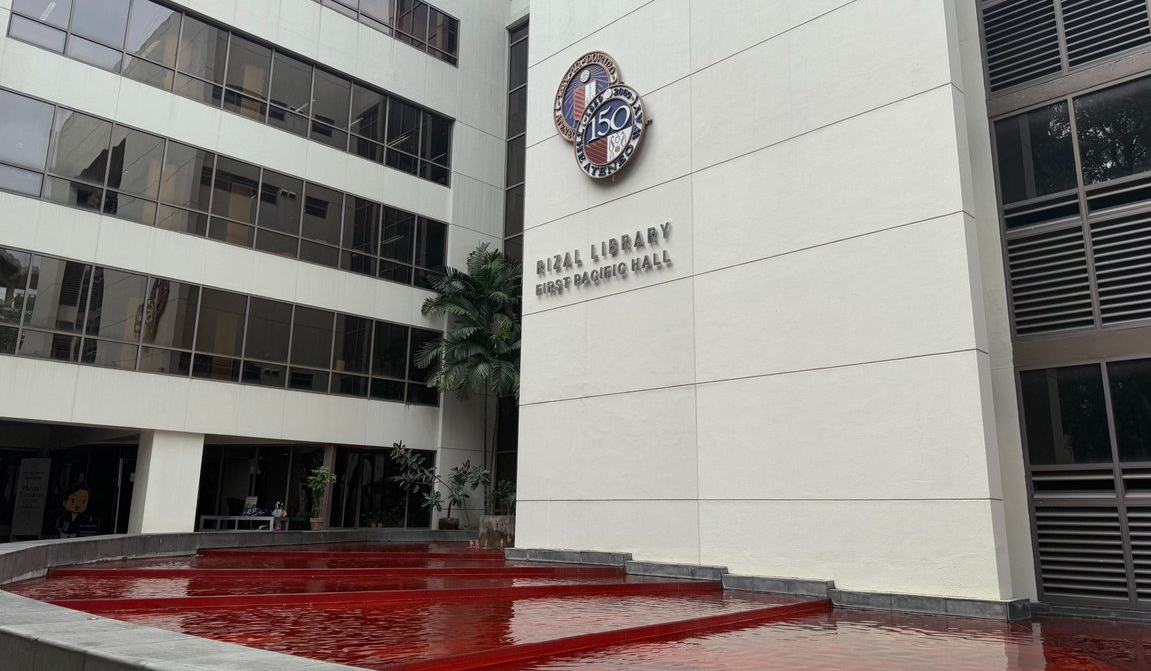
One of Ateneo de Manila University's foremost contributions to public scholarship is the Pardo de Tavera Library and Special Collections (PDTLSC), located on the second floor of the Rizal Library Special Collections Building, commonly known as the "Old Rizal Library." Named after renowned Filipino scholar, physician, bibliophile, and historian Dr. Trinidad Hermenegildo Pardo de Tavera, the facility serves as one of the country's premier repositories of Philippine historical and cultural materials.
The PDTLSC functions as an important research destination for students, faculty members, historians, writers, cultural workers, graduate researchers, genealogists, journalists, heritage advocates, and visiting scholars from both the Philippines and abroad. Rather than limiting access exclusively to members of the Ateneo community, the University welcomes guest researchers who require access to its extensive archival holdings, subject to established library policies and preservation guidelines. This inclusive approach reflects Ateneo's belief that historically significant collections should support national scholarship and public education.
The Special Collections preserve thousands of unique materials that document the political, social, literary, religious, artistic, and intellectual history of the Philippines. These resources include rare books, historical photographs, archival manuscripts, personal papers, maps, artworks, newspapers, and donated collections from distinguished Filipino scholars and public intellectuals. Many of these materials are unavailable elsewhere, making the PDTLSC an indispensable center for primary-source research.
Preserving Philippine Documentary Heritage
Among the most significant holdings of the Pardo de Tavera Library and Special Collections is the Manila Times Photo Morgue, one of the largest historical photographic archives in the country. Donated by the late National Artist nominee and renowned food historian Dr. Doreen G. Fernandez, the collection contains approximately 638,000 photographs systematically organized according to subject matter. The archive documents decades of Philippine political events, social developments, cultural traditions, personalities, architecture, landscapes, and everyday life, providing researchers with invaluable visual evidence for historical investigation.
The collection serves historians, journalists, documentary filmmakers, educators, students, and cultural researchers seeking authentic photographic documentation of Philippine history. By preserving and making this extensive archive available for research, Ateneo safeguards an important component of the country's visual memory while supporting scholarly publications, exhibitions, documentaries, and educational initiatives.
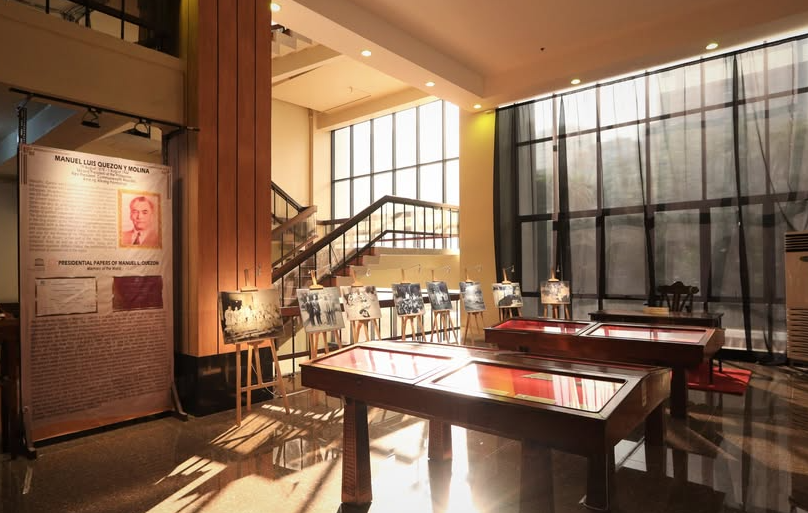
Complementing this photographic archive is the University's substantial collection of Rare Books and Historical Imprints, which includes 1,796 rare printed works dating from various historical periods. These holdings encompass scarce publications that are significant to the study of Philippine history, colonial administration, religion, language, literature, natural sciences, and early printing in the Philippines. Among the collection's notable treasures are original editions of Flora de Filipinas, one of the most important botanical works documenting Philippine plant life during the Spanish colonial period. Such publications provide researchers with direct access to original historical texts that are rarely available in modern libraries.
The Special Collections likewise preserve historically significant maps, illustrations, and works of art that offer valuable insights into the country's geographic, scientific, and artistic heritage. Highlights include an 1801 map of the East India Isles, an important cartographic record illustrating historical perceptions of Southeast Asia during the colonial era, and original 1856 watercolor artworks by C. W. Andrews, which documents landscapes, architecture, and aspects of nineteenth-century Philippine life. These materials support interdisciplinary research across history, geography, art history, anthropology, and cultural studies.
Further enriching the library's holdings are numerous personal collections donated by respected Filipino writers, historians, academics, diplomats, and public servants. These donated archives often contain unpublished manuscripts, correspondence, research notes, personal libraries, photographs, diaries, and other unique documentary materials that preserve the intellectual legacy of influential individuals. Such collections provide researchers with rare insights into the development of Philippine scholarship, literature, public policy, and cultural discourse.
Supporting Public Research and Scholarly Inquiry
Beyond preserving valuable historical resources, the Pardo de Tavera Library actively supports scholarly research by providing professional reference and archival services to both members of the Ateneo community and external researchers. Visitors are assisted by experienced librarians and archivists who guide users in identifying relevant materials, navigating specialized collections, and locating primary sources appropriate to their research topics.
This personalized research assistance enables graduate students, faculty researchers, independent scholars, local historians, and visiting academics to maximize the use of the collections while ensuring the proper handling and preservation of fragile historical materials. The availability of expert guidance enhances the quality of historical inquiry and encourages greater utilization of the University's unique archival resources.
To further facilitate access to information, the library offers various document reproduction services, including photocopying, high-resolution scanning, and digitization of selected materials, subject to copyright regulations and preservation policies. These services allow researchers to obtain copies of reference materials for scholarly use while minimizing repeated handling of rare and fragile originals. Digitization initiatives likewise contribute to the long-term preservation of historically significant materials by reducing physical wear and improving accessibility.
The Pardo de Tavera Library maintains regular service hours to accommodate researchers and visitors:
- Monday to Friday: 8:00 AM–12:00 NN and 1:00 PM–5:00 PM
- Saturday: 8:00 AM–12:00 NN
These operating hours provide opportunities for researchers from outside the University, including those traveling from other regions, to conduct sustained archival work using Ateneo's collections.
Expanding Access Beyond the Ateneo Community
Ateneo de Manila University's commitment to public access extends beyond its Special Collections through institutional policies that welcome external users into the Rizal Library system. Recognizing the important role that educators and librarians play in expanding access to knowledge throughout the country, the University grants free library access to public school teachers, professional librarians, and members of the Catholic Educational Association of the Philippines (CEAP) upon presentation of valid identification and compliance with visitor registration procedures.
This initiative supports the professional development of educators while strengthening partnerships between Ateneo and educational institutions across the Philippines. By removing financial barriers for these key stakeholder groups, the University enables teachers to access scholarly references, instructional resources, and research materials that can enhance classroom teaching, curriculum development, and academic research. Librarians similarly benefit from exposure to specialized collections and professional library resources that may inform collection development and information services within their own institutions.
Making Research Accessible through Open-Access Journals
Ateneo de Manila University advances the open and accessible sharing of knowledge through scholarly publications that make research available to readers beyond traditional academic institutions. By supporting electronic and open-access journals, the University helps reduce barriers to scholarly information and enables students, researchers, educators, practitioners, and members of the public to engage with academic work.
Several open-access electronic journals include:
- Kritika Kultura, a Scopus and ISI-Indexed international peer-reviewed electronic journal of language and literary/cultural studies. It is published by the Literary and Cultural Studies Program under the School of Humanities of the Ateneo de Manila University. The journal aims to bridge disciplinary research around the issues in the 21st century, especially work in Philippine, Asian, Southeast Asian, and Filipino-American studies.
- Social Transformations Journal of the Global South is an internationally peer-reviewed print and open access electronic journal that analyzes social movements, development paradigms, relations, policies, tensions, contradictions, and socio-political interventions in the Global South. This journal is published twice a year by the Ateneo de Manila University and is indexed in EBSCOHost.
- Asia Pacific Mission Studies (APMS) is an electronic open-access online journal and is the publication of the East Asian Pastoral Institute (EAPI) run by the Society of Jesus within the campus of Ateneo de Manila University. APMS aims to promote knowledge and research related to the mission of the Church, bridging theology and ministry in the Asia-Pacific context and facilitating informed praxis and effective witnessing by the Church.
Ateneo Library of Women's Writings (ALiWW)
|
|
|
Further demonstrating its commitment to inclusive knowledge preservation is the Ateneo Library of Women's Writings (ALiWW), a specialized archival collection dedicated to documenting the literary, intellectual, and cultural contributions of Filipino women. Recognized as the first archive of its kind in both the Philippines and Asia, ALiWW serves as a significant resource for gender studies, literature, history, cultural studies, sociology, and feminist scholarship.
The collection actively acquires, preserves, organizes, and provides access to literary works written by Filipino women as well as publications about women's lives, experiences, and contributions to Philippine society. By systematically preserving these materials, ALiWW addresses historical gaps in traditional archives and ensures that women's voices remain visible within the country's documentary heritage.
Access to the collection is not restricted solely to Ateneo affiliates. External researchers, graduate students, educators, writers, historians, and members of the public may consult ALiWW resources in accordance with Rizal Library visitor policies. This openness encourages interdisciplinary research while supporting local and international scholarship focused on gender, literature, history, and Philippine cultural studies.
The existence of ALiWW highlights Ateneo's commitment to preserving diverse perspectives within the nation's intellectual history while ensuring that valuable research resources remain available to a broad scholarly community.
Source:
You may also like these articles

Growing with purpose: How Mekeni Food Corporation turns adversity into shared value
From a small backyard operation in Porac, Pampanga, to an internationally recognized food brand exporting to 25 countries, Mekeni Food Corporation's journey demonstrates how businesses

Three Ateneo-incubated startups secure DOST-PCIEERD’s startup grant fund
Last 9 November, during the opening day of Philippine Startup Week 2026, Soolok Properties Inc, Pili AdheSeal Inc, and Saltric Power (PDG Engineering Services), three
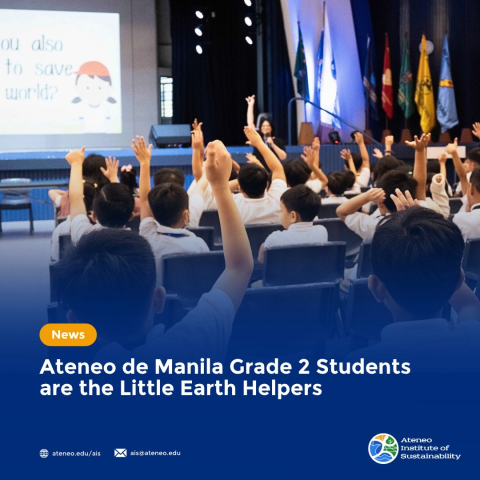
Ateneo de Manila Grade 2 students are the little Earth helpers
It was a great day for saving the world when Ateneo Institute of Sustainability (AIS) came to Ateneo Grade School to give a session on
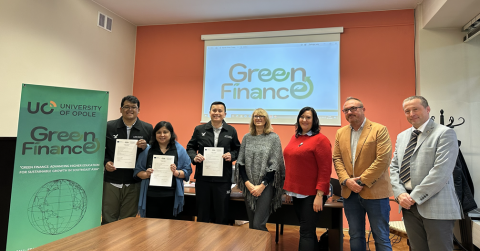
JGSOM representatives complete green finance training in Poland, sets sights on 2027 micro-credential launch
Representatives of Ateneo de Manila University's John Gokongwei School of Management (JGSOM) completed the second phase of their Erasmus+ Green Finance international mobility activities at
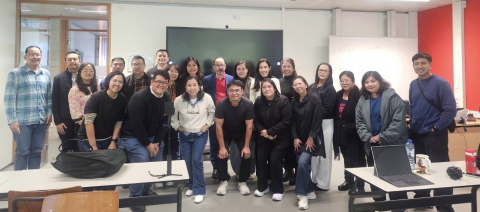
JGSOM Representatives Participate in Green Finance Training at the University of Twente
Enschede, Netherlands | October 15–16, 2026 Representatives of Ateneo de Manila University's John Gokongwei School of Management (JGSOM) participated in a specialized Green Finance training
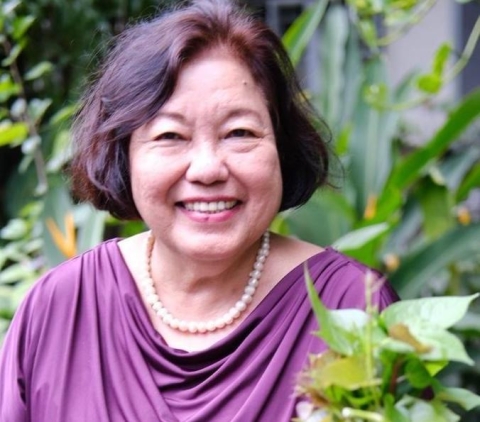
Professor Emeritus Dr Emma Porio highlights climate resilience and biodiversity at international conferences
Emma E Porio, PhD, Professor Emeritus of Ateneo de Manila University and Principal Investigator of Ateneo's Manila Observatory Center for Climate Resilience and Public Health