16.3.4 Neutral Platform to Discuss Issues
17 Jan 2025


Creating Spaces for Meaningful Dialogue
Ateneo de Manila University continues to advance evidence-based governance, public safety, and institutional integrity by providing neutral spaces for rigorous dialogue, policy evaluation, and collaborative action. Whether examining evolving legal frameworks and climate litigation at the School of Law, structuring national health interventions for tobacco cessation through the Ateneo Policy Center, or evaluating regional maritime defense ties alongside international security partners, these convenings serve as impartial platforms where diverse stakeholders can engage openly across complex issues.
A Forum for Engaging Legal Discussions
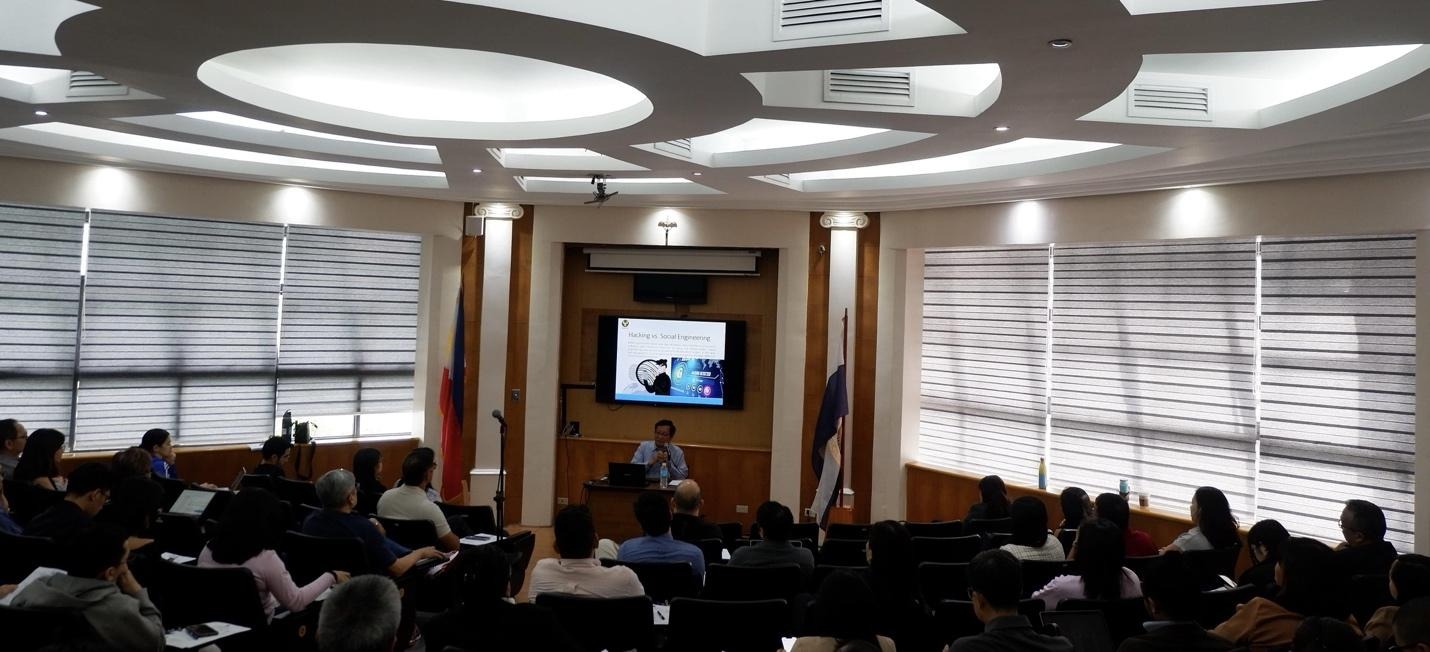
On 28 February 2025, the Fr. Joaquin G. Bernas, SJ Institute for Continuing Legal Education of the Ateneo de Manila University School of Law held a Mandatory Continuing Legal Education (MCLE) Lecture Series, accredited by the Supreme Court of the Philippines. The event brought together legal experts and practitioners in an atmosphere that encouraged open discussion, thoughtful exchange, and engagement with emerging legal issues.
The lectures tackled timely concerns affecting the legal profession, including cybercrime in banking, amendments to the Rules of Evidence, media ethics, data privacy, and climate change and climate litigation. Each topic provided an opportunity to examine how changes in technology, regulations, professional responsibilities, and environmental challenges are influencing legal practice.
Beyond simply presenting updates, the event created a space where participants could listen to different perspectives, reflect on current legal challenges, and engage with issues that directly affect their work. The discussions encouraged participants to consider both the opportunities and challenges brought about by developments in law and society.
Ateneo School of Government, DOH, and Partners Draft National Tobacco Cessation Infrastructure Plan 2025–2030
The Ateneo School of Government (ASOG), through the Ateneo Policy Center (APC), convened key health sector partners for a two-day Multistakeholder Framework Planning Workshop on 8 and 9 May 2025 in Quezon City. Serving as a follow-up to an initial planning session held on 23 April 2025, the gathering focused on developing a comprehensive, evidence-based framework for the National Tobacco Cessation Infrastructure Plan 2025–2030. The workshop brought together representatives from various bureaus of the Department of Health (DOH), Vital Strategies, national government agencies, local government units (LGUs), civil society organizations, hospitals, and regional Centers for Health and Development.
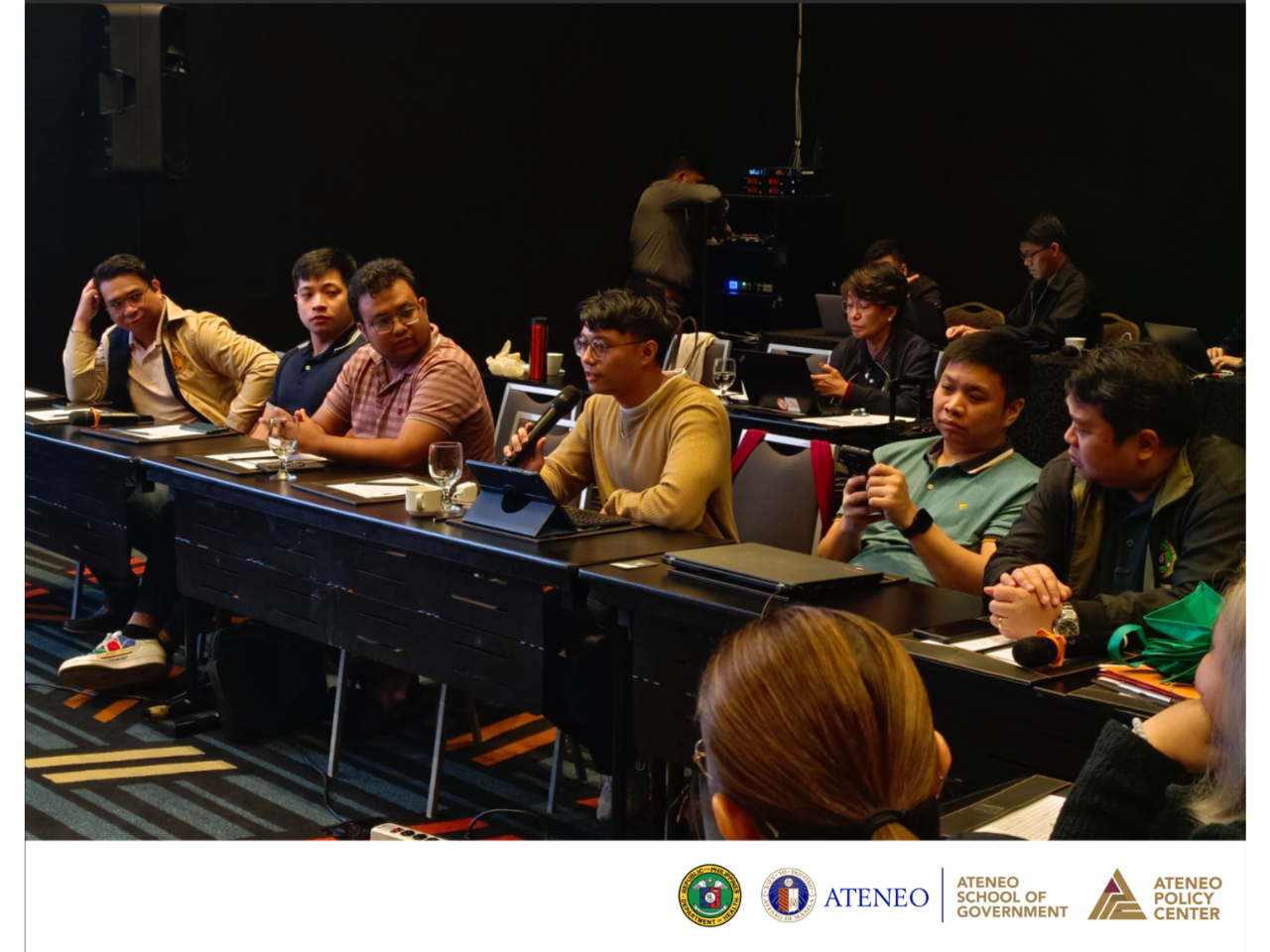
Across the two-day engagement on 8 and 9 May 2025, discussions covered national tobacco control challenges, operational insights from the National Quitline, scalable LGU-level cessation models, and the growing concern of youth vaping. Technical briefings provided historical policy overviews alongside recent research on national cessation efforts, setting the stage for collaborative planning.
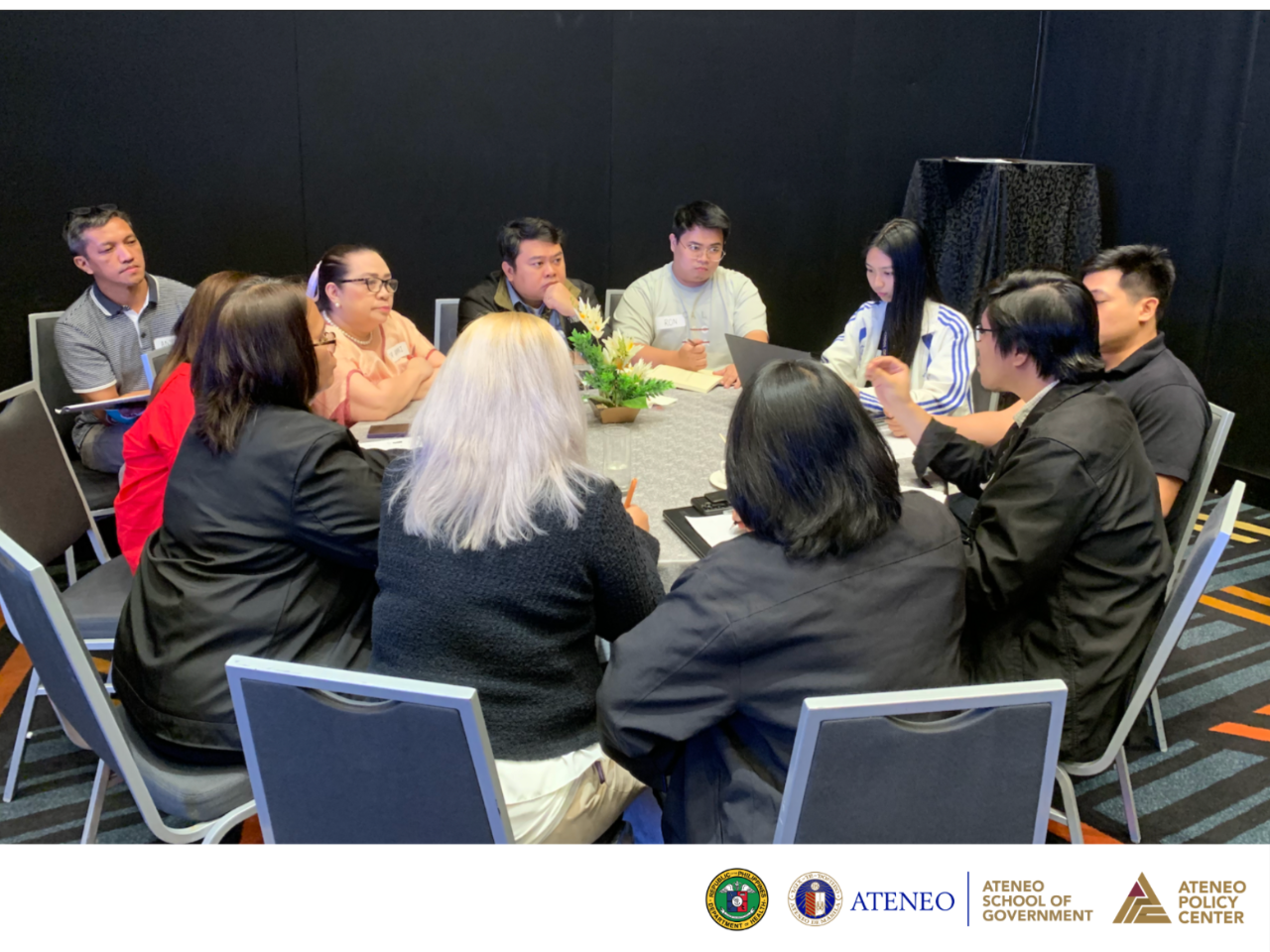
To build a structured strategy, participants worked across five key result areas (KRAs) to outline implementation channels, data collection mechanisms, and stakeholder roles spanning both national and local levels. The sessions also incorporated global best practices to identify effective policy levers suited to the Philippine context, alongside a consultative review of the Self-administered Tool for Evaluating Program Success in Tobacco Cessation (STEPS-TC) to ensure alignment with the World Health Organization Framework Convention on Tobacco Control (WHO FCTC) Article 14 guidelines.
The workshop concluded with the establishment of a project roadmap detailing upcoming fieldwork, stakeholder engagements, and expert review sessions. Moving forward, the participating public, private, and civil society organizations committed to formalizing their collaboration as the Cessation Technical Working Group to oversee the finalization and rollout of the National Tobacco Cessation Infrastructure Plan 2025–2030.
Ateneo Policy Center and Center for Naval Analyses Host Strategic Roundtable on US-PH Security Cooperation
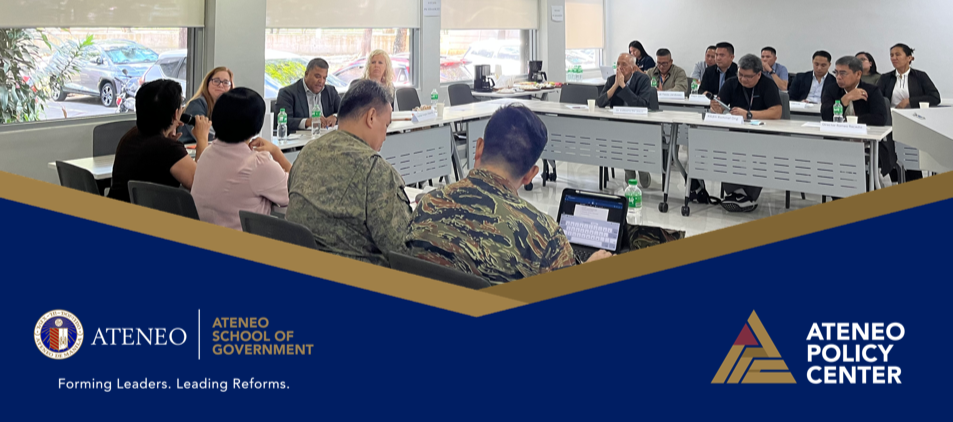
On 17 January 2025, the Ateneo Policy Center (APC), the public policy think tank of the Ateneo School of Government, in collaboration with the Center for Naval Analyses (CNA), convened a strategic roundtable discussion to examine the evolving landscape of US-Philippine security cooperation.
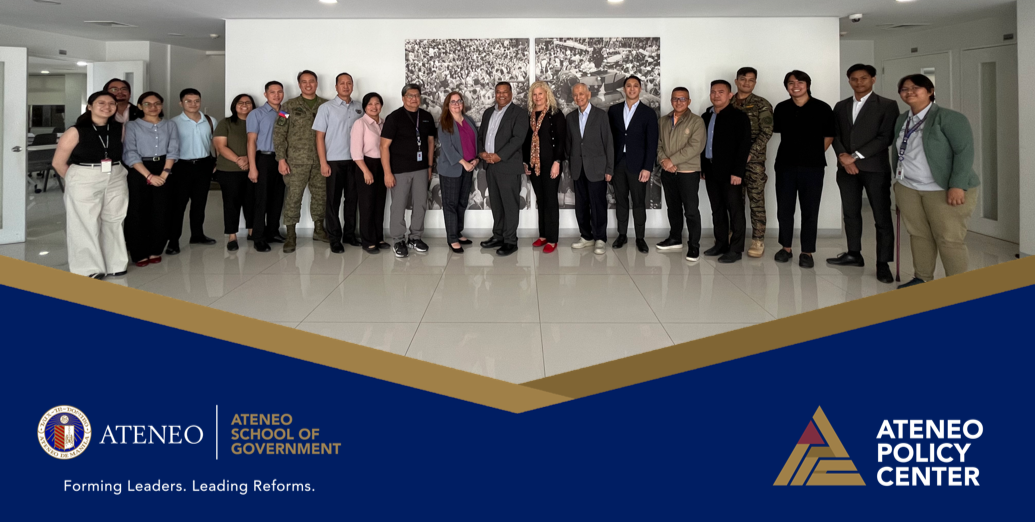
The forum brought together security experts, military leadership, and researchers from Ateneo de Manila University, the Philippine Army, the Philippine Navy, the Office of Naval Strategic Studies and Strategy Management, the National Security Council, and WR Numero. Discussions focused primarily on pressing maritime and naval security challenges, particularly escalating tensions in the West Philippine Sea.
A key theme throughout the opening remarks was the necessity of maintaining strategic stability during political transitions. Senior analysts noted that because significant leadership changes in both nations over recent years have reshaped the alliance's operational parameters, maintaining continuity and balance remains vital as external circumstances evolve. Experts emphasized that historical frameworks must not impede the relationship's evolution, underscoring that a strong, self-reliant Philippines is essential to regional balance.
Analyzing the nature of modern geopolitical friction, strategic assessments highlighted that the challenges facing the Philippines extend well beyond direct naval confrontations. Speakers detailed how non-military levers—such as diplomatic pressure, targeted information operations, and economic coercion—are deliberately deployed to shape domestic political, social, and environmental landscapes, ultimately influencing the perspectives of both the public and policymakers.
Addressing naval power dynamics, researchers shared insights on force structure shifts in the Western Pacific, noting that defense officials are closely monitoring the rapid pace and capacity of regional shipbuilding. In response to evolving security demands, the U.S. Navy continues to accelerate technological development, acquiring advanced vessels, aircraft, and weapons systems, while shifting toward operational architectures heavily reliant on uncrewed systems.
In concluding remarks, forum leaders urged strategic innovation to counter regional threats, pointing to key foundational frameworks—including the US-Philippines Bilateral Defense Guidelines and the US-Philippines-Japan Trilateral Summit agreements—as ideal starting points for evaluating defense cooperation moving forward.
The roundtable concluded with broad consensus among participants that enhancing geographical access, operational posture, and institutional resiliency will remain pivotal to reinforcing US-Philippine security ties in an era of rapid political and strategic change.
Sources:
1. ASoG Holds Multistakeholder Planning Workshop for National Tobacco Cessation Plan
2. A Forum for Exchanging Legal Discussions
3. US-PH Security Cooperation
Recent News
You may also like these articles

Growing with purpose: How Mekeni Food Corporation turns adversity into shared value
From a small backyard operation in Porac, Pampanga, to an internationally recognized food brand exporting to 25 countries, Mekeni Food Corporation's journey demonstrates how businesses

Three Ateneo-incubated startups secure DOST-PCIEERD’s startup grant fund
Last 9 November, during the opening day of Philippine Startup Week 2026, Soolok Properties Inc, Pili AdheSeal Inc, and Saltric Power (PDG Engineering Services), three

Ateneo de Manila Grade 2 students are the little Earth helpers
It was a great day for saving the world when Ateneo Institute of Sustainability (AIS) came to Ateneo Grade School to give a session on

JGSOM representatives complete green finance training in Poland, sets sights on 2027 micro-credential launch
Representatives of Ateneo de Manila University's John Gokongwei School of Management (JGSOM) completed the second phase of their Erasmus+ Green Finance international mobility activities at

JGSOM Representatives Participate in Green Finance Training at the University of Twente
Enschede, Netherlands | October 15–16, 2026 Representatives of Ateneo de Manila University's John Gokongwei School of Management (JGSOM) participated in a specialized Green Finance training

Professor Emeritus Dr Emma Porio highlights climate resilience and biodiversity at international conferences
Emma E Porio, PhD, Professor Emeritus of Ateneo de Manila University and Principal Investigator of Ateneo's Manila Observatory Center for Climate Resilience and Public Health