17.2.4 Collaboration for SDG Best Practice
07 Jun 2024


Partnerships for Impact
Ateneo de Manila University’s commitment to sustainability extends beyond its campus, encompassing partnerships, knowledge-sharing, research, and collaboration across institutions and sectors. Ateneo engages with local and international partners to develop solutions to complex challenges and contribute to the achievement of the Sustainable Development Goals. These collaborations create opportunities to exchange knowledge, share best practices, strengthen capacity, and translate research and ideas into meaningful action. Whether addressing resource use and environmental sustainability or strengthening evidence-informed policymaking and health systems, Ateneo recognizes that lasting change is best achieved through collective action and partnerships that connect expertise, experience, and shared purpose.
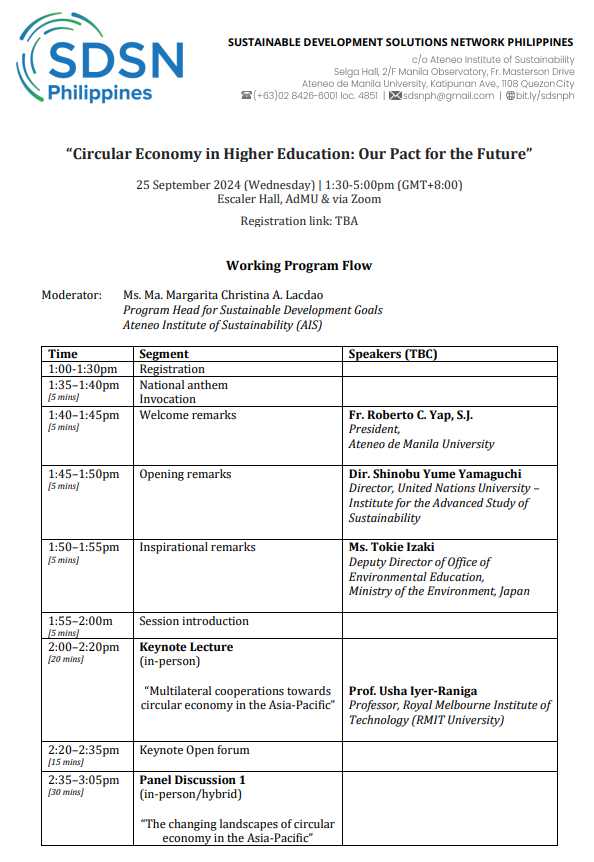
Circular Economy in Higher Education: Joint SDSN Philippines 2024 Public Plenary and ProSPER.Net 2024 Sustainability Forum
Ateneo de Manila University, through the Ateneo Institute of Sustainability, has been actively involved in networks that bring universities and organizations together to advance sustainable development. These partnerships provide opportunities to share experiences, learn from successful initiatives, and explore practices that can be adapted to different institutional and community contexts.
One area of growing interest is the circular economy, which seeks to keep products and materials in use longer while reducing resource consumption, waste, and carbon emissions. For universities, circularity can be integrated into campus operations, research, teaching, procurement, waste management, and community engagement. Sharing these experiences allows institutions to learn from both successes and challenges.
This collaborative approach is reflected in the partnership between the Sustainable Development Solutions Network Philippines (SDSN PH) and the Promotion of Sustainability in Postgraduate Education and Research Network (ProSPER.Net). These networks connect universities and sustainability practitioners across the Philippines and Asia-Pacific, creating platforms for knowledge exchange and the development of practical solutions.
The collaboration embodies recognizes that sustainable development depends on shared knowledge and collective action. No single institution has all the answers. By bringing together different perspectives and experiences, universities can strengthen sustainability initiatives, share best practices, and develop solutions that can be applied beyond their own campuses.
Through partnerships such as SDSN PH and ProSPER.Net, Ateneo contributes to and learns from a wider community working toward sustainable development.
From Evidence to Action: Building Stronger Health Systems Together
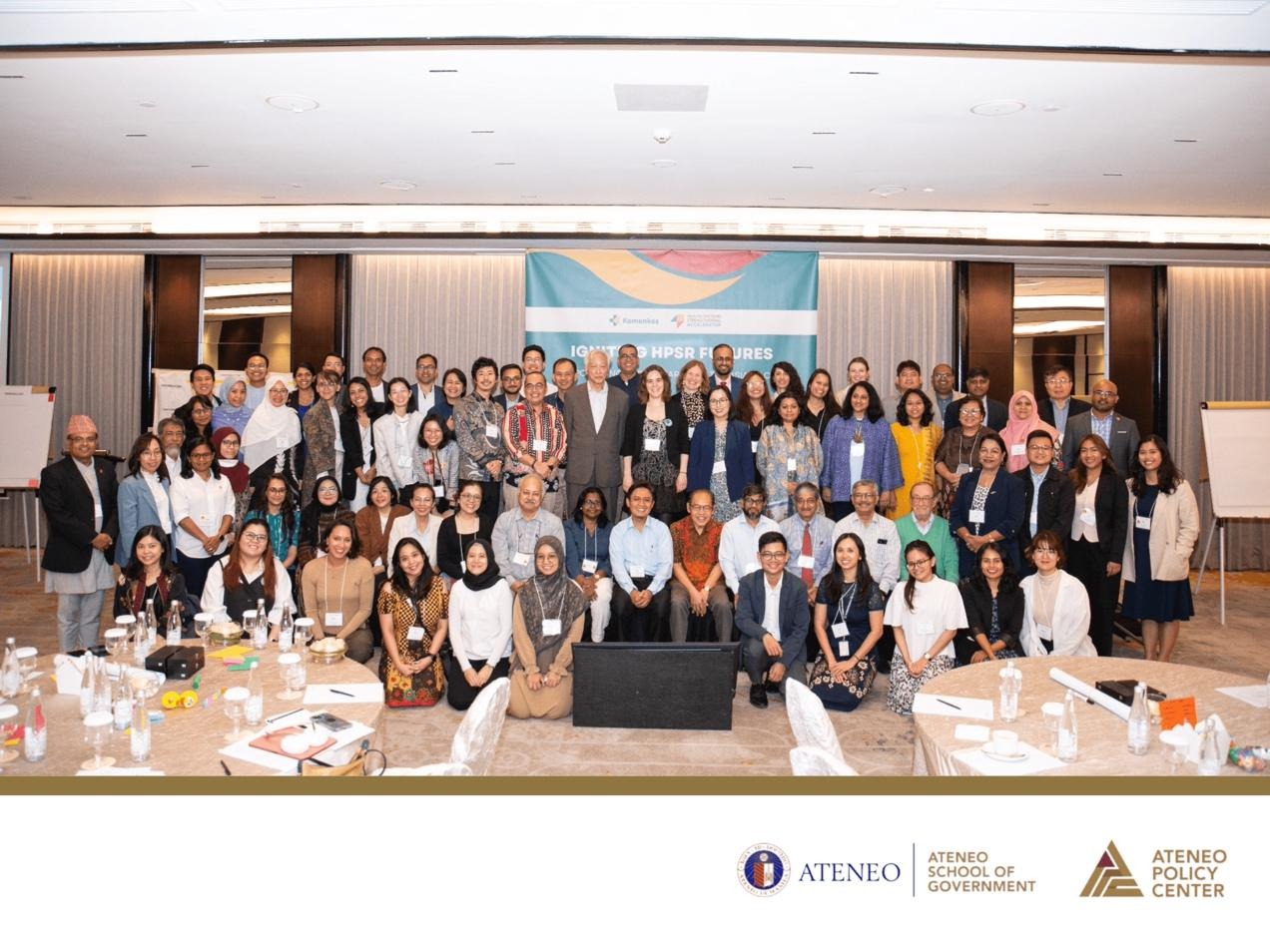
The Ateneo School of Government (ASOG), through the Ateneo Policy Center (APC), participated in the three-day “Igniting HPSR Futures: Empowering Torchbearers in the Asia-Pacific” workshop held in Jakarta, Indonesia, from June 5–7, 2024. Organized by the Health Systems Strengthening Accelerator and partners, the workshop brought together health policy and systems research institutions, government officials, regional networks, and development partners from 17 Asia-Pacific countries.
The workshop focused on strengthening collaboration between research and policymaking, building institutional capacity, and identifying “torchbearers” who can advance health systems strengthening in the region. Participants shared national experiences, assessed existing policy-research collaboration models, explored regional networks, and identified gaps and opportunities for improvement.
The Philippines highlighted its Contractual Model, emphasizing the importance of capacity assessment and feedback mechanisms to strengthen relationships between researchers and decision-makers and address knowledge-translation gaps. Participants also explored other approaches, including Integrated Knowledge Translation, Advisory Panel, and Mixed Models, recognizing that policy-research collaboration must be adaptable to different national contexts.
The workshop concluded with commitments from health research institutions, governments, networks, and development partners to strengthen evidence generation, knowledge translation, regional collaboration, capacity building, and joint initiatives. Participants affirmed their role as “torchbearers” working collectively to strengthen health systems and evidence-informed policymaking across Asia-Pacific.
Working Towards Sustainable University Campuses in Southeast Asia
Universities are uniquely positioned to accelerate the transition toward a more sustainable future. As centers of learning, research, innovation, and community engagement, they can equip future leaders with the knowledge and values needed to address today’s environmental and social challenges. They can also lead by example by embedding sustainability into campus operations, governance, teaching, and partnerships.
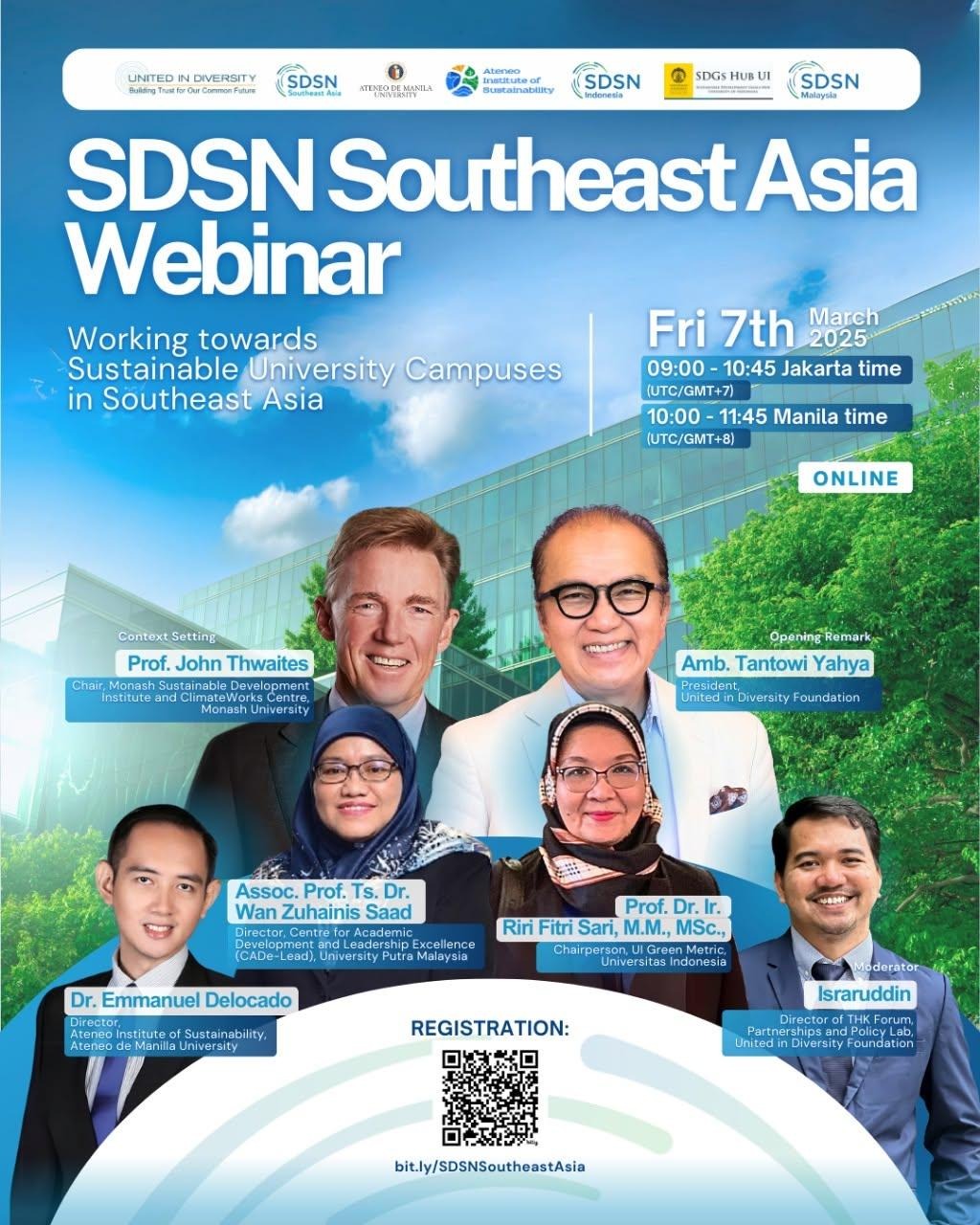
The SDSN Southeast Asia Sustainability Regional Webinar which took place on March 7, 2025, entitled “Working towards Sustainable University Campuses in Southeast Asia,” convened university leaders, educators, students, and sustainability practitioners to exchange ideas and learn from regional experience. The session explored promising practices, innovative solutions, and collaborative approaches that can help higher education institutions create greener, more inclusive, and more resilient campuses.
Co-organized by the United in Diversity Foundation, SDSN Southeast Asia, Ateneo de Manila University, Ateneo Institute of Sustainability, SDSN Indonesia, SDGs HUB UI, and SDSN Malaysia, the webinar provided a platform for institutions across Southeast Asia to strengthen their role in advancing the Sustainable Development Goals.
Analyzing the Current SDG Trends and Future Pathways in Southeast Asia
On July 10, 2024, SDSN Southeast Asia, SDSN Philippines, and SDSN Malaysia jointly organized the Sustainable Development Report 2024 Launch Webinar SDGs in Southeast Asia: Current Trends and Future Pathways. This event, which welcomed more than 220 participants from multiple sectors across Southeast Asia, was a time to share the latest SDG results, particularly in Southeast Asia. In the footsteps of the launch of the Sustainable Development Report 2024 in June, it was necessary to discuss the SDG trends regionally in more detail.
Moderated by Philip Arnold P. Tuano, Dean of the Ateneo School of Government, the event featured Grayson Fuller, co-lead writer of the Sustainable Development Report 2024 and Manager of SDG Index and Data at the SDG Transformation Center. Fuller reviewed the objectives (supporting policy decisions and strengthening data availability), methodology, and data sources (WHO, World Bank, etc.) of the SDR 2024. He shared that the world is not on track to meet any SDGs by 2030, with only 16% of targets on track and major concerns about SDG 2 (No Hunger), SDG 14 (Life Below Water), SDG 15 (Life on Land), and SDG 16 (Peace, Justice, and Strong Institutions).
The second part of the event was a panel discussion, featuring Setyo Budiantoro, the manager of the Economic Development Pillar of the National SDGs Secretariat of the Ministry of National Development Planning of the Republic of Indonesia; Filomeno Sta. Ana III, Coordinator of Action for Economic Reforms; Jeremy Lim, Data Analyst at the SDSN Asia Headquarters, hosted by Sunway University in Malaysia; and Fithriyyah Iskandar, ASEAN Youth Forum Representative to the ASEAN Environmental Rights Working Group. During a dynamic discussion, the panelists shared their own perspectives based on their respective countries and fields of work.
In the context of Indonesia, the country does not have any declining SDG goals, and the government's SDG effort and commitment are strong, with the archipelago ranking 1st out of 74 countries worldwide during a 2023 survey of SDSN assessing the government's commitment to SDG implementation, as noted by Setyo Budiantoro.
In the case of the Philippines, however, Filomeno reminded us that only 31% of the targets are planned to be achieved by 2030, and major challenges remain in regards to economic growth, inequality, and urban poverty. The government's economic growth target has decreased from 6% to 5%. The Philippines is one of the poorest-performing Asian countries in terms of equality, and the share of the urban population living in slums is huge in the Philippines' cities. To improve the situation, Filomeno suggests the need to recognize the importance of economic growth, but it should be more inclusive and broader.
Jeremy Lim shared the methodology for monitoring the performance of SDGs at the provincial level using a dashboard, giving the example of the federated states of Malaysia. This dashboard allows us to compare the sub-national SDG performance of a country and assess which province is making more progress than another. We learn, for example, that in the case of Malaysia, the provinces of Kuala Lumpur, Putrajaya, and Labuan have the best performance in the country, while more effort is needed to ensure Kelantan is not left behind. Such disaggregated dashboards have been presented to Malaysian ministerial-level government officials for local development assessment and policy making.
Finally, Fithriyyah Iskandar brought real insights into the role of youth at the downstream (grassroots) and upstream (governance) levels, where both need to work harmoniously to achieve the SDGs in Southeast Asia. At the downstream level, it can be through engagement in NGOs or university associations, and at the upstream level, it can be with representation in the political arena where youth can be consulted and provide their inputs during the decision-making process.
The expertise and experience of the panelists have provided the Southeast Asian SDG advocates to have a clearer comprehension of the trends in the region. Participants were able to connect with prominent SDG leaders and share their thoughts. Driven by real positive trends, Southeast Asia is stabilizing and looks to have a bright future. However, it is important not to forget the concerns and disparities within the region with some countries performing better than others. By having a holistic view, Southeast Asian societies can advance together towards a more sustainable future.
Sources:
1. Circular Economy in Higher Education: Joint SDSN Philippines 2024 Public Plenary and ProSPER.Net 2024 Sustainability Forum
2. ASoG Commits Torchbearers towards Strengthening Health Policy
3. Working towards Sustainable University Campuses in Southeast Asia
4. Analyzing the Current SDG Trends and Future Pathways in Southeast Asia
Recent News
You may also like these articles

Growing with purpose: How Mekeni Food Corporation turns adversity into shared value
From a small backyard operation in Porac, Pampanga, to an internationally recognized food brand exporting to 25 countries, Mekeni Food Corporation's journey demonstrates how businesses

Three Ateneo-incubated startups secure DOST-PCIEERD’s startup grant fund
Last 9 November, during the opening day of Philippine Startup Week 2026, Soolok Properties Inc, Pili AdheSeal Inc, and Saltric Power (PDG Engineering Services), three

Ateneo de Manila Grade 2 students are the little Earth helpers
It was a great day for saving the world when Ateneo Institute of Sustainability (AIS) came to Ateneo Grade School to give a session on
JGSOM representatives complete green finance training in Poland, sets sights on 2027 micro-credential launch
Representatives of Ateneo de Manila University's John Gokongwei School of Management (JGSOM) completed the second phase of their Erasmus+ Green Finance international mobility activities at
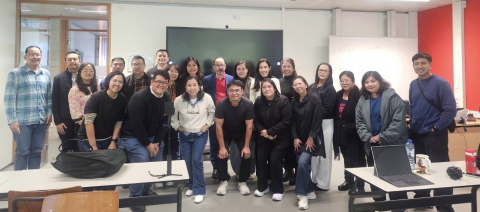
JGSOM Representatives Participate in Green Finance Training at the University of Twente
Enschede, Netherlands | October 15–16, 2026 Representatives of Ateneo de Manila University's John Gokongwei School of Management (JGSOM) participated in a specialized Green Finance training
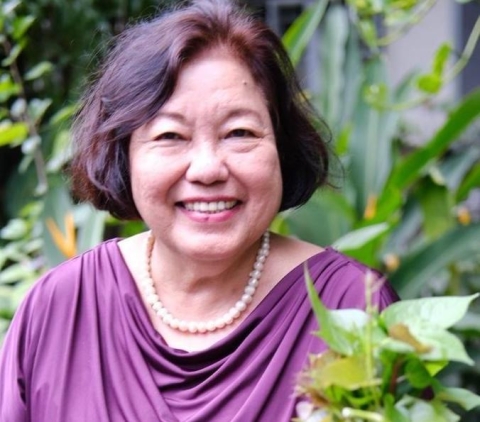
Professor Emeritus Dr Emma Porio highlights climate resilience and biodiversity at international conferences
Emma E Porio, PhD, Professor Emeritus of Ateneo de Manila University and Principal Investigator of Ateneo's Manila Observatory Center for Climate Resilience and Public Health