570 Basic Education formators gather for session 2 of Ateneo Curriculum Review
05 Aug 2026

On 8 July 2026, the Office of the Vice President for Ateneo de Manila Basic Education, together with the Gokongwei Brothers School of Education and Learning Design (GBSEALD), conducted Session 2 of the Basic Education Curriculum Review for 570 faculty members and administrators from the Ateneo Grade School (AGS), Ateneo Junior High School (AJHS), and Ateneo Senior High School (ASHS). The plenary sessions were held on the second floor of the Formation and Learning Center (FLC) on the ASHS campus. The curriculum review initiative aims to ensure the systematic, intentional, and regularly monitored integration of the 5 C's throughout the Ateneo Basic Education curriculum.
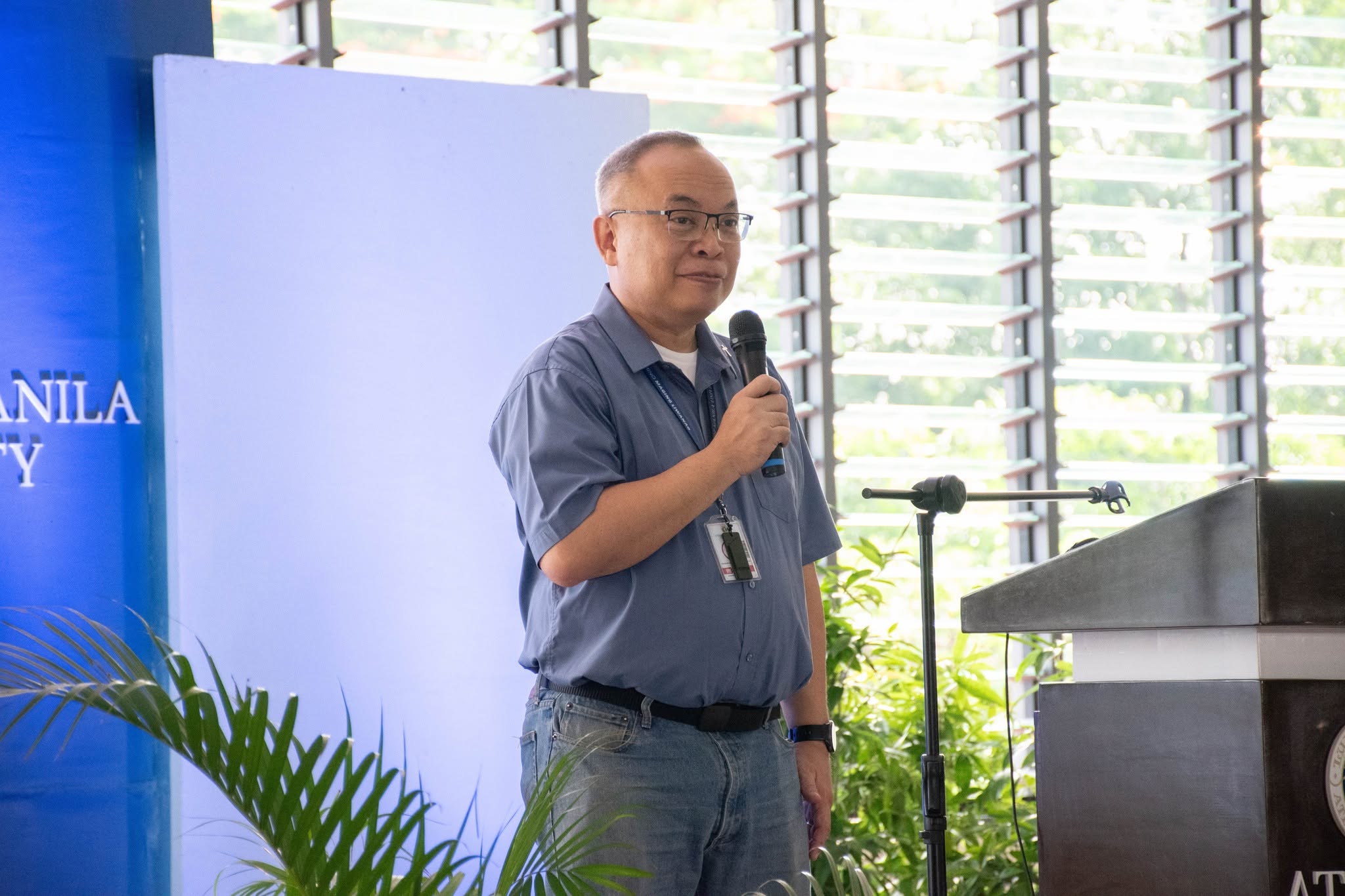
Building on the foundation laid during Session 1 on 23 June, the second session focused on helping each subject area and program identify its top three among Ateneo Basic Education's 5 C's—Christ-centeredness, Competence, Conscience, Commitment, and Compassion—using the Reflection-Action axis of the Ignatian Pedagogical Paradigm (IPP). Participants also began discussing how these values could be intentionally cultivated in their classrooms, offices, and formation programs.

During Session 1, which was facilitated by Fr. Johnny Go SJ, participants developed a shared understanding of the 5 C's by defining and describing each one, illustrating them through examples, and clarifying questions that emerged during group and plenary discussions.
Session 2 was facilitated by Dr. Rita J. Atienza, Mr. Galvin Radley L. Ngo, and Ms. Jeraldine K. Ching of GBSEALD. The session had two primary objectives: first, to help each subject area, office, or program identify the three C's that most naturally align with its discipline or area of responsibility and explore how these could be intentionally integrated into its work; and second, to begin discussing concrete ways of developing these identified priority C's.
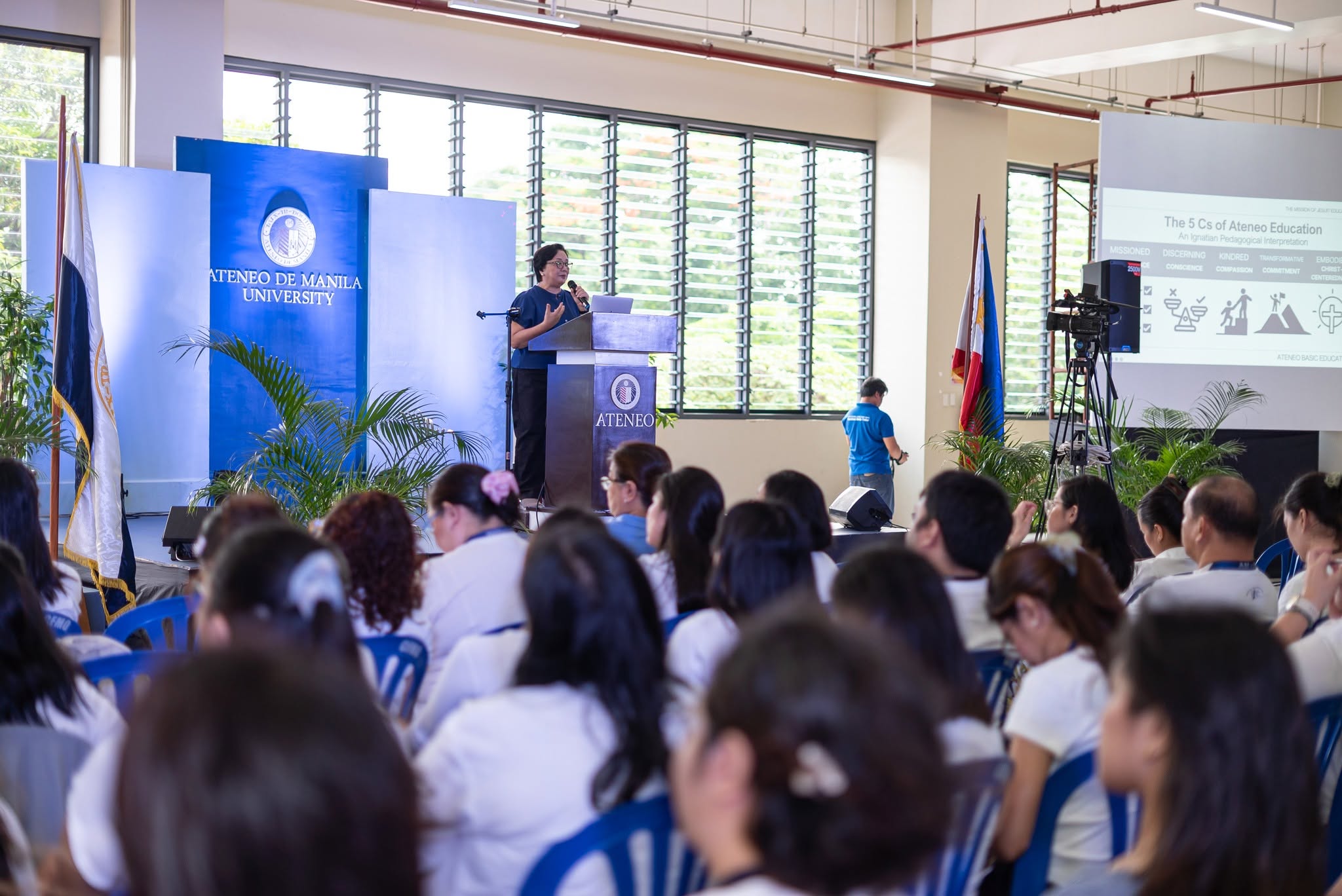
At the opening plenary, the facilitators revisited the concepts introduced during Session 1 and emphasized that while every subject area has the potential to develop all five C's, certain values naturally align more closely with the knowledge and skills of particular disciplines. Dr. Atienza explained that identifying these areas of alignment would enable teachers to cultivate the values more deliberately and consistently in their instruction.

The central task of Session 2 was to examine how the mission of forming students in the 5 C's—a defining goal of Jesuit education—can become a lived reality across the different subject areas, formation programs, and offices of Basic Education. Rather than mapping the values to individual competencies, GBSEALD encouraged participants to "zoom out" and examine each subject area or program as a whole. This broader perspective would help identify which values are most naturally developed within each discipline and ensure that these are integrated intentionally, sustainably, and systematically.
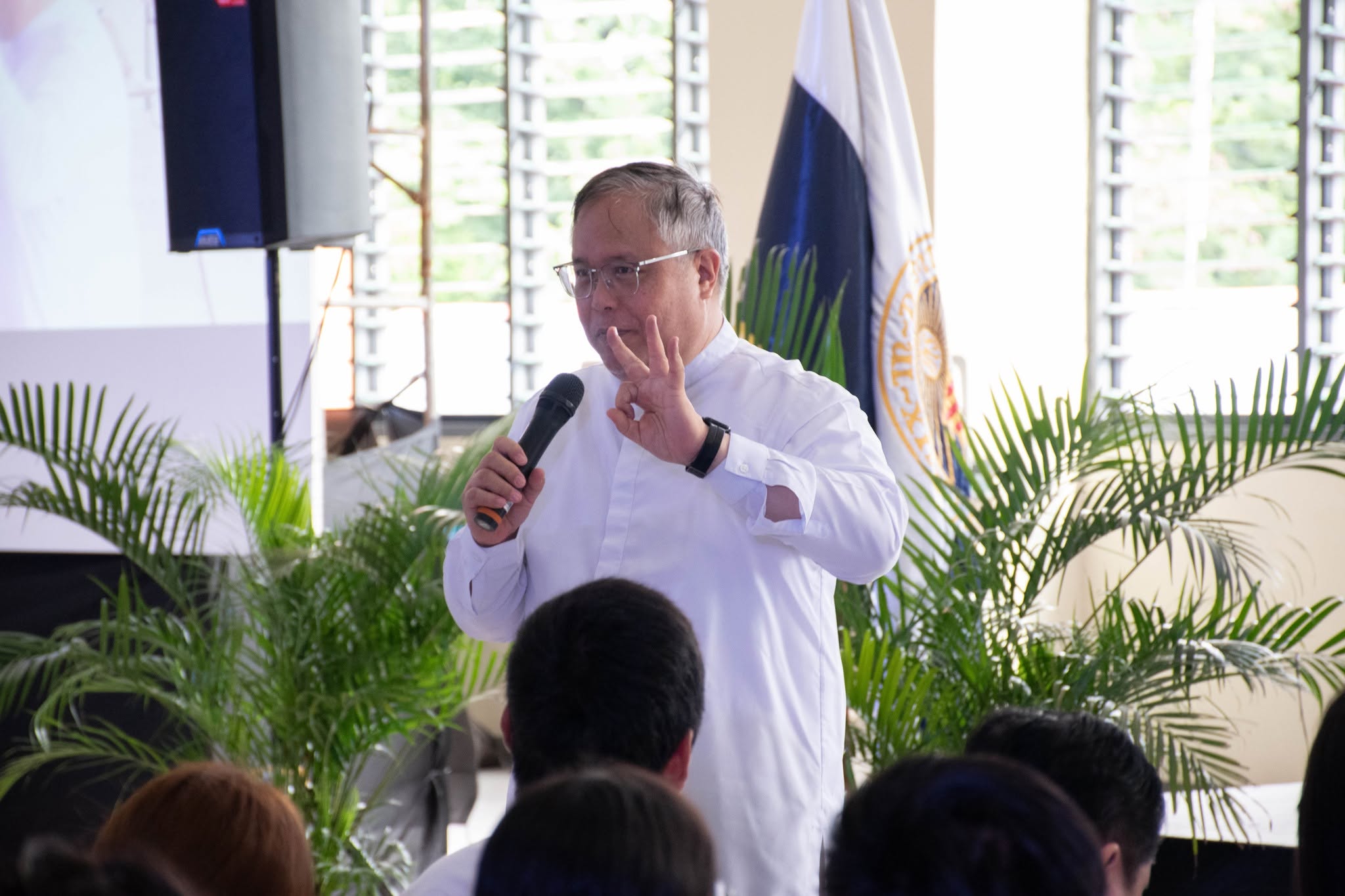
The facilitators also explained that focusing each subject area or program on two or three priority C's would allow for a deeper and more meaningful development of those values, while recognizing that other subject areas and programs would contribute to the formation of the remaining C's. The long-term goal is for students to internalize these values so deeply that they become part of their everyday language, habits, and decision-making.
Participants then gathered in breakout sessions according to their respective subject areas and offices to discuss how the 5 C's could be more intentionally integrated into teaching, learning, and formation. The conversations centered on helping students develop not only content knowledge and skills but also a deeper, more nuanced understanding of their disciplines through the lens of the 5 C's.
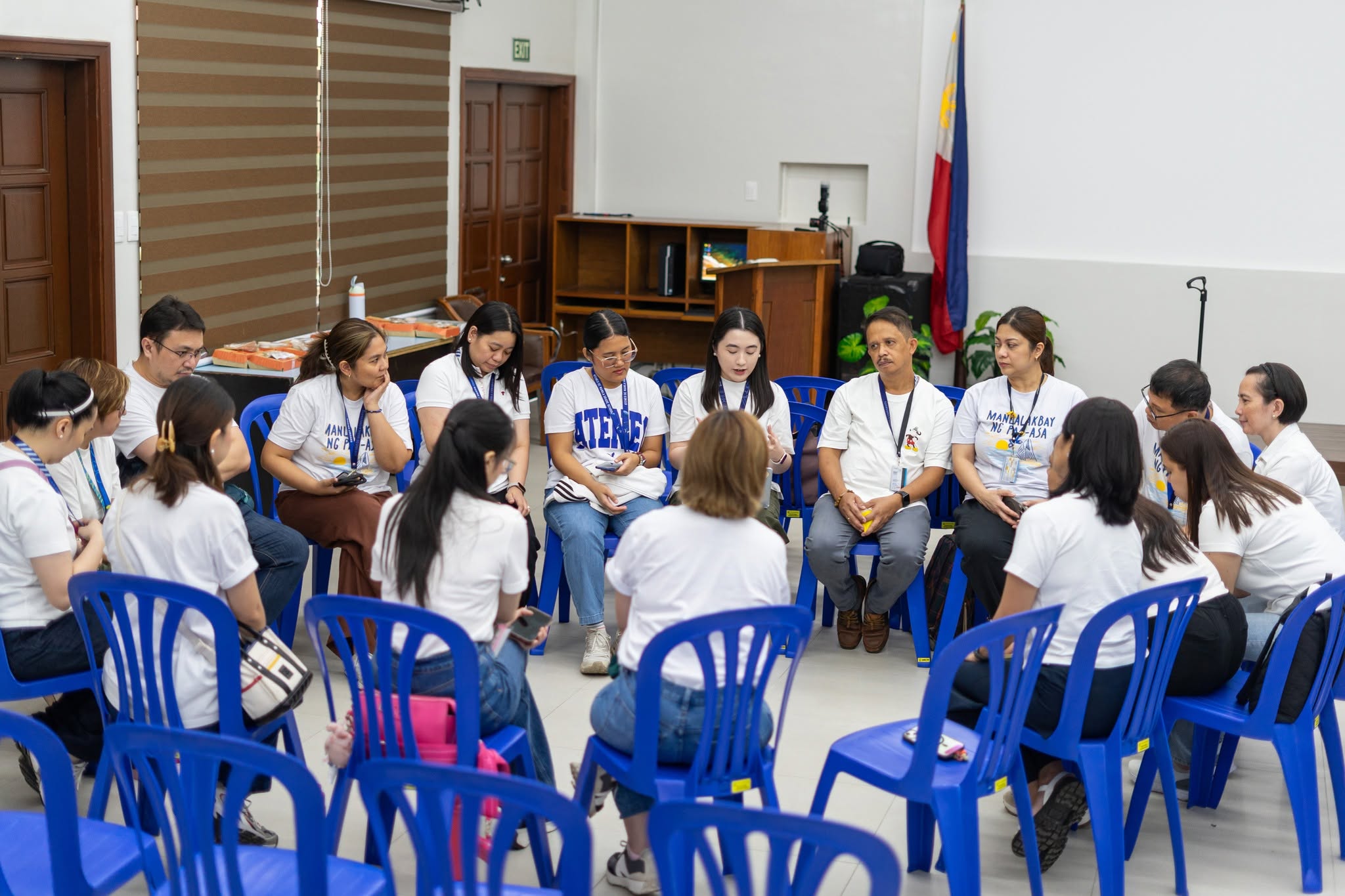
Faculty members met in subject-area groups such as Araling Panlipunan/Social Science, Art, Sining at Paggawa (SiPag), Computer Science, English, Filipino, Mathematics, Music, Research, Science, and other disciplines. Administrators and staff likewise convened according to their respective offices, including Athletics, Campus Ministry, the Christian Service and Involvement Program (CSIP), the Social Involvement Office (SIO), the Guidance/Child Development Center, Deportment/Discipline/Formation, Admissions, Parent Relations (PREP-PUSH), AGSPAC, and the Registrar. Breakout sessions were held in various venues across the AJHS and ASHS campuses.
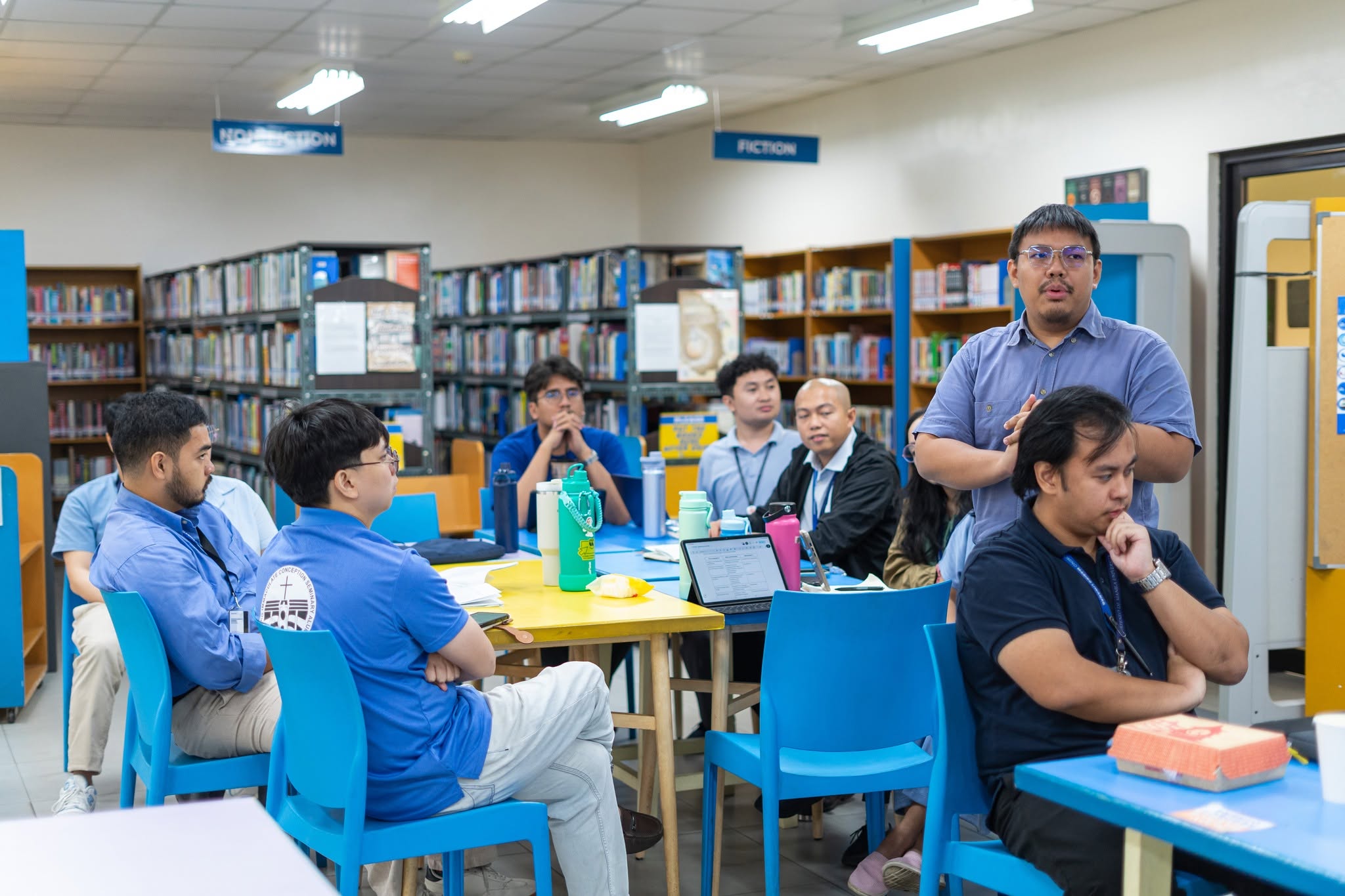
The discussions were lively and highly engaged, particularly in larger departments such as Science, Mathematics, English, and Filipino, where faculty members exchanged ideas on how best to embed the 5 C's within their respective curricula.
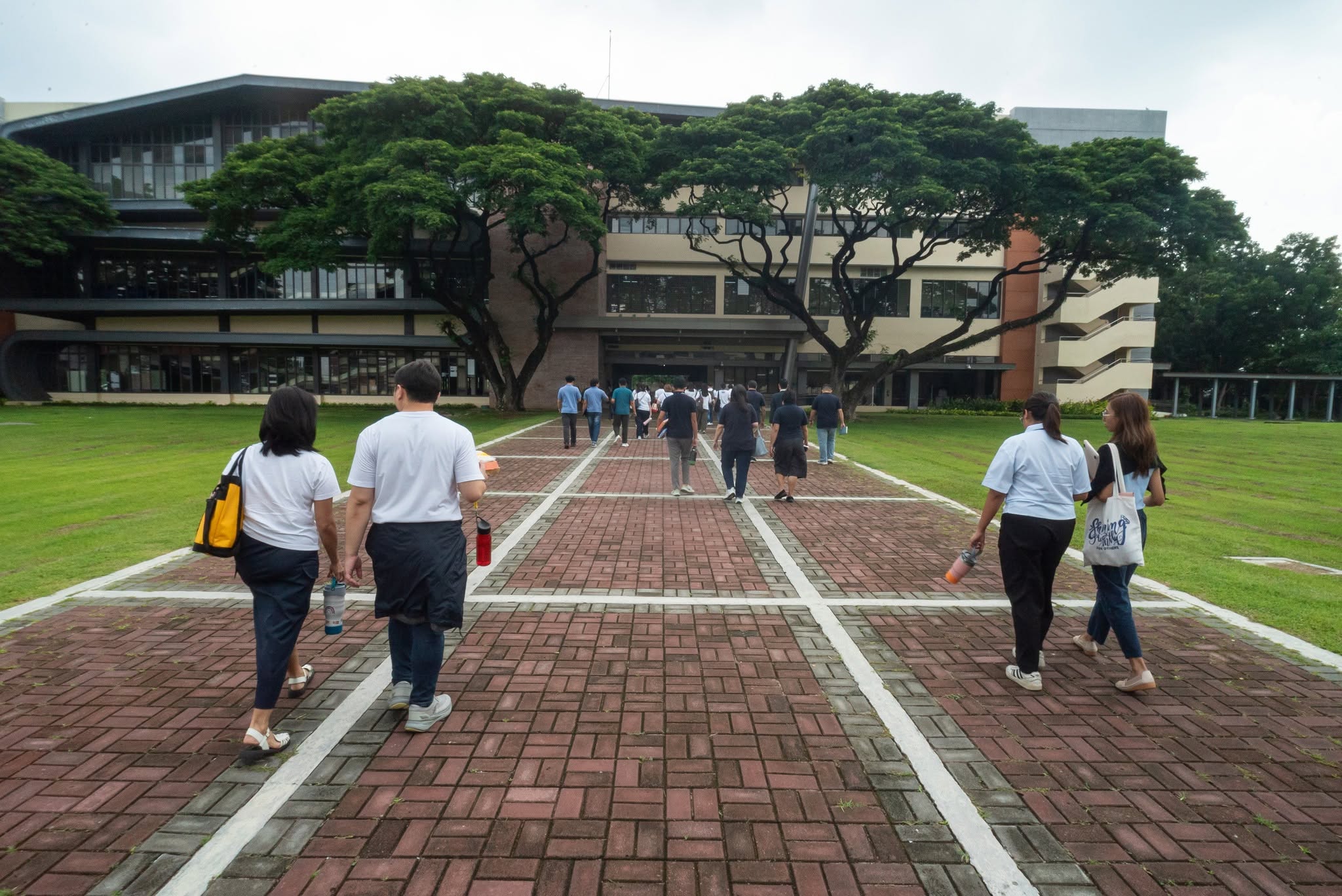
Following the breakout sessions, participants reconvened on the second floor of the FLC, where selected groups shared highlights of their discussions during the plenary session.
In her closing remarks, Dr. Atienza reminded participants that the day's work represented only a "first pass" in what would be a long-term, collaborative process of strengthening the Basic Education curriculum. She noted that while each school unit may identify different priority C's—for example, the teaching of Mathematics in the Senior High School may emphasize a different combination of values than Mathematics in the Grade School or Junior High School—the shared objective is to develop a unified framework for intentionally integrating the 5 C's across Ateneo Basic Education.
She emphasized that meaningful curriculum development is an organic process that unfolds over several years and begins with a shift in mindset among educators. The July 8 session, she said, marked an important step in building that shared understanding and laying the groundwork for future conversations and continued collaboration toward forming Ateneo students who truly embody the 5 C's.
Recent News
You may also like these articles

The courage to commit: PReVEx 2026 brings the question of vocation into the classroom
Young people are often told to keep their options open, yet some of life’s most meaningful choices require the opposite: the courage to commit. What
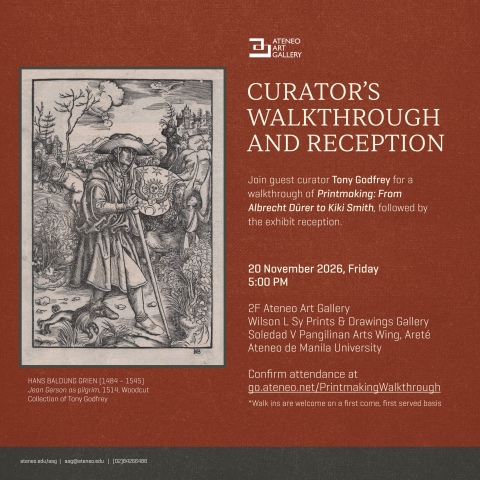
Join Ateneo Art Gallery for the Curator's Walkthrough and Exhibition Reception of "Printmaking: From Albrecht Dürer to Kiki Smith"
Ateneo Art Gallery presents a Curator’s Walkthrough of Printmaking: From Albrecht Dürer to Kiki Smith with guest curator Tony Godfrey on 20 November 2026 (Friday)
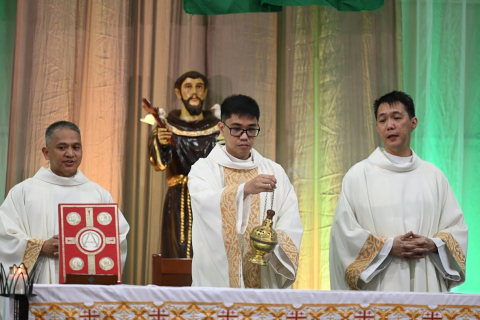
AJHS October 2026 Community Mass: "Come to Me, Take My Yoke, Learn from Me"
On 21 October 2026, the Ateneo Junior High School (AJHS) community gathered for its monthly Community Mass, which was celebrated in honor of St Francis
PAGSIBOL: Finding God in the silence
At the Pagsibol Retreat, the simplest things became meaningful again: the beauty of nature, the comfort of good food, the quiet moments of prayer, and

PAGSIBOL: A Theological Reflection on the Laudato Si’ Retreat
“Come away by yourselves to a deserted place and rest a while” (Mark 6:31) Introduction The Pagsibol: Laudato Si’ Retreat became a sacred moment of
Executive Education Center strengthens faith-based organizations’ capacity for strategic religious engagement
The Ateneo School of Government (ASOG) Executive Education Center conducted the training component of the Ateneo Policy Center’s Strategic Religious Engagement (SRE) initiative through the