Executive Education Center strengthens faith-based organizations’ capacity for strategic religious engagement
26 Oct 2026



The Ateneo School of Government (ASOG) Executive Education Center conducted the training component of the Ateneo Policy Center’s Strategic Religious Engagement (SRE) initiative through the course, "Strengthening Policy Influence through Evidence and Partnership”, held on 14-15 September 2026, at Citadines Roces, Quezon City. Designed for faith-based organizations (FBOs) working in education and social protection, the two-day, 16-learning-hour program strengthened participants' capacity to develop evidence-based policy messages, engage government stakeholders strategically, and use monitoring and evaluation to support their advocacy efforts.
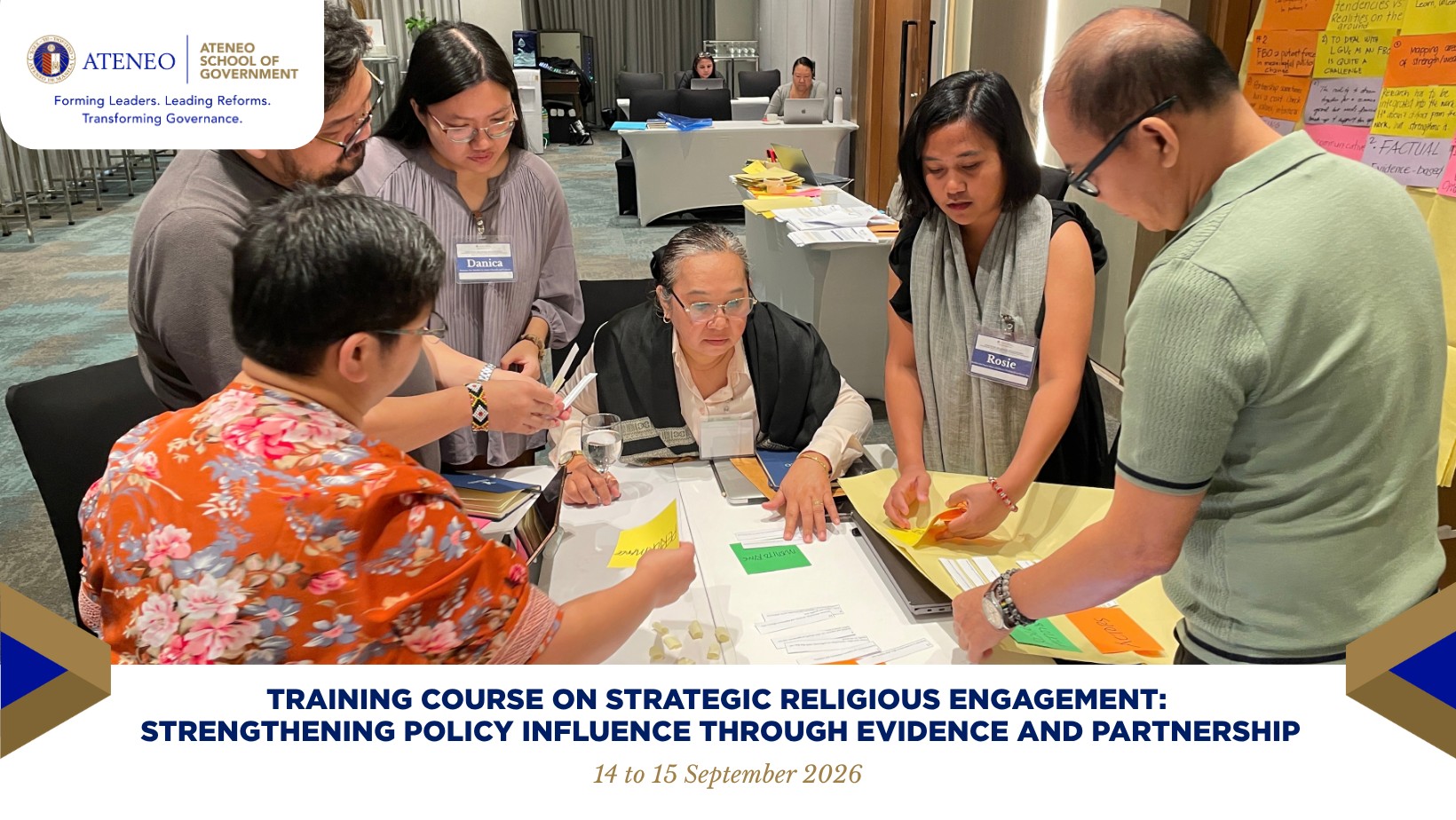
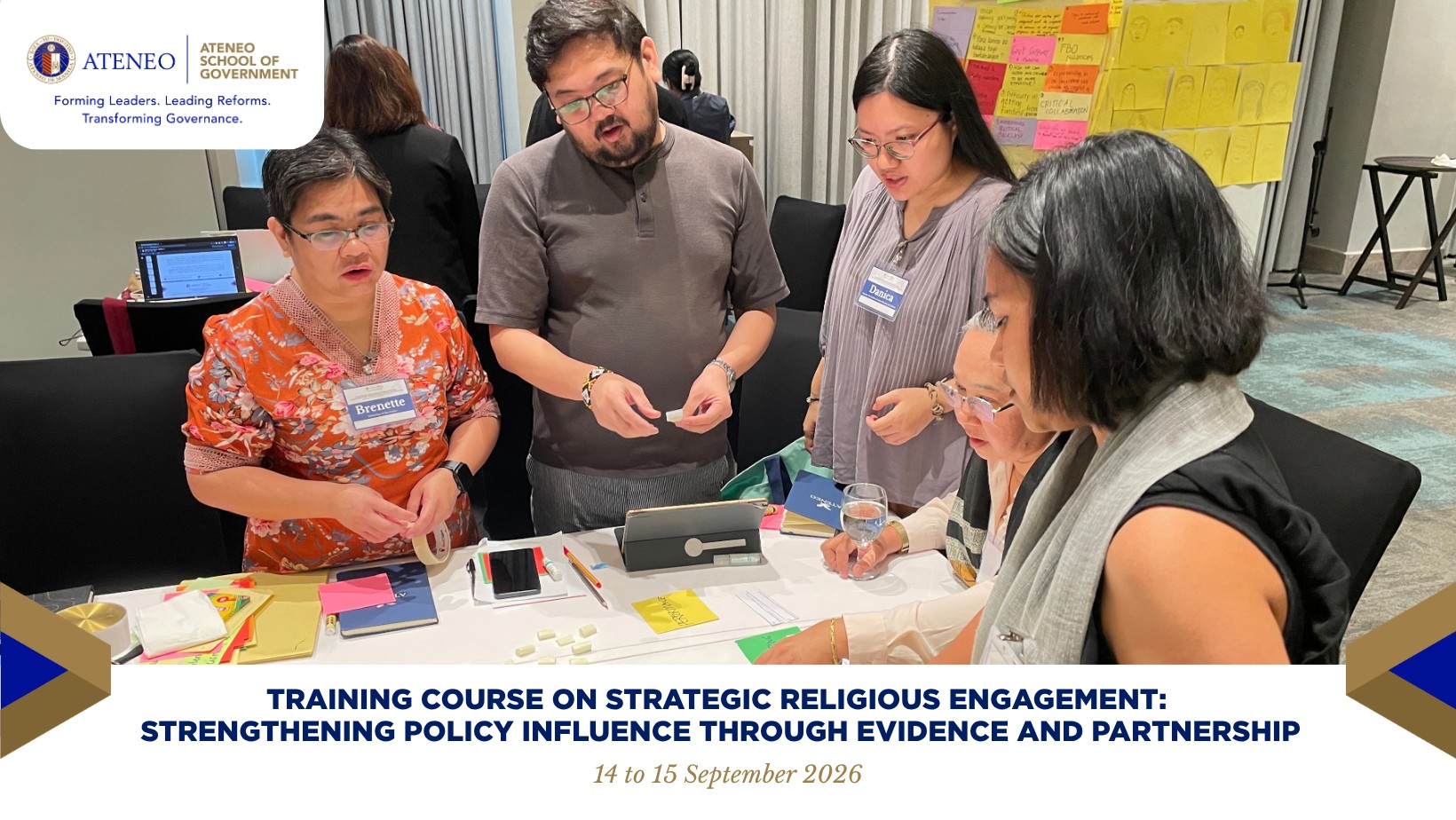
Faith-based organizations play an important role in advancing education, social protection, and community development across the Philippines. Regional consultations conducted under the SRE initiative, identified opportunities to strengthen the advocacy capacity of FBOs and deepen their engagement in public policy and systems change. In response, the training built on participants’ existing experience through sessions on Strategic Policy Advocacy and Government Engagement; Monitoring, Evaluation and Learning for Advocacy; Building Organizational and Network Capacity.
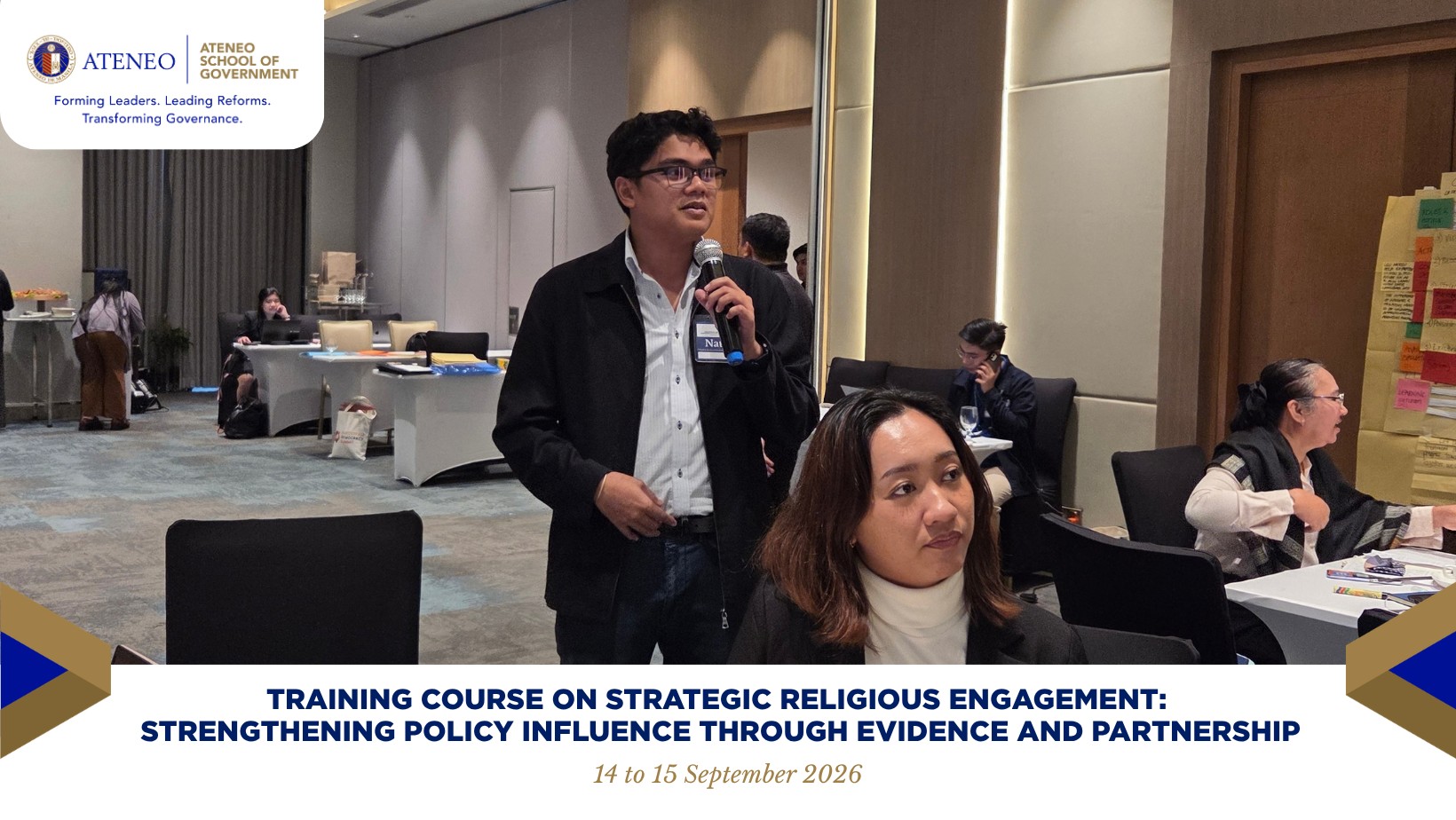
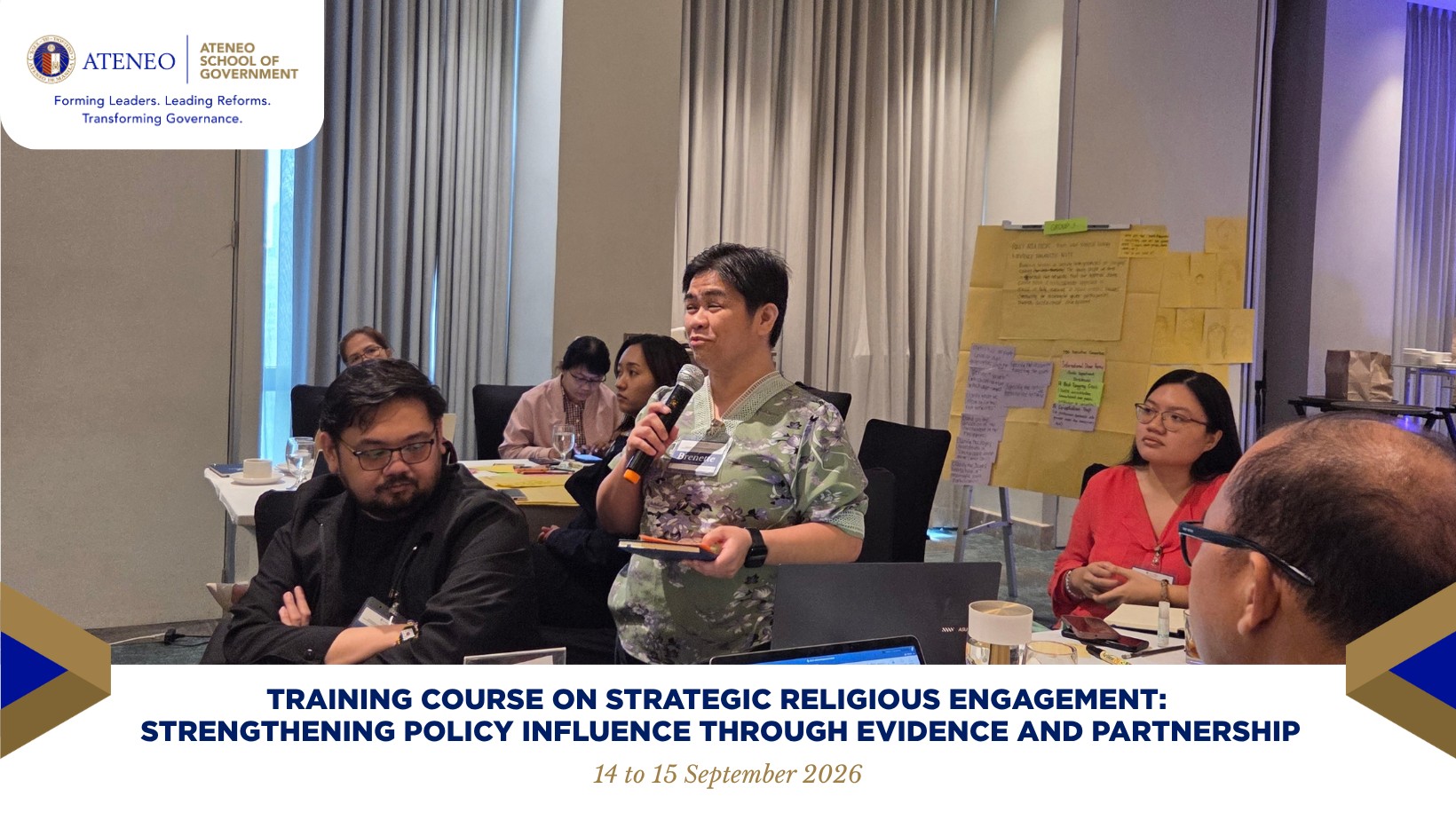
The training brought together representatives from faith-based, church-affiliated, and academic organizations across Metro Manila, the Visayas, and Mindanao. These included Pakigdait, Silsilah Dialogue Movement, Bukas Palad Cebu Foundation, Salvatorian Pastoral Care for Children, Philippine Relief and Development Services (PHILRADS), Tanging Yaman Foundation, the Institute for Studies in Asian Church and Culture, the John J Carroll Institute on Church and Social Issues, the University of San Carlos, and Ateneo de Zamboanga University. Participants included executive directors, program directors, program officers, and social workers.
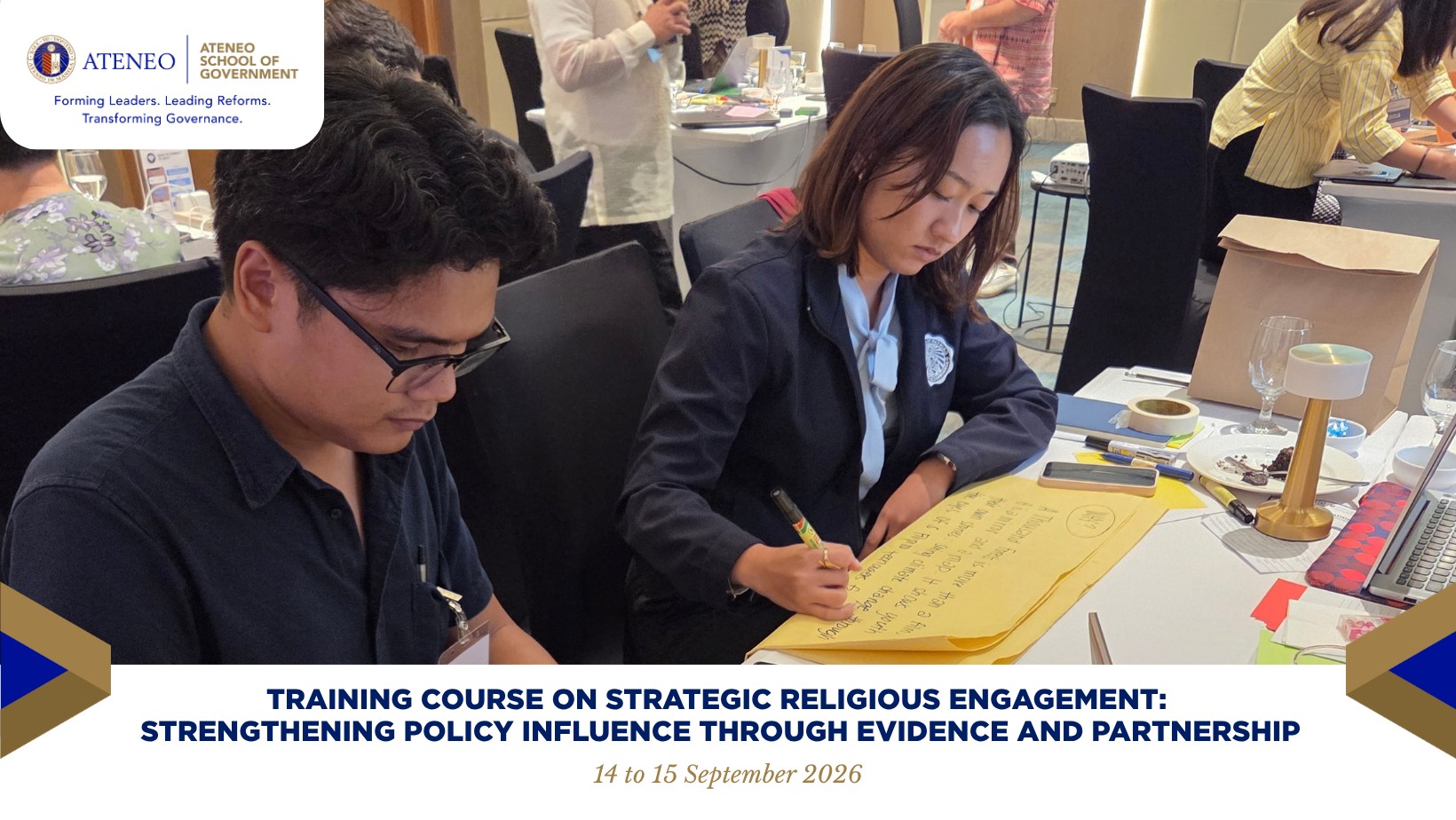
The course was facilitated by Karl Salibay Comiling, DSD, a theologian, educator, and social development practitioner with more than two decades of experience in community formation, grassroots political education, and advocacy. He guided participants in mapping policy actors, positioning their organizations, triangulating evidence, and framing messages for different policy audiences. Fr Dennis M Cagantas, PhD, a leadership educator and consultant on governance and organizational renewal for local government units, faith-based organizations, and dioceses, facilitated the succeeding modules, helping participants assess their advocacy contexts, identify appropriate monitoring and evaluation approaches, and examine organizational and network capacity through a coalition case study.
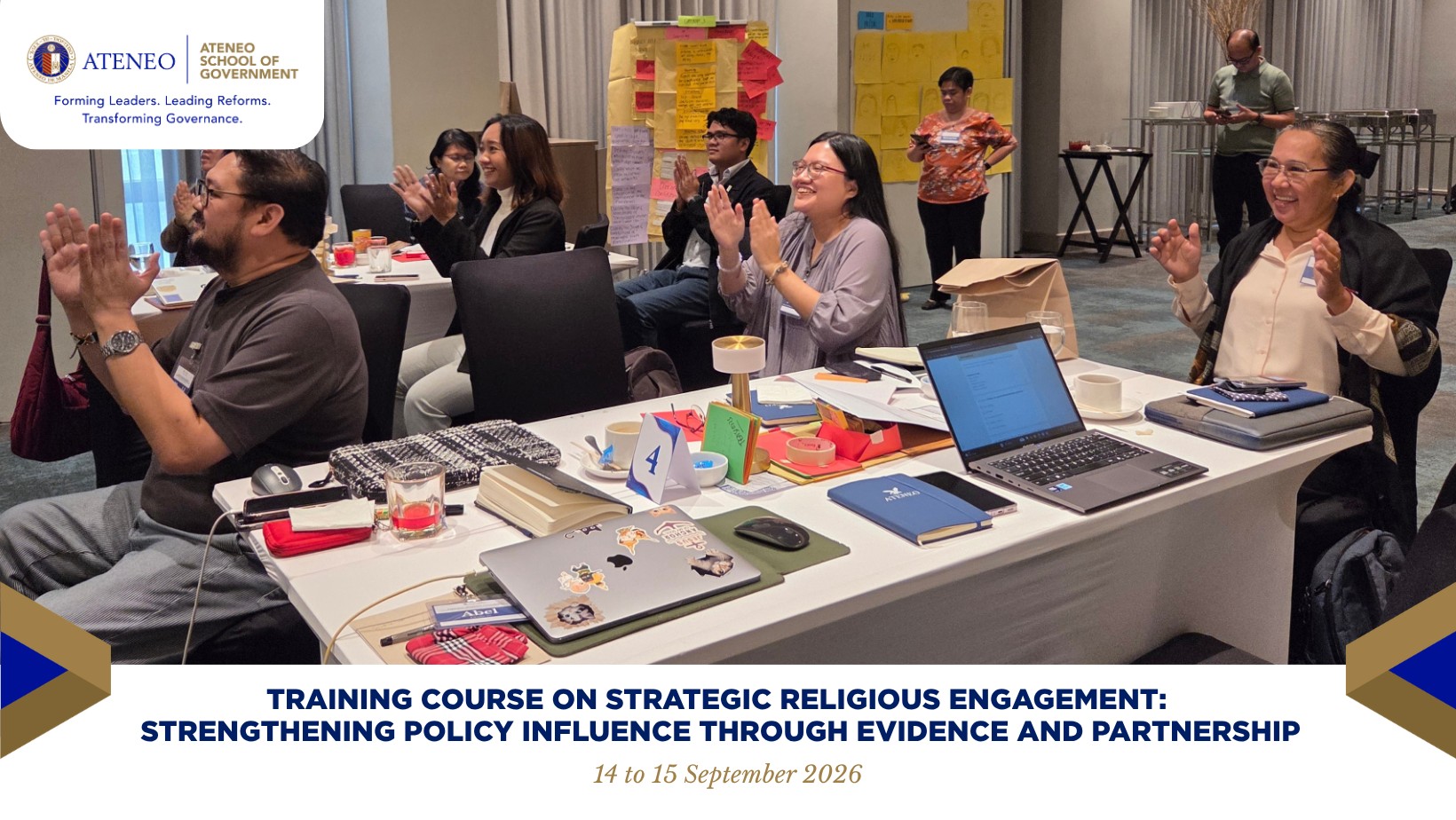
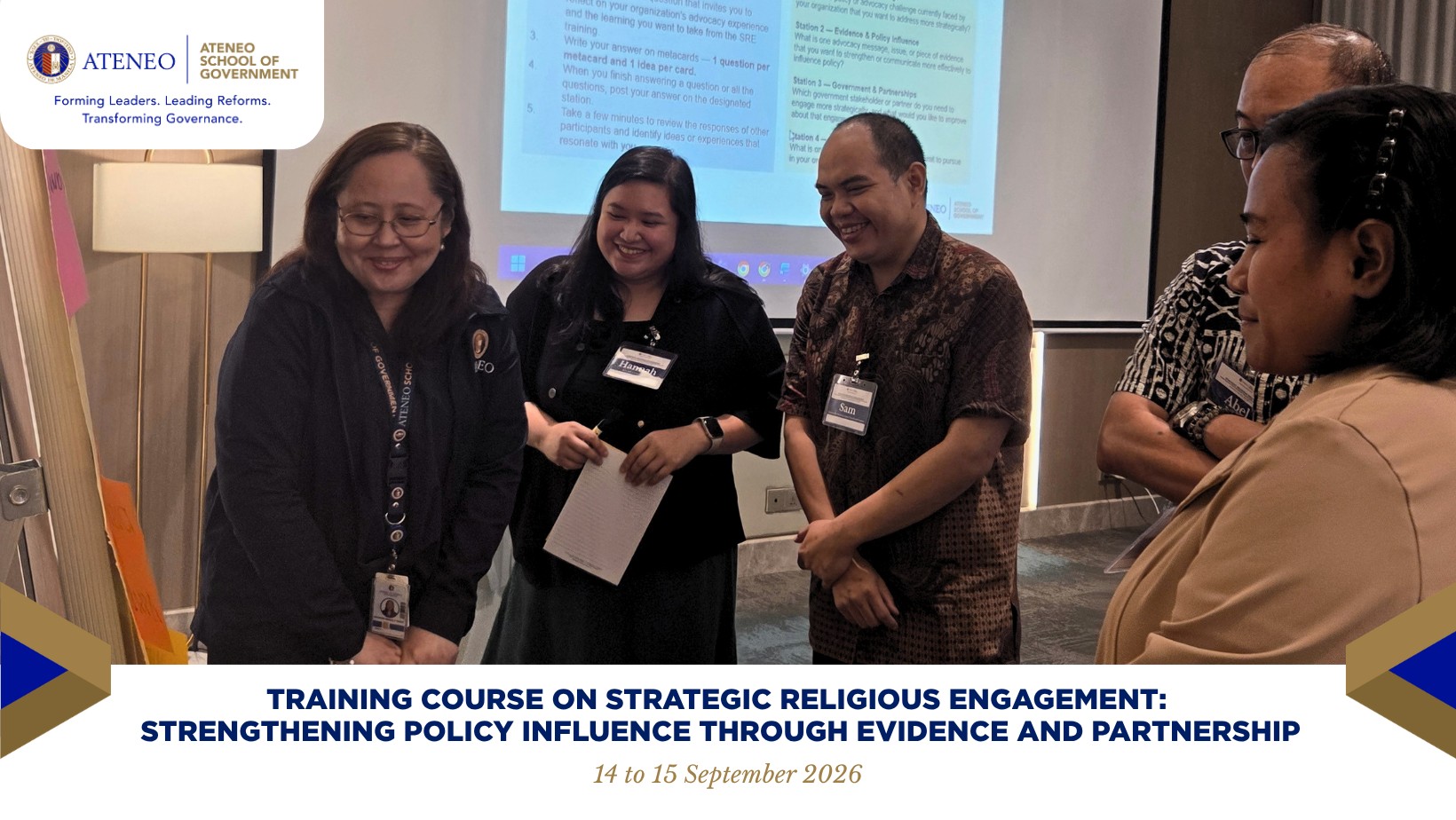
In her opening remarks, Sharon Grace S Yabut, Director of the Executive Education Center, emphasized that the program was designed to build on the participants’ experience and help them become more strategic in translating evidence into policy influence. She encouraged participants to share the tools and approaches with their colleagues so that individual learning could contribute to organizational learning, noting that adopting new tools also calls for changes in how organizations communicate, engage stakeholders, and use evidence.
In her closing remarks, Ivyrose S Baysic, Director of the Ateneo Policy Center, reflected on the participants’ learning from the training and marked the transition to the two-day forum, where participants continued the conversation on strategic religious engagement and inclusive development. The training formed part of the broader SRE initiative and was followed by the Strategic Religious Engagement for Inclusive Development Forum on 16 to 17 September 2026, at the same venue.
Recent News
You may also like these articles

The courage to commit: PReVEx 2026 brings the question of vocation into the classroom
Young people are often told to keep their options open, yet some of life’s most meaningful choices require the opposite: the courage to commit. What
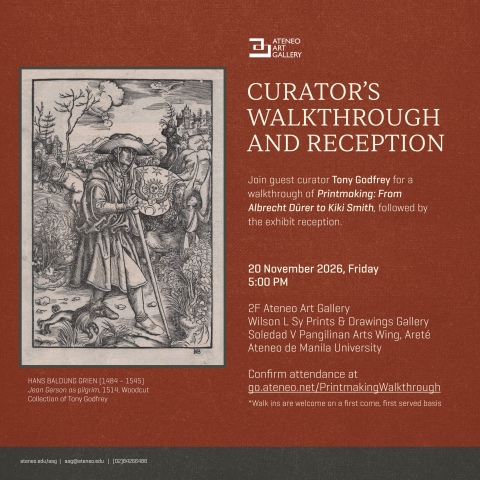
Join Ateneo Art Gallery for the Curator's Walkthrough and Exhibition Reception of "Printmaking: From Albrecht Dürer to Kiki Smith"
Ateneo Art Gallery presents a Curator’s Walkthrough of Printmaking: From Albrecht Dürer to Kiki Smith with guest curator Tony Godfrey on 20 November 2026 (Friday)
AJHS October 2026 Community Mass: "Come to Me, Take My Yoke, Learn from Me"
On 21 October 2026, the Ateneo Junior High School (AJHS) community gathered for its monthly Community Mass, which was celebrated in honor of St Francis
PAGSIBOL: Finding God in the silence
At the Pagsibol Retreat, the simplest things became meaningful again: the beauty of nature, the comfort of good food, the quiet moments of prayer, and

PAGSIBOL: A Theological Reflection on the Laudato Si’ Retreat
“Come away by yourselves to a deserted place and rest a while” (Mark 6:31) Introduction The Pagsibol: Laudato Si’ Retreat became a sacred moment of
Itatawid, Ihahatid: ASHS commemorates Duffy-Delaney Day
The Ateneo de Manila Senior High School (ASHS) community commemorated its annual Duffy-Delaney Day (D3) on Friday, 2 October 2026, with the theme, “Tahanan,” at