Math Department hosts Summer Problem-Solving Program for AJHS and incoming ASHS students
09 Sep 2024 | Chara Deanna F Punzal



After several years since its last iteration around the 2000s (spearheaded by the late Dr Jose A Marasigan), the Summer Math Problem Solving Program has finally made its way to the Ateneo de Manila Junior High School (AJHS). Last 8 -12 July 2024, selected students from Grades 7 to 11 participated in the four-day enrichment program facilitated by faculty members of the Department of Mathematics of the School of Science and Engineering.
Erika Y San Jose, AJHS Assistant Principal for Academics, believes that this program "will help empower our students to develop essential problem-solving skills, build resilience and perseverance, and prepare for future academic success in a supportive and challenging environment.”
Grade 7 students tested their logic skills by figuring out various alphametic problems. A supplement to algebra, the lessons allowed the students to see the important relationships between numbers and quantities. This was highlighted in lessons on non-routine computations and word problems. Particularly on the last day, students were challenged by non-routine problems that required them to think of various possibilities and cases. The lessons were interactive as students were asked to present their solutions to most of the prepared exercises.
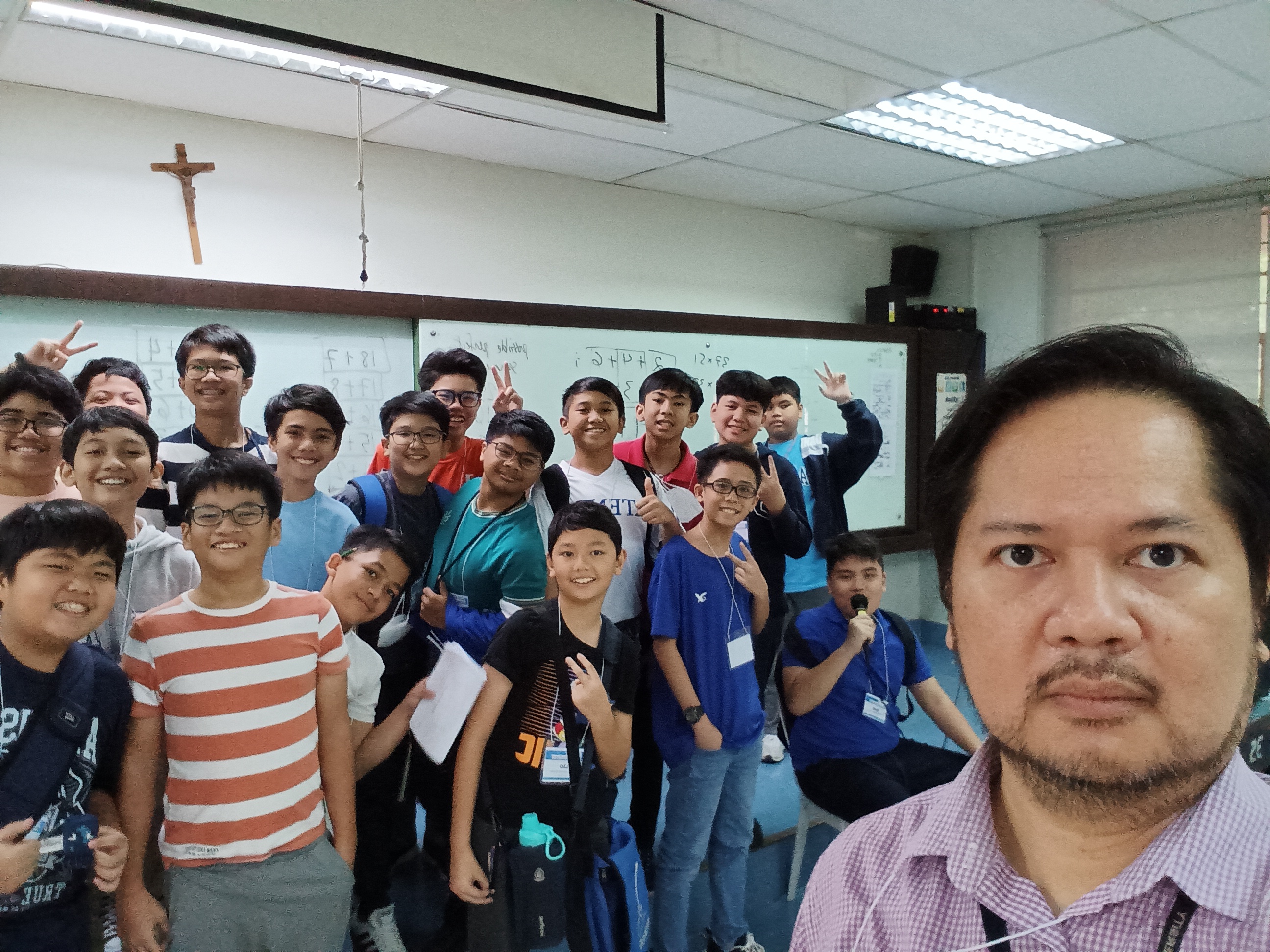
Grade 8 students had the chance to explore new twists on concepts they had encountered in previous math classes. They tackled unconventional problems involving sets and Venn diagrams, as well as problem-solving heuristics like pattern recognition. The students were also challenged with creative mathematical problems, including KenKen puzzles, cryptarithms, and linguistic challenges. These activities allowed them to formulate their own conjectures and deductions, while also working together in small groups to solve particularly tricky or laborious problems.
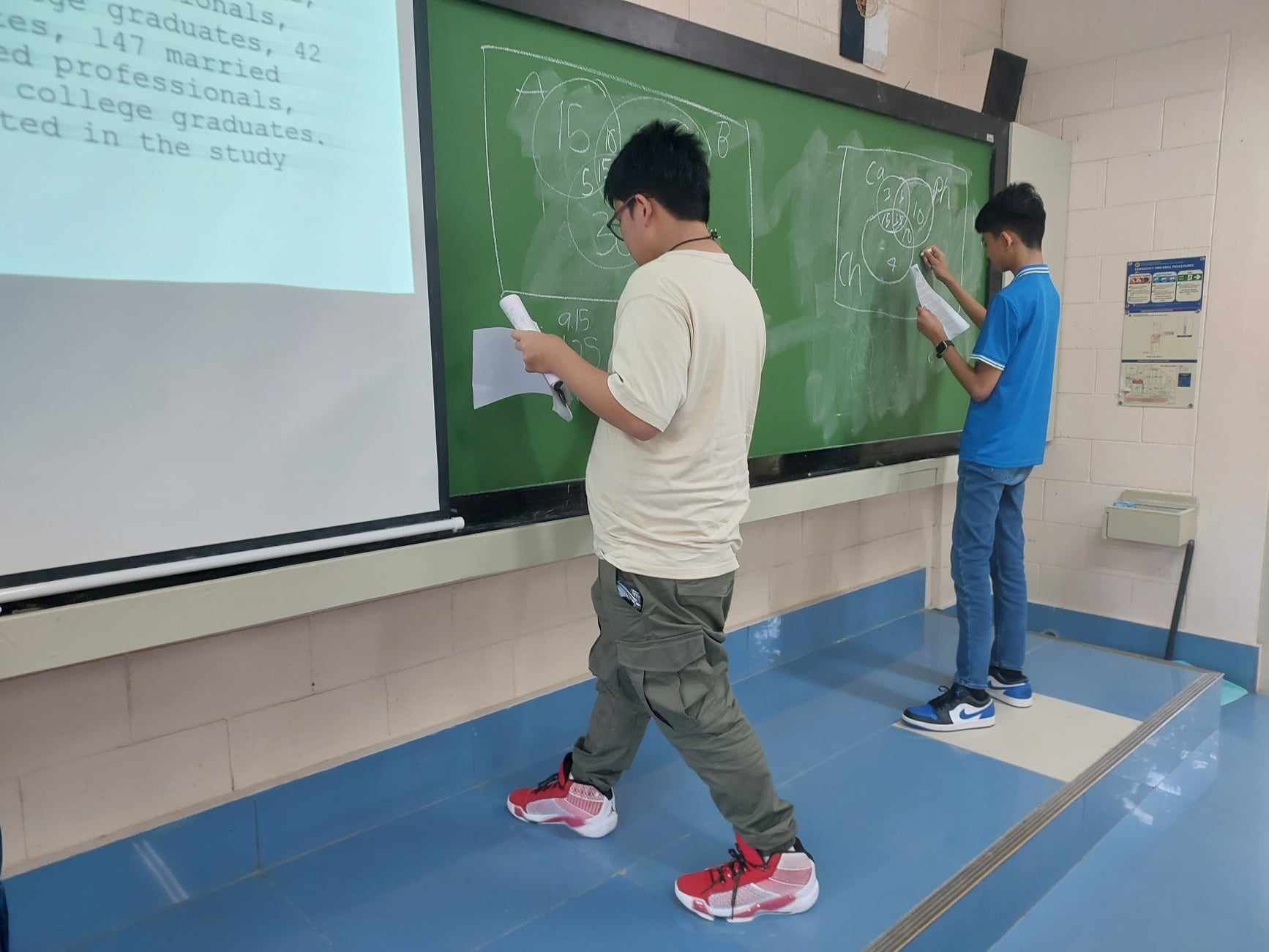
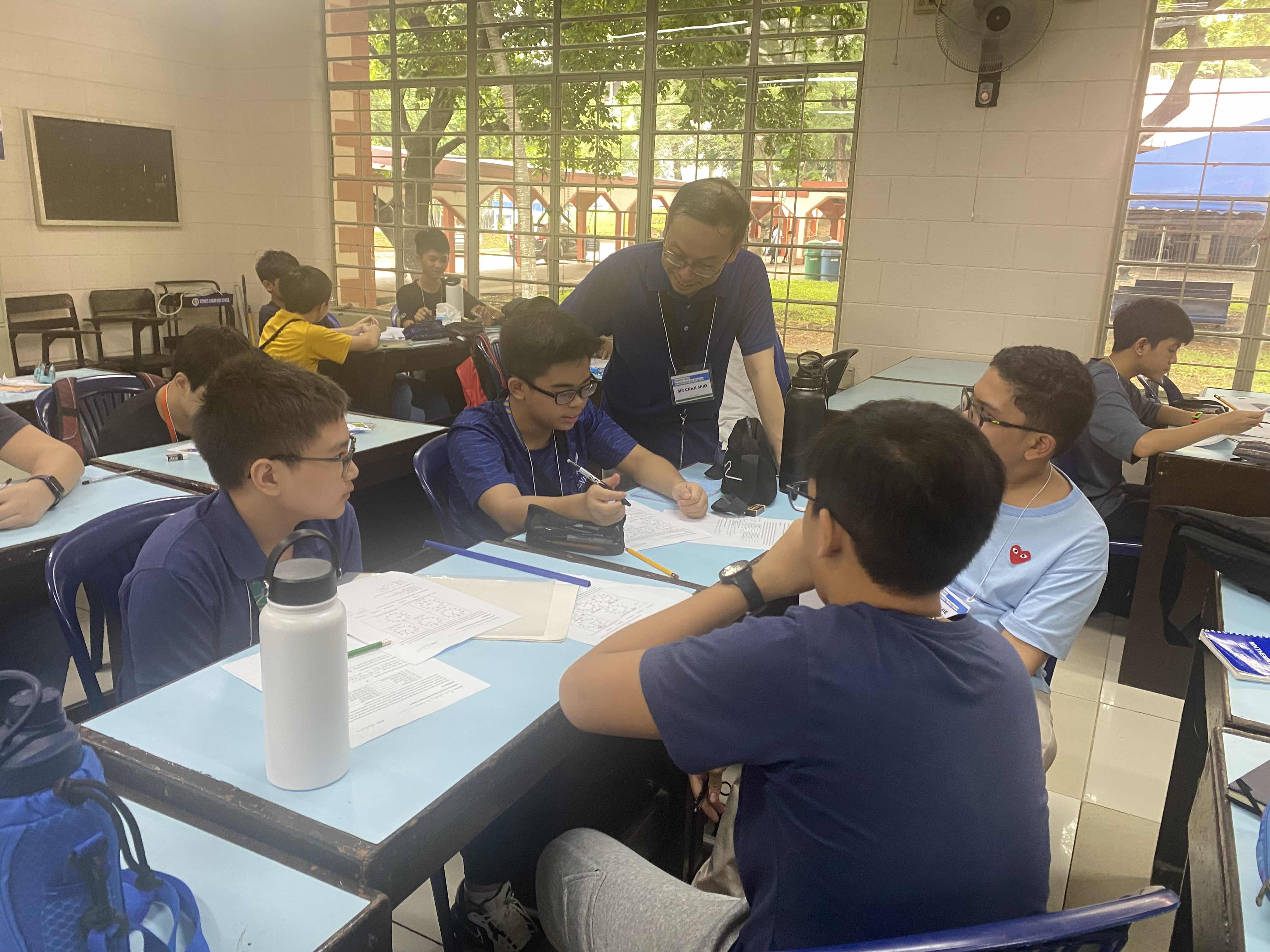
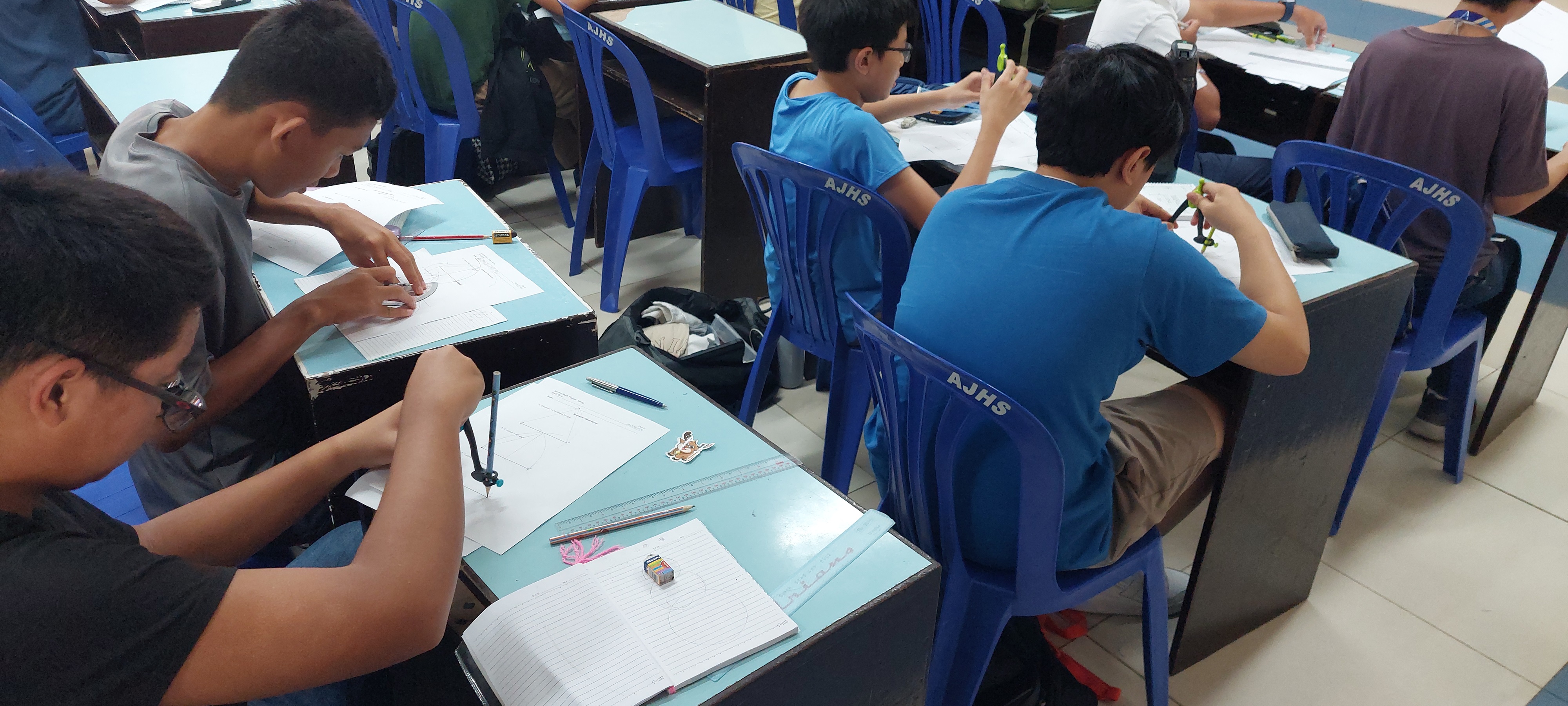
Grade 9 students had the chance to refine their problem-solving skills by engaging in a variety of nonroutine challenges, including puzzles like KenKen, Nonograms, and Menseki, as well as hands-on activities such as geometric construction. This approach aimed not only to enhance their ability to tackle complex problems but also to inspire and nurture their mathematical talents.
As for the incoming Grade 9 students, their activities were designed to be both encouraging and challenging, bridging their current skills to more refined problem-solving techniques. Throughout the week, students were paired to facilitate collaboration, allowing them to share insights and work together on various problems. They eagerly supported one another, especially with tasks that required putting together different ideas and concepts.
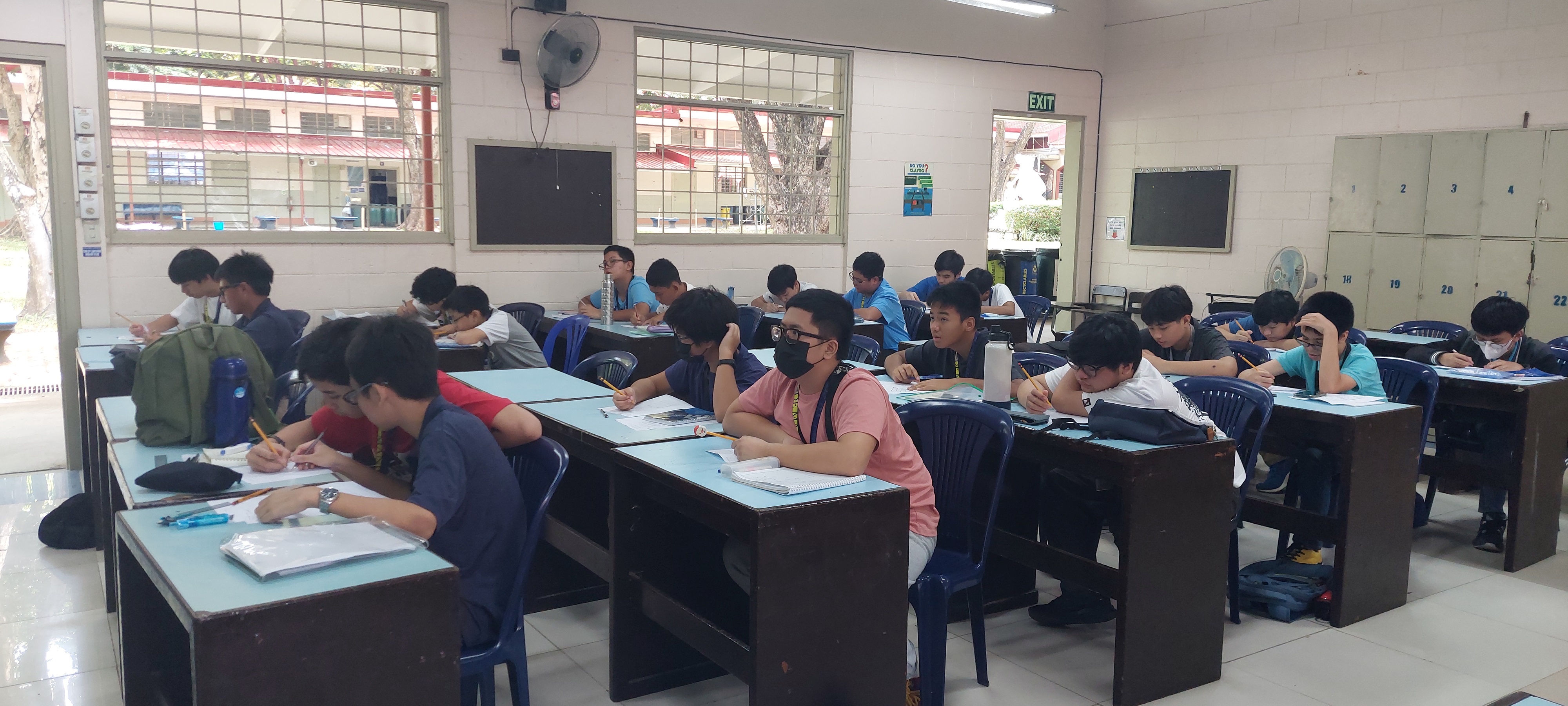
Meanwhile, the Grade 10 students demonstrated their deductive reasoning skills through solving a range of logic puzzles, including Kakuro, KenKen, and Einstein’s Riddle. They focused on mastering efficient counting techniques by applying principles of counting, permutations, and combinations. By recognizing and analyzing patterns, they tackled problems involving sequences with greater ease. On the final day, the students enjoyed solving recreational math problems, adding a fun and engaging conclusion to their week.
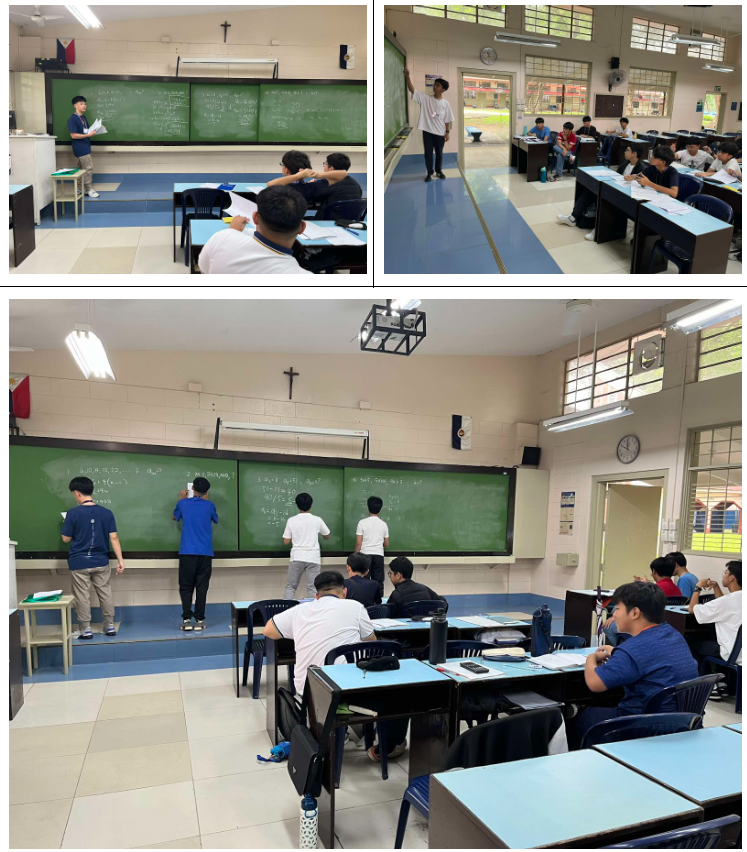
Each of the four problem-solving sessions for the Grade 10 students were designed to tackle non-routine problems from the following areas, respectively: Recreational Mathematics, Number Theory, Algebra, and Geometry. This guaranteed that the students were exposed to as many mathematical problems, and were equipped with various problem-solving techniques as possible that would benefit them as they advanced to senior high school and eventually to college.
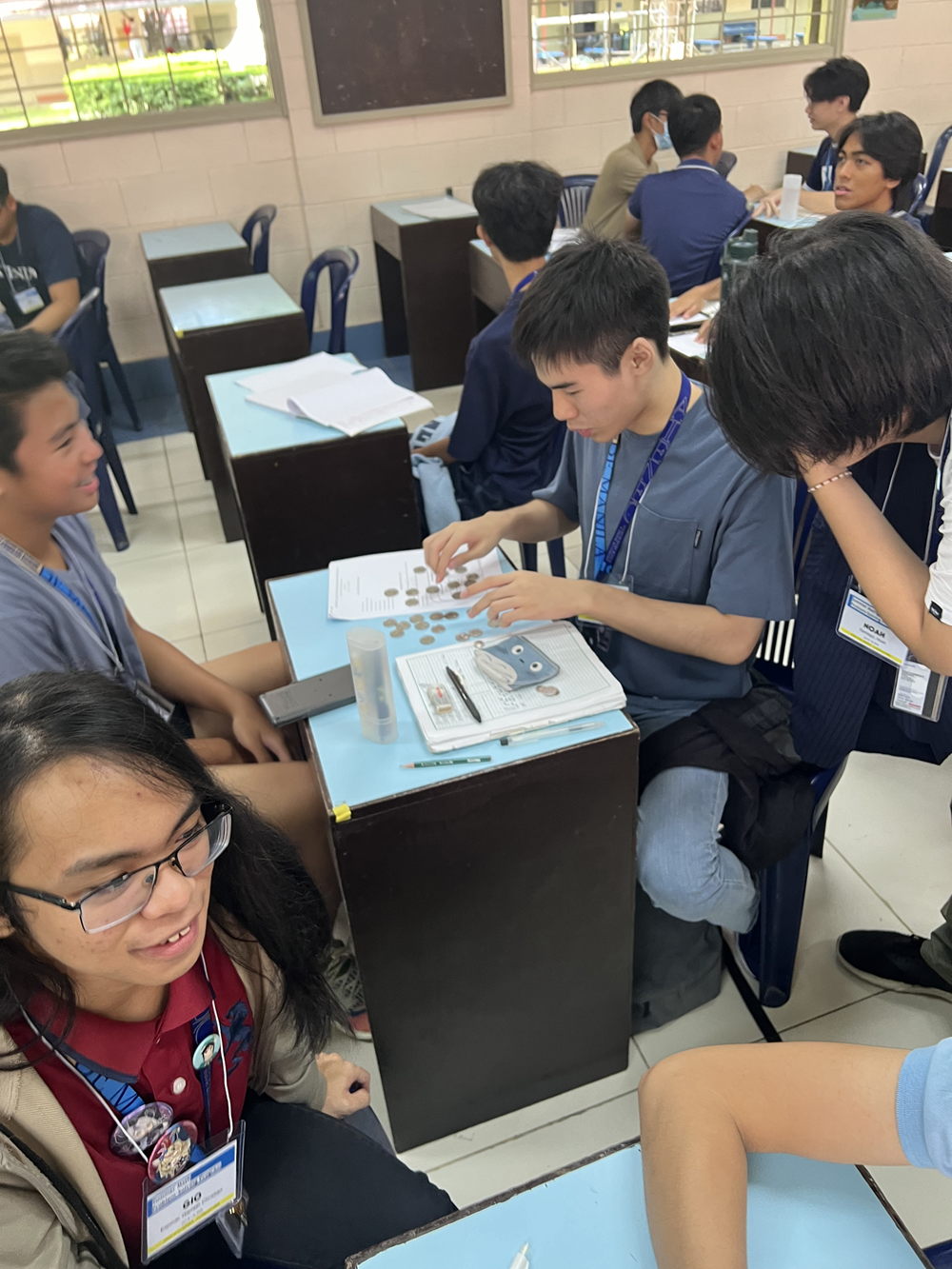
In each session, students engaged deeply with the material by tackling unfamiliar problems, either individually or in collaboration with peers. The class progressed only when all students had solved the problem, mimicking the real problem-solving process. While the students may not have become problem-solving experts in just four sessions, they took significant steps toward becoming adept problem solvers by learning the value of perseverance and continuous effort.
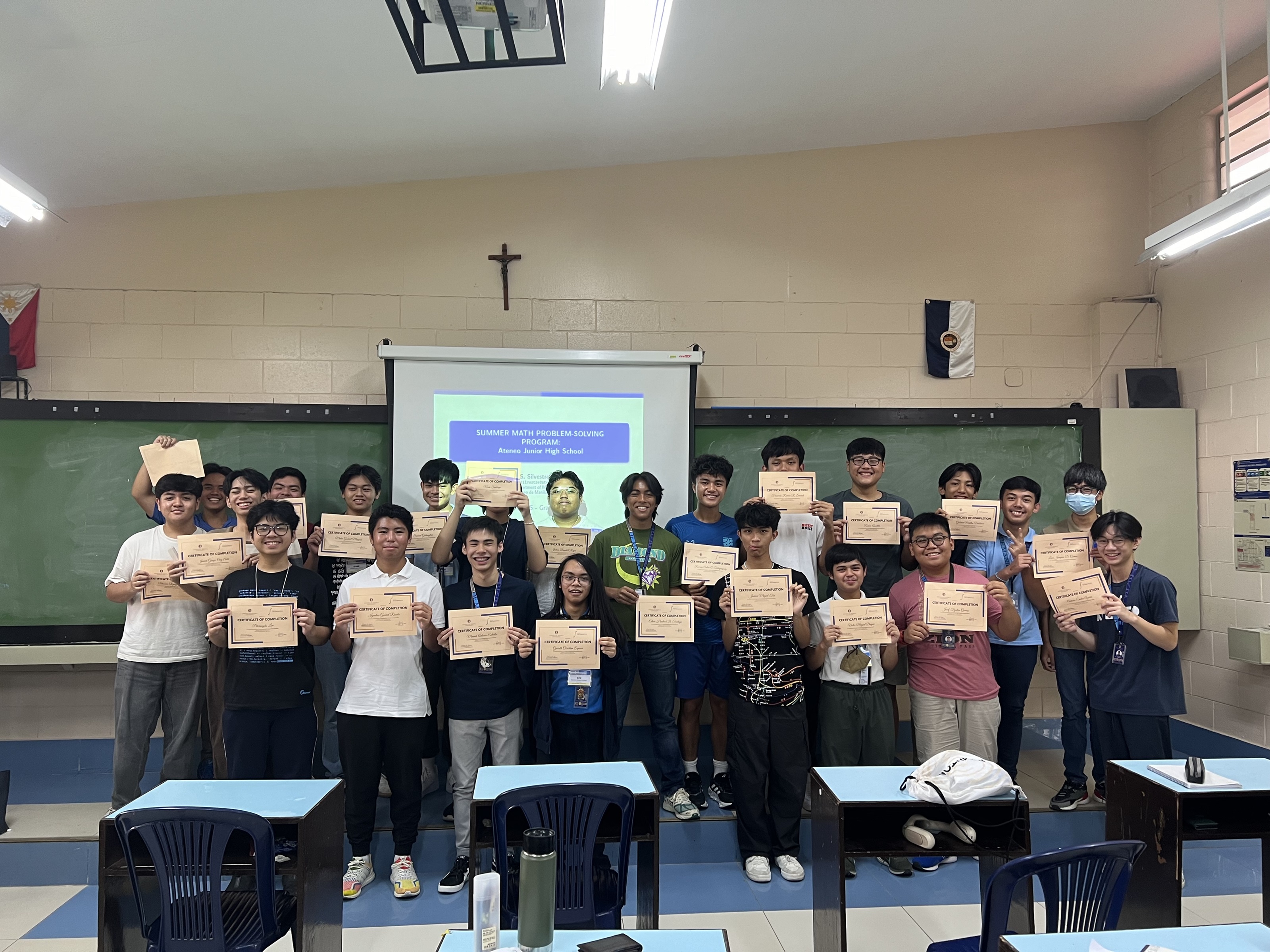
All five teachers consistently expressed similar sentiments throughout the week: the students exhibited remarkable diligence and creativity. While it’s natural for non-routine problems to challenge students, these young learners showcased a strong determination to persevere through difficulties. Their ability to approach complex problems with resilience and innovative thinking highlighted their potential to grow into highly skilled problem-solvers in the future. Though the boys sometimes took time to solve certain problems, the teachers were impressed not only by their tenacity but also by their willingness to explore different strategies, indicating a deep-seated curiosity and capacity for growth in mathematical problem-solving.
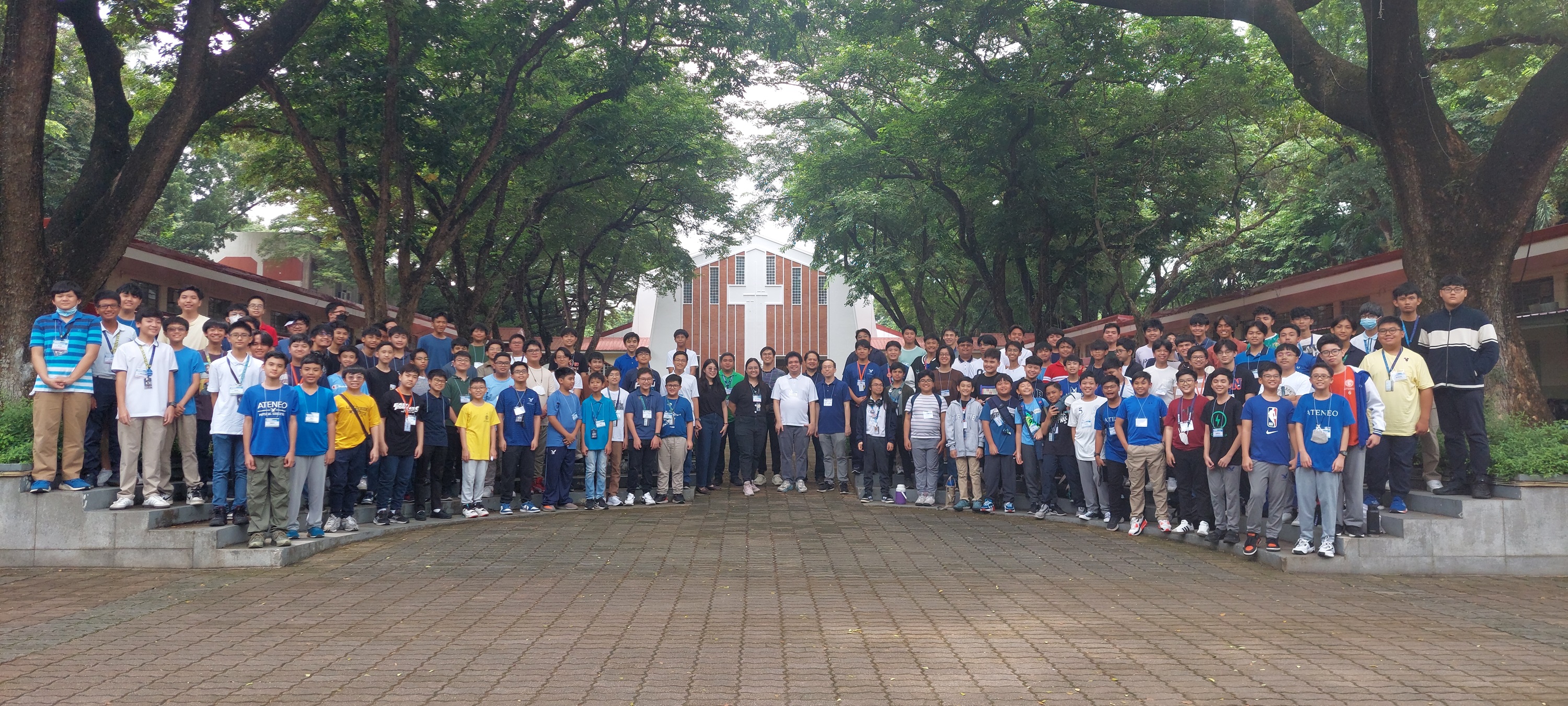
The Summer Math Problem Solving Program is a cornerstone initiative of the Department of Mathematics, driven by Fr. Ben Nebres SJ’s commitment to advancing STEM education in the Philippines. Launched in the early 2000s by Fr. Ben and Dr. Queena N. Lee-Chua, the program was designed to develop problem-solving skills among young students, with the goal of these students making significant contributions to nation-building. Initially aimed at a select group of talented students, the program sought to challenge and inspire more young minds while sparking their interest in STEM fields. As we continue to champion STEM education, our goal is to nurture even more problem-solvers for the future of the country.
You may also like these articles

Ateneo hosts 30th Asian Technology Conference in Mathematics
The Ateneo Department of Mathematics, in partnership with the School of Science and Engineering and the Ateneo Office of the Assistant Vice President for University

Ateneo grade schoolers experience joy of problem solving in summer math program
Ateneo Grade School (AGS) students from Grades 2 to 5 strengthened their problem-solving and analytical thinking skills during the 2026 Ateneo Summer Math Problem-Solving Program

A math major’s training: How the Freshman Enhancement Program (FrEP) solidified my math journey
Under the bright fluorescent lights of the SEC A classrooms, math majors were being prepared for their college life. You could see papers filled with

Ateneo Math showcases diverse research at 2026 MSP Annual Convention in Pangasinan
Faculty members, collaborators, alumni, and both graduate and undergraduate students from Ateneo de Manila University presented their latest research at the 2026 Mathematical Society of

ASOG promotes cybersecurity awareness in the public sector
As government services increasingly rely on digital systems, cybersecurity plays a vital role in protecting sensitive information, strengthening public institutions, and safeguarding the people they

PSA to run Ateneo-built National ID verification for local governments and NGOs
Built for areas with limited or no connectivity, including geographically isolated and disadvantaged areas. The same software is available to banks and other institutions.