Klim@Queer
19 Oct 2026 | By Matteo Francesco Suzara and Almia Tumaneng





When we think of the climate and sustainability, images of forests, oceans, renewable energy, and recycling bins often come to mind. Rarely do we picture Pride marches, drag performances, or queer activists. Yet sustainable development and climate resilience have always recognized that caring for the environment goes hand in hand with caring for people.
The climate crisis unfolds alongside existing social inequalities. Although rising temperatures, stronger typhoons, prolonged droughts, and other extreme weather events affect communities, their impacts are experienced differently depending on people’s circumstances. Access to healthcare, safe housing, social protection, and disaster response are often shaped by social factors such as education, income, and race—social inequalities that already exist long before disasters strike. This is a concept known as differential vulnerability, which recognizes the diversity in inequalities within and among communities (Thomas et al., 2019). Climate justice, therefore, also considers whose lives are placed at greater risk, whose voices are represented in decision-making, and whose realities shape the solutions being pursued. As conversations on climate and sustainability continue to evolve, it is just as important to draw attention to the relationship between climate justice and queer justice.
Fundamentally, the decades-long fight for LGBTQIA+ rights is a movement for inclusion and equality—to exist outside of the normal order of social and gender standards without being discriminated against or arrested for. At its very core, LGBTQIA+ rights are human rights in highlighting the queer experience in areas such as healthcare, employment, housing, and disaster response. This article looks at how that experience meets the climate crisis in the Philippines, from disaster response and housing to health and livelihood, and at how queer communities are already shaping climate justice in return.
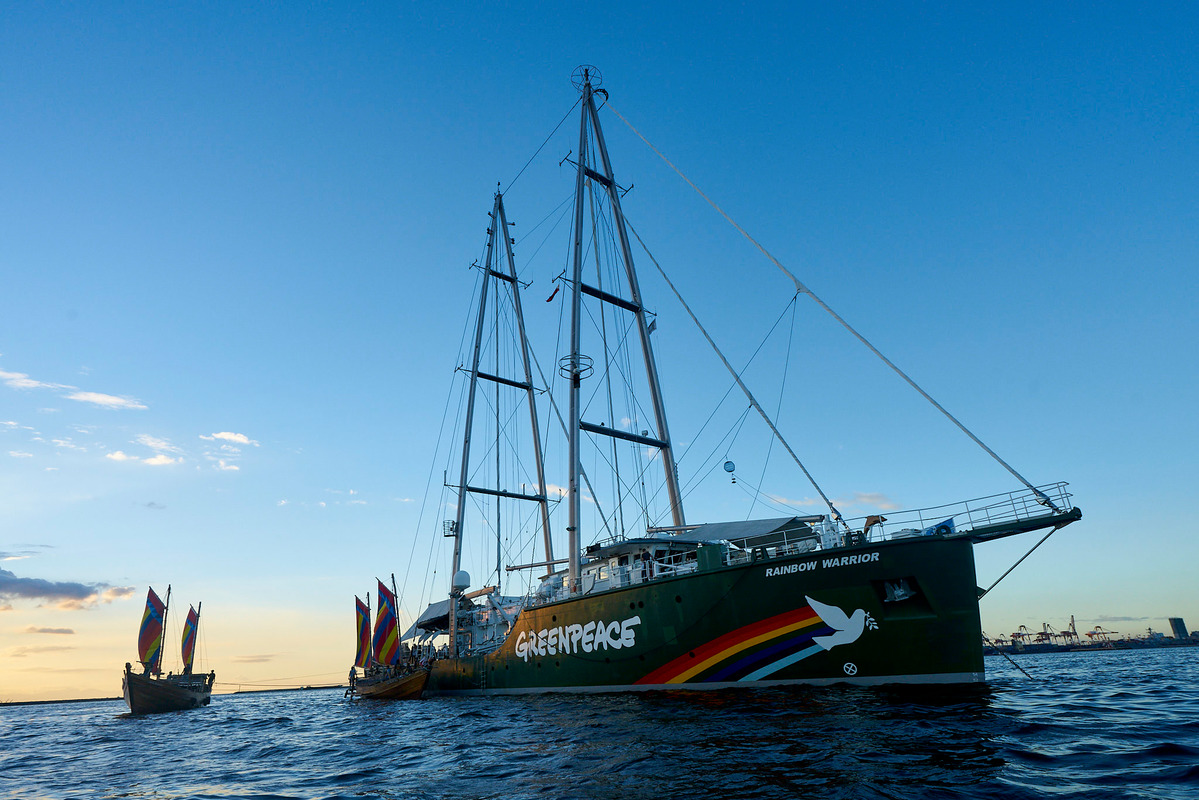
The Climate of Inequality
The queer presence in Philippine society is far older than the climate crisis. Long before colonization, the babaylan served as spiritual leaders, healers, and community authorities. They were mostly women, alongside male babaylan known as asog or bayog, who took on feminine dress and roles (Brewer, 1999). Spanish colonization and the introduction of Christianity suppressed these figures and recast gender-diverse expression as sinful, one of the many systemic changes that shaped the heteronormative order still reflected in institutions today.
Queer life endured and, in time, organized. In 1993, UP Babaylan became the country’s first LGBTQIA+ student organization, and on 26 June 1994, the Progressive Organization of Gays in the Philippines (ProGay) and the Metropolitan Community Church marched in Quezon City in what is often claimed to be Asia’s first Pride march. The first Metro Manila Pride followed in 1996 (Roque, 2026). In 2010, the Supreme Court ordered the Commission on Elections to accredit Ang Ladlad, a national organization composed of Filipinos who identify as part of the LGBTQIA+ community, ruling that moral disapproval alone could not justify excluding them from the party-list system (Ang Ladlad LGBT Party v. Commission on Elections, 2010). Yet legal protection has been slow to follow. This is the history LGBTQIA+ Filipinos carry into the climate crisis: a long record of community-building and political organizing, set against institutions that have yet to catch up.
For the Philippines, which once again tops the WorldRiskIndex 2026 as the country at the highest risk of disaster in the world (Bündnis Entwicklung Hilft & IFHV, 2026), the intersection between queerness and climate change is far from an abstract concept. Typhoons, strong winds, and extreme heat frequently expose the limitations of disaster response systems, particularly for communities that already face social and institutional barriers. For many LGBTQIA+ Filipinos, these barriers can shape access to emergency shelters, healthcare, and other essential services, especially when disaster response systems are designed around heteronormativity (Conde, 2023; Greenpeace Philippines, 2022) and overlook the diverse realities of queer communities.
These vulnerabilities become especially visible when disasters disrupt access to healthcare. Following Super Typhoon Odette (international name Rai) in 2021, Eunille Santos, a communications campaigner at Greenpeace Philippines, recalled that people living with HIV in Southern Leyte were unable to access antiretroviral therapy (ART) for weeks because healthcare services had been interrupted and roads were difficult to navigate (Albay, 2025; UNFPA Asia-Pacific, 2024). ART suppresses the virus and allows people living with HIV to live long, healthier lives (NIH, 2025). Interruptions in treatment can have serious consequences. These include, but are not limited to, viral rebound, which can occur within as little as a month of stopping therapy, and the emergence of drug-resistant strains of the virus that are harder to suppress and may force patients onto second-line regimens (Marshall, 2014).
Although HIV affects people across all sectors of society, the epidemic in the Philippines has disproportionately affected gay, bisexual, and other men who have sex with men, as well as transgender women (Sodipe, 2023). United Nations data show that new infections in the country rose by 418 percent between 2010 and 2022, the fastest-growing HIV epidemic in the Asia-Pacific region (Sodipe, 2023). Stigma also discourages people from seeking testing and care, and together with limited HIV education, has been cited as a driver of the country’s soaring infections (Sodipe, 2023). As a result, disruptions to HIV services often carry significant implications for many members of the LGBTQIA+ community. Santos likewise emphasized that access to HIV treatment and gender-affirming healthcare should not be treated as secondary concerns during emergencies. Instead, these services form part of the essential healthcare that communities rely on before, during, and after disasters (Albay, 2025).
These challenges have become even more pressing as international aid shrinks. In January 2025, Donald Trump’s U.S. administration froze foreign aid and went on to reduce its United States Agency for International Development (USAID) funding, including support for the President’s Emergency Plan for AIDS Relief (PEPFAR), which placed HIV prevention and treatment efforts in the Philippines under increasing strain. The Joint United Nations Programme on HIV/AIDS (UNAIDS) has likewise warned that more than 550,000 vulnerable people could lose access to essential HIV services if sustainable funding is not secured (Albay, 2025).
The effects of climate disasters also extend beyond immediate emergency response. As of 2023, nearly a decade after Super Typhoon Yolanda (international name Haiyan), many LGBTQIA+ survivors in Eastern Visayas continued to face barriers in accessing permanent housing (Conde, 2023). While the government’s Yolanda Permanent Housing Program sought to relocate families from high-risk areas, eligibility requirements centered on legally recognized family units, effectively excluding many queer individuals living alone or with same-sex partners.
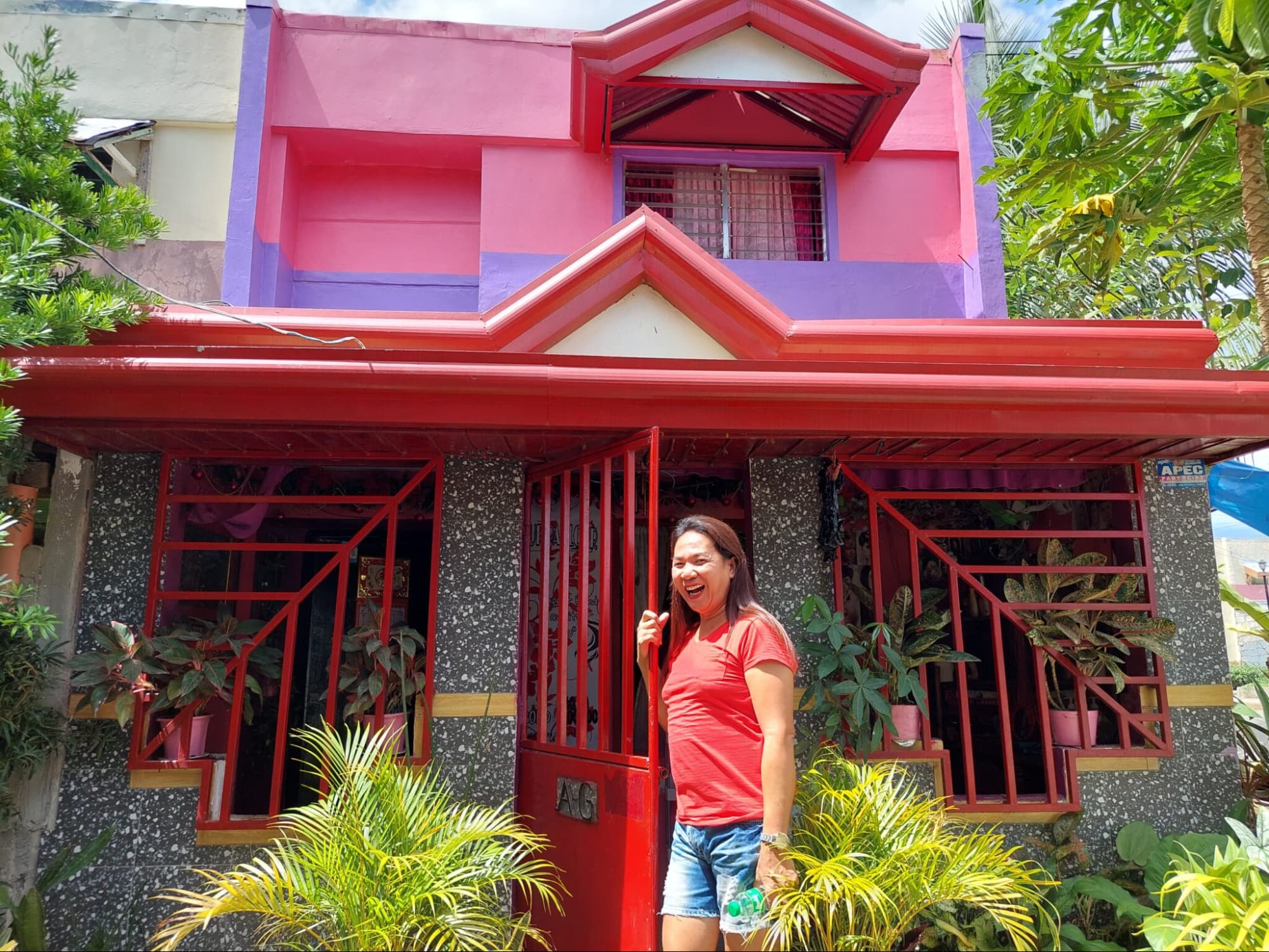
For survivors such as Arturo “Arthur” Golong, a transgender woman from Tacloban City, the challenge was never proving that she had survived the disaster. Rather, it was navigating a recovery system that failed to recognize her household. With Philippine legislation defining family through heterosexual marriage, many LGBTQIA+ survivors found themselves ineligible for housing assistance despite experiencing the same climate-induced losses and damages as heterosexual counterparts. These cases illustrate how climate recovery policies can unintentionally reproduce existing social inequalities, as disaster response depends not only on severity of climate impacts, but also whether existing policies recognize the diversity of the communities they are intended to serve (Conde, 2023). Arthur herself was eventually awarded permanent housing as the breadwinner of her family, but she went on to advocate for survivors who did not qualify, speaking in Congress and before the Commission on Human Rights’ National Inquiry on Climate Change (Conde, 2023).
Still, change is beginning to take shape at the local level. In June 2023, Quezon City launched the Right to Care Card, which lets LGBTQIA+ partners make medical decisions for each other, a recognition that hospitals nationwide have largely reserved for legal spouses and next of kin (Quezon City Government, 2023; Santos, 2023).
Yet these stories of vulnerability only tell part of the story of the LGBTQIA+ community’s enduring efforts to adapt to and combat the climate crisis. Across disasters and other crises, queer communities have long organized mutual aid initiatives, supported one another through community care, and created spaces of solidarity when formal systems fall short. In Mindanao, for instance, Alvin Toni Gee Fernandez of the Zamboanga-based group Mujer notes that queer communities are often among the first to respond when state support is delayed or absent, leading mutual aid and relief drives and mobilizing networks faster than some formal institutions (Albay, 2025). As Santos of Greenpeace reflected, “LGBTQIA+ individuals have always been powerful agents of care, creativity, and resistance. From disaster response to community kitchens, we’ve turned survival into solidarity for generations” (Albay, 2025).
Earth of Home to Whom?
Through the dark alleyways of Pasay is the Home for the Golden Gays: a two-storey, two-bedroom apartment that, as of 2023, was housing nine elderly queers between the ages of 60–93. The apartment is paid for by irregular donations and money earned by the tenants through gigs, drag shows, hair styling, and street vending, that increasingly get difficult with age (De Guzman, 2023). Yet, getting by paycheck-to-paycheck is a better alternative compared to living in the streets, which raises the question: What spaces do the queer community in the Philippines occupy and participate in?
A 2023 survey by Out Right Action International of LGBTQIA+-identifying Filipinos aged 50 to 74 found that 40 percent lacked money for necessities such as food and medication, and 48 percent feared losing their homes (as cited in De Guzman, 2023). In addition, a 2025 study by University of the Philippines faculty members found that LGBTQIA+ Filipinos were about twice as likely to be underemployed and three times as likely to be in vulnerable employment (Gregorio, 2025). With the lack of a robust national anti-discrimination statute that addresses LGBTQIA+ rights, the SOGIE (Sexual Orientation and Gender Identity Expression) Equality Bill, first filed in 2000, has yet to pass the Senate (Orcullo, 2026), there is greater risk for discrimination in employment, housing, education, among others. This scarcity of data is itself a gap that researchers can fill, particularly in studying how LGBTQIA+ Filipinos experience climate vulnerability and build climate resilience. The gap is not unique to the Philippines: the WorldRiskReport 2023, which focused on diversity, notes that the lack of comparable global data on dimensions of diversity, including LGBTQIA+ communities, makes vulnerable populations harder to identify and can compromise relief and protection measures (Bündnis Entwicklung Hilft & IFHV, 2023).
Struggles encountered in housing and employment—critical rights to sustain a secure livelihood—can compound and push queer individuals to low-income and declining neighborhoods and slums, which are linked to poor air circulation, air pollution, poor solid waste management, and limited coping strategies for climate resilience (Ballesteros, 2010). Aside from the lack of formal national protection of LGBTQIA+ rights, queer individuals are prone to targeted discrimination in employment, housing, and health care, which, as evidence from the United States shows, places them further at risk for chronic diseases associated with environmental exposures (Goldsmith & Bell, 2022; Yale School of the Environment, 2022).
The advocacy for an inclusive and safe space for the LGBTQIA+ and for all people is multilayered in that it is environmental, economic, and social. Yet, it still continues to challenge the dominant heteronormative space of the day-to-day.
A central value to the queer justice movement is its foundation of unity and care. Within the pool of queer activists, sentiments that sympathize with more vulnerable demographics of the queer community are shared and echoed, noting views like ‘may mga bakla sa Palestine’ (there are queer people in Palestine) and ‘there are queer and trans people in the streets when flooding’ in protests, which effectively employs solidarity through shared identity and experience (Feng, 2022; Ang Bayan Ngayon, 2026; Belle, 2026). Grounded in this foundation is the strong belief that individuals, regardless of social group, have the right to live in a safe environment. This guides queer activists in using past knowledge from previous LGBTQIA+ resistances and applying it to other social issues like climate resistance. In the United States, for instance, gay activists have pointed out similarities between the AIDS issue and the climate crisis, such as government silence or denial of the problem, the global scale of the issue, and the life-or-death stakes (Feng, 2022).
In addition to these identified patterns, the queer activists also take inspiration in past strategies of protests like the practice of fun and play in hosting drag shows and events for climate justice. Likely the queer movement’s biggest contribution to climate justice is the incorporation of play, with drag shows being one expression among many. Play is instrumental in building solidarity. It makes climate justice a celebration, not only of the solutions to climate problems, but also of queer and trans identity, through the inclusion of body politics and the logic of fun. This allows discourse on the topic to move away from the ‘doom’ approach of mainstream climate awareness and action, which tends to be heavy on statistics and facts (Feng, 2022). The same impulse is visible in the Philippines, where climate activist and drag performer Celestia took her drag to the 2025 Bonn Climate Camp, calling it “a form of protest against oppressive systems” (Albay, 2025).
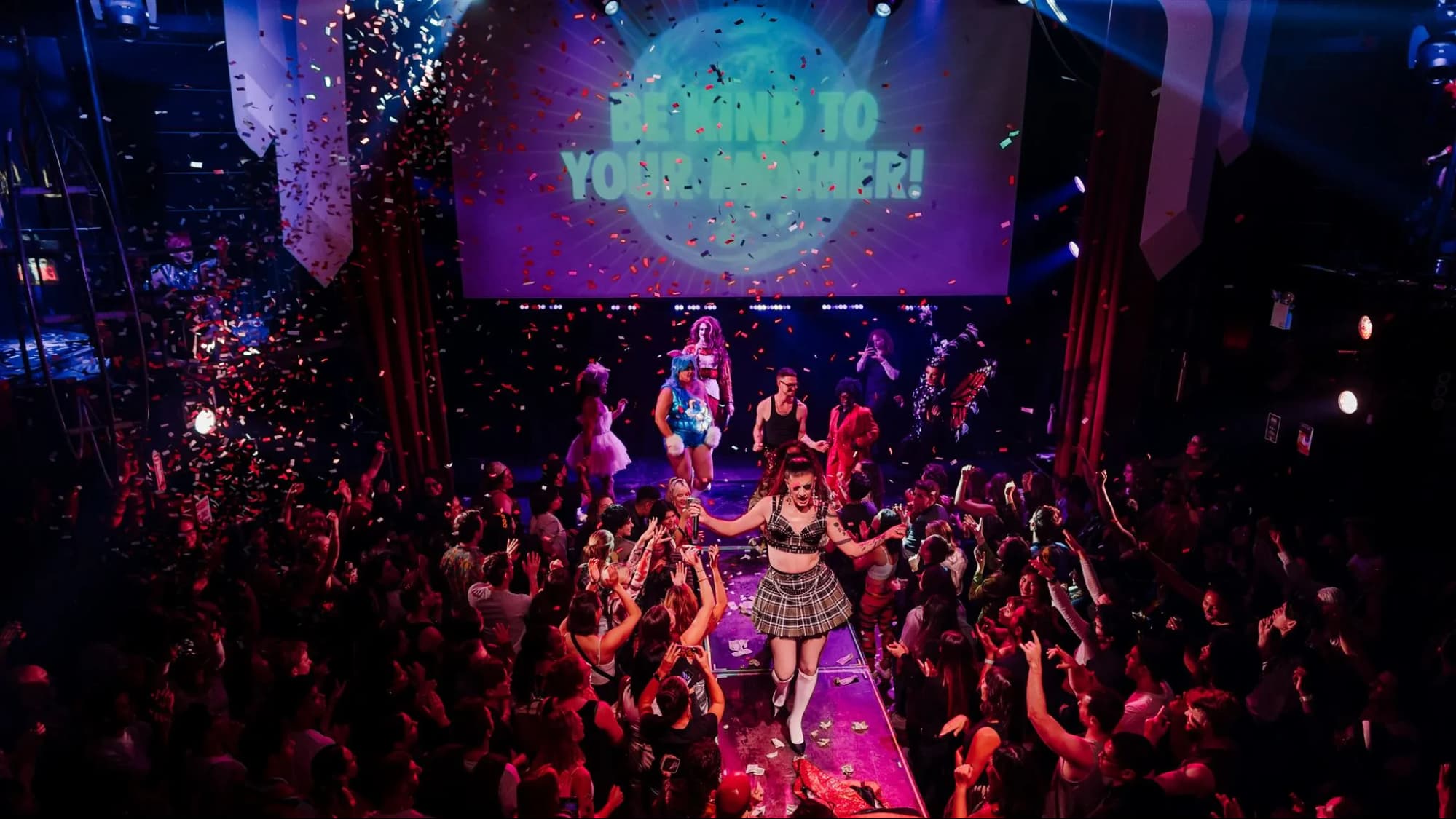
While on the surface it may be difficult to conceive of climate justice and sustainability—or what we imagine to be representative of waste management and renewable energy—side by side with the queer fight—or what we instinctually associate with a fight for the right to love—both causes fight for human rights: the right to a balanced and healthy ecology, the right to health, and the right to dignity, are after all, connected to the right to equality.
Queering the Climate
Addressing the climate crisis requires participation from every sector of society. No single institution, organization, or group can define what a sustainable future should look like. Climate action grows stronger when it reflects the diversity of the communities working toward it.
Climate action grows stronger when it reflects the diversity of the communities working toward it.
Nature itself offers an important lesson. Healthy ecosystems thrive through biodiversity, where different species contribute to the resilience of the whole. Sustainable societies are built on a similar principle: different communities bring distinct experiences, knowledge, and perspectives that strengthen collective responses to shared challenges.
This is the idea behind queering climate justice (Feng, 2022). It calls for climate policies and environmental movements that recognize and engage with communities often overlooked in traditional decision-making, including LGBTQIA+ people whose lived experiences reveal how climate impacts intersect with inequality. Queering climate justice expands the conversation by ensuring that environmental solutions are built with and informed by the realities of those most affected.
In practice, this means building queer realities into how disasters are planned for and recovered from. It means collecting the data needed to see who is affected and involving vulnerable populations in disaster management and decision-making (Bündnis Entwicklung Hilft & IFHV, 2023); treating HIV treatment and gender-affirming care as essential services in emergencies (Albay, 2025); and revising recovery programs, such as housing, whose eligibility rules recognize only legally defined families (Conde, 2023). Local measures like Quezon City’s Right to Care Card show what recognition can look like, while lasting protection depends on national legislation such as the SOGIE Equality Bill.
Climate justice ultimately asks what kind of future we hope to build: a future that leaves no one behind requires climate action that values every community, protects human dignity alongside the environment, and creates space for every voice to help shape a more resilient and equitable world.
Climate justice does not simply mean going green. It should involve every color of the rainbow.
References
Albay, R. L. (2025, July 7). Disaster, discrimination and defiance: Queer Filipinos push for climate inclusion. Eco-Business. https://www.eco-business.com/news/disaster-discrimination-and-defiance-queer-filipinos-push-for-climate-inclusion/
Ang Ladlad LGBT Party v. Commission on Elections, G.R. No. 190582 (Phil. Apr. 8, 2010). https://chanrobles.com/cralaw/2010aprildecisions.php?id=906
Ballesteros, M. (2010). Linking Poverty and the Environment: Evidence from Slums in Philippine Cities. In Philippine Institute for Development Studies. https://pidswebs.pids.gov.ph/CDN/PUBLICATIONS/pidsdps1033.pdf
Brewer, C. (1999). Baylan, Asog, Transvestism, and Sodomy: Gender, sexuality and the sacred in early colonial Philippines. Intersections: Gender, History and Culture in the Asian Context, (2).
Bündnis Entwicklung Hilft & Institute for International Law of Peace and Armed Conflict (IFHV), Ruhr University Bochum. (2023). WorldRiskReport 2023: Diversity and disasters. Bündnis Entwicklung Hilft. https://weltrisikobericht.de/worldriskreport/
Conde, M. (2023, January 30). 10-year post-Haiyan: LGBTQ+ survivors still fight for their legal rights. New Naratif. https://newnaratif.com/post-haiyan-lgbtq-survivors/
De Guzman, C. (2023, December 22). It’s Not Easy to Be Old, Gay, or Homeless in the Philippines. These Drag Queens Are All Three. TIME. https://time.com/6550091/philippines-golden-gays-elderly-homeless-drag-queens/
Feng, J. (2022). Toward Queer Climate Justice [UC Santa Barbara]. https://escholarship.org/uc/item/7837b34j
Goldsmith, L., & Bell, M. L. (2022). Queering environmental justice: Unequal environmental health burden on the LGBTQ+ community. American Journal of Public Health, 112(1), 79–87. https://doi.org/10.2105/AJPH.2021.306406
Greenpeace Philippines. (2022, June 24). Greenpeace on Pride: Climate justice is queer justice. https://www.greenpeace.org/philippines/press/53266/greenpeace-on-pride-climate-justice-is-queer-justice/
Gregorio, A. (2025). Study: LGBTQI+ Filipinos twice more likely to be underemployed. ABS-CBN Newsletter. https://www.abs-cbn.com/news/business/2025/4/12/study-lgbtqi-filipinos-twice-more-likely-to-be-underemployed-1722
Marshall, S. (2014, September 26). Supply shortages of antiretrovirals can have devastating consequences for patients. The Pharmaceutical Journal. https://doi.org/10.1211/PJ.2014.20066595m/interview/the-activist-who-wondered-why-the-green-movement-was-so-white/
Morton, M., Dworsky, A., & Patel, S. (2017). LGBTQ Young Adults Experience Homelessness at More than Twice the Rate of Peers. In Chapin Hall. https://www.chapinhall.org/research/lgbtq-young-adults-experience-homelessness-at-more-than-twice-the-rate-of-peers/
National Institutes of Health. (2025, March 31). The stages of HIV infection. HIVinfo.NIH.gov. https://hivinfo.nih.gov/understanding-hiv/fact-sheets/stages-hiv-infection
Pharmaceutical Journal. (2014). Supply shortages of antiretrovirals can have devastating consequences for patients. https://doi.org/10.1211/PJ.2014.20066595
Orcullo, J. (2026, July 28). Akbayan lawmaker laments SOGIE bill omission in Marcos’ SONA. Daily Tribune. https://tribune.net.ph/2026/07/28/akbayan-lawmaker-laments-sogie-bill-omission-in-marcos-sona
Quezon City Government. (2023). Quezon City launches a landmark initiative to acknowledge rights for LGBTQIA+ couples. https://quezoncity.gov.ph/?p=68414
Roque, N. (2026, June 26). Pride Month: From Stonewall to the Philippines, why Pride remains a protest. GMA News Online. https://www.gmanetwork.com/news/lifestyle/content/992427/pride-month-from-stonewall-to-the-philippines-why-pride-remains-a-protest/story/
Santos, J. (2023, June 24). Quezon City launches ‘care card’ for LGBTQIA+ couples. GMA Integrated News. https://gmanetwork.com/news/topstories/metro/873897/quezon-city-launches-care-card-for-lgbtqia-couples/story
Sodipe, L. (2023, December 2). Poor education, stigma fuel Philippines’ soaring HIV infections. The Philippine Star (Agence France-Presse). https://www.philstar.com/headlines/2023/12/02/2315918/poor-education-stigma-fuel-philippines-soaring-hiv-infections/amp/
Thomas, K., Hardy, R. D., Lazrus, H., Mendez, M., Orlove, B., Rivera-Collazo, I., Roberts, J. T., Rockman, M., Warner, B. P., & Winthrop, R. (2019). Explaining differential vulnerability to climate change: A social science review. WIREs Climate Change, 10(2), e565. https://doi.org/10.1002/wcc.565
UNFPA Asia-Pacific. (2024, August 16). Profile: Chrisly Orit de Asis, proud transgender humanitarian. https://asro.unfpa.org/en/news/profile-chrisly-orit-de-asis-proud-transgender-humanitarian
Yale School of the Environment. (2022, January 27). Queering environmental justice. https://environment.yale.edu/news/article/queering-environmental-justice
Recent News
You may also like these articles

Growing with purpose: How Mekeni Food Corporation turns adversity into shared value
From a small backyard operation in Porac, Pampanga, to an internationally recognized food brand exporting to 25 countries, Mekeni Food Corporation's journey demonstrates how businesses

Three Ateneo-incubated startups secure DOST-PCIEERD’s startup grant fund
Last 9 November, during the opening day of Philippine Startup Week 2026, Soolok Properties Inc, Pili AdheSeal Inc, and Saltric Power (PDG Engineering Services), three
Ateneo de Manila Grade 2 students are the little Earth helpers
It was a great day for saving the world when Ateneo Institute of Sustainability (AIS) came to Ateneo Grade School to give a session on
JGSOM representatives complete green finance training in Poland, sets sights on 2027 micro-credential launch
Representatives of Ateneo de Manila University's John Gokongwei School of Management (JGSOM) completed the second phase of their Erasmus+ Green Finance international mobility activities at
JGSOM Representatives Participate in Green Finance Training at the University of Twente
Enschede, Netherlands | October 15–16, 2026 Representatives of Ateneo de Manila University's John Gokongwei School of Management (JGSOM) participated in a specialized Green Finance training
Professor Emeritus Dr Emma Porio highlights climate resilience and biodiversity at international conferences
Emma E Porio, PhD, Professor Emeritus of Ateneo de Manila University and Principal Investigator of Ateneo's Manila Observatory Center for Climate Resilience and Public Health