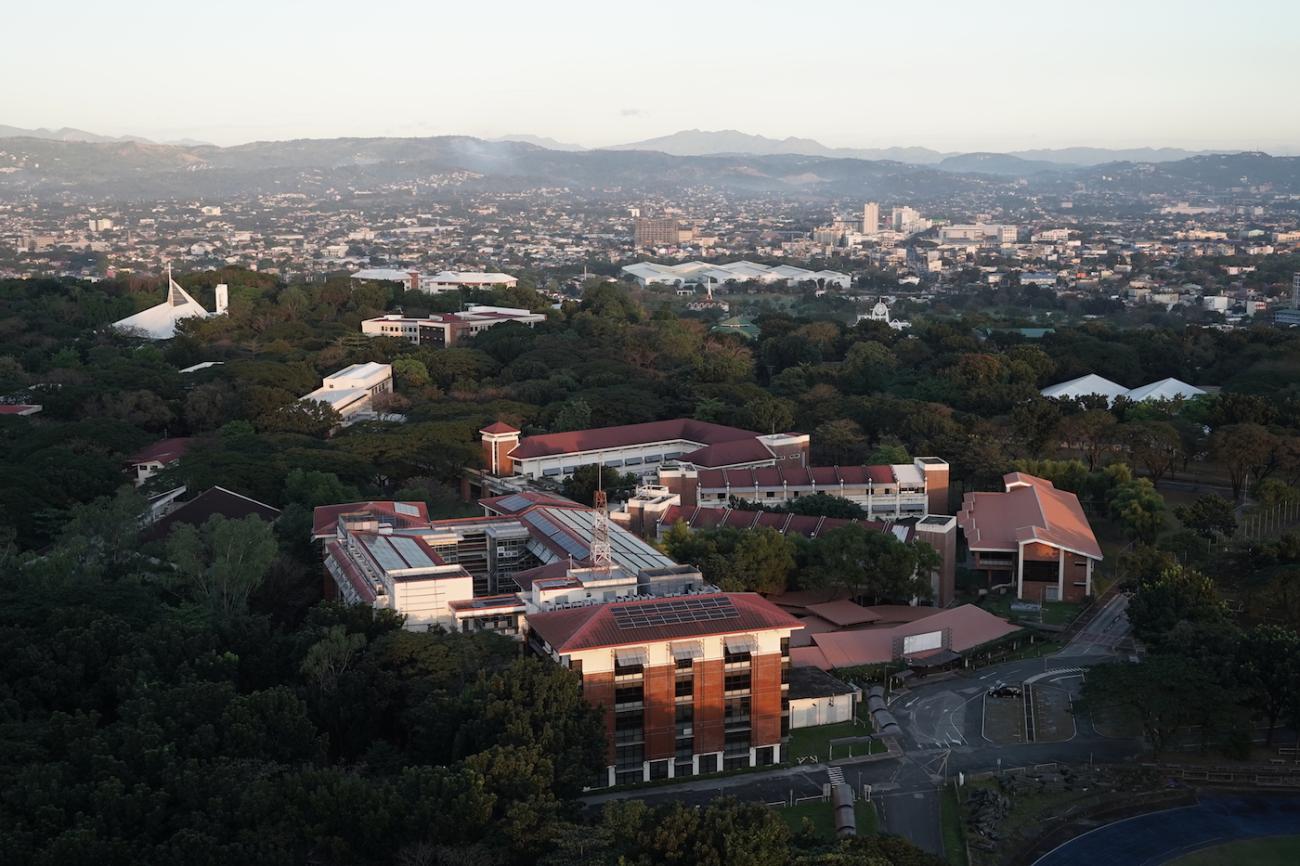


Ateneo de Manila University has made a commitment to the UN Sustainable Development Goals (SDGs). In 2021, Ateneo launched a set of strategic priorities that align with its sustainability goals. These priorities include educational transformation, integral ecology, bridging cultural divides, and universal health and well-being. By prioritizing these areas, Ateneo aims to continue advancing its sustainability efforts and make a positive impact on society and the environment.


Latest News

Herbularyo card game blends Filipino folklore and organic chemistry
The scientifically-grounded traditional Filipino remedies found in the game are based on real research from the Philippine Institute of Traditional and Alternative Health Care (PITAHC).

Dr Joshua Uyheng recognized as 2026 NAST Outstanding Young Scientist
The Department of Psychology would like to extend its warmest congratulations to Joshua Uyheng, PhD, Assistant Professor and Director of the Political Psychology of Democratization...

Communities gather at Ateneo for Laudato Si’ Summit 2026
Ateneo de Manila partner communities gathered on 9 May 2026 for a Laudato Si Summit held at the Institute of Social Order with the theme...

Professor Emeritus Dr Emma Porio joins multisectoral consultation on climate justice and disaster resilience in Cebu
Representing Ateneo de Manila University, Dr Emma E Porio, Professor Emeritus at the Department of Sociology and Anthropology Department of Ateneo's Dr Rosita G Leong...

Out of the lab, into the world: An Atenean’s mission to make research matter
Science doesn’t change the world by staying inside a laboratory. For generations, scientists have been taught how to conduct research; far fewer have been taught...

Public Health and Safety Advisory for July 2026
The new school year is fast approaching, with classes in the Basic Education units about to start in a couple of days and in the Higher Education in a few weeks. With the expected increase in population on campus and with more interactions across groups becoming inevitable, the university community will be at a higher risk for the transmission of infectious diseases.