2026 | SDG 4 Highlights
28 Sep 2026


Ensure inclusive and equitable quality education and promote lifelong learning opportunities for all
As a leading university in the Philippines, Ateneo de Manila is committed to providing high-quality education. The university offers both free and paid access to its libraries and fosters creativity and innovation through its learning spaces. Ateneo Graduate School of Business' Center for Continuing Education also provides opportunities for lifelong learning skills to the public. Various schools, departments, and centers within the university, such as the Institute of Philippine Culture and the Ateneo School of Government, contribute to public access to learning through open access and online seminars.
Ateneo also aims to promote inclusive education by offering scholarships that target underrepresented groups. Scholarships are available for disadvantaged individuals, women, and persons with disabilities (PWDs) at the graduate level, ensuring access to education while promoting diversity, equality, and inclusion.
Ateneo Strengthened Support for Visually Impaired Freshman
Manila, Philippines – Ateneo de Manila University implemented a comprehensive support system to ensure an accessible and inclusive learning environment for Enzo, a visually impaired freshie in AB Political Science. Various offices, faculty, and staff worked together to provide accommodations that assisted him in his academic and campus life.
Campus Mobility and Student Support
To help Enzo navigate the campus, a designated staff member coordinated with him daily to address mobility concerns. During a meeting on July 12, 2024, his family also submitted a health notification form to the university’s health services, ensuring appropriate medical support when needed.
Academic and Co-Curricular Adjustments
Special arrangements were made across different subjects to provide accessible learning materials and support:
- Home Department and Core Courses: History, English, and Political Science (Home Department): Faculty members ensured that course materials were available in accessible formats, and Enzo was given course options that suited his needs.
- PE (PATHFIT): The instructor arranged a meeting to discuss necessary adjustments for his participation.
- Natural Science: Course syllabi and materials were provided to help him choose the most suitable option, and further discussions with department representatives were planned.
- Modern Language: His selected language course was adjusted to accommodate his learning requirements.

Orientation and Student Integration
During orientation, assigned student guides assisted Enzo in familiarizing himself with the campus and key locations. Special arrangements were also made to support him in his freshman integration classes.
Assistive Technology and Learning Tools
To enhance his learning experience, Enzo used:
- A screen reader to navigate digital materials.
- Optical Character Recognition (OCR) software converts scanned PDFs into readable text.
- Cloud-based word processing applications for document creation.
Faculty members provided slide presentations before or during class to ensure accessibility. The university also explored secure test-taking options that aligned with his needs.
Through these coordinated efforts, Ateneo reaffirmed its commitment to inclusive education, ensuring all students received the necessary support to thrive academically.
Ateneo de Manila’s Commitment to Quality Education
As a leading university in the Philippines, Ateneo de Manila is committed to providing high-quality education. The university offers both free and paid access to its libraries and fosters creativity and innovation through its learning spaces. Ateneo Graduate School of Business' Center for Continuing Education also provides opportunities for lifelong learning skills to the public. Various schools, departments, and centers within the university, such as the Institute of Philippine Culture and the Ateneo School of Government, contribute to public access to learning through open access and online seminars.
Ateneo also aims to promote inclusive education by offering scholarships that target underrepresented groups. Scholarships are available for disadvantaged individuals, women, and persons with disabilities (PWDs) at the graduate level, ensuring access to education while promoting diversity, equality, and inclusion.
Over the past three years, there has been a consistent increase in the percentage of graduates with teaching qualifications, reflecting successful efforts to prepare graduates for careers in education better. Similarly, lifelong learning measures have demonstrated positive growth, emphasizing a commitment to continuous learning opportunities beyond traditional education. However, there has been a slight decline in the percentage of first-generation students, highlighting the importance of inclusive policies and support mechanisms to ensure equitable access to education for all. Recommendations include enhancing preparation for careers in education, fostering lifelong learning through diverse programs, and prioritizing inclusive policies for first-generation students to promote diversity and equal opportunities in higher education.
Ateneo de Manila University: Programs on Climate Science and Environmental Sustainability
Ateneo de Manila University offers a comprehensive range of courses and degree programs that specifically teach climate science and environmental sustainability:
Department of Environmental Science
Undergraduate Program
- BS Environmental Science: Interdisciplinary training combining natural sciences, social sciences, and management
- Focus on environmental analysis, fieldwork, and real-world problem-solving
Graduate Programs (Environmental Science & Sustainability)
- Master in Environmental Management (MEM): Covers environmental science, engineering, economics, law, and policy
- Master of Science in Environmental Science (MS ES): Advanced study of air, water, soil, biodiversity, and environmental systems
- Emphasis on research, conservation, and pollution management
- Doctor of Philosophy in Environmental Science (PhD ES):
- Advanced interdisciplinary research in environmental science and sustainability
Climate and Disaster-Focused Program
- Master in Disaster Risk and Resilience (MDRR):
- Integrates climate science, risk assessment, and resilience strategies: Uses systems thinking and interdisciplinary approaches
John Gokongwei School of Management
Sustainability Management
- Minor in Sustainability
- Master of Science in Sustainability Management (MSSM)
- Courses in systems thinking, industrial ecology, environmental finance, green accounting, and sustainability reporting
- Focus on sustainable business practices and reducing ecological footprints
Department of Physics
- Climate Science (Specialized Program)
- Master of Science in Atmospheric Science:
- Focus on climate science, meteorology, air quality, and disaster science; Conducted in collaboration with the Manila Observatory
Ateneo School of Government
- Master in Public Management (MPM) – Climate Change & Environmental Governance Track
- Courses include environmental governance, climate policy, adaptation tools, and low-carbon development
For more information please visit:
Academic Programs | Environmental Science | Ateneo de Manila University
Ateneo Embeds Environmental Sustainability Training Across Students and Staff
The Ateneo de Manila University integrates both social and environmental dimensions of sustainability into student and staff programs.
Environmental sustainability is integrated in the Bigkis Program, designed for juniors taking the Economy, Society, and Sustainable Development and the National Service Training Program courses. Here, students respond to the needs of partner communities through service-learning by applying integrated concepts from the courses.
This is further emphasized in training programs such as annual Disaster Literacy modules and workshops, a required module for the University’s ROTC cadets, equivalent to 6 hours. These modules highlight environmental and situational awareness and disaster risk and resilience.
For students in the John Gokongwei School of Management (JGSOM), those who participate in the JGSOM Student Enterprise Center Challenge receive semi-annual training and seminars on sustainability in business operations for a total of 3 hours.
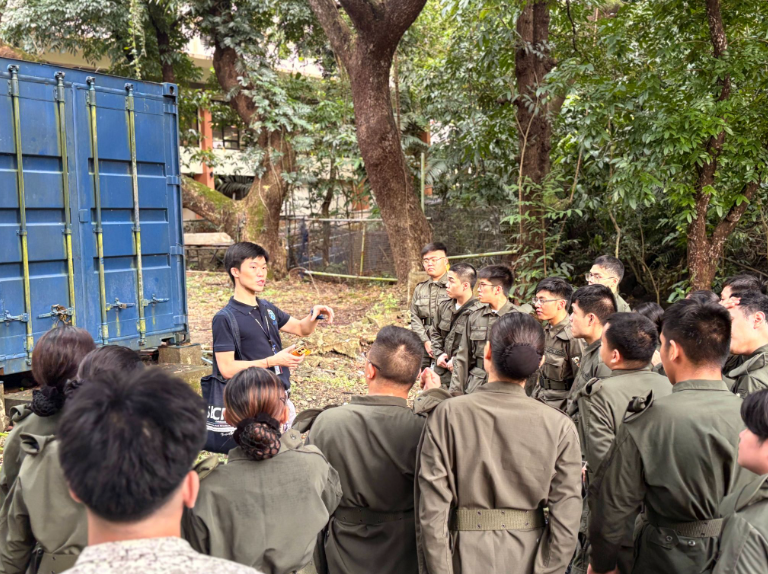
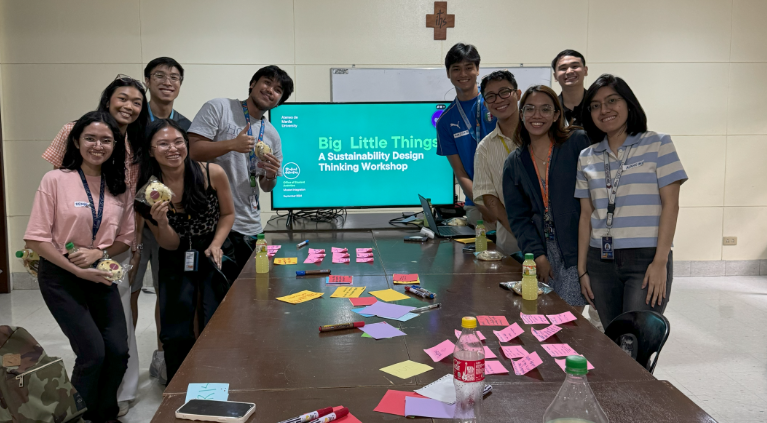
For student organizations, the Office of Student Activities guides students through the Organizational Sustainability Audit, which engages student leaders to strategize organizational practices, resource efficiency, and long-term sustainability goals. They are also supported by annual Systems Thinking Workshops for integrating sustainability practices by the Ateneo Institute of Sustainability, on both social and environmental sustainability indicators such as through supply chain stability, supplier relations, environmental management, and climate resilience. AIS’ systems thinking training spans a total of 14 hours, providing a comprehensive and in-depth learning experience.
Shaping Sustainable Students Through Data and Leadership Frameworks
The Laudato Si’ University-wide Baseline Study establishes baseline data on students’ understanding of sustainable development and integral ecology, while profiling their attitudes and sustainable lifestyle practices. Its findings inform targeted information, education, and communication strategies for students through two surveys and focus group discussions.
Complementing this, student engagement is strengthened through frameworks such as SOAR (Student Organization Accreditation and Recognition), which guides leadership and sustainability development in student organizations. The SOAR framework covers four key areas: Leadership and Member Formation, Organizational Capacity, Organizational Motivation, and External Environment Impact. Each area includes core determinants that set standards of excellence in student leadership and organizational practices, serving as the basis for evaluating student organizations and shaping recommendations for their accreditation.
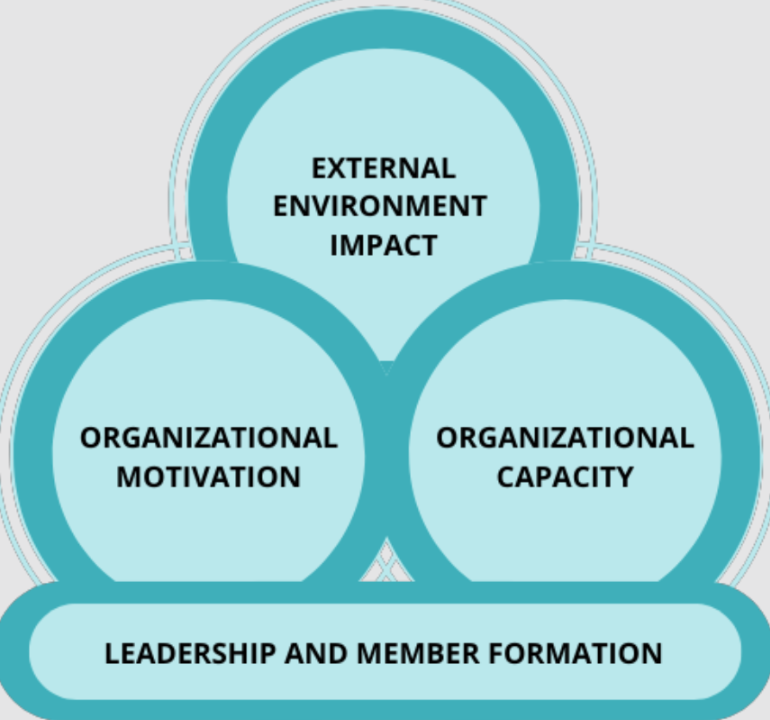
(1) Leadership & Member Formation, (2) Organizational Capacity, (3) Organizational Motivation, and (4) External Environment Impact.
Forming Communities of Care: Ateneo’s Social Sustainability Training Initiatives
Ateneo highlights policies related to the social aspects of Sustainability during the New Employees Orientation (NEO) to inform new employees as part of their onboarding process. Such topics are ethics and governance, non-discrimination, anti-corruption, and health and safety. From June - August 2025, UPT&OD oriented 61 new support employees.
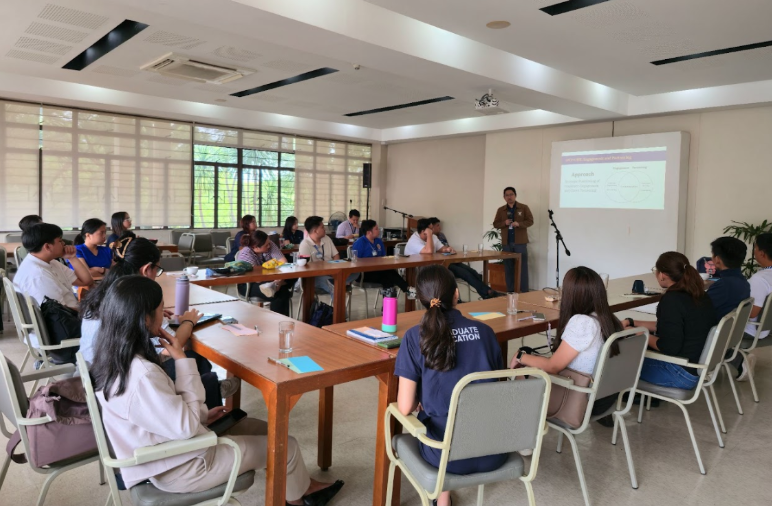
Ateneo de Manila University, through the Ateneo Institute of Sustainability, continues to advance social sustainability and community resilience through training programs that equip students and stakeholders with practical knowledge on sustainability, climate resilience, and disaster preparedness.
The University Gender and Development Office conducted several trainings for the Ateneo community, such as:
- Gender Sensitive Training and Onboarding with the Mission Integration Cluster (21 October 2025), the Office of Assistant Vice President for Graduate Education personnel and the Ateneo de Manila Multi-Purpose Cooperative (21 March 2026).
- Signs of Solidarity: Learning FSL with Pinoy Deaf Rainbow: A workshop on Filipino Sign Language and Deaf LGBTQIA+ inclusion (14 October 2025)
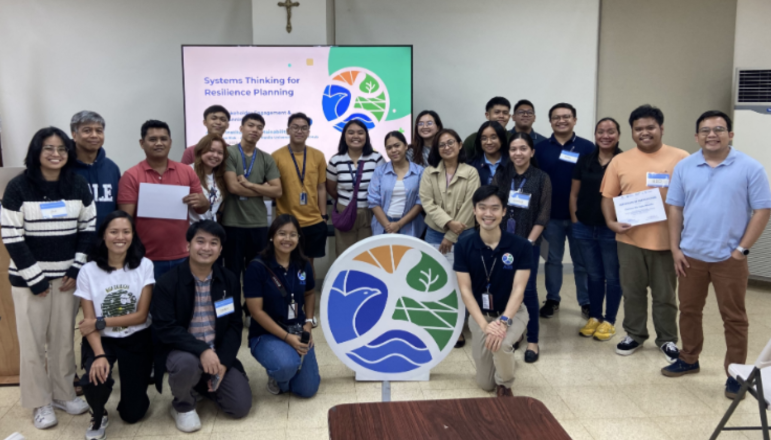
Advancing Social Sustainability through Values-Based Formation and Inclusive Training
Ateneo de Manila University advances social sustainability by integrating key policies such as ethics and governance, non-discrimination, anti-corruption, and health and safety into its New Employees Orientation, reaching 61 support staff from June to August 2025. Complementing this, the Ateneo Institute of Sustainability delivers training programs on sustainability, climate resilience, and disaster preparedness, while the University Gender and Development Office promotes inclusive practices through initiatives such as gender sensitivity trainings and workshops on Filipino Sign Language and Deaf LGBTQIA+ inclusion, strengthening a culture of equity, inclusion, and community resilience.
Forming Leaders for Mission: Ignatian Values-Based Training Across the Ateneo Community
Ateneo de Manila University provides values-based formation across all levels of the organization, integrating Ignatian spirituality into leadership development for students, faculty, administrators, and staff.
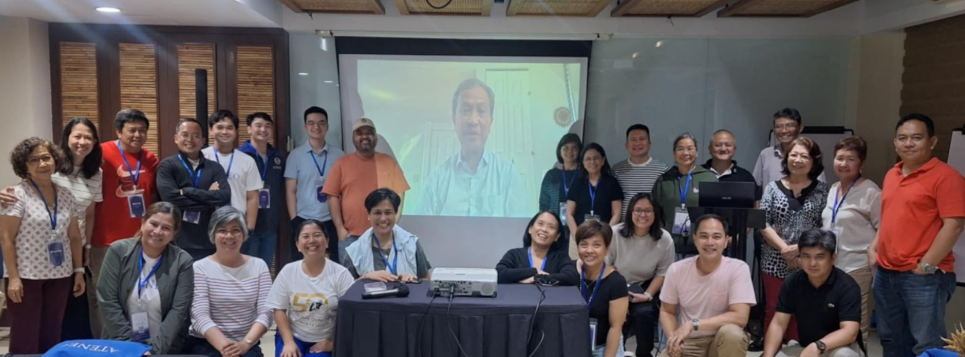
At the core of this effort is the Ignatian Leadership in Education Program (ILEP), a university-wide initiative that forms leaders through reflection, discernment, and mission-oriented practice. Recent trainings demonstrate the scale and continuity of this effort. From 14–18 July 2025, the ILEP Batch 3 Mentors Training gathered 22 participants, bringing the total number of trained mentors to nearly 80 across the University. Earlier, from 7–11 October 2024, another mentors’ training engaged 27 faculty members and administrators, equipping them to guide future participants as part of the University-wide rollout of ILEP.
These trainings bring together personnel across ranks, from senior leaders to early-career professionals, focused on reflective leadership, listening leadership, discerning leadership, and missioning leadership, alongside practical tools such as nonviolent communication and guided discernment.
The program emphasizes cura personalis (care for the whole person), self-awareness, and mission-centered decision-making. Participants are formed to align their leadership with the University’s mission, asking how their choices contribute strengthen the university’s purpose.
Recent News
You may also like these articles

Growing with purpose: How Mekeni Food Corporation turns adversity into shared value
From a small backyard operation in Porac, Pampanga, to an internationally recognized food brand exporting to 25 countries, Mekeni Food Corporation's journey demonstrates how businesses

Three Ateneo-incubated startups secure DOST-PCIEERD’s startup grant fund
Last 9 November, during the opening day of Philippine Startup Week 2026, Soolok Properties Inc, Pili AdheSeal Inc, and Saltric Power (PDG Engineering Services), three
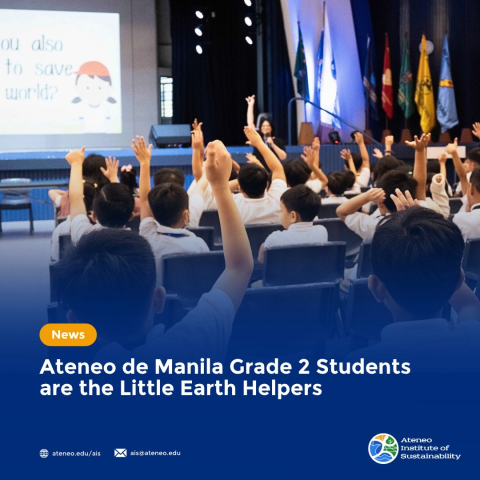
Ateneo de Manila Grade 2 students are the little Earth helpers
It was a great day for saving the world when Ateneo Institute of Sustainability (AIS) came to Ateneo Grade School to give a session on
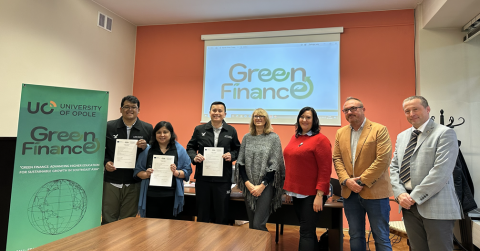
JGSOM representatives complete green finance training in Poland, sets sights on 2027 micro-credential launch
Representatives of Ateneo de Manila University's John Gokongwei School of Management (JGSOM) completed the second phase of their Erasmus+ Green Finance international mobility activities at
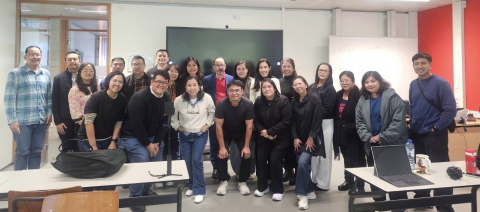
JGSOM Representatives Participate in Green Finance Training at the University of Twente
Enschede, Netherlands | October 15–16, 2026 Representatives of Ateneo de Manila University's John Gokongwei School of Management (JGSOM) participated in a specialized Green Finance training

Professor Emeritus Dr Emma Porio highlights climate resilience and biodiversity at international conferences
Emma E Porio, PhD, Professor Emeritus of Ateneo de Manila University and Principal Investigator of Ateneo's Manila Observatory Center for Climate Resilience and Public Health