6.3.4 Water-Conscious Building Standards
01 May 2025


Water-Conscious Building Standards
Ateneo de Manila University implements comprehensive building standards and campus-wide infrastructure measures to minimize water use as part of its institutional commitment to sustainable resource management, climate resilience, and environmental stewardship. Guided by its Water Conservation Program: Plan–Build–Behave, the University's Sustainability Policies and Guidelines, the Sustainable Ateneo Master Plan, the Philippine Clean Water Act (Republic Act No. 9275), and the environmental standards of the Department of Environment and Natural Resources (DENR) and the Laguna Lake Development Authority (LLDA), Ateneo integrates water-efficient technologies, green building principles, nature-based infrastructure, wastewater recycling systems, rainwater harvesting, and continuous monitoring into the planning, construction, operation, and maintenance of its campus facilities. Rather than relying on a single conservation measure, the University adopts a holistic building standard that incorporates efficient water fixtures, recycled water systems, rainwater utilization, stormwater management, leak detection, smart metering, and ecological wastewater treatment into everyday campus operations. These integrated standards reduce potable water demand, increase water reuse, strengthen climate resilience, and ensure the long-term sustainability of the University's water resources.
Building Standards for Water-Efficient Campus Infrastructure
Recognizing freshwater as a finite and increasingly valuable resource, Ateneo de Manila University incorporates water-conscious building standards into the design, construction, renovation, and operation of campus buildings and infrastructure. The University's approach follows the principle of "Building with Nature for Water Conservation," wherein engineering solutions are integrated with ecological design to minimize water consumption while maximizing opportunities for water reuse, groundwater recharge, and pollution prevention.
These building standards emphasize the installation of efficient plumbing fixtures, sustainable landscaping practices, rainwater harvesting systems, wastewater recycling facilities, porous pavements, detention ponds, and intelligent water monitoring systems that collectively reduce overall water demand throughout the campus. Rather than treating water conservation as a standalone initiative, Ateneo integrates these standards into everyday building operations, ensuring that every stage of water use, from supply and consumption to treatment, reuse, and discharge, supports the University's broader sustainability objectives.
The University's water conservation initiatives are implemented and managed by the Central Facilities Management Office (CFMO), which oversees campus water infrastructure, monitors water consumption, ensures the integrity of water supply and storage systems, and continuously evaluates opportunities to improve operational efficiency. Together with the Office for Food Safety and Quality Assurance (OFSQA), the CFMO also ensures compliance with water quality standards while maintaining the University's broader water management infrastructure.
Water-Efficient Building Fixtures and End-Use Efficiency
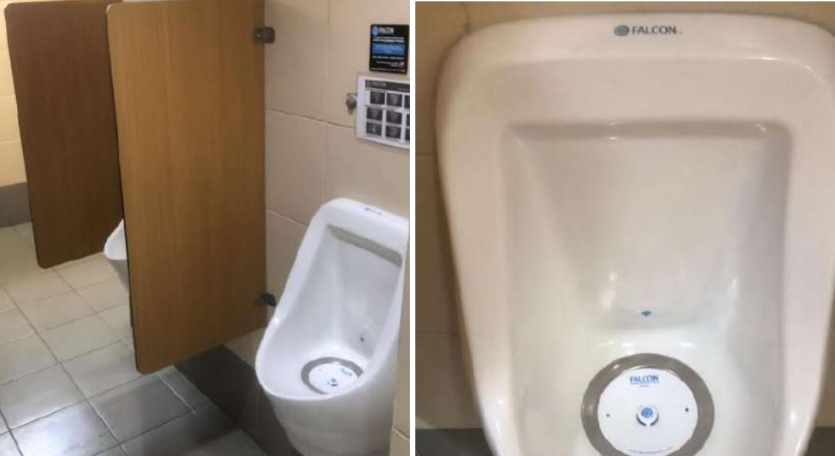
One of the University's primary building standards for minimizing water use is the installation of water-efficient plumbing fixtures across campus. Buildings incorporate dual-flush water closets, low-pressure faucets, aerated taps, and other efficient plumbing technologies that significantly reduce potable water consumption without compromising user comfort or functionality.
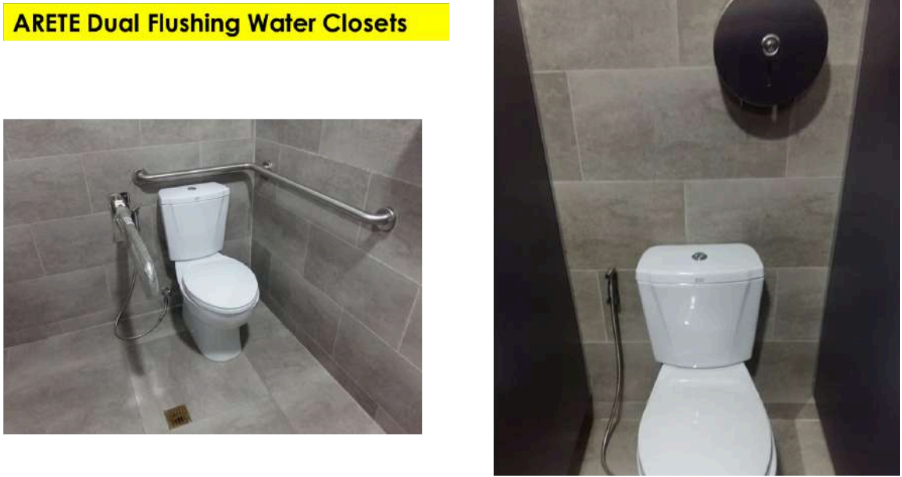
Dual-flush systems allow users to select appropriate flushing volumes depending on usage requirements, reducing unnecessary water consumption in one of the University's largest areas of indoor water use. These water-efficient sanitary fixtures form part of Ateneo's sustainable building design strategy by promoting responsible water use within academic buildings, offices, residential facilities, and common areas.
Similarly, low-pressure faucets equipped with aerators reduce water flow while maintaining sufficient pressure for effective handwashing and cleaning activities. These fixtures minimize unnecessary water use throughout campus facilities while contributing to the University's overall water conservation objectives.
Smart Water Monitoring and Infrastructure Management
Efficient building standards require accurate measurement and continuous monitoring of water consumption. Ateneo therefore integrates smart water management systems into its building operations through the installation of sub-meters, digital monitoring systems, and preventive maintenance programs.
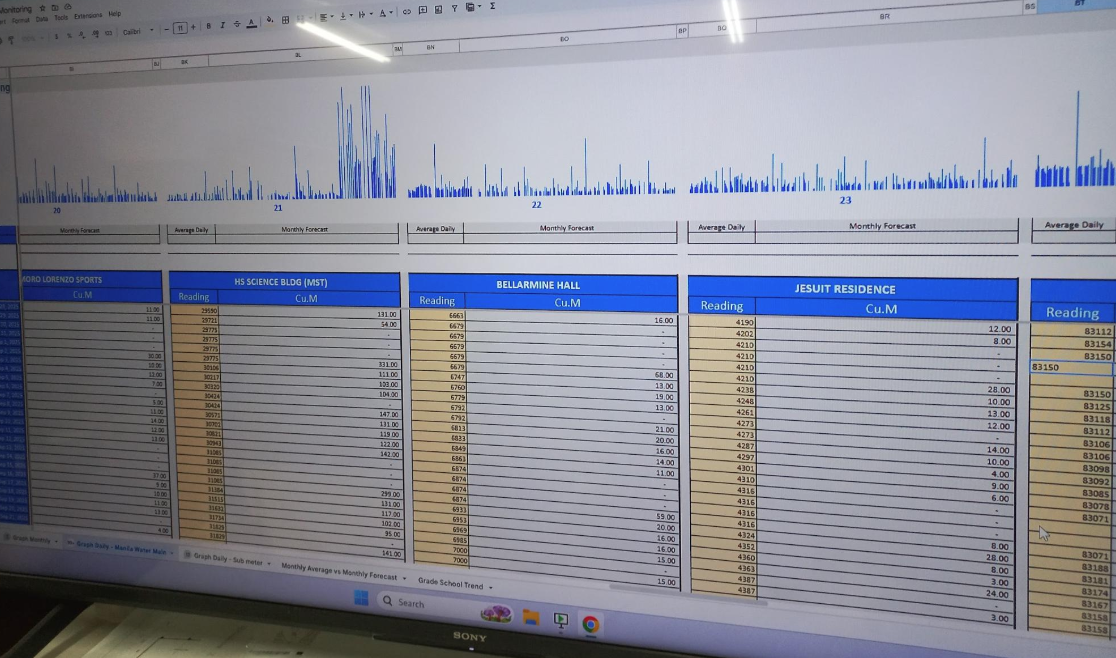
Water consumption across the University is continuously monitored by the Central Facilities Management Office (CFMO) through strategically installed sub-meters across campus facilities. These systems enable detailed monitoring of water use at the building level, allowing facilities managers to identify abnormal consumption patterns, detect leaks, evaluate conservation performance, and provide feedback to campus units.
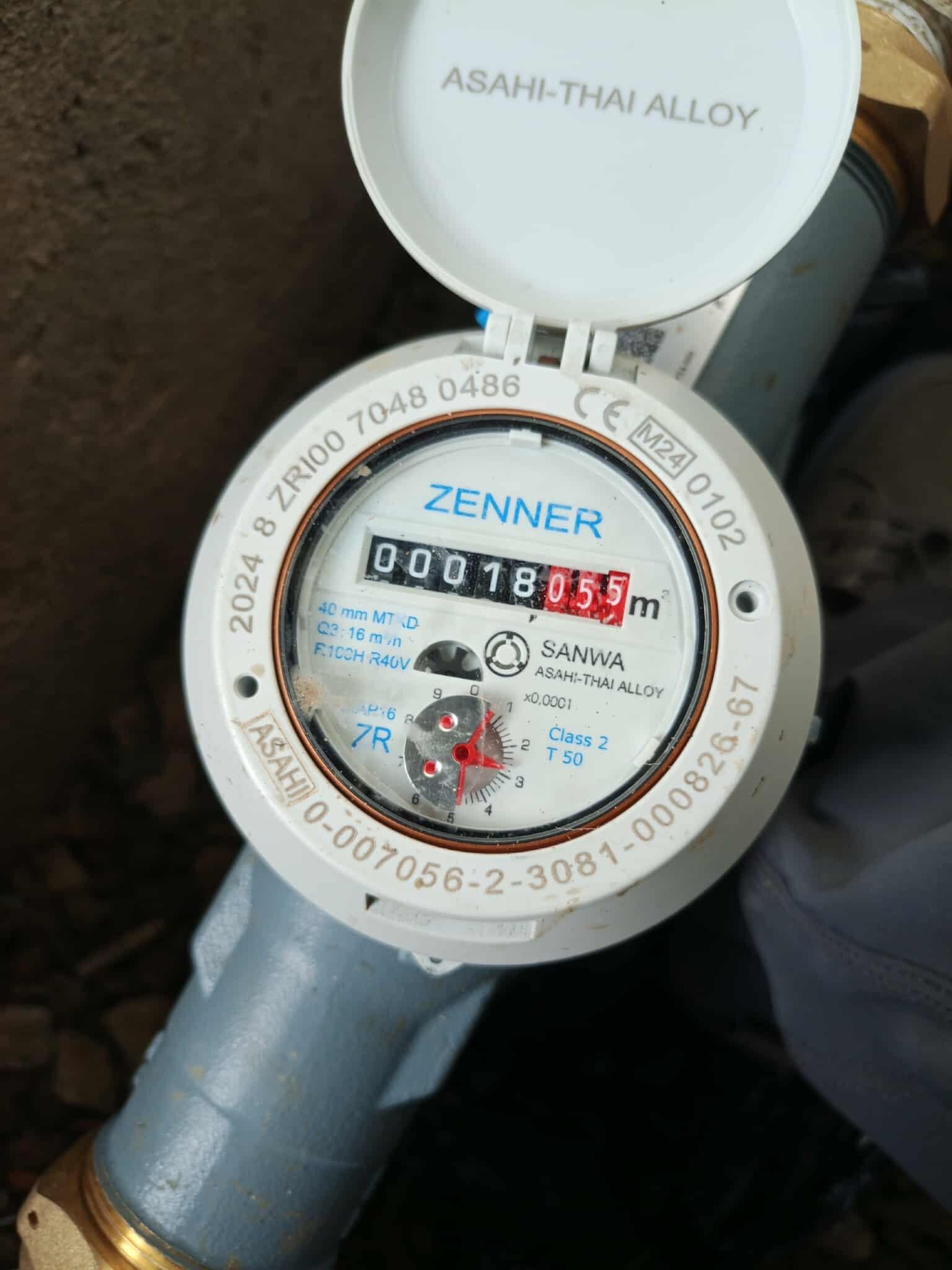
Supporting these monitoring systems are ICT-enabled dashboards, monitoring tools, and regular water readings that provide information to guide maintenance scheduling, infrastructure planning, and operational decision-making. These data-driven systems ensure that conservation measures remain effective while enabling the University to respond quickly to changing water demand and infrastructure conditions.
The University's preventive maintenance program further strengthens water efficiency through water pipe relining projects, routine inspection of water distribution infrastructure, and the use of leak detection technologies that enable maintenance teams to identify hidden leaks before they result in significant water losses. Through proactive infrastructure management, Ateneo minimizes water waste, extends the service life of campus utilities, and ensures the long-term reliability of its water distribution network.
Rainwater Harvesting and Sustainable Stormwater Management
A key building standard implemented by Ateneo is the integration of rainwater harvesting systems into campus buildings to supplement water supplies and reduce reliance on potable water sources.
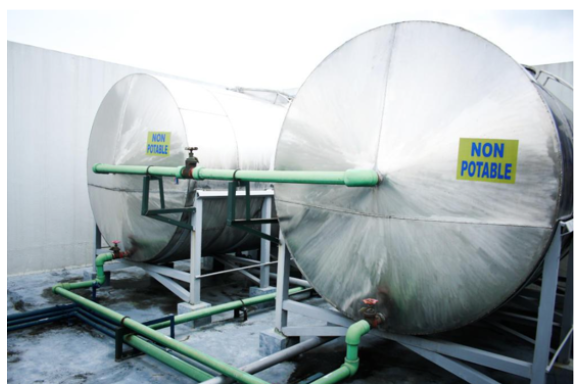
Several major buildings, including Areté, the New Rizal Library, Cervini Cafeteria, and other campus facilities, are equipped with rainwater harvesting infrastructure that captures rainwater from rooftop collection systems and stores it for reuse. Harvested rainwater supports various non-potable applications such as toilet flushing, irrigation, cleaning, and outdoor maintenance activities through dedicated storage and distribution systems.
Nature-Based Wastewater Treatment and Water Recycling
The University's building standards extend beyond water conservation to include comprehensive wastewater recycling systems that support circular water use throughout campus.
Ateneo operates Decentralized Wastewater Treatment Systems (DEWATS), Building Wastewater Treatment Systems (BWATS), and wastewater treatment facilities that collectively treat wastewater before reuse or environmental discharge.
The DEWATS and BWATS facilities utilize aerobic reactors, anaerobic reactors, constructed reed beds, polishing ponds, and natural filtration systems that mimic ecological processes while reducing environmental impacts. These systems comply with water quality standards established by environmental regulatory agencies and ensure that wastewater is treated safely before reuse.
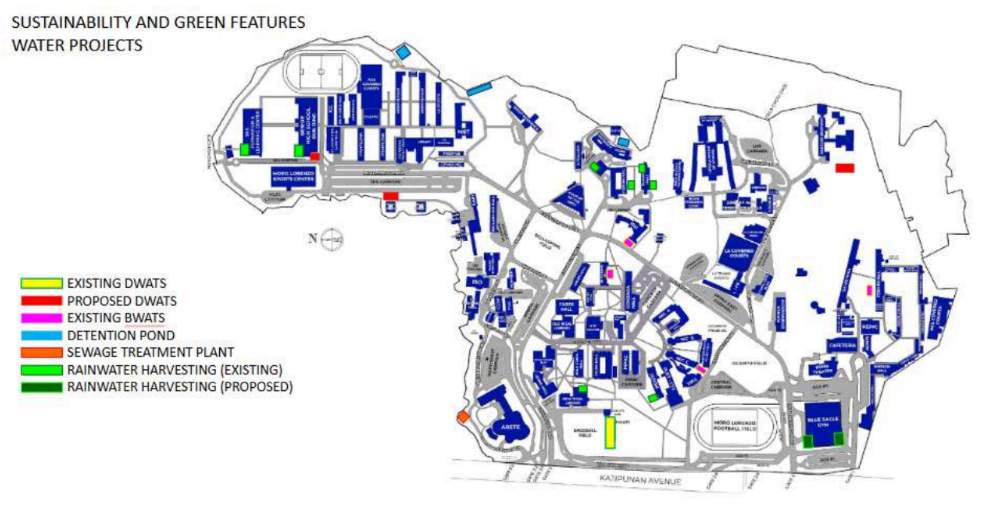
Buildings with dedicated BWATS include:
- Matteo Ricci Hall
- Fermin Hall
- International Residence Halls
Meanwhile, the following buildings are connected to the University's DEWATS:
- First Pacific Hall (New Rizal Library)
- Ricardo and Dr. Rosita Leong Hall
- Social Sciences Building
- Horacio dela Costa Hall
- Manuel V. Pangilinan Center for Student Leadership
- Faura Hall
- Schmitt Hall
Rather than disposing of treated wastewater, Ateneo incorporates water reuse into its building standards. Treated wastewater is recycled for irrigating campus landscapes, watering gardens, cleaning walkways, washing driveways, vehicle cleaning, and other grounds maintenance activities. Contractors responsible for campus maintenance likewise utilize recycled water supplied by these wastewater treatment facilities, supporting sustainable resource management throughout campus operations.
This circular approach significantly reduces freshwater demand while ensuring that wastewater becomes a valuable resource supporting everyday campus activities.
Source:
You may also like these articles

Growing with purpose: How Mekeni Food Corporation turns adversity into shared value
From a small backyard operation in Porac, Pampanga, to an internationally recognized food brand exporting to 25 countries, Mekeni Food Corporation's journey demonstrates how businesses

Three Ateneo-incubated startups secure DOST-PCIEERD’s startup grant fund
Last 9 November, during the opening day of Philippine Startup Week 2026, Soolok Properties Inc, Pili AdheSeal Inc, and Saltric Power (PDG Engineering Services), three

Ateneo de Manila Grade 2 students are the little Earth helpers
It was a great day for saving the world when Ateneo Institute of Sustainability (AIS) came to Ateneo Grade School to give a session on

JGSOM representatives complete green finance training in Poland, sets sights on 2027 micro-credential launch
Representatives of Ateneo de Manila University's John Gokongwei School of Management (JGSOM) completed the second phase of their Erasmus+ Green Finance international mobility activities at

JGSOM Representatives Participate in Green Finance Training at the University of Twente
Enschede, Netherlands | October 15–16, 2026 Representatives of Ateneo de Manila University's John Gokongwei School of Management (JGSOM) participated in a specialized Green Finance training

Professor Emeritus Dr Emma Porio highlights climate resilience and biodiversity at international conferences
Emma E Porio, PhD, Professor Emeritus of Ateneo de Manila University and Principal Investigator of Ateneo's Manila Observatory Center for Climate Resilience and Public Health