6.3.1 Wastewater Treatment
01 May 2025


Ateneo Wastewater Treatment Processes
Ateneo de Manila University implements a comprehensive wastewater treatment and circular water management system across the entire University as part of its commitment to environmental stewardship, regulatory compliance, and sustainable campus operations. Recognizing water as a finite and shared resource, the University adopts an integrated approach to water management that combines wastewater treatment, water reuse, rainwater harvesting, water conservation, pollution prevention, smart monitoring systems, and sustainable landscape management.
Guided by the Philippine Clean Water Act of 2004 (Republic Act No. 9275), the University's Sustainability Policies and Specific Guidelines, the Sustainable Ateneo Master Plan, and the principles of Laudato Si', Ateneo transforms conventional water management into a circular system that maximizes resource efficiency while minimizing environmental impacts. Through innovative engineering solutions, nature-based treatment technologies, ICT-enabled monitoring, and community engagement, the University ensures that water resources are responsibly managed throughout their entire lifecycle—from consumption and treatment to reuse and environmental discharge—supporting climate resilience, environmental protection, and the achievement of the Sustainable Development Goals (SDGs).
Wastewater Treatment and Sustainable Water Management Systems
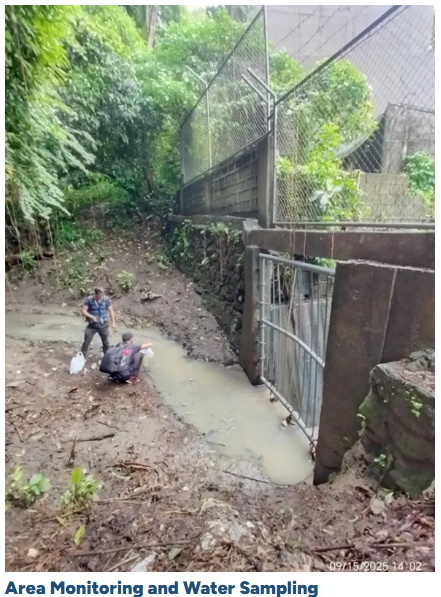 Ateneo de Manila University operates institution-wide wastewater treatment processes that safely collect, treat, monitor, and reuse wastewater before it is released into the environment or repurposed for non-potable applications. Rather than treating wastewater as waste, the University recognizes it as a valuable resource that can be recovered and reintegrated into campus operations through a circular water management approach.
This integrated wastewater management framework combines ecological wastewater treatment technologies, engineered infrastructure, continuous environmental monitoring, rainwater harvesting systems, water-efficient facilities, and evidence-based management practices to reduce dependence on potable water supplies while protecting surrounding waterways and ecosystems.
Water use across campus is closely monitored through sub-meters, regular collection and analysis of water consumption data, and feedback mechanisms provided to campus units. These monitoring systems are complemented by stakeholder education, information and communication (IEC) campaigns, and inter-unit collaboration that encourage responsible water use and promote a culture of conservation throughout the University community. Whenever feasible, less water-intensive vegetation is selected for campus greening, further strengthening Ateneo's commitment to sustainable resource management.
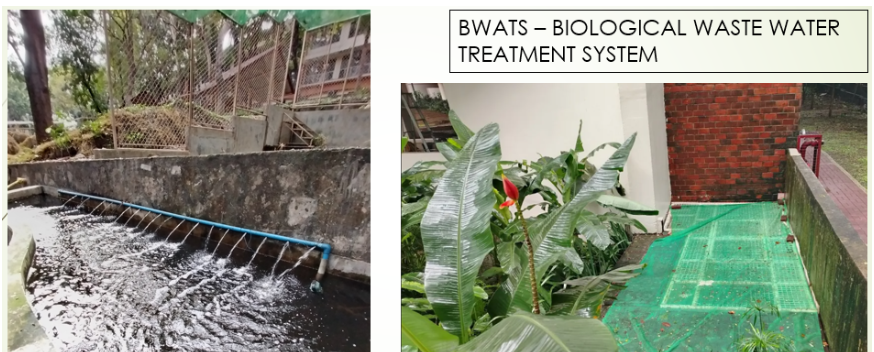
One of the University's flagship initiatives is the implementation of the Building Wastewater Treatment System (BWaTS) and the Decentralized Wastewater Treatment System (DEWATS), which form the backbone of Ateneo's campus-wide wastewater treatment infrastructure. These systems naturally treat wastewater generated from washrooms and campus facilities using a carefully designed sequence of ecological and engineering processes.
Wastewater first passes through settling tanks that remove suspended solids before flowing into underground aerobic and anaerobic reactors where naturally occurring microorganisms biologically decompose organic matter. The partially treated water then passes through constructed reed beds that further remove contaminants through phytoremediation, followed by polishing gravel filters and indicator ponds that complete the treatment process while allowing continuous monitoring of treatment performance.
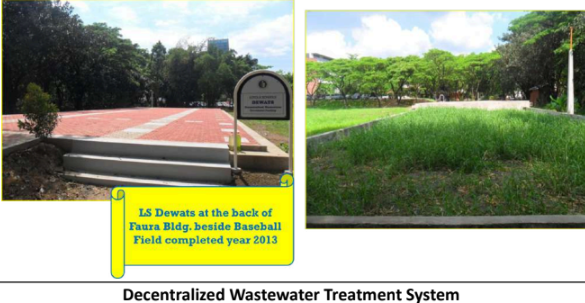
Through these integrated wastewater treatment systems, wastewater is transformed into treated effluent that consistently complies with the standards established under the Philippine Clean Water Act (Republic Act No. 9275), demonstrating Ateneo's commitment to environmentally responsible wastewater management, innovative infrastructure, and sustainable campus development. The combination of biological treatment processes, nature-based filtration systems, and continuous monitoring allows the University to manage wastewater responsibly while reducing environmental impacts and promoting resource recovery.
Beyond meeting regulatory standards, Ateneo closes the water cycle by maximizing the reuse of treated wastewater for various non-potable applications throughout campus. Treated water from the DEWATS and BWaTS facilities is reused for irrigating landscaped areas, maintaining gardens and green spaces, cleaning walkways and driveways, and supporting other grounds maintenance activities.
Complementing wastewater reuse are rainwater harvesting systems installed in key campus buildings, including Areté, the New Rizal Library, Cervini Cafeteria, and the International Residence Halls, where rainwater collected from sloped rooftops is directed into underground catchment cisterns.
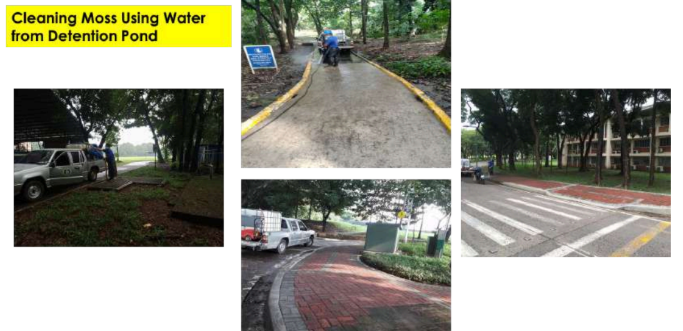
Through dual-piping systems, harvested rainwater remains available throughout the year and is used for toilet flushing, irrigation, and landscape maintenance, even during dry months. Captured rainwater from detention ponds is likewise reused for irrigation and campus cleaning, significantly reducing dependence on potable water supplies.
Treated wastewater and harvested rainwater form an integrated circular water system that maximizes water reuse while improving the University's resilience against water scarcity and climate variability.
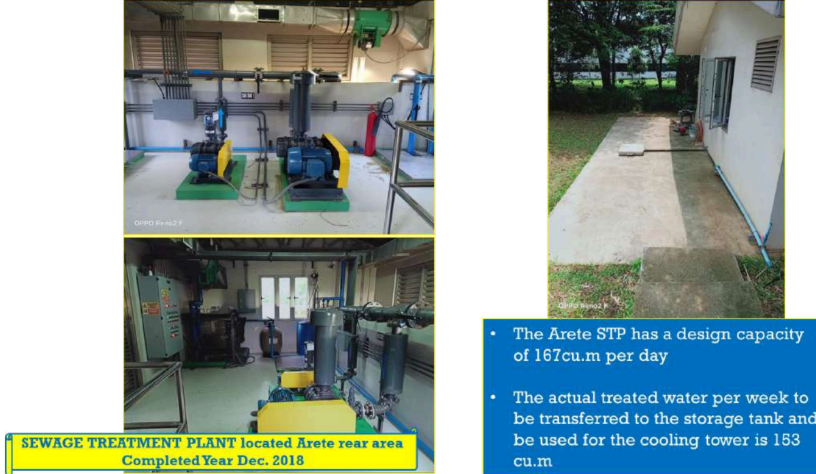
The University's wastewater treatment process is further supported by numerous water conservation initiatives that improve efficiency across campus. Almost all campus toilets are equipped with dual-flush systems that reduce water consumption by allowing users to select appropriate flush volumes. Drip irrigation systems slowly deliver water directly to plant roots through a network of valves, pipes, and tubing, minimizing evaporation losses while ensuring efficient irrigation of campus landscapes. Rainwater detention ponds capture excess stormwater during heavy rainfall, mitigating downstream flooding while increasing opportunities for rainwater storage and reuse.
These ponds are equipped with float sensors and connected to underground cisterns that enhance campus water storage capacity. In addition, porous pavers installed throughout campus allow rainwater to infiltrate naturally into the soil, helping recharge groundwater while minimizing runoff, erosion, and water waste. These complementary infrastructure investments integrate wastewater treatment with broader strategies for climate adaptation, flood mitigation, groundwater recharge, and sustainable campus development.
To ensure the effectiveness and long-term sustainability of its wastewater treatment systems, Ateneo employs comprehensive environmental monitoring and ICT-enabled water management practices overseen by the Central Facilities Management Office (CFMO). Water consumption is continuously monitored through campus sub-meters and recorded using monitoring systems that allow facilities managers to analyze water use, rainwater harvesting performance, treated-water consumption, and system efficiency.
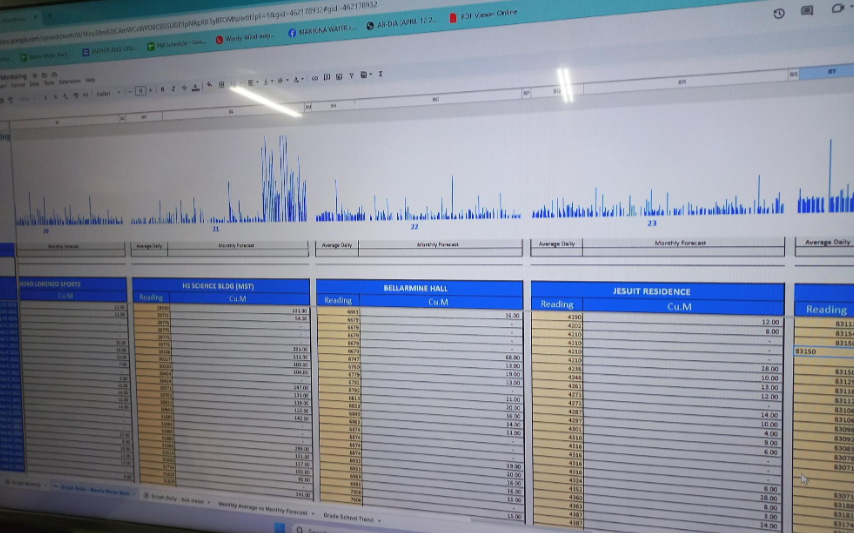
Regular collection and analysis of water data provide timely feedback to campus units, enabling maintenance teams to detect inefficiencies, optimize maintenance schedules, and implement evidence-based operational improvements.
Water quality is likewise monitored through routine sampling, integrity checks, and laboratory analyses at wastewater discharge points in accordance with the requirements of the Department of Environment and Natural Resources (DENR), the Laguna Lake Development Authority (LLDA), and the Philippine Clean Water Act.
Through these data-driven monitoring systems and transparent compliance reporting, Ateneo ensures that wastewater treatment facilities remain effective, reliable, and fully compliant with national environmental regulations while protecting nearby rivers, waterways, and aquatic ecosystems.
Ateneo's integrated water management framework extends beyond wastewater treatment to encompass broader initiatives that promote sustainable water use throughout campus. Safe drinking water is provided through drinking fountains and water dispensers across campus, with these facilities undergoing regular testing and timely filter replacement to ensure compliance with national drinking water standards.
Source:
Recent News
You may also like these articles

Growing with purpose: How Mekeni Food Corporation turns adversity into shared value
From a small backyard operation in Porac, Pampanga, to an internationally recognized food brand exporting to 25 countries, Mekeni Food Corporation's journey demonstrates how businesses

Three Ateneo-incubated startups secure DOST-PCIEERD’s startup grant fund
Last 9 November, during the opening day of Philippine Startup Week 2026, Soolok Properties Inc, Pili AdheSeal Inc, and Saltric Power (PDG Engineering Services), three

Ateneo de Manila Grade 2 students are the little Earth helpers
It was a great day for saving the world when Ateneo Institute of Sustainability (AIS) came to Ateneo Grade School to give a session on
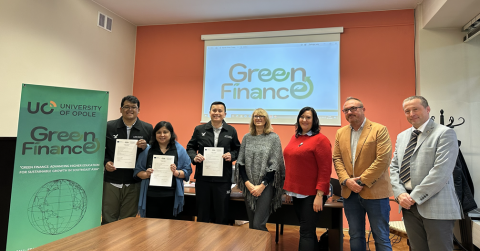
JGSOM representatives complete green finance training in Poland, sets sights on 2027 micro-credential launch
Representatives of Ateneo de Manila University's John Gokongwei School of Management (JGSOM) completed the second phase of their Erasmus+ Green Finance international mobility activities at
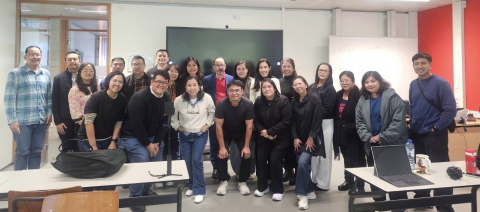
JGSOM Representatives Participate in Green Finance Training at the University of Twente
Enschede, Netherlands | October 15–16, 2026 Representatives of Ateneo de Manila University's John Gokongwei School of Management (JGSOM) participated in a specialized Green Finance training

Professor Emeritus Dr Emma Porio highlights climate resilience and biodiversity at international conferences
Emma E Porio, PhD, Professor Emeritus of Ateneo de Manila University and Principal Investigator of Ateneo's Manila Observatory Center for Climate Resilience and Public Health