17.4.2 Education for SDGs Specific Courses on Sustainability
01 May 2025


Ateneo de Manila University integrates sustainability and the United Nations Sustainable Development Goals (SDGs) across different levels of its academic curriculum. The University provides students with multiple pathways to engage with sustainable development through dedicated undergraduate and graduate degree programs, minors, and elective courses. This allows sustainability to be explored from different academic and professional perspectives while connecting classroom learning with pressing social, economic, and environmental challenges.
Students can develop knowledge and skills related to sustainable development while examining how the SDGs intersect with issues such as poverty, inequality, environmental protection, governance, economic development, and community well-being. The availability of programs at both the undergraduate and graduate levels also supports continued learning and specialization for students who wish to pursue sustainability more deeply. These offerings demonstrate Ateneo's effort to embed sustainability education within the broader academic experience.
Sustainability-Focused Academic Programs
Ateneo de Manila University offers a range of undergraduate and graduate programs that directly address environmental sustainability, sustainable management, climate change, disaster resilience, and sustainable development. These programs span the natural sciences, management, governance, and public policy, reflecting an interdisciplinary approach to sustainability education.
| Program | School | Program Description |
|---|---|---|
| BS Environmental Science | School of Science and Engineering | The program combines the empirical focus of the natural sciences with the pro-active methodologies of management and the social sciences. |
| MS Environmental Science | School of Science and Engineering | The program is a more in-depth study of specific environmental compartments like soil, water, air and biota and other courses such as law and policy, ethics, culture, economics and many others. It provides students with advanced knowledge in resource conservation and pollution management, to equip researchers with technical skills in identifying, analyzing and developing innovative solutions to environmental problems and link environmental research to policy, economic and/or social issues. |
| PhD Environmental Science | School of Science and Engineering | The program emphasizes interdisciplinary approaches that balance depth of knowledge in a specific field with a larger systems perspective of environmental science and management. |
| MS Sustainability Management | John Gokongwei School of Management | The program develops the knowledge, skills, and competencies needed to address complex management challenges through the integrated perspectives of systems thinking and sustainable development. |
| Master in Disaster Risk and Resilience | School of Science and Engineering | The program is designed to advance interdisciplinary and trans-disciplinary approaches to addressing risk and building resilience. |
| Master in Public Management (Track on Climate Change) | Ateneo School of Government (Ateneo Professional School) | The MPM program aims to build the capacity of the students to achieve the broader goals of transforming communities and building the nation through ethical leadership and good governance in the public service. |
| Master in Public Management (Track on Energy Transitions) | Ateneo School of Government (Ateneo Professional School) | The MPM program aims to build the capacity of the students to achieve the broader goals of transforming communities and building the nation through ethical leadership and good governance in the public service. |
Sustainability-Focused Minor Programs/Tracks
Beyond full degree programs, Ateneo de Manila University provides students with opportunities to specialize in sustainability and related issues through minors, academic tracks, and focused electives. These offerings allow students to develop sustainability competencies within broader fields such as public management, urban and regional development, gender studies, and governance.
| Minor/Track | Specific Courses/Electives |
|---|---|
| Master in Public Management (Track on Climate Change) |
Environmental Governance and Climate Change (3 Units) The course introduces the students to the principles of environmental governance and sustainable development as the overarching framework for addressing climate change and managing natural resources. Science and Technology Tools for Climate Change Adaptation (3 Units) The course delves into the science, impact and risks associated with climate change. It gives the students greater understanding of the country’s vulnerability to climate change, particularly in the areas of environment, public and social welfare, security, poverty and development. Policy and Economics for Climate Change (3 Units) The course introduces the students to the economics of climate change and provides them with policy tools for building an economy that follows a low-carbon path and is resilient from climate risks. Mainstreaming Climate Change into Policy and Planning (3 Units) The course is designed to ensure that the knowledge, skills and tools acquired by the students from the other specialized courses are integrated into the planning and policy formulation processes. |
| Master in Public Management (Track on Energy Transitions) |
Comparative Policy in Energy Transitions (3 Units) This introductory course explores the country's experiences in the area of energy policy with respect to the economic, social, political, and technological forces that underpin energy transitions. Utilizing a comparative approach and real-life case studies, this course immerses the students to critically understand and analyze the crosscutting issues and complexities of decision-making processes within this policy area. While cognizant that energy policy is often a centralized and national-level policy domain, the course shall also touch on challenges experienced at subnational levels and other contexts that are underpinned by diverse geographical, socio-economic and political circumstances. Energy Economics and Regulation (3 Units) As a consumer and industrial good, energy is a basic and critical resource that demands intensive consideration and public regulation by relevant authorities. Students shall be informed on the intricate workings of energy markets, the interplay between resource production and utilization, and possible externalities stemming from energy use. A special focus on the historical experience and current regulatory issues in the Philippines shall also be undertaken. Energy Governance and Management (3 Units) A critical goal in energy policy is maintaining and ensuring a stable, secure and equitable supply of energy. Students shall be instructed on the systematic management and other essential strategies to deal with the various risks and consequences inherent to energy systems. Especially under a context of increasing hazards from climate crises and other disaster scenarios, the management of the energy system is vital to energy specialists. Principles of Energy Systems (3 Units) Public managers working on energy policy are expected to be conversant about their field’s scientific, engineering and technical aspects. This course serves as a broad introduction to fundamental concepts in the energy field: science, engineering, products and its applications. Students are not expected to have a technical background to undertake this subject but shall be trained to eventually possess a scientific appreciation of the energy field. At the end of the course, the knowledge gained from this course could serve as a building block for advanced topics. Energy Innovations and the Environment (3 Units) The fast-paced evolution of contemporary knowledge has given rise to competing and complementary energy technologies that are largely geared to meet sustainability targets and environmental regulations. This advanced course shall acquaint future public managers with the ongoing development, debate and discussions about the different novel and emerging energy technologies and innovations to address climate change issues. Business of Energy (3 Units) For systemic energy transitions to fully deploy, the involvement of the private sector and other non-government organizations would be necessary to complement efforts by the government. The energy transitions should take the Sustainable Development Goals together with the Ambisyon 2040 plans into consideration, and ensure that no one is left behind. Students shall be intimately exposed to the commercial operations of the energy industry particularly within the Philippine setting. The course shall also touch on practical and professional topics such as power contracting, purchase agreements, and retail competition. |
| Minor in Urban and Regional Development |
The minor aims to attract students who see a career in policy-making and planning related to urbanization and regional development. Electives included:
|
| Minor in Gender Studies |
The minor is an interdisciplinary program that explores key concepts and analytical tools for understanding gender issues and their intersectionality. It fosters an innovative mindset to address contemporary gender challenges. Courses and electives:
|
| Minor in Sustainability | The minor is designed to equip students as organizations transition towards sustainable models. Graduates will be able to analyze problems and issues using the perspectives of systems thinking and sustainable development, particularly as they are applied to environment management and disaster risk reduction; develop multi- and interdisciplinary solutions to issues such as inclusive development, corporate sustainability, governance, and sustainable mobility; and develop tools and competencies that may be required by new situations and contexts. |
Sources:
1. Minor in Sustainability
2. Minor in Gender Studies
3. Minor in Urban and Regional Development
4. Environmental Science Programs
5. MS in Sustainability Management
Recent News
You may also like these articles

Growing with purpose: How Mekeni Food Corporation turns adversity into shared value
From a small backyard operation in Porac, Pampanga, to an internationally recognized food brand exporting to 25 countries, Mekeni Food Corporation's journey demonstrates how businesses

Three Ateneo-incubated startups secure DOST-PCIEERD’s startup grant fund
Last 9 November, during the opening day of Philippine Startup Week 2026, Soolok Properties Inc, Pili AdheSeal Inc, and Saltric Power (PDG Engineering Services), three
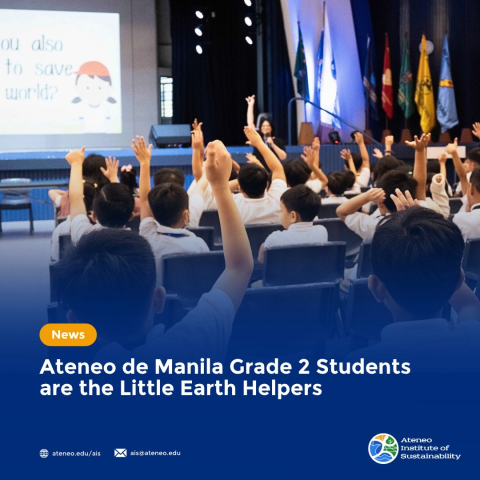
Ateneo de Manila Grade 2 students are the little Earth helpers
It was a great day for saving the world when Ateneo Institute of Sustainability (AIS) came to Ateneo Grade School to give a session on
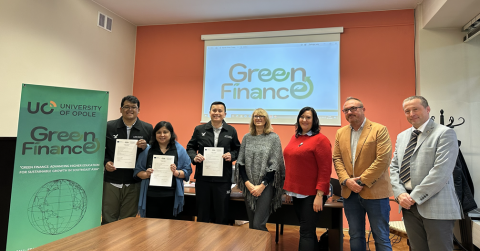
JGSOM representatives complete green finance training in Poland, sets sights on 2027 micro-credential launch
Representatives of Ateneo de Manila University's John Gokongwei School of Management (JGSOM) completed the second phase of their Erasmus+ Green Finance international mobility activities at
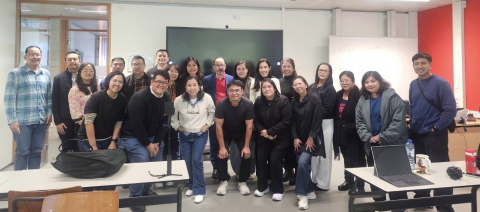
JGSOM Representatives Participate in Green Finance Training at the University of Twente
Enschede, Netherlands | October 15–16, 2026 Representatives of Ateneo de Manila University's John Gokongwei School of Management (JGSOM) participated in a specialized Green Finance training

Professor Emeritus Dr Emma Porio highlights climate resilience and biodiversity at international conferences
Emma E Porio, PhD, Professor Emeritus of Ateneo de Manila University and Principal Investigator of Ateneo's Manila Observatory Center for Climate Resilience and Public Health