11.4.8 Planning Development - New Build Standards
01 May 2025


Planning Development – New Build Standards
Ateneo de Manila University ensures that all new building developments are designed and constructed according to sustainable standards through the implementation of its Campus Master Plan and the Ateneo Sustainability Guidelines, particularly Section C1: Campus Built Environment (page 8). While the University does not currently anchor its new construction projects on a single external certification system such as LEED or the World Green Building Council, it follows a comprehensive internal sustainability framework that establishes mandatory environmental design requirements for campus facilities.
The Ateneo Sustainability Guidelines require all new buildings to adopt green tropical design principles, recognizing the importance of designing infrastructure that responds to the Philippines’ climate conditions while reducing environmental impacts. These standards integrate passive architectural strategies, renewable energy readiness, water conservation measures, sustainable wastewater management, biodiversity protection, and climate-responsive planning.
Through these guidelines, Ateneo ensures that sustainability is embedded throughout the entire development process from architectural planning and engineering design to construction and long-term facility operations. The University’s approach reflects its commitment to responsible stewardship of resources and its mission of caring for the environment as part of its broader commitment to Laudato Si’: Care for Our Common Home, the Universal Apostolic Preferences of the Society of Jesus, and the United Nations Sustainable Development Goals (SDGs).
Institutional Sustainability Framework for Campus Development
Ateneo’s approach to sustainable construction is guided by the principle that buildings are not merely physical structures but long-term contributors to environmental, social, and community well-being. The Campus Master Plan and Sustainability Guidelines establish standards that ensure new facilities contribute to a more sustainable and resilient campus ecosystem.
Under the Campus Built Environment guidelines, new construction projects are required to incorporate:
- Green tropical architectural principles;
- Energy-efficient building strategies;
- Renewable energy integration readiness;
- Water conservation and reuse systems;
- Sustainable wastewater treatment solutions;
- Biodiversity-sensitive design approaches;
- Reduced environmental impacts from campus operations; and
- Climate-resilient infrastructure planning.
These standards demonstrate Ateneo’s commitment to developing facilities that balance functionality, innovation, environmental responsibility, and the needs of the University community.
Green Tropical Architecture and Passive Design Strategies
Ateneo’s new buildings incorporate green tropical architecture principles designed specifically for the country’s warm and humid climate. Instead of relying solely on mechanical cooling and artificial lighting, new facilities prioritize passive design strategies that improve energy performance and occupant comfort.
Key design approaches include:
- Maximizing natural lighting through optimized building orientation and window placement;
- Promoting natural ventilation and cross-air circulation;
- Reducing heat gain through improved building envelope design;
- Incorporating double-envelope insulation systems to improve thermal performance; and
- Designing spaces that reduce dependence on artificial lighting and mechanical cooling.
Through these strategies, Ateneo reduces energy consumption while creating healthier and more comfortable learning and working environments for students, faculty, staff, and visitors. The University’s emphasis on passive design demonstrates that sustainability begins with architectural decisions that work with the natural environment rather than against it.
Renewable Energy Integration and Energy Efficiency Measures
Building structures are designed with future clean energy integration in mind, particularly through the incorporation of photovoltaic (solar) energy systems.
New construction projects consider:
- Roof orientation and slope optimization;
- Structural loading requirements for solar panel installation; and
- Building layouts that support renewable energy technologies.
This approach ensures that campus facilities are prepared for the expansion of renewable energy systems while reducing dependence on conventional energy sources.
Beyond renewable energy readiness, Ateneo promotes energy efficiency through responsible technology adoption. Energy-related investments, including lighting systems and air-conditioning technologies, are evaluated based on efficiency, lifecycle costs, installation requirements, disposal considerations, and potential carbon reduction benefits.
Renewable Energy Expansion
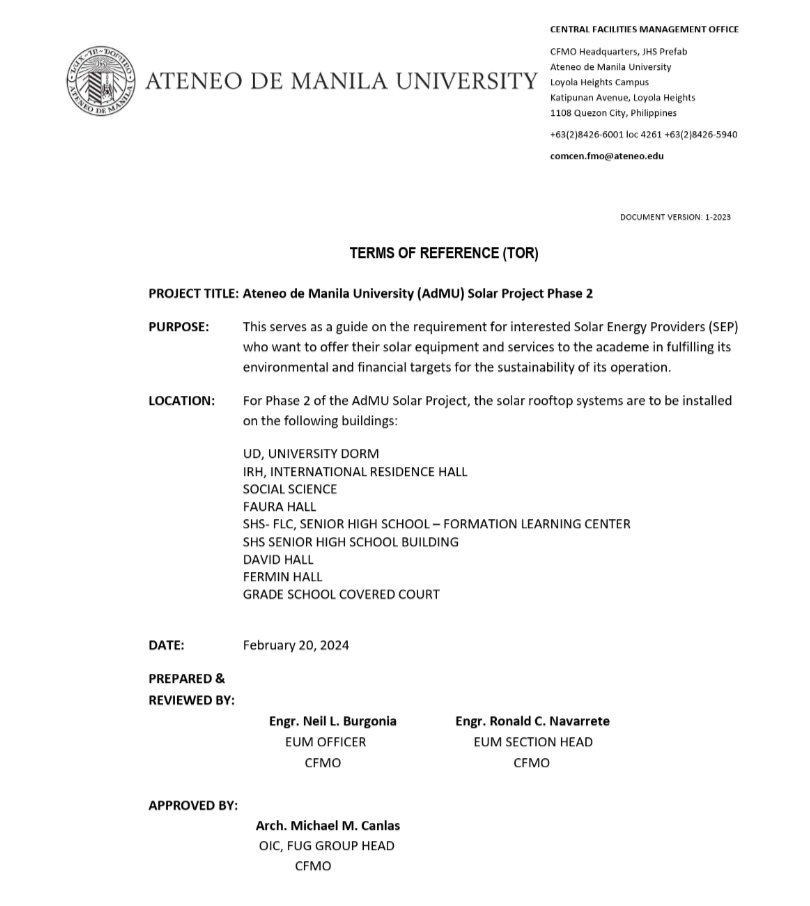
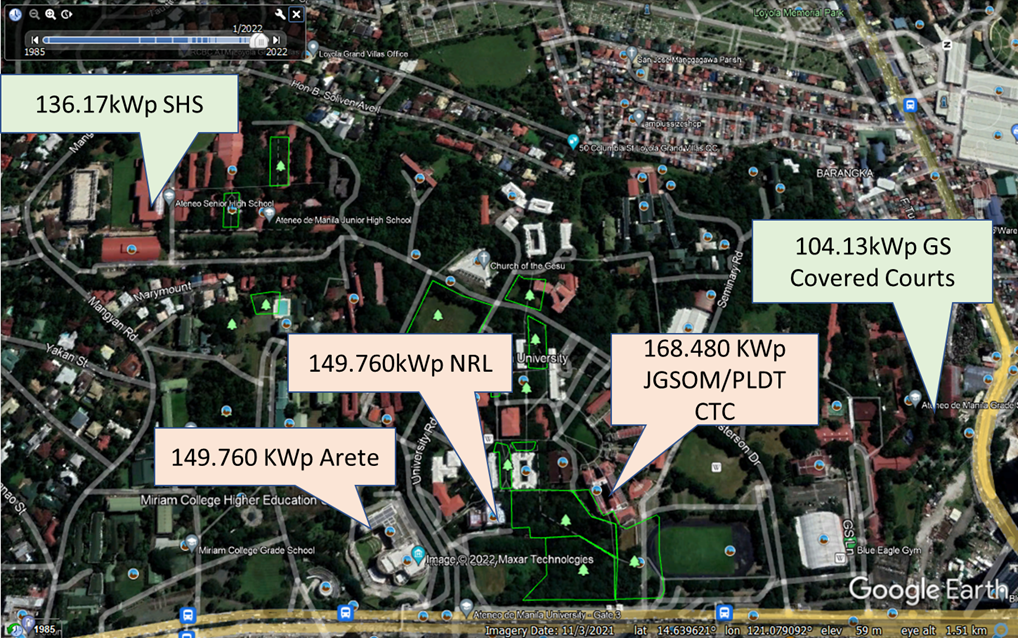
The Ateneo Solar Power Project, launched in 2020, represents the University’s commitment to clean energy generation. As of 2025, solar panels installed on five key buildings—Arete, the New Rizal Library (First Pacific Hall), PLDT-CTC/JGSOM, Senior High School Main Building, and the Ateneo Grade School Covered Courts—have a combined capacity of 695.50 kWp, producing 725,071.80 kWh annually, equivalent to nearly 6% of campus energy needs.
Water Conservation, Rainwater Management, and Sustainable Wastewater Treatment
Water stewardship is a central component of Ateneo’s sustainable building standards. New facilities incorporate systems designed to reduce water consumption, improve water efficiency, and promote responsible wastewater management.
Sustainable water practices include:
- Rainwater harvesting and storage systems;
- Water-efficient fixtures such as low-flow showerheads, aerators, and dual-flush toilets;
- Responsible water use management;
- Sustainable irrigation practices; and
- Wastewater treatment and reuse systems.
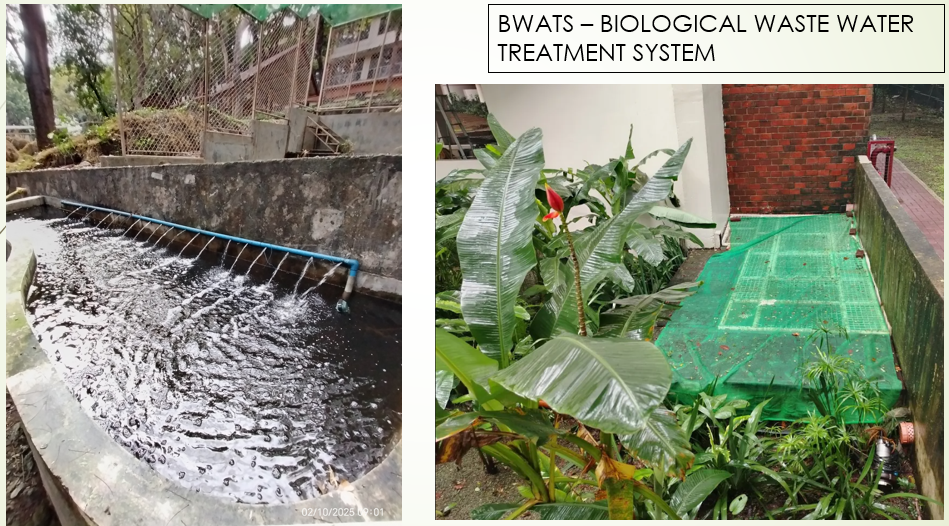
Ateneo requires septic tank effluents from facilities to connect to sustainable treatment systems such as Decentralized Wastewater Treatment Systems (DEWATS) or Building Wastewater Treatment Systems (BWATS).
These systems allow wastewater to undergo appropriate treatment before reuse for non-potable purposes.
Biodiversity Protection and Environmentally Responsible Building Design
Ateneo recognizes that sustainable campus development must protect biodiversity and minimize ecological impacts. New building projects therefore incorporate measures that consider the surrounding environment and campus ecosystems.
One specific sustainability requirement involves reducing risks to birds and urban wildlife. Large glass surfaces in buildings are designed or retrofitted with measures such as:
- Fritted glass;
- Specialized glazing treatments; and
- Visual decal patterns, including opaque dot patterns that reduce reflective surfaces.
These interventions help prevent bird collisions by making glass surfaces more visible to wildlife while maintaining architectural functionality.
The University also implements responsible outdoor lighting strategies. Exterior illumination systems use downward-facing LED fixtures to provide adequate campus safety lighting while reducing unnecessary upward light emissions and minimizing impacts associated with light pollution.
Through these measures, Ateneo demonstrates that sustainable architecture must consider not only human users but also the broader ecological systems within which the campus operates.
Recent News
You may also like these articles

Growing with purpose: How Mekeni Food Corporation turns adversity into shared value
From a small backyard operation in Porac, Pampanga, to an internationally recognized food brand exporting to 25 countries, Mekeni Food Corporation's journey demonstrates how businesses

Three Ateneo-incubated startups secure DOST-PCIEERD’s startup grant fund
Last 9 November, during the opening day of Philippine Startup Week 2026, Soolok Properties Inc, Pili AdheSeal Inc, and Saltric Power (PDG Engineering Services), three
Ateneo de Manila Grade 2 students are the little Earth helpers
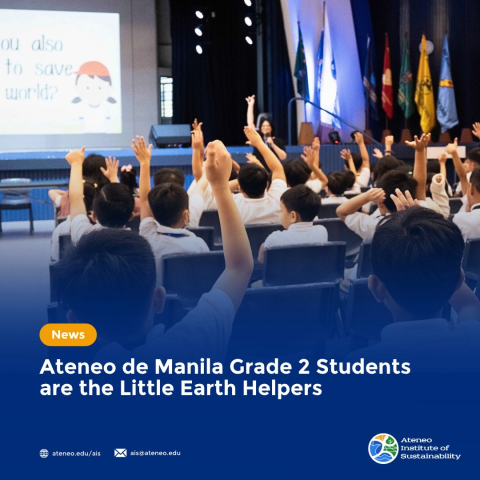
It was a great day for saving the world when Ateneo Institute of Sustainability (AIS) came to Ateneo Grade School to give a session on
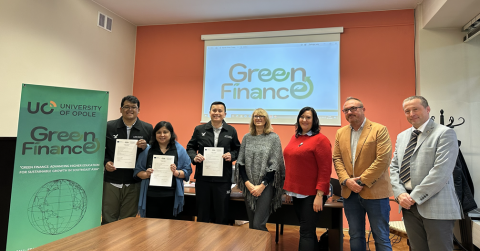
JGSOM representatives complete green finance training in Poland, sets sights on 2027 micro-credential launch
Representatives of Ateneo de Manila University's John Gokongwei School of Management (JGSOM) completed the second phase of their Erasmus+ Green Finance international mobility activities at
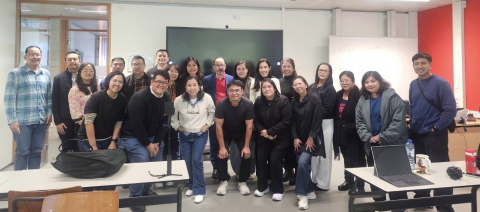
JGSOM Representatives Participate in Green Finance Training at the University of Twente
Enschede, Netherlands | October 15–16, 2026 Representatives of Ateneo de Manila University's John Gokongwei School of Management (JGSOM) participated in a specialized Green Finance training

Professor Emeritus Dr Emma Porio highlights climate resilience and biodiversity at international conferences
Emma E Porio, PhD, Professor Emeritus of Ateneo de Manila University and Principal Investigator of Ateneo's Manila Observatory Center for Climate Resilience and Public Health