11.4.1 Sustainable Practices Targets
01 May 2025


Advancing Sustainable Campus Mobility Through Data-Driven Commuting Practices
Ateneo de Manila University uses tracking and measurement to understand how members of the community travel around and to campus and to assess progress toward more sustainable mobility. By monitoring indicators such as bicycle use, E-jeep ridership, and pedestrian traffic, the university can identify changes in commuting patterns and evaluate whether its transportation initiatives are encouraging lower-emission alternatives to private vehicles. Comparing data across school years also provides a basis for measuring progress and identifying areas that may require further improvements.
These measurements support Ateneo’s broader sustainability targets, particularly its goal of reducing carbon emissions and decreasing the number of private vehicles on campus. Data from SY 2023–2024 and SY 2024–2025 show changes in bicycle use, E-jeep ridership, and pedestrian activity, providing evidence of how mobility practices are developing over time. Continued monitoring allows the university to track whether infrastructure and services are meeting the needs of the community while supporting more sustainable ways of commuting.
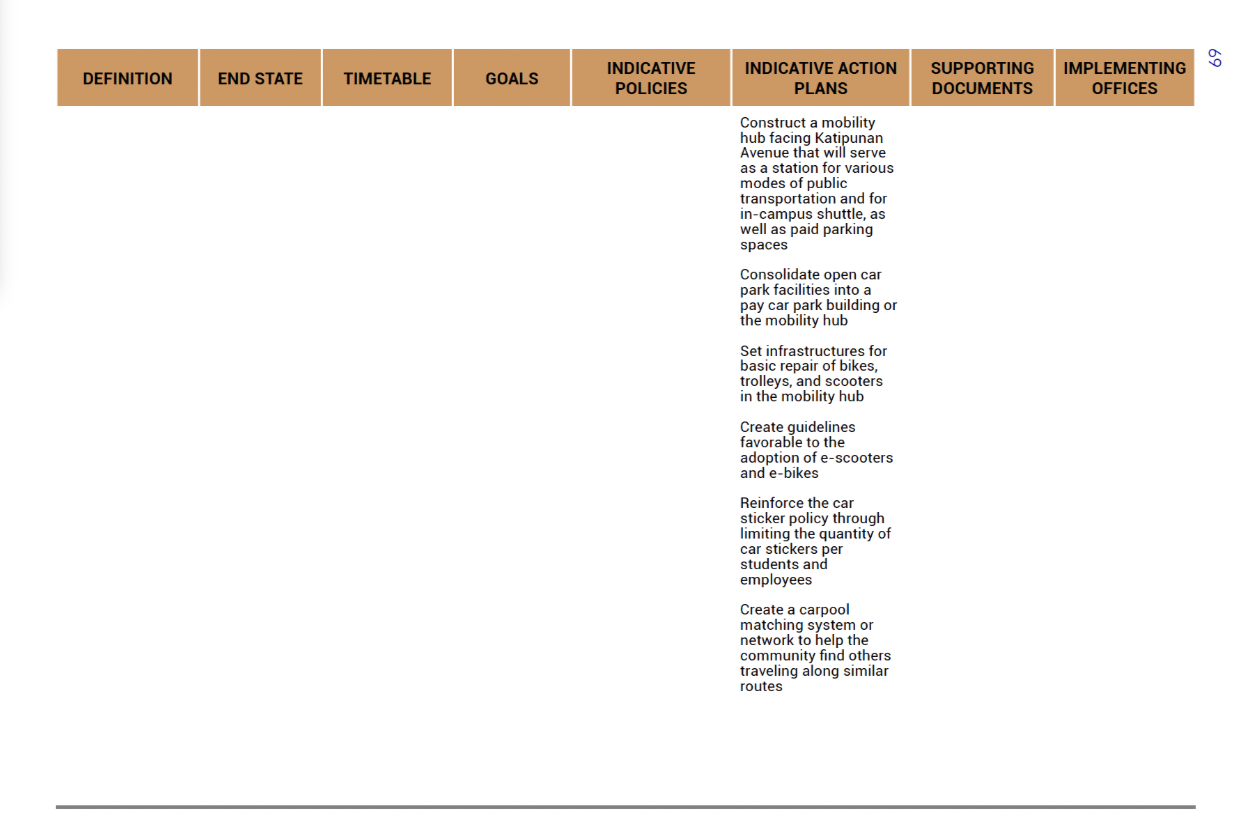
Looking toward 2030, Ateneo’s Sustainability University Masterplan sets targets and action areas focused on reducing reliance on private cars and improving sustainable transportation. These include strengthening carpooling and school bus systems, improving connections to nearby public transportation hubs, supporting bicycles, e-bikes, and e-scooters, developing mobility facilities, and reviewing policies that regulate private vehicle access to campus. The university also plans to study issues such as air pollution and traffic stress. These targets provide a longer-term framework for using mobility data to guide improvements and measure Ateneo’s progress toward a more sustainable, connected, and people-centered campus.
Bicycles on Campus
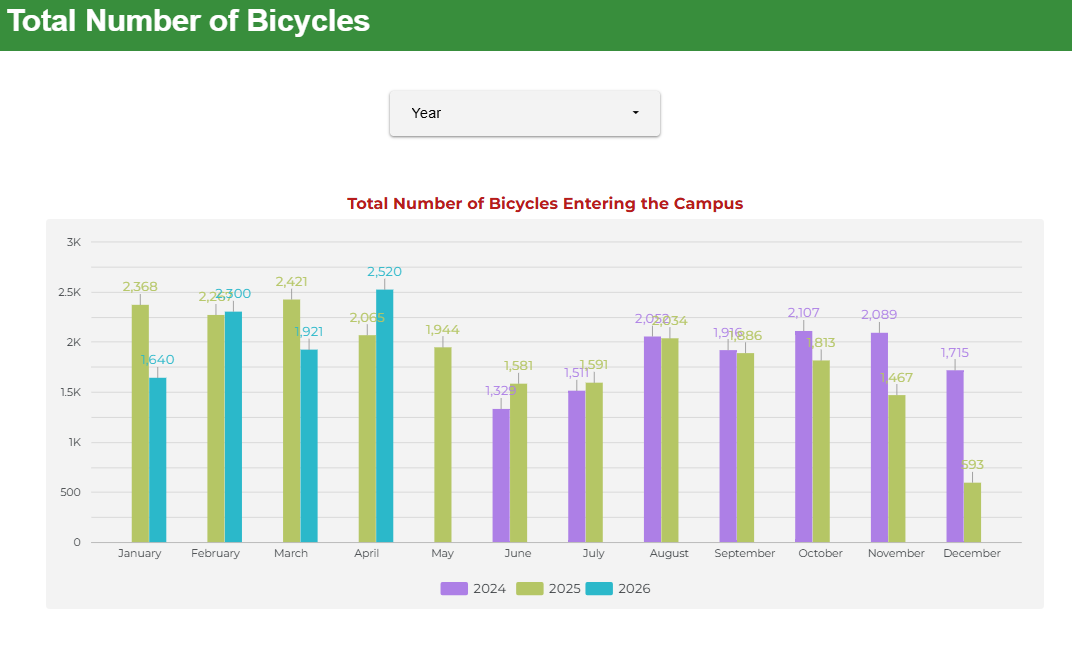
In SY 2023–2024, bike counts reflected a growing interest in cycling as a commuting option. By SY 2024–2025, both daily and monthly counts increased further, showing steady uptake in bicycle use across campus gates.
E-Jeep Shuttle Service
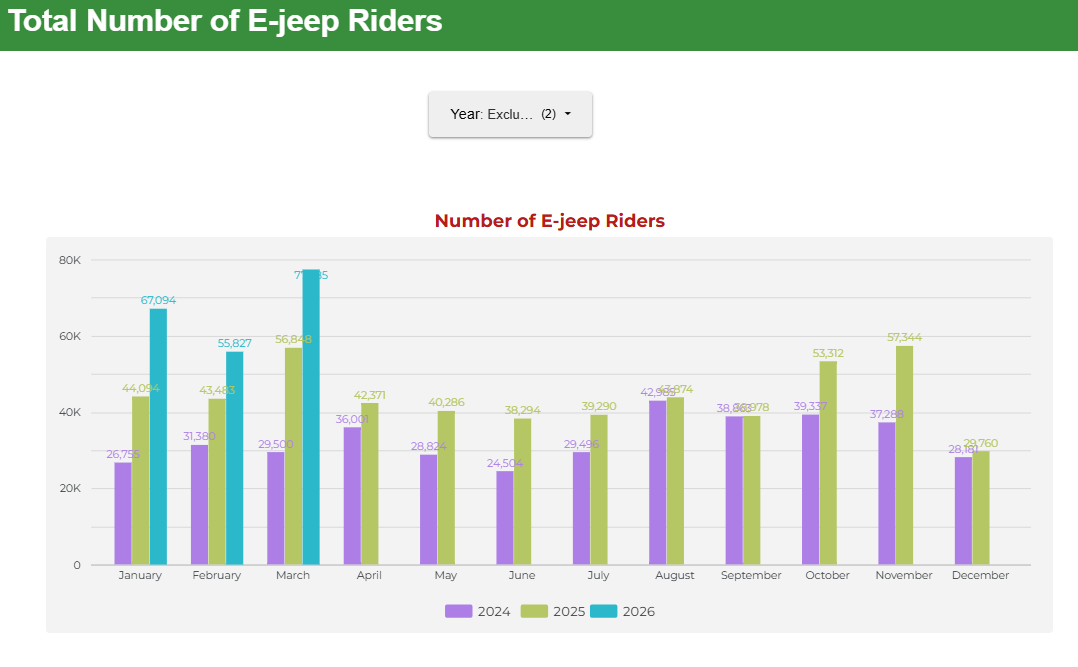
The five E-jeeps resumed service after the pandemic and recorded consistent ridership in SY 2023–2024. In SY 2024–2025, passenger volume rose significantly, signaling stronger reliance on this low-emission transport option.
Pedestrian Traffic
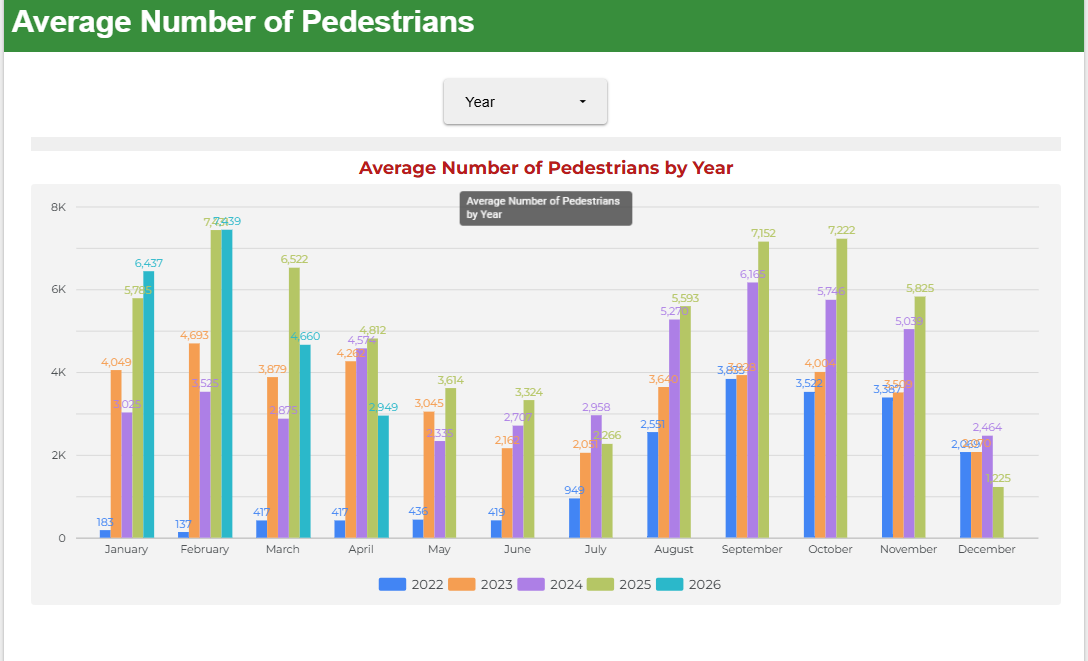
Walking remains central to Ateneo’s people-centric mobility. In SY 2023–2024, pedestrian entries rebounded after COVID-19 restrictions. By SY 2024–2025, daily averages stabilized at higher levels, supported by an expanded network of covered walkways and paths.
Sustainability University Masterplan
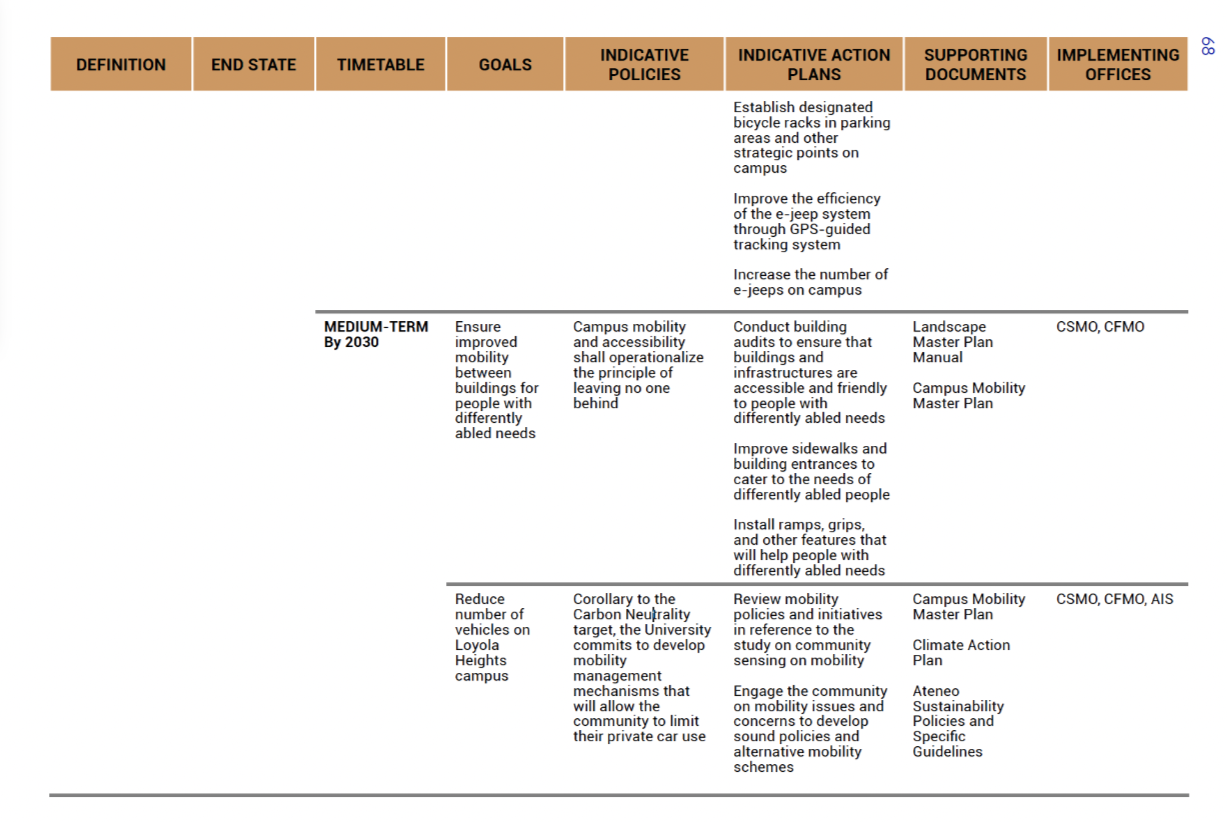
Corollary to the Carbon Neutrality Target, Ateneo’s medium-term goals by 2030 focus on reducing the number of vehicles on campus, allowing the community to limit their private car use. Some action plans towards this include “consolidating open car park facilities into a pay car park building, setting infrastructures for basic repair of bikes, trolleys, and scooters in the mobility hub, creating guidelines favorable to the adoption of e-scooters and e-bikes, reinforce the car-sticker policy through limiting the quantity of car stickers per students and employees, create a carpool matching system or network to help the community find others traveling along similar routes” (p. 69), “establishing a school bus system for basic education students with fares being included in the mandatory tuition and fees, explore partnerships with would allow comprehensive P2P (point-to-point) bus, improve campus connectivity with nearby transit hubs, and conduct studies on air pollution and traffic stress” (p. 70).
Sources:
1. Bicycles on Campus
2. Sustainability University Masterplan (pp. 68-70)
3. Sustainability Metrics Dashboard
Recent News
You may also like these articles

Growing with purpose: How Mekeni Food Corporation turns adversity into shared value
From a small backyard operation in Porac, Pampanga, to an internationally recognized food brand exporting to 25 countries, Mekeni Food Corporation's journey demonstrates how businesses

Three Ateneo-incubated startups secure DOST-PCIEERD’s startup grant fund
Last 9 November, during the opening day of Philippine Startup Week 2026, Soolok Properties Inc, Pili AdheSeal Inc, and Saltric Power (PDG Engineering Services), three
Ateneo de Manila Grade 2 students are the little Earth helpers
It was a great day for saving the world when Ateneo Institute of Sustainability (AIS) came to Ateneo Grade School to give a session on
JGSOM representatives complete green finance training in Poland, sets sights on 2027 micro-credential launch
Representatives of Ateneo de Manila University's John Gokongwei School of Management (JGSOM) completed the second phase of their Erasmus+ Green Finance international mobility activities at
JGSOM Representatives Participate in Green Finance Training at the University of Twente
Enschede, Netherlands | October 15–16, 2026 Representatives of Ateneo de Manila University's John Gokongwei School of Management (JGSOM) participated in a specialized Green Finance training

Professor Emeritus Dr Emma Porio highlights climate resilience and biodiversity at international conferences
Emma E Porio, PhD, Professor Emeritus of Ateneo de Manila University and Principal Investigator of Ateneo's Manila Observatory Center for Climate Resilience and Public Health