10.6.8 Disability Support Services
01 May 2025


Comprehensive Disability Support Services and Inclusive Education Framework at Ateneo de Manila University
Ateneo de Manila University demonstrates a sustained institutional commitment to inclusive education, disability accessibility, and non-discrimination through a multi-tiered support framework grounded in the Ignatian principle of cura personalis (care for the whole person). Guided by Catholic, Ignatian, and Filipino values, the university aligns its institutional policies and operational practices with national laws, including Republic Act No. 7277 (Magna Carta for Disabled Persons), the Data Privacy Act, and international mandates such as the UN Convention on the Rights of Persons with Disabilities (UN CRPD). By distributing disability support across centralized health units, academic administration, specialized mental health centers, and financial aid structures, the university fosters an accessible learning environment. This holistic approach ensures equal access to higher education through physical accommodations, assistive services, specialized counseling, and targeted scholarship programs for persons with disabilities (PWDs).
Scope and Reach: Campus Infrastructure, Physical Accommodations, and On-Ground Mobility Support
To address the physical and logistical needs of students with mobility and health impairments, Ateneo de Manila University maintains dedicated administrative mechanisms within its Higher Education cluster. Managed under the Mission and Integration cluster of Health, Care, and Wellness (HCW), the Office of Health Services (OHS), led by the Office of the University Physician, serves as the primary health unit addressing student disability concerns and equipping faculty members with guidance to manage accessible classroom environments. Complementing medical support, the Office of the Associate Dean for Student Affairs (OADSA)—specifically through its Student Concerns and Compliance section—implements direct accessibility accommodations on campus in Quezon City. Key services delivered by OADSA include facilitating classroom relocation requests to accessible ground-floor spaces for mobility-impaired students, managing designated PWD parking privileges, issuing entry approvals for personal companions and helpers, and maintaining physical accessibility infrastructure, such as stairlifts across college facilities. These ongoing operational services are provided at no additional cost to enrolled PWD students, ensuring equitable physical access to university spaces.
Cost Accessibility and Specialized Mental Health Intervention Programs
Recognizing that support for persons with disabilities extends to neurodiversity and non-visible impairments, the university integrates specialized psychological services and financial assistance to ensure cost accessibility. The Office of Guidance and Counseling (OGC) delivers tailored intervention and continuous follow-up support for students with special needs. Furthermore, the Ateneo Bulatao Center for Psychological Services, affiliated with the Department of Psychology, provides specialized individual psychotherapy and counseling services while extending open-access, free online psychological counseling to the broader public and conducting mental health research. To alleviate financial barriers for disabled scholars, the Office of the Assistant Vice President for Graduate Education administers dedicated financial aid programs, notably the Tuition (20%) Scholarship for Persons with Disabilities. These internal initiatives run continuously alongside admissions policies that safeguard PWD access through standardized accommodation protocols.
Policy Alignment, Inclusive Admissions, and Global Network Collaborations
The University maintains strict compliance with national legal frameworks and international disability rights benchmarks to govern its institutional admissions and cross-border partnerships. The university's Admission Testing Guidelines for Accommodation of Applicants with Special Needs ensures non-discriminatory access by providing modified testing conditions and reasonable accommodations for prospective students, in full alignment with the CHED Manual of Regulations and the Magna Carta for Disabled Persons. Internationally, the university expands its reach by promoting external funding and policy networks, such as the ASEAN University Network - Disability and Public Policy Network (AUN-DPPnet) Postgraduate Scholarship. This collaboration supports disabled individuals across ASEAN member nations in pursuing postgraduate education focused on public policy, positioning the university as an active participant in regional capacity-building and cross-border disability advocacy.
Allocated Funding Mechanisms and Global Scholarship Networks
To eliminate financial barriers to higher education for persons with disabilities, Ateneo de Manila University operates direct, institutionalized funding streams alongside international grant partnerships. The university maintains an internal budget allocation that funds a dedicated Tuition (20%) Scholarship for PWDs, which guarantees designated financial support slots per academic school and unit.
Furthermore, the university collaborates with international partner organizations and funding networks to scale its financial assistance capacity. Key external partnerships include the ASEAN University Network - Disability and Public Policy Network (AUN-DPPnet) scholarship program, supported by The Nippon Foundation. This grant-funded international partnership provides full scholarship support for post-graduate students with disabilities across the region. Together, these internal allocations and external grant mechanisms ensure that Ateneo's reasonable accommodation policies are backed by sustainable, adequately funded financial frameworks.
Source:
Recent News
You may also like these articles

Growing with purpose: How Mekeni Food Corporation turns adversity into shared value
From a small backyard operation in Porac, Pampanga, to an internationally recognized food brand exporting to 25 countries, Mekeni Food Corporation's journey demonstrates how businesses

Three Ateneo-incubated startups secure DOST-PCIEERD’s startup grant fund
Last 9 November, during the opening day of Philippine Startup Week 2026, Soolok Properties Inc, Pili AdheSeal Inc, and Saltric Power (PDG Engineering Services), three
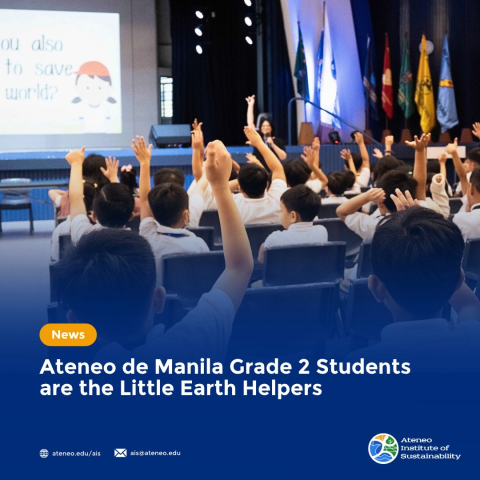
Ateneo de Manila Grade 2 students are the little Earth helpers
It was a great day for saving the world when Ateneo Institute of Sustainability (AIS) came to Ateneo Grade School to give a session on
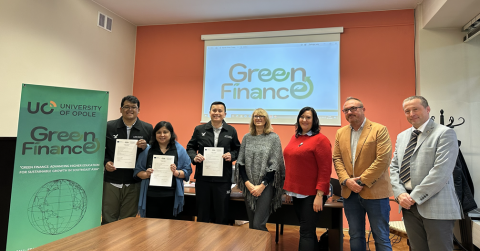
JGSOM representatives complete green finance training in Poland, sets sights on 2027 micro-credential launch
Representatives of Ateneo de Manila University's John Gokongwei School of Management (JGSOM) completed the second phase of their Erasmus+ Green Finance international mobility activities at
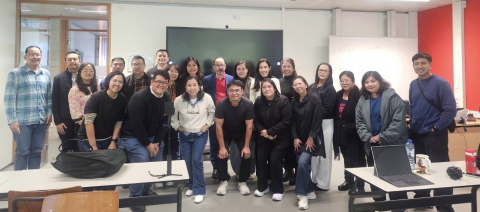
JGSOM Representatives Participate in Green Finance Training at the University of Twente
Enschede, Netherlands | October 15–16, 2026 Representatives of Ateneo de Manila University's John Gokongwei School of Management (JGSOM) participated in a specialized Green Finance training
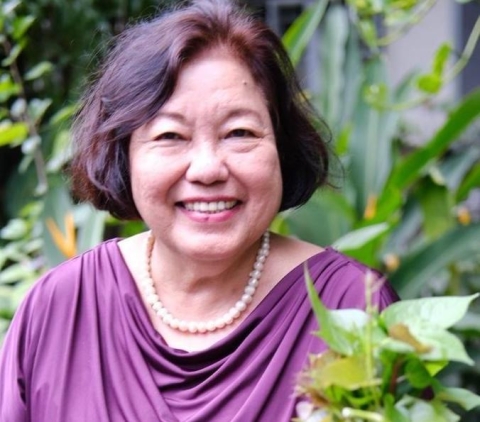
Professor Emeritus Dr Emma Porio highlights climate resilience and biodiversity at international conferences
Emma E Porio, PhD, Professor Emeritus of Ateneo de Manila University and Principal Investigator of Ateneo's Manila Observatory Center for Climate Resilience and Public Health