7.2.2 Upgrade Buildings to Higher Energy Efficiency
10 Apr 2025


Ateneo de Manila’s Building Upgrades and Sustainable Infrastructure Programs Supporting Energy Efficiency
As part of Ateneo’s commitment to climate action, the University has established phased targets to transition its existing campus infrastructure to higher energy efficiency and 100% renewable energy utilization. The University aims to systematically eliminate its Scope 2 greenhouse gas emissions by scaling up on-site solar generation and optimizing building power management across all campuses.
To modernize its facilities sustainably, Ateneo de Manila University implements a diverse infrastructure strategy: expanding rooftop solar installations on existing structures, deploying advanced digital monitoring networks for equipment control, and forming strategic clean energy supply partnerships.
Rooftop Solar Power Generation and Growth Plan (Phase 1 to Phase 2)
|
Phase |
Building |
Capacity |
Contribution |
|---|---|---|---|
| Phase 1 (Completed) | The Arete, First Pacific Hall (New Rizal Library), PLDT-CTC/JGSOM | 468 kWp | Generates 345,374.00 kWh annually (4% of operational needs) |
| Phase 2 (In Progress) |
Expansion across 7 identified campus buildings is in the works | To be determined upon full rollout | Anticipated substantial increase in localized grid generation |
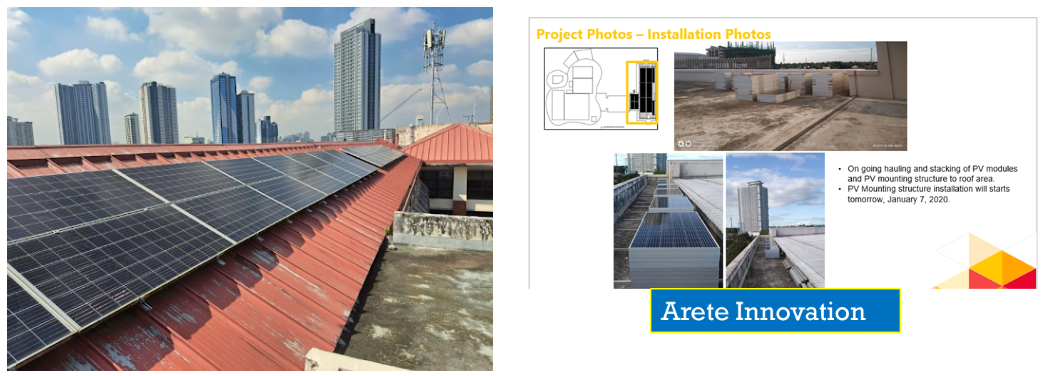
The University's solarization timeline forms part of its broader decarbonization journey to establish climate-resilient facilities and meet its institutional sustainability milestones.
In-House Energy Efficiency Systems and Infrastructure
The University’s facilities and planning offices implement structural and technical retrofits designed to lower the baseline power consumption of existing buildings.
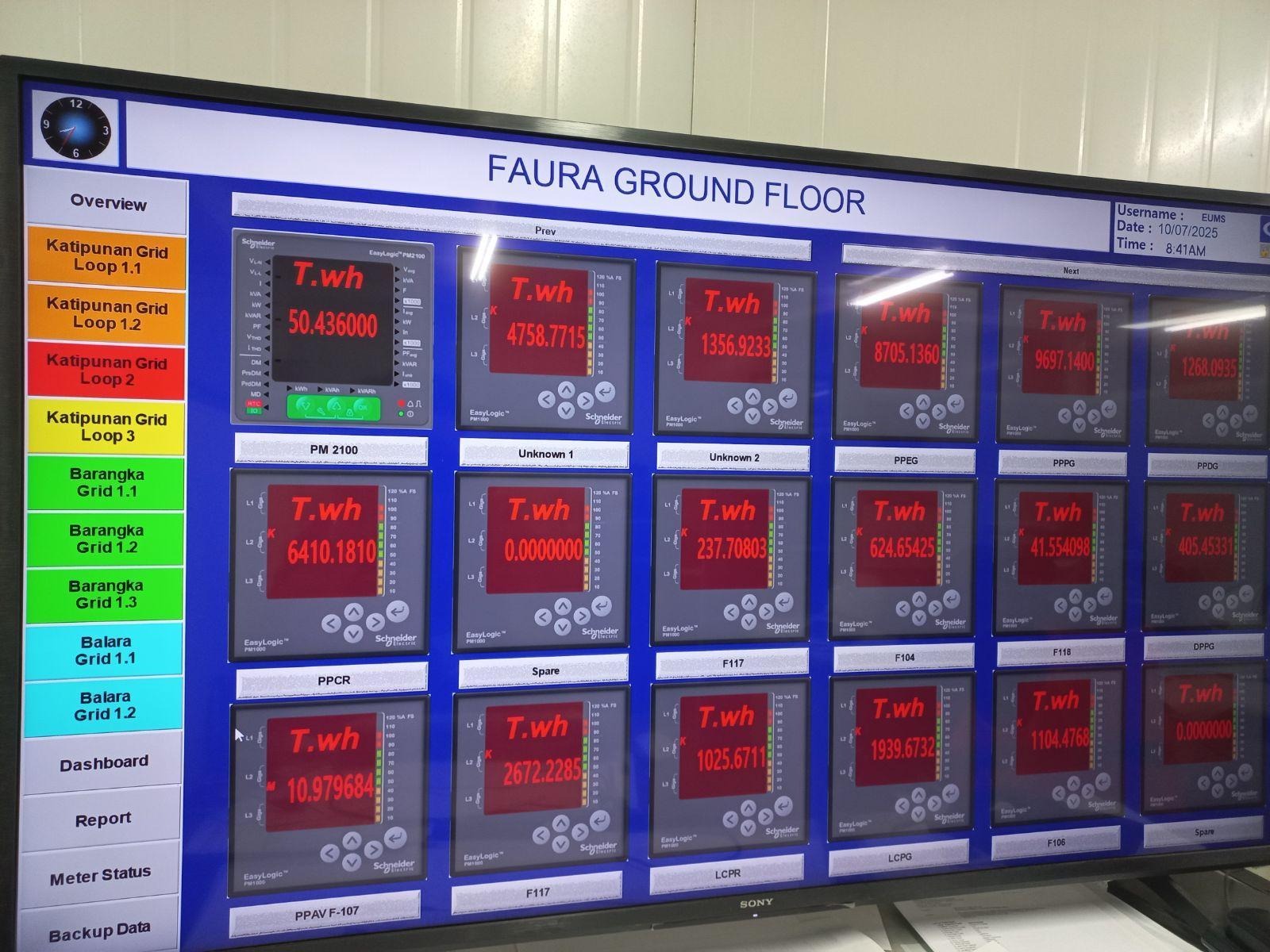
- SCADA (Supervisory Control and Data Acquisition) System: The University utilizes the SCADA (Supervisory Control and Data Acquisition) system, which allows for a high-level supervision of equipment and energy use. Previous work by university stakeholders, such as the report prepared by the Carbon Neutrality Project Team led by Fr Jose Ramon T Villarin SJ lists recommendations for opportunities to increase our collective efficiency as a University. Among them are robust monitoring systems, and increasing capacity for data collection, processing, and reporting. The SCADA system is a step towards more robust monitoring for energy efficiency and conservation.
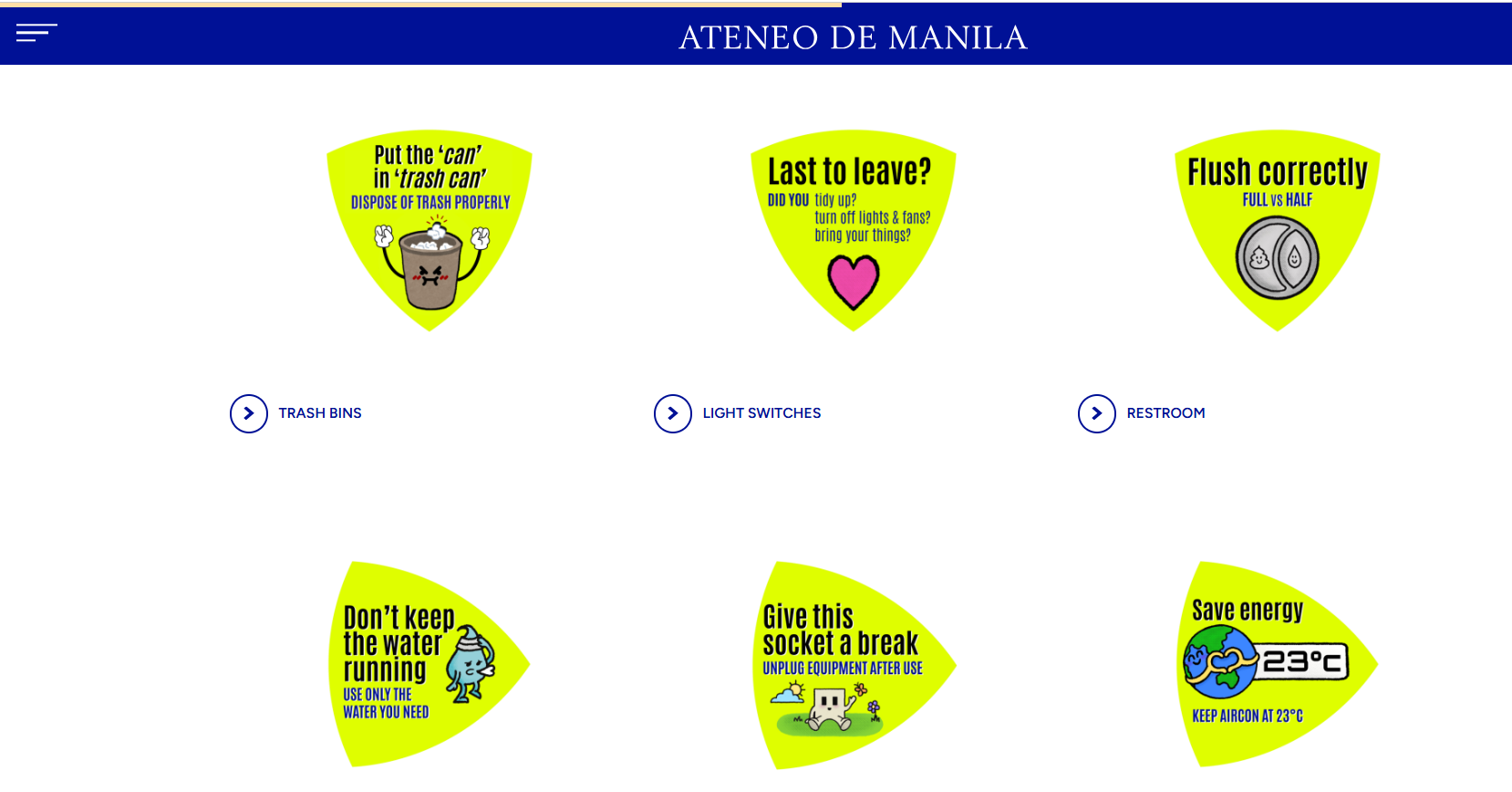
- Green Nudges Behavioral Retrofitting: The Green Nudge campaign is a behavioral shift campaign that was developed in collaboration between different offices in the University, and with student groups. The cynosure of the campaign is the bright chartreuse shape, a Reuleaux triangle, which contains a message about resource management. These are a series of printable vinyl stickers with messages on energy conservation, water conservation, waste management, and office citizenship, all designed to inspire sustainable behaviors. The unique shape and color of the stickers are strategically crafted to gently persuade individuals toward sustainable habits. Although there are official plans to expand the deployment of the Green Nudges, the stickers are also publicly available through the University’s website, ensuring that various groups have free access to print their own Green Nudges.
Campus-Wide Renewable Energy Supply Program
Ateneo de Manila University complements structural building upgrades by moving its entire campus network off the fossil-fuel grid through aggressive green power procurement contracts.
- Green Energy Option Program (GEOP): In the last four years, the Loyola Heights campus’ monthly average peak energy demand amounted to more than 4,000 kW. Under the Retail Competition and Open Access (RCOA) program, this is large enough for the campus to become a contestable customer, which allows us to decide which energy sources to purchase and which electricity suppliers to source from, as mandated by the Electric Power Industry Reform Act of 2001 (RA 9136). This thus allowed Ateneo to choose an electricity supplier that specifically produces renewable energy for the Loyola Heights campus. The three professional school campuses, the Ateneo School of Medicine and Public Health along Ortigas Avenue, and the Ateneo Professional Schools’ Rockwell Campus and Salcedo Campus, formerly did not meet this requirement, with an average peak energy demand of less than 200 kW. They are aimed to be included as a collective to qualify for the Green Energy Option Program (GEOP), as mandated by the Renewable Energy Act of 2008 (RA 9513). Under the GEOP, entities may “choose renewable energy over fossil fuels, allowing them to source 100% power directly from a renewable energy supplier.”
‘Powering Tomorrow’: AIS, German Embassy, and GIZ plug renewable energy and a just transition
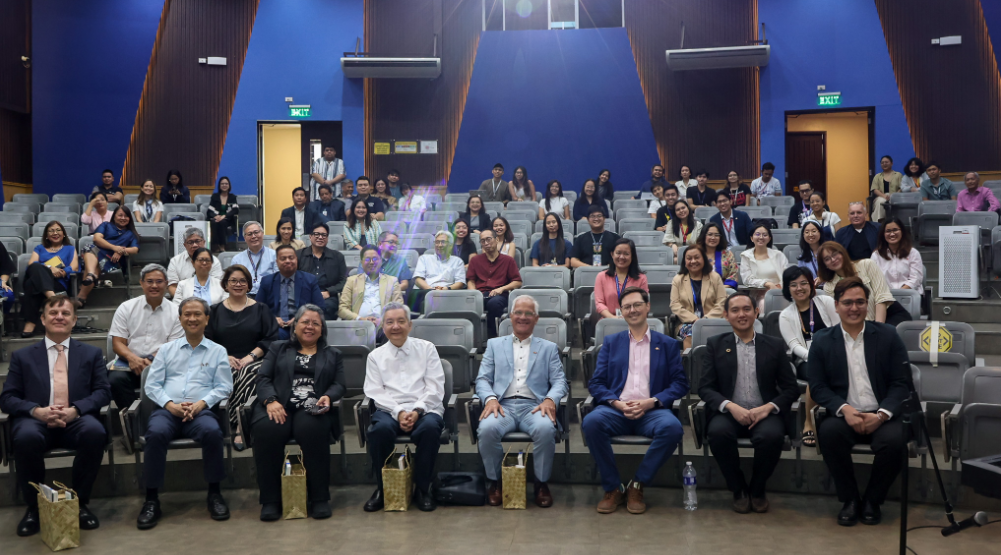
On 10 April 2025, the Ateneo Institute of Sustainability co-hosted a culminating event, “Energy in Transition: Powering Tomorrow,” for the exhibit, which was located in SEC A Foyer from 07 to 10 April. The exhibit and event were co-hosted by the German Embassy Manila and Deutsche Gesellschaft für Internationale Zusammenarbeit (GIZ) GmbH.
As heads of the co-organizing institutions of the exhibit, University President Fr Roberto C Yap SJ and German Ambassador to the Philippines Dr Andreas Michael Pfaffernoschke kickstarted the program with the welcome and opening remarks. Fr Yap emphasized Ateneo de Manila University’s commitment to achieving carbon neutrality by 2050 and the University’s goal to shift to 100% renewable energy across all its campuses, underscoring the importance of community-wide engagement in this endeavor. Meanwhile, His Excellency Ambassador Dr Pfaffernoschke highlighted how initiatives such as the exhibit can foster meaningful collaborations. The traveling exhibit showcased three areas within the global energy transition–renewable energy, mobility, and a just transition. It invited visitors to explore local perspectives from different parts of the globe, reinforcing the idea that grassroots experiences are important to crafting effective global solutions.
Messages of support were also delivered by Dr Rowena Cristina Guevara, Undersecretary at the Department of Energy, and by Mr Immanuel Gebhardt, Country Director of GIZ Philippines and Pacific Island Countries. Dr Guevara shared how efforts toward an energy transition are a shared responsibility, with the Philippines’ goal of increasing renewable energy to account for 35% by 2030 and 50% by 2040. Likewise, Mr Gebhardt expressed his continued support through ongoing collaborations with the German Embassy and AIS. He emphasized that the long-term pursuit of renewable energy not only advances SDG 7 (Affordable and Clean Energy), but also strengthens partnerships between institutions, ensuring that innovative solutions and best practices are shared.
An intermission featuring the Ateneo Chamber Singers followed, led by conductor Jonathan Velasco. This was followed by a keynote message, which was given by Mr Michael Victor N Alimurung, City Administrator of Quezon City, on behalf of Quezon City Mayor Ma Josefina Go Belmonte-Alimurung. Mr Alimurung shared the City’s responsibility in addressing climate change and promoting environmental sustainability through a series of programs, services, and initiatives. He also outlined key strategies undertaken by the City such as the electrification of the bus fleet of the Q City Bus Program and tracking the city’s emissions, with a strong emphasis on accelerating the transition to renewable energy sources.
Following this was a keynote talk by Dr Erees Queen B Macabebe, Chair of the Department of Electronics, Computer, and Communications Engineering, which centered on the value of renewable energy and a just transition. In her address, she mentioned the evolving landscape of energy management solutions in the Philippines, emphasizing the growing importance of renewable energy. She also presented current forecasts on renewable energy sources, noting its increasing viability and integration into the country’s energy mix. Central to her message was the importance of collaboration and involvement, stating that energy transition relies not only on technological advancement but also on active engagement and collective action, touching on the social impacts of energy and ensuring a just transition.
The exhibit was open to the Ateneo de Manila community for three days. Earlier that week, Department of Energy Secretary Raphael P M Lotilla visited the exhibit and expressed his support to just transition initiatives, as well as research on renewable energy.
Events such as this show the importance of collaborations and partnerships in attaining broad sustainability- and resilience-related goals. They are avenues for forging new partnerships and deepening existing ones, while strategizing on how we can leverage on each other’s strengths and meet each other’s needs. The different institutions represented in the event represent levers of change and across different sectors, from intergovernmental, national, to the local; across the academe, and civil society. After all, although national and regional boundaries may define how our institutions operate, we all belong to and are affected by the same planetary systems and phenomena.
Source:
1. ‘Powering Tomorrow’: AIS, German Embassy, and GIZ plug renewable energy and a just transition
You may also like these articles

Growing with purpose: How Mekeni Food Corporation turns adversity into shared value
From a small backyard operation in Porac, Pampanga, to an internationally recognized food brand exporting to 25 countries, Mekeni Food Corporation's journey demonstrates how businesses

Three Ateneo-incubated startups secure DOST-PCIEERD’s startup grant fund
Last 9 November, during the opening day of Philippine Startup Week 2026, Soolok Properties Inc, Pili AdheSeal Inc, and Saltric Power (PDG Engineering Services), three
Ateneo de Manila Grade 2 students are the little Earth helpers
It was a great day for saving the world when Ateneo Institute of Sustainability (AIS) came to Ateneo Grade School to give a session on
JGSOM representatives complete green finance training in Poland, sets sights on 2027 micro-credential launch
Representatives of Ateneo de Manila University's John Gokongwei School of Management (JGSOM) completed the second phase of their Erasmus+ Green Finance international mobility activities at
JGSOM Representatives Participate in Green Finance Training at the University of Twente
Enschede, Netherlands | October 15–16, 2026 Representatives of Ateneo de Manila University's John Gokongwei School of Management (JGSOM) participated in a specialized Green Finance training

Professor Emeritus Dr Emma Porio highlights climate resilience and biodiversity at international conferences
Emma E Porio, PhD, Professor Emeritus of Ateneo de Manila University and Principal Investigator of Ateneo's Manila Observatory Center for Climate Resilience and Public Health