6.5.3 Off-Campus Water Conservation Support
01 Mar 2025


Ateneo Support on Off-Campus Water Conservation
Ateneo de Manila University actively supports water conservation beyond the boundaries of its campuses through institutional partnerships, community engagement, technology transfer, research, and capacity-building initiatives that promote sustainable water management in local communities. The University recognizes that responsible water stewardship extends beyond campus operations and therefore works collaboratively with local government units, farming communities, academic institutions, industry partners, and civil society organizations to improve water security, increase resilience to climate change, and promote sustainable agricultural practices. Through the Ateneo Innovation Center (AIC), the Manila Observatory, and various interdisciplinary research and extension programs, Ateneo develops and deploys innovative water conservation approaches while ensuring that partner communities acquire the knowledge and skills necessary to sustain these initiatives over the long term.
Educating for Sustainable and Climate-Smart Agriculture
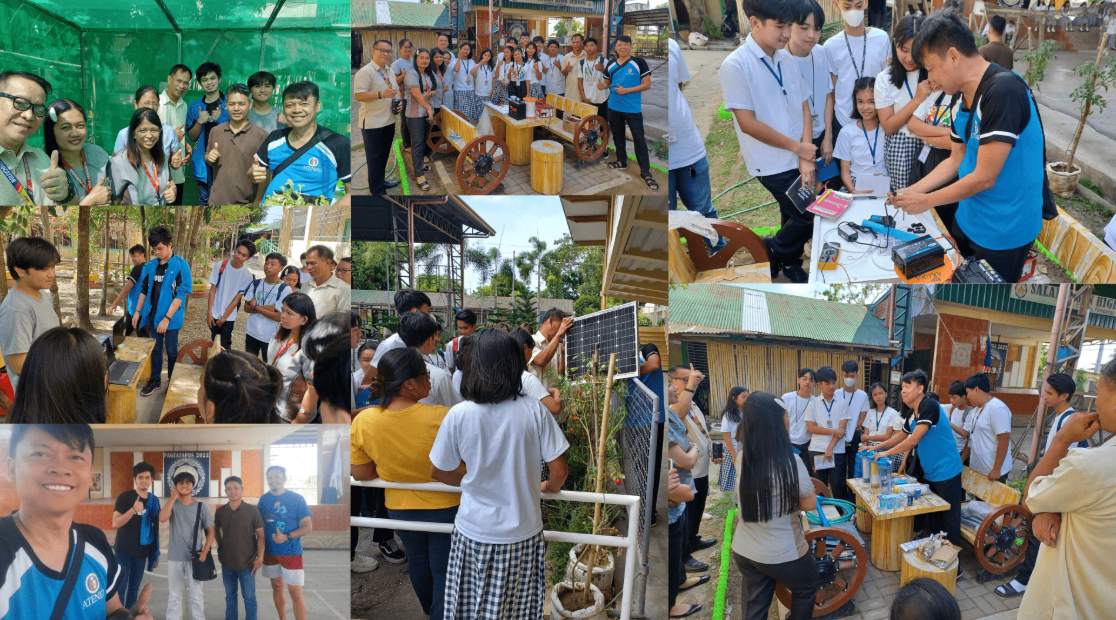
The Ateneo Innovation Center (AIC) promotes sustainable agriculture and climate action through its Smart Hydroponics Greenhouse Laboratory, combining smart sensors, monitoring systems, and hands-on learning. Implemented in schools by March 2025 such as Salapungan National High School and Ateneo Grade School, the initiative engages students, teachers, farmers, and local communities in learning and applying technology-driven hydroponics.
Through technologies such as soil sensors, weather stations, AI-assisted lighting, and nutrient monitoring, the project demonstrates how hydroponics can serve as a water-efficient, low-carbon, and climate-resilient approach to food production. Its strong educational component equips learners and communities with practical skills in sustainable farming, technology, and climate adaptation, helping build local capacity and encouraging future generations to become active participants in climate-smart agriculture.
Connecting Water Management, Farming, and Community Education
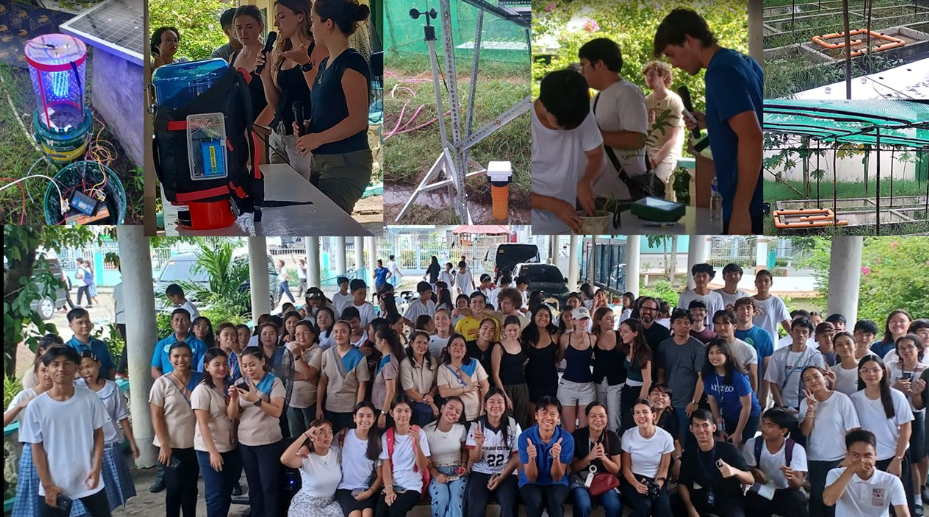
The continued partnership between Ateneo de Manila University (Ateneo) and Boston College (BC) in 2025 has successfully engaged teachers, students, parents, farmers, and local government officials at Tagulod High School and the Barangay Hall of Candaba, Pampanga in the introduction and practical application of innovative farming technologies. The initiative provides communities with opportunities to learn about accessible technologies that can support agricultural productivity, resource efficiency, and climate resilience.
Among the technologies introduced are a black bug trap using blue LED strips, a rice seed scatterer, a portable NPK sensor, water-level and wind sensors, and an aquaponics system. These technologies are powered by lithium-ion batteries and recharged through solar PV panels, demonstrating how renewable energy can be integrated into agricultural applications. Beyond simply providing equipment, the initiative gives participants hands-on exposure to how these tools can be used to monitor environmental conditions, improve farming practices, and address common challenges in agricultural production.
The engagement also serves as a platform for knowledge transfer and community-based learning. Teachers and students gain practical experience with emerging agricultural technologies, while farmers and local stakeholders are introduced to tools that may be adapted to their own farming activities. The involvement of parents and local government officials further expands the reach of the initiative, encouraging broader awareness of technology-based approaches to sustainable agriculture within the community.
Importantly, the technologies are now being managed by the school, providing an opportunity for continued use, learning, and experimentation beyond the initial implementation. The strong approval expressed by members of the partner community reflects the value of introducing technologies that are not only innovative but also practical, accessible, and responsive to local needs.
Sources:
1. Educating for Climate-Smart Agriculture
2. Water Management, Farming, and Community Education
You may also like these articles

Growing with purpose: How Mekeni Food Corporation turns adversity into shared value
From a small backyard operation in Porac, Pampanga, to an internationally recognized food brand exporting to 25 countries, Mekeni Food Corporation's journey demonstrates how businesses

Three Ateneo-incubated startups secure DOST-PCIEERD’s startup grant fund
Last 9 November, during the opening day of Philippine Startup Week 2026, Soolok Properties Inc, Pili AdheSeal Inc, and Saltric Power (PDG Engineering Services), three
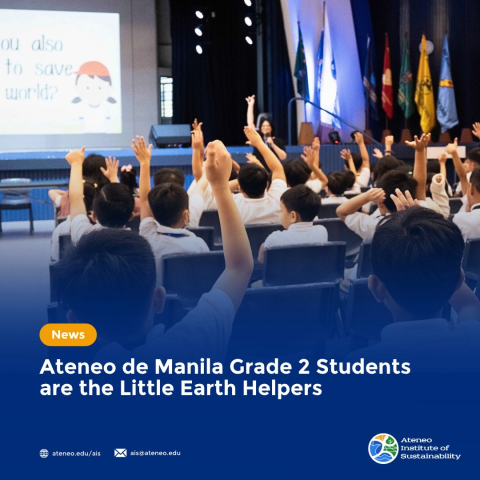
Ateneo de Manila Grade 2 students are the little Earth helpers
It was a great day for saving the world when Ateneo Institute of Sustainability (AIS) came to Ateneo Grade School to give a session on
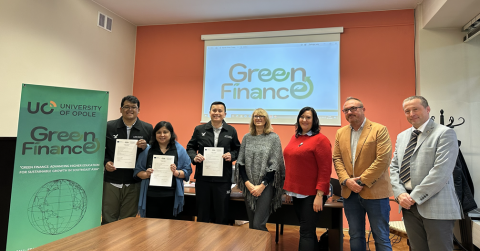
JGSOM representatives complete green finance training in Poland, sets sights on 2027 micro-credential launch
Representatives of Ateneo de Manila University's John Gokongwei School of Management (JGSOM) completed the second phase of their Erasmus+ Green Finance international mobility activities at
JGSOM Representatives Participate in Green Finance Training at the University of Twente
Enschede, Netherlands | October 15–16, 2026 Representatives of Ateneo de Manila University's John Gokongwei School of Management (JGSOM) participated in a specialized Green Finance training

Professor Emeritus Dr Emma Porio highlights climate resilience and biodiversity at international conferences
Emma E Porio, PhD, Professor Emeritus of Ateneo de Manila University and Principal Investigator of Ateneo's Manila Observatory Center for Climate Resilience and Public Health