4.3.1 Free Public Access to Learning Resources
01 Oct 2024


Ateneo Expands Public Access to Learning, Knowledge Resources, and Facilities
Ateneo de Manila University believes that learning should extend beyond the classroom and be accessible to a wider community. Through free professional development webinars, open-access scholarly journals, and library resources available to external users, the University creates opportunities for educators, researchers, professionals, and the public to continue learning, access knowledge, and engage with academic scholarship.
Free Continuing Education for English Teachers through ACELT Webinars
The Ateneo Center for English Language Teaching (ACELT) provides free webinars with Certificate of Participation for school administrators and English teachers in the Philippines. One such webinar was the ACELT-DepEd Webinar Series 2025: Teaching English in Multilingual Settings (TEEMS).
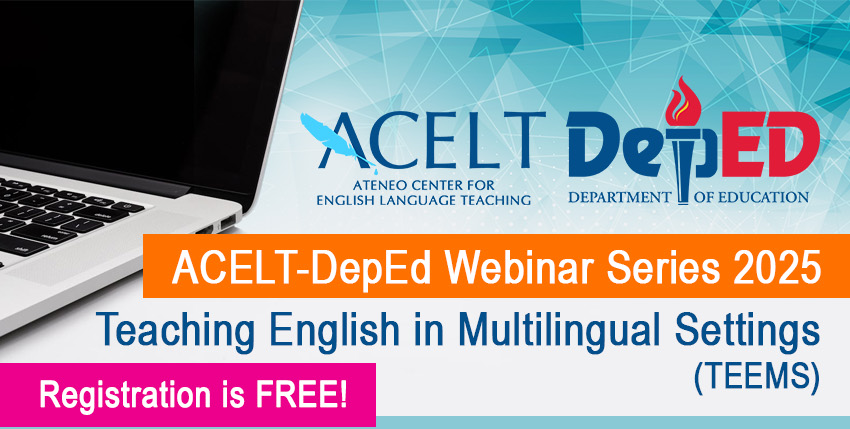
In partnership with the Department of Education (DepEd), ACELT organized a 3-part webinar targeting administrators and teachers. Each event is detailed below:
- Webinar 1: Navigating Old and New DepEd Language Policies: Bridging the Gap in Teaching English in Multilingual Settings. The event was held last March 1, 2025 and was attended by school administrators. It focused on the current language policies in the Philippine educational system and how a first language-based multilingual strategy in teaching English is prioritized to improve learning outcomes and literacy despite policy-related changes. Discussions included administrative practices that support theory-based curriculum delivery (e.g., translanguaging techniques in the classroom). It underscored the crucial role of school administrators in aligning pedagogy with policy and creating effective language learning environments that honor local contexts and prepare learners for global opportunities.
- Webinar 2: Teaching Strategies for Multilingual English Language Learners (Key Stages 1 and 2). This event, held last April 26, 2025, was attended by teachers in Key Stages 1 and 2. It focused on evidence-based teaching practices specifically designed for multilingual learners, with an emphasis on early literacy and language development. Discussions included teaching reading strategies for literacy formation and development, leveraging L1 as a resource for L2 acquisition, and fostering communicative competence through real-world contexts. The session aimed to empower educators with adaptable strategies to enhance learners’ English proficiency while preserving cultural and linguistic diversity.
- Webinar 3: Teaching Strategies for Multilingual English Language Learners (Key Stages 3). Held last May 31, 2025, this event targeted English teachers in Key Stage 3 and focused on teaching techniques that helped develop students’ multiliteracies as they navigate different text types, media, and modalities. Discussions included genre-based pedagogy and developing metalinguistic awareness through translanguaging. The session helped teachers design engaging lessons that foster students’ capacity to analyze, evaluate, and create texts for a range of audiences, purposes, and contexts.
Panel members included Dr. Merry Ruth M. Gutierrez (Professor from the Philippine Normal University), Bro. Rodrick M. Aguirre (Academic and Literacy Director of John Paul Academy of Business and Arts, Inc.), and Ms. Ayette Ferriols (Supervising Education Program Specialist for English and Mother Tongue from the Department of Education). Meanwhile, Dr. Cecilia A. Suarez (Executive Director of Ateneo Center for English Language Teaching) both served as a panel member and moderator of the webinars.
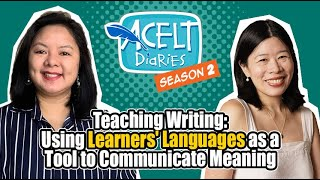
The Ateneo Center for English Language Teaching (ACELT) also promotes equitable access to continuing education by making recorded webinar sessions publicly available on its website. This enables individuals who are unable to attend the live sessions to access the learning materials free of charge at their convenience. Additionally, through ACELT Diaries, a YouTube show, the Center is able to offer short, episodic, and free lectures on current issues and trends in English Language Teaching in the Philippines. Viewers simply need to subscribe to their YouTube channel.
Making Research Accessible through Open-Access Journals
Aside from these lectures, Ateneo makes several electronic journals open-access, such as the following:
- Kritika Kultura, a Scopus and ISI-Indexed international peer-reviewed electronic journal of language and literary/cultural studies. It is published by the Literary and Cultural Studies Program under the School of Humanities of the Ateneo de Manila University. The journal aims to bridge disciplinary research around the issues in the 21st century, especially work in Philippine, Asian, Southeast Asian, and Filipino-American studies.
- Social Transformations Journal of the Global South is an internationally peer-reviewed print and open access electronic journal that analyzes social movements, development paradigms, relations, policies, tensions, contradictions, and socio-political interventions in the Global South. This journal is published twice a year by the Ateneo de Manila University and is indexed in EBSCOHost.
- Asia Pacific Mission Studies (APMS) is an electronic open-access online journal and is the publication of the East Asian Pastoral Institute (EAPI) run by the Society of Jesus within the campus of Ateneo de Manila University. APMS aims to promote knowledge and research related to the mission of the Church, bridging theology and ministry in the Asia-Pacific context and facilitating informed praxis and effective witnessing by the Church.
Accessible Library Services for Educators, Researchers, and the Public
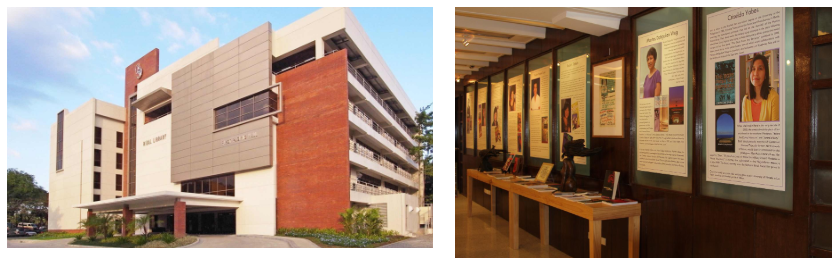
The Ateneo de Manila University Rizal Library is one of the country’s leading academic libraries, providing access to extensive print, digital, and archival collections that support teaching, learning, and research. Its collections include books, journals, electronic databases, special collections, archives, and rare materials covering a wide range of disciplines.
Beyond serving the Ateneo community, the Rizal Library extends selected services to external users. Public school teachers, librarians, members of the Catholic Education Association of the Philippines (CEAP) can likewise access the Rizal Library free of charge. Visitors may use the library upon presenting the required credentials and following the library's access guidelines.
Likewise, the Ateneo Library of Women’s Writings (ALiWW), an archival facility and a special collection of the Rizal Library, houses the works by and about Filipino women in various disciplines. It is the first of its kind in the country and in Asia. It endeavors to build, develop, preserve, and promote Filipino women’s writings, contributing to the enrichment of Philippine culture and heritage. Non-Ateneo researchers and visitors are allowed to use ALiWW’s collection following the visitor guidelines and policies of the Rizal Library.
Unlocking Access to Ideas, Spaces, and Collaboration
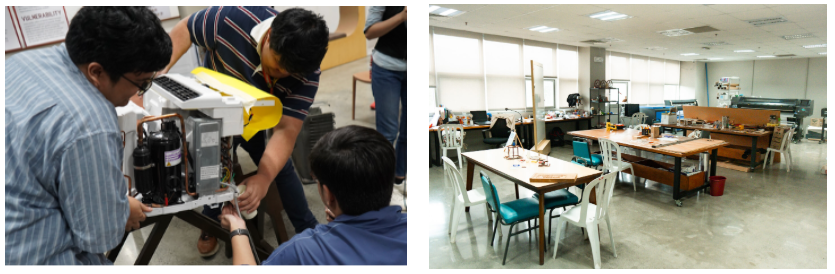
The Eduardo J. Aboitiz Sandbox Zone at the Areté, Ateneo de Manila University, fosters interdisciplinary collaborations that bring together research, artistic practice, and community engagement to address real-world challenges. Through the Areté Sandbox Residency Grant, the University supports innovative, collaborative projects beyond traditional academic settings by providing funding, mentorship, and space for experimentation, ideation, and incubation. The program enables participants to develop and refine creative, community-responsive solutions to complex societal issues.
The Grant is dedicated to providing not only financial support but also an environment that fosters the maturation, adaptation, and growth of ideas through collaboration, insightful feedback, and creative experimentation. It is open for interdisciplinary teams only which may include non-Ateneo members. Awarded teams enjoy the following benefits:
- Working capital of Php 100,000
- Priority access to the Eugenio Lopez Jr Makerspace (3D printers, laser cutters, milling machines, and large format printers, among others)
- A dedicated workspace in the Eduardo J. Aboitiz Sandbox Zone for the residency period
- Php 50,000 space-use grant for Areté facilities, and
- Participation in workshops on creative thinking, ideation, and problem solving.
The Grant provides more than funding—it offers a supportive ecosystem where interdisciplinary teams can explore, prototype, refine, and strengthen ideas through collaboration, mentorship, and creative experimentation.
Learning Beyond the Classroom: Free Nihongo Classes for Ateneo Employees
Ateneo de Manila University supports lifelong learning not only for its students, but also for its employees. One example of this commitment is the Nihongo for Ateneo employees, a free introductory Japanese language course designed specifically for Ateneo employees who are not enrolled as students at the University.
The 10-Saturday course, held from 9:00 to 10:30 a.m. that began in October 2024, provides participants with a light and practical introduction to Nihongo. Rather than focusing solely on formal language instruction, the class emphasizes simple grammar and common expressions that participants can use in everyday situations. These include scenarios that one might encounter when traveling to Japan for the first time or engaging in simple conversations with Japanese speakers.
The program highlights how Ateneo's learning opportunities extend beyond its student population. By offering the course free of charge to employees, the University provides its workforce with opportunities for personal enrichment, cultural learning, and skills development. This initiative demonstrates that education at Ateneo can take place beyond formal degree programs and is accessible to members of the wider University community.
Institutional Startup Incubation, Seed Grants, and Prototyping Infrastructure
Through the Ateneo Intellectual Property Office (AIPO) and its flagship Ateneo Blue Nest Incubation Program, the University provides end-to-end incubation, structured mentorship, and commercialization pathways for high-impact ventures. Complementing this framework, Areté's Sandbox Student Challenge 2025 (Call for Applications active October 29 – November 23, 2024) provides direct financial and operational backing for interdisciplinary local startups. Beneficiaries selected for the 2025–2026 residency cycle receive a ₱25,000 working capital grant, a ₱50,000 facility space-use grant at Areté, priority access to the Eugenio Lopez Jr. Makerspace (equipped with 3D printers, laser cutters, and large-format printers), dedicated co-working space within the Eduardo J. Aboitiz Sandbox Zone, and one-on-one mentorship from industry experts.
This framework operates on a fully subsidized, grant-funded cost model (free of charge for selected incubatees) to remove financial barriers for early-stage social and commercial enterprises. Furthermore, the Ateneo BUILD (Business Insights Laboratory for Development) and AIPO launched a joint technology incubation track that extends structured IP protection, customer validation, and prototyping support to software-based student and community ventures at no cost to the participants.
Sources:
1. Webinars | Ateneo Center for English Language Teaching
2. ACELT webpage with recorded webinars
3. ACELT Podcasts & Publications
4. Rizal Library Access to Visitors
5. ALiWW Collection
6. Sandbox Residency Grant
7. Nihongo for Ateneo Employees
8. Ateneo Blue Nest | AIPO
Recent News
You may also like these articles

Growing with purpose: How Mekeni Food Corporation turns adversity into shared value
From a small backyard operation in Porac, Pampanga, to an internationally recognized food brand exporting to 25 countries, Mekeni Food Corporation's journey demonstrates how businesses

Three Ateneo-incubated startups secure DOST-PCIEERD’s startup grant fund
Last 9 November, during the opening day of Philippine Startup Week 2026, Soolok Properties Inc, Pili AdheSeal Inc, and Saltric Power (PDG Engineering Services), three

Ateneo de Manila Grade 2 students are the little Earth helpers
It was a great day for saving the world when Ateneo Institute of Sustainability (AIS) came to Ateneo Grade School to give a session on

JGSOM representatives complete green finance training in Poland, sets sights on 2027 micro-credential launch
Representatives of Ateneo de Manila University's John Gokongwei School of Management (JGSOM) completed the second phase of their Erasmus+ Green Finance international mobility activities at

JGSOM Representatives Participate in Green Finance Training at the University of Twente
Enschede, Netherlands | October 15–16, 2026 Representatives of Ateneo de Manila University's John Gokongwei School of Management (JGSOM) participated in a specialized Green Finance training

Professor Emeritus Dr Emma Porio highlights climate resilience and biodiversity at international conferences
Emma E Porio, PhD, Professor Emeritus of Ateneo de Manila University and Principal Investigator of Ateneo's Manila Observatory Center for Climate Resilience and Public Health