8.2.8 Employment Practice Appeal Process
01 Jun 2024


Ateneo Structured Grievance Procedures and Due Process Appeal Mechanisms Under the Collective Bargaining Agreement
Ateneo de Manila University maintains a fully institutionalized, legally binding appeal and grievance process to protect employee rights and address compensation and workplace disputes. Formalized under the Ateneo de Manila University – Ateneo Employees and Workers Union (AEWU) Collective Bargaining Agreement (CBA) 2024–2029 (Notarized, pp. 14–15), the institution provides a structured, multi-step grievance procedure that ensures due process, fair representation, and objective resolution for all covered personnel. This framework guarantees that staff members can systematically appeal adverse labor decisions, dispute wage or benefit interpretations, and seek redress through internal machinery or external voluntary arbitration without fear of reprisal.
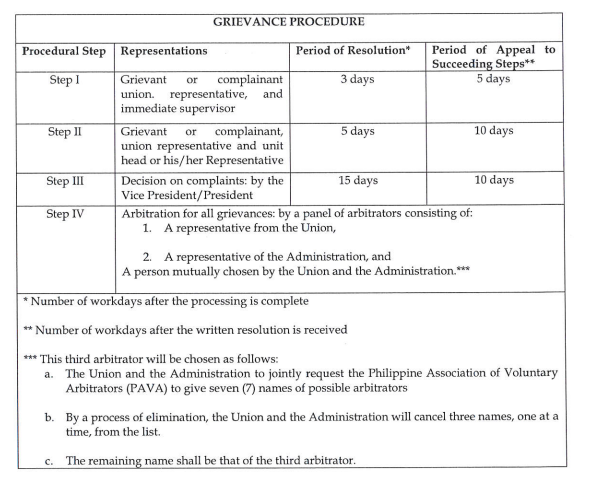
The primary institutional mechanism for appealing employee rights and pay issues is the formal Grievance Machinery established under Article X of the CBA 2024–2029. Under pages 14–15 of the notarized agreement, the procedure initiates with Step 1, where an employee or union representative submits a formal written grievance to the immediate supervisor or department head. If unresolved, the appeal escalates to Step 2, involving the complainant, union representative and unit head or his/her Representative alongside union officers to conduct formal conciliation. This structured progression ensures that wage disputes, working condition appeals, and disciplinary grievances receive systematic internal review prior to formal escalation.
At the advanced policy cycle stage, unresolved appeals progress to Step 3 of the grievance mechanics, which mandates the convening of a Joint Grievance Committee. By embedding defined timelines and formal written decisions within the CBA, the university guarantees operational due process and policy enforcement, allowing employees to challenge administrative interpretations of compensation matrices and institutional privileges.
For grievances that remain unresolved after internal remedies are exhausted, the framework establishes a definitive final stage through binding Voluntary Arbitration, aligned with the Department of Labor and Employment (DOLE) and the National Conciliation and Mediation Board (NCMB) standards. Functioning as an open-access resource under Philippine labor law, this cross-institutional mechanism allows either party to submit contested wage, discipline, or employee rights cases to an accredited neutral Voluntary Arbitrator or Tribunal. By integrating this statutory escalation path into pages 14–15 of the 2024–2029 CBA document, Ateneo de Manila University ensures that employee rights and pay disputes are subject to binding, legally enforceable third-party adjudication, reinforcing institutional accountability and transparent workplace governance.
Source
1. Collective Bargaining Agreement 2024-2029 (pp. 14-15)
Recent News
You may also like these articles

Growing with purpose: How Mekeni Food Corporation turns adversity into shared value
From a small backyard operation in Porac, Pampanga, to an internationally recognized food brand exporting to 25 countries, Mekeni Food Corporation's journey demonstrates how businesses

Three Ateneo-incubated startups secure DOST-PCIEERD’s startup grant fund
Last 9 November, during the opening day of Philippine Startup Week 2026, Soolok Properties Inc, Pili AdheSeal Inc, and Saltric Power (PDG Engineering Services), three
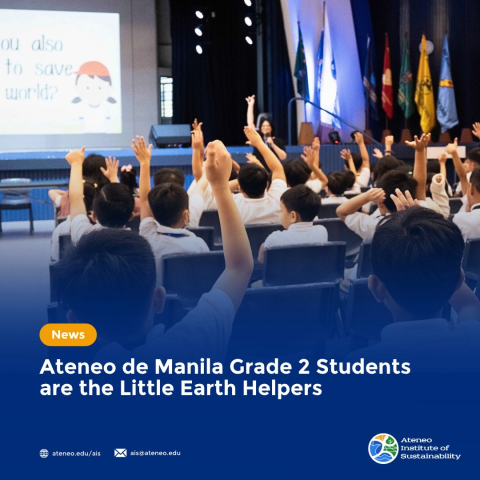
Ateneo de Manila Grade 2 students are the little Earth helpers
It was a great day for saving the world when Ateneo Institute of Sustainability (AIS) came to Ateneo Grade School to give a session on
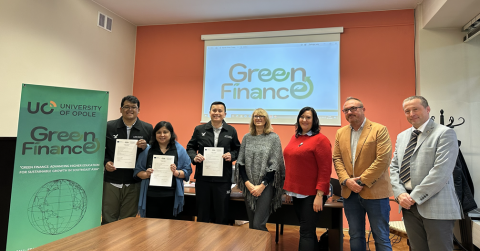
JGSOM representatives complete green finance training in Poland, sets sights on 2027 micro-credential launch
Representatives of Ateneo de Manila University's John Gokongwei School of Management (JGSOM) completed the second phase of their Erasmus+ Green Finance international mobility activities at
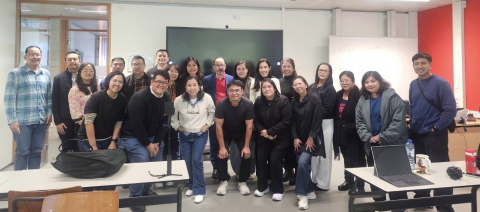
JGSOM Representatives Participate in Green Finance Training at the University of Twente
Enschede, Netherlands | October 15–16, 2026 Representatives of Ateneo de Manila University's John Gokongwei School of Management (JGSOM) participated in a specialized Green Finance training
Professor Emeritus Dr Emma Porio highlights climate resilience and biodiversity at international conferences
Emma E Porio, PhD, Professor Emeritus of Ateneo de Manila University and Principal Investigator of Ateneo's Manila Observatory Center for Climate Resilience and Public Health