2.5.1 Access to Food Security Knowledge
01 Jun 2024


Ateneo de Manila Access to Food Security Knowledge and Sustainable Agriculture Knowledge
Ateneo de Manila University regularly provides local farmers, smallholder food producers, agricultural students, and rural communities with free and fully subsidized access to food security knowledge, technical skills, and climate-smart agricultural technology. Spearheaded by academic departments, the Ateneo Innovation Center (AIC), and interdisciplinary research units, the University equips grassroots food producers with precision farming tools, low-cost water quality management systems, sustainable crop protection methods, and climate-resilient agricultural training at zero cost to the beneficiaries..
Free Technical Assistance & Sustainable Crop Protection for Local Farmers
Ateneo directly transfers scientific knowledge and sustainable agricultural practices to provincial farming communities to resolve localized crop vulnerabilities:
Chemistry & Agricultural Extension Program for Antipolo Farmers (June 2024): Faculty and chemistry students from the School of Science and Engineering (SOSE) partnered with local smallholder farmers in Antipolo, Rizal. The University conducted free hands-on workshops and laboratory-backed field assistance to teach organic pest management, safe soil testing, and non-toxic crop protection mixtures, empowering local producers to increase crop yields without relying on expensive chemical inputs.
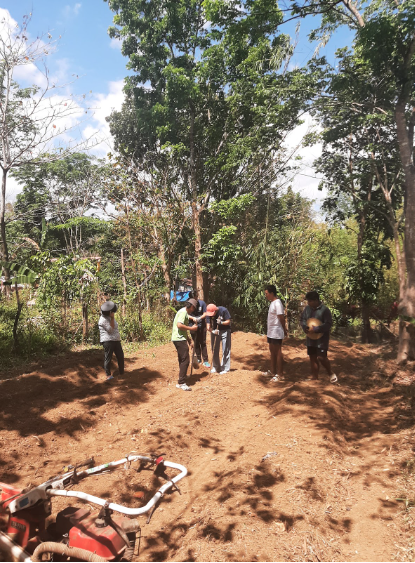 |
Determined to contribute to assist farming communities in Antipolo City in Rizal Province, 50 BS Chemistry and BS Materials Science and Engineering students conducted chemical analysis as part of their course requirements for NSTP12-Bigkis. The class, which was subdivided into six groups, focused on water, soil, and product content analysis as requested by their partner organizations.
At the start of the semester, the students were provided with an orientation on the NSTP12-Bigkis Program. They learned briefly about the different community partner organizations’ context. Students then individually chose the organization they would like to partner with.
They also had preparatory sessions to help them integrate with the communities. After submitting the necessary requirements such as medical clearance, parent or guardian's permission among other things, they completed a whole day of sample collection and engagement with the members of the organizations. This was done to deepen their understanding of the context of the community, their livelihood, and the different aspects of their lives that would impact the results of the research projects.
The students describe their laboratory experience as intensive and grueling. However, after numerous hours spent on experimentation and consultations with the mentors involved, they succeeded in presenting the results and recommendations to the representatives of their respective partner organizations and guest panelists. The presentation allowed their partner organizations to share their feedback and validate the results of the project. They extended their gratitude to the students for their valuable work. Michaell Galang, from Marikina River Watershed Kaysakat Association, Inc., shared that it boosted their confidence in what they do - that their tomato in oil and sundried tomato products meet government standards.
Rowena Millare, President of San Joseph Free Farmers Association in Antipolo City, Inc., shared, “hindi namin kaya na magpa-analyze ng tubig dahil may kamahalan. Kaya, nagpapasalamat kami sa mga mag-aaral at sa Ateneo dahil kahit papaano ay nalaman namin na ligtas inumin ang tubig na iniinom namin mula sa bukal.” (We cannot afford the cost for the water testing. We are grateful to the students and to Ateneo because we feel assured that the water from the spring is safe for drinking.)
Fully Subsidized Smart Hydroponics & Precision Farming Infrastructure
Through the Ateneo Innovation Center (AIC), the University designs, deploys, and trains local agricultural communities on low-cost, technology-driven smart farming solutions:
AIC Smart Hydroponics Greenhouse Laboratory & Candaba Farmers Project (March 2025): In partnership with Boston College, AIC deployed fully subsidized climate-resilient hydroponics and precision agriculture technologies to Salapungan National High School and local farming communities in Candaba, Pampanga. Ateneo experts provided free technical training on LoRa-based 7-in-1 soil/water sensors, AI-driven plant growth lighting, and NearCloud offline monitoring systems, enabling farmers to grow crops year-round while reducing water consumption and mitigating flood risks.
Ateneo-Boston College Partnership Brings AI-Enabled, Sustainable Farming Tech to Pampanga
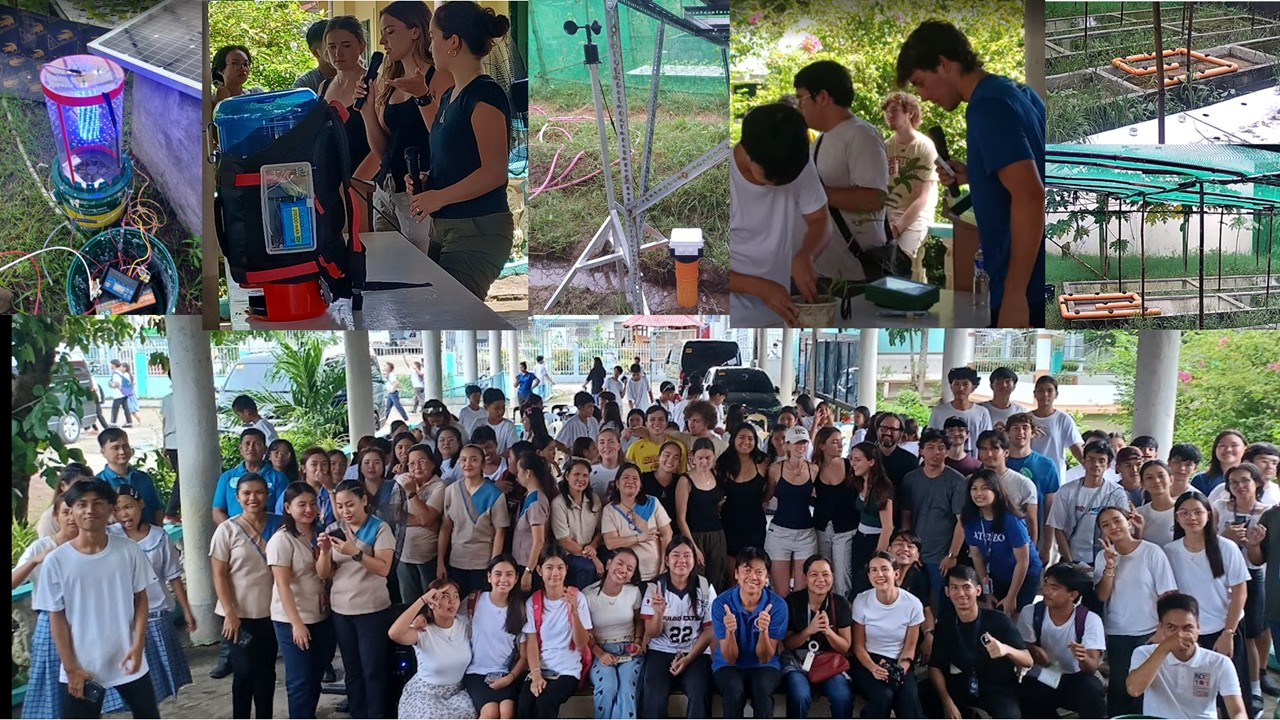 |
The continued partnership between Ateneo de Manila University (Ateneo) and Boston College (BC) has successfully engaged teachers, students, parents, farmers, and local government officials at Tagulod High School and the Barangay Hall of Candaba, Pampanga in the introduction of innovative farming technologies. These include a black bug trap using blue LED strips, a rice seed scatterer, a portable NPK sensor, water level and wind sensors, and an aquaponics system—all powered by lithium-ion batteries and recharged through solar PV panels. The technologies are now being managed by the school and have earned strong approval from members of the partner community.
Through this joint initiative of the two Jesuit institutions, we look forward to more exchanges of technical expertise and practical knowledge that can help farmers improve their crop yields, sustain their families, and inspire the youth. With the right mindset, motivation, and creativity, farming can become a viable and rewarding career path for the next generation.
Cultivating Hope: Ateneo and Boston College Partner to Support Candaba Farmers and the Next Generation
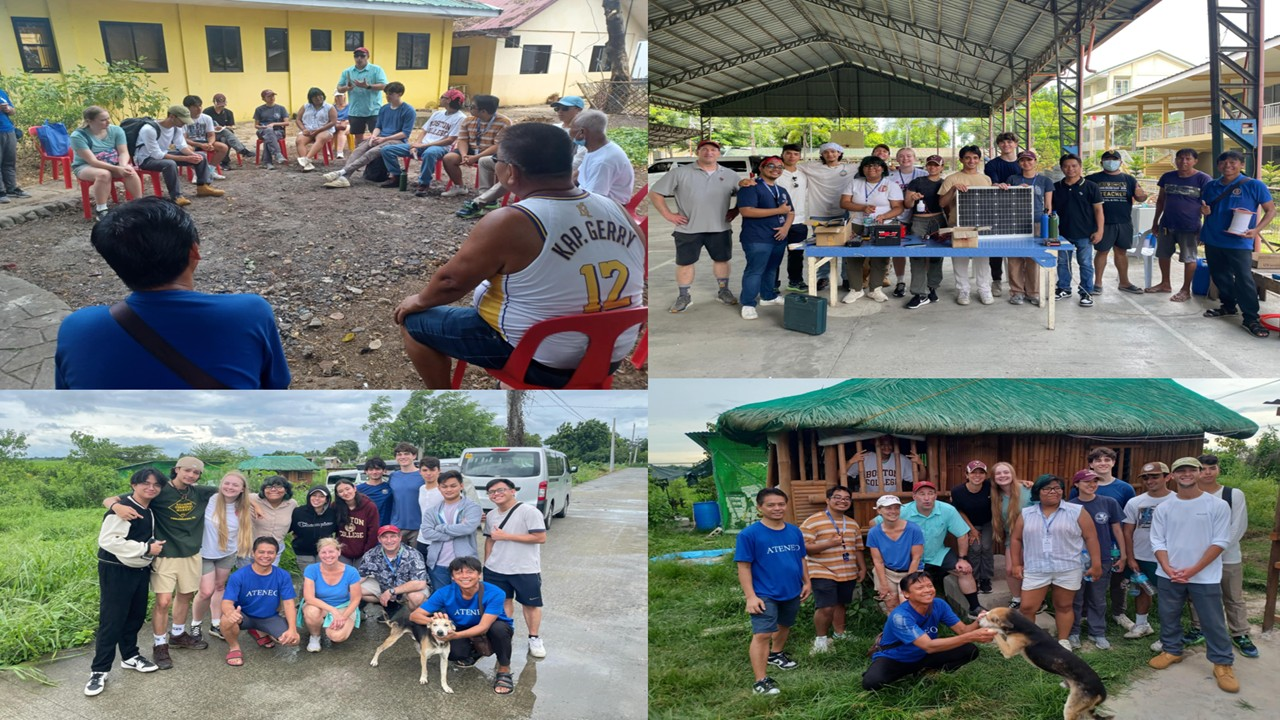 |
Ateneo de Manila University (Ateneo) and Boston College (BC) have successfully partnered to support rice farmers in addressing key challenges such as water scarcity, golden snail infestation, and the lack of effective rice-drying solutions during the rainy season. The Ateneo Innovation Center (AIC) led the community engagement activities with rice farmers in Salapungan, Candaba, Pampanga during June and July 2024. During these sessions, they presented prototype solutions and gathered valuable feedback from the partner farming community, the Dean of the School of Science and Engineering, and the Director of AIC.
Building on this collaboration, BC will continue its partnership with Ateneo in June 2025, further engaging with the underserved rice farming communities in Candaba. Through the sharing of technical expertise and practical knowledge, the initiative aims to help farmers improve their crop yields and ultimately support their families especially by enabling them to send their children to school.
Multi-Stakeholder Forums & Knowledge Sharing on Food Systems Digitization (Free)
Ateneo co-organizes regional and national webinars aimed at bridging the technology divide between rural food producers and modern agricultural markets:
Digitizing Food Systems to Bridge the Rural Divide (September 11, 2024): In collaboration with Xavier University-Ateneo de Cagayan, Xavier Science Foundation, Ateneo de Davao University, and SDSN Philippines, Ateneo co-hosted a free, public knowledge-transfer webinar.
Focus & Farmer Engagement: The event convened local farmers, agricultural students, and food tech advocates to discuss practical digital strategies including hybrid offline/online tools, simple SMS market pricing alerts, and localized digital tracking to help small rural farmers integrate into modern supply chains and boost farm profitability.
Digitizing food systems to bridge the rural divide
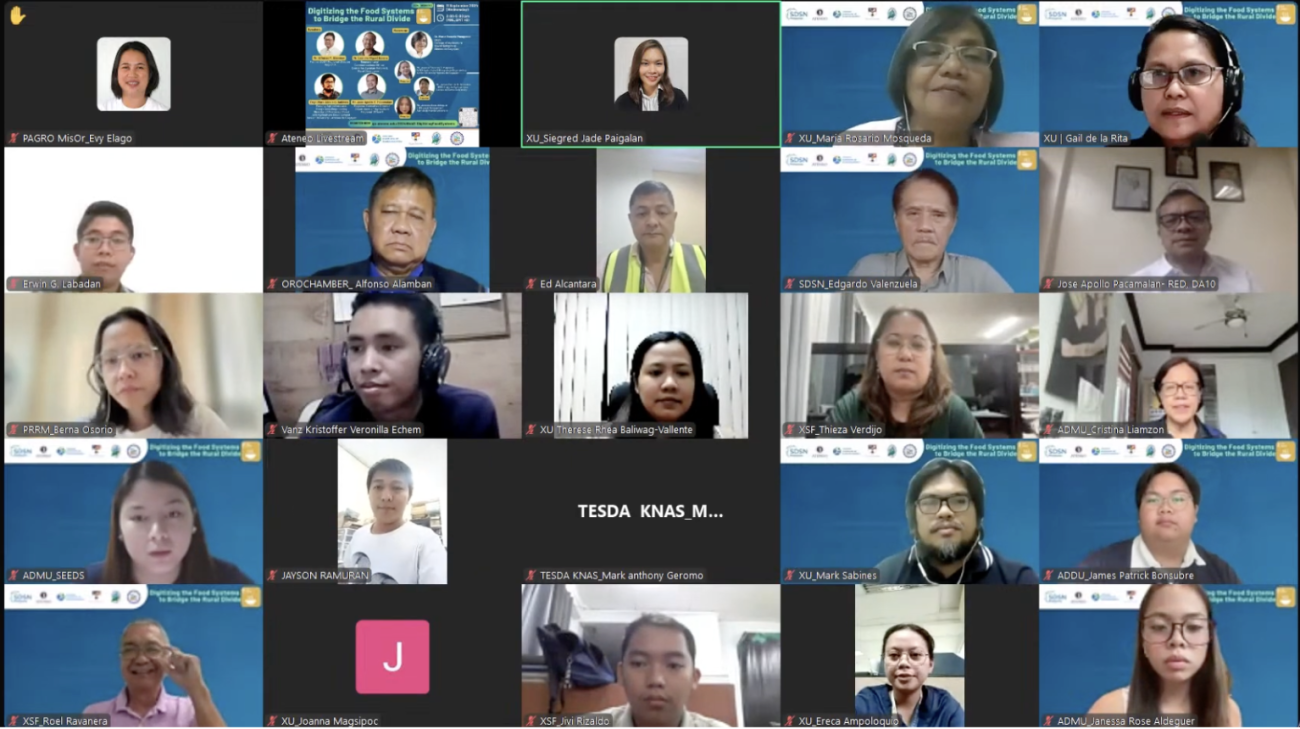 |
On 11 September 2024, Xavier University-Ateneo de Cagayan and the Xavier Science Foundation hosted a webinar entitled “Digitizing the Food Systems to Bridge the Rural Divide”. The session explored how farming, one of the world's oldest professions, is now entering the digital revolution. The event was organized in collaboration with Ateneo de Manila University, Ateneo de Davao University, and SDSN Philippines.
Moderated by Dr Maria Rosario Mosqueda, Dean of the College of Agriculture at Xavier University, the discussion showcased practical applications of technology in agriculture, spanning food safety systems and disaster sensors to telehealth stations and drone-assisted mapping.
Alfonso P Alamban, former DOST Regional Director for Northern Mindanao, opened the session by presenting real-world digital tools. His team developed Save Food Bite, an app designed to ensure food safety for consumers during the pandemic. He highlighted the deployment of over a thousand weather stations for Project NOAH (Nationwide Operational Assessment of Hazards). These stations provide real-time data on rainfall and river levels every ten minutes, providing the community with actionable information for disaster preparedness.
Mr Alamban further explained the role of LiDAR technology in creating high-tech 3D maps. These digital models allow Local Government Units (LGUs) to identify safe zones for settlements and optimal areas for farming. Additionally, he introduced the SARAI (Smarter Approaches to Reinvigorate Agriculture as an Industry in the Philippines) system, which acts as a "digital farming coach," by offering guidance on planting techniques and disease diagnosis for crops like rice, corn, and coffee. Mr Alamban noted that digital adoption still faces hurdles, such as the lingering need for face-to-face interactions in government licensing and the challenge of scaling startups like Galansang (drone reforestation) and Frisco Green Mind (urban agri-sensors).
Representing Xavier University, Engr Mark Alexis O Sabines, Director of the Masterson Food and Agriculture Development Office, introduced a suite of farmer-first applications designed to streamline agricultural management. These tools include Abuno for calculating precise fertilizer requirements, FarmBuild for production and break-even planning, and PEST-ika for the digital pest identification. Additionally, PROMISE (Project Management and Monitoring System) provides real-time market transparency by sending daily vegetable prices from Cagayan de Oro’s Bulua market directly to farmers via text message. Central to these innovations is Engr. Sabines’ insight that digital farming must remain human-centric; he emphasized the necessity of a hybrid system that rejects a fully automated approach in favor of a meaningful combination of ICT tools and human expertise.
Leandro Miguel Novero, Research and Communications Officer for the Center for Agrarian Reform and Rural Development (CARRD), demonstrated how technology supports rights and services. Through participatory Geographic Information Systems, communities can resolve land title overlaps and track agricultural projects, such as sugar greenway survival across 16 barangays. Furthermore, their telehealth partnership with the University of San Agustin and Pasig City LGU has facilitated over 500 consultations for farmer-patients, providing vital medical access to remote areas.
Finally, Mr Jose Apollo Y Pacamalan, Regional Executive Director of the Department of Agriculture Region X, illustrated the power of scale. He highlighted a new coconut processing plant that utilizes drone mapping to select high-yield trees. This facility currently processes 60,000 nuts daily and pays farmers one peso above the standard farm-gate price. For Pacamalan, the future lies in "offline-ready" systems that ensure technology works even in areas with poor connectivity.
The discussion crystallized into three core truths: technology must remain hybrid and people-first; success requires cross-sectoral commitment; and systems must be constantly updated to stay relevant. A student reactor echoed a common sentiment among farmers: “To see is to believe.” This underscores the necessity of on-the-ground demonstrations. Whether it is a simple text message regarding market prices or a telehealth corner in a barangay, these tools bridge the digital divide. By providing direct access to data, farmers transition from being "price-takers" at the mercy of traders to informed negotiators with greater agency over their livelihoods.
As the webinar concluded, the message was unmistakable: the future of food is already digital. The challenge now is to ensure these advancements are reachable, reliable, and real for every Filipino farmer.
Sources:
1. Chemistry students mix passion, competence to assist Antipolo farmers
2. Digitizing food systems to bridge the rural divide
3. Ateneo Innovation Center
Recent News
You may also like these articles

Growing with purpose: How Mekeni Food Corporation turns adversity into shared value
From a small backyard operation in Porac, Pampanga, to an internationally recognized food brand exporting to 25 countries, Mekeni Food Corporation's journey demonstrates how businesses

Three Ateneo-incubated startups secure DOST-PCIEERD’s startup grant fund
Last 9 November, during the opening day of Philippine Startup Week 2026, Soolok Properties Inc, Pili AdheSeal Inc, and Saltric Power (PDG Engineering Services), three
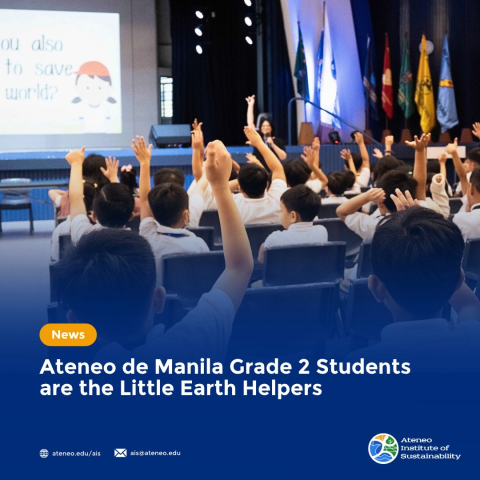
Ateneo de Manila Grade 2 students are the little Earth helpers
It was a great day for saving the world when Ateneo Institute of Sustainability (AIS) came to Ateneo Grade School to give a session on
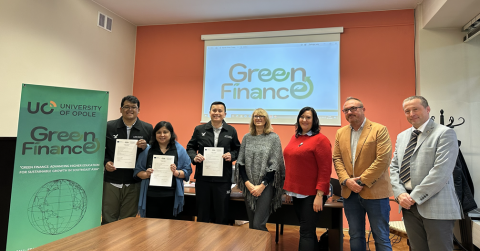
JGSOM representatives complete green finance training in Poland, sets sights on 2027 micro-credential launch
Representatives of Ateneo de Manila University's John Gokongwei School of Management (JGSOM) completed the second phase of their Erasmus+ Green Finance international mobility activities at
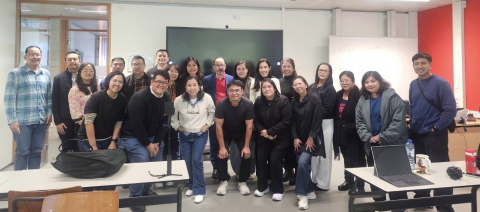
JGSOM Representatives Participate in Green Finance Training at the University of Twente
Enschede, Netherlands | October 15–16, 2026 Representatives of Ateneo de Manila University's John Gokongwei School of Management (JGSOM) participated in a specialized Green Finance training
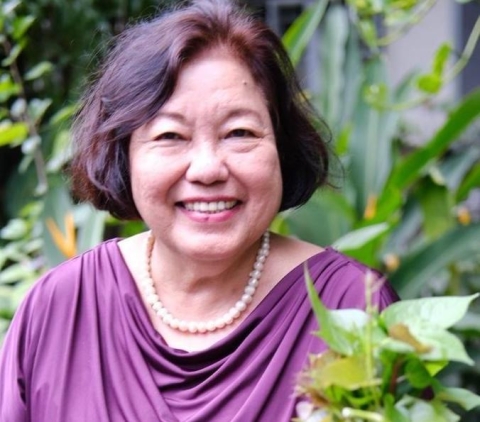
Professor Emeritus Dr Emma Porio highlights climate resilience and biodiversity at international conferences
Emma E Porio, PhD, Professor Emeritus of Ateneo de Manila University and Principal Investigator of Ateneo's Manila Observatory Center for Climate Resilience and Public Health