Klim@Tsokolate
08 Jul 2026 | Elisha Razon & Raphael Diongco




Chocolate is having a moment — again. Dubai chewy chocolate, fudgy brownies, chocolate-covered everything, overpriced café drinks we somehow still order without hesitation. The algorithm loves it. Honestly, so do we.

What's cocoa-ing on?
Chocolate begins its journey as cacao beans on cacao farms. These are found inside pods that grow directly from the trunk of the cacao tree, or Theobroma cacao, which loosely translates to "food of the gods". Before any of it becomes chocolate, the beans are harvested, fermented, dried, roasted, and processed through a chain that stretches from small farms to global factories.
That chain begins with geography. Cacao grows only within a narrow tropical band — roughly 10 degrees north and south of the equator — where conditions are warm, humid, and consistently rainy. Step outside that band, and the tree struggles. Push the conditions in the band itself — through rising temperatures, shifting rainfall, or worsening droughts — and the entire system starts to crack: chocolate may be eaten everywhere, but cacao can only grow in a handful of places, under a specific set of conditions.
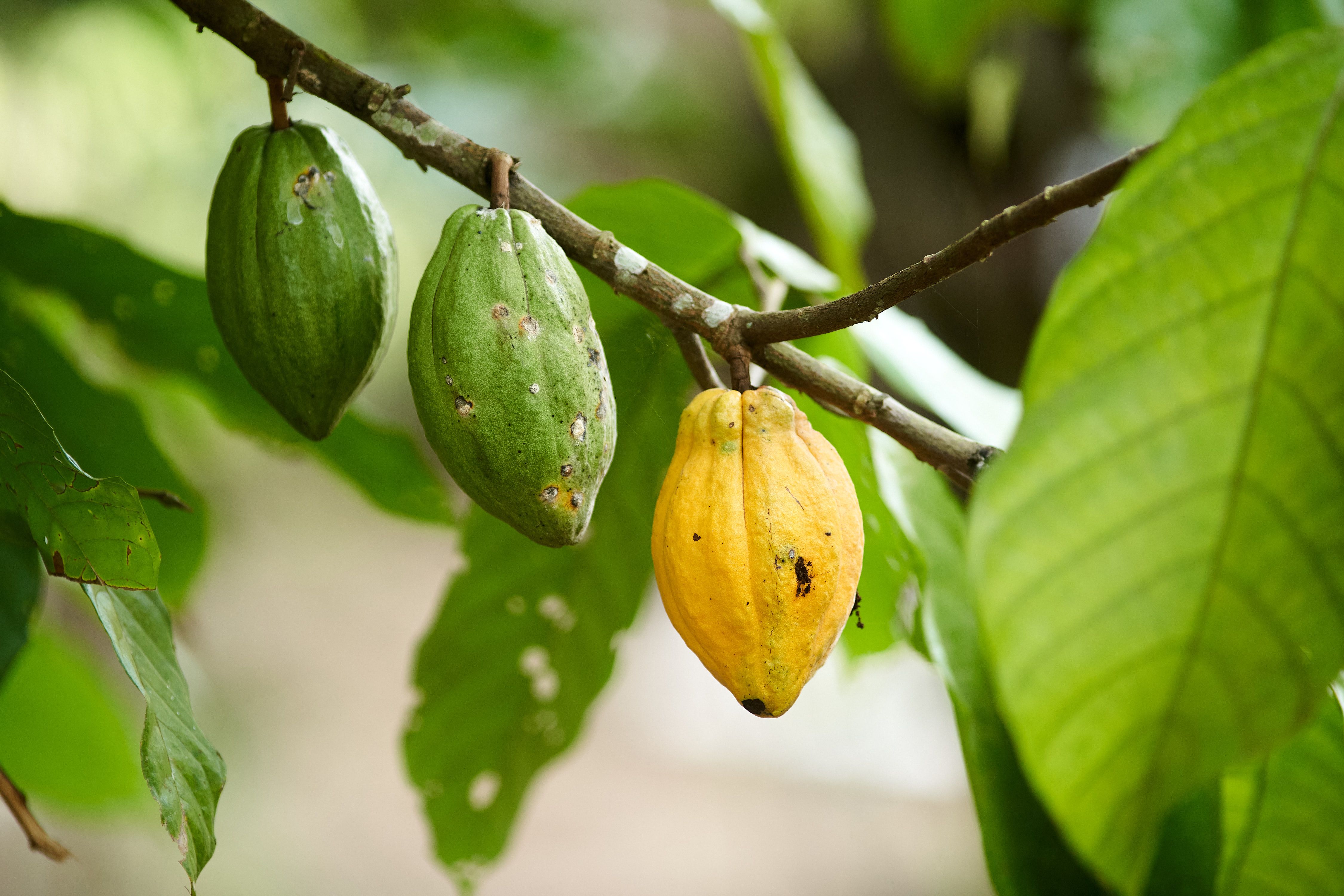
In other words, chocolate is a highly climate-sensitive cash crop. It has seen a steady and sometimes sudden price spike, surging by 136% from July 2022 to February 2024 and hitting record highs of near $12,000 per tonne at the end of 2024 (UNCTAD, 2024). This reflects the reality that cacao has been getting harder to produce for quite some time now. Along with this, climate change continues to threaten this fragile system, where pulling on one thread can cause ripple effects which destabilize the entire chain.
The Philippines is a cacao-producing nation, placing 72nd in terms of global cocoa exports and holding less than 0.01% of the global market share (Department of Trade and Industry, 2017). Locally, cacao is processed by companies such as Universal Robina Corporation, Commonwealth Foods, Inc., Goya, and Columbia International Food Products Inc., as well as by artisanal producers including Auro, Theo + Philo, and Hiraya Chocolates (Philippine Consulate General in Vancouver, n.d.). Given its small share, most of the chocolate consumed globally and in the country is ultimately sourced from West Africa, which produces 70% of all cocoa beans in the world (Chen, 2024). Among the major industry players that get their cocoa from the region are Nestlé, Mars, The Hershey Company, Ferrero, Lindt & Sprüngli, Mondelēz International, and Barry Callebaut (Njoroge, 2026).
A treat under heat
Climate change isn't arriving as a single stressor. It arrives as a cascade — hotter air, stressed trees, more pests, fewer pollinators, smaller harvests — each problem compounding the next.
Cacao production is incredibly sensitive to temperature changes. While optimal growing conditions vary slightly by variety and region, cacao generally thrives within a temperature range of 18–32°C (Mensah et al., 2023). Generally, temperatures below or above this range can cause stress to the plant, reducing both the quality and quantity of cocoa beans produced. In the context of today’s rising global temperatures, the Intergovernmental Panel on Climate Change (IPCC) projects a potential range of temperature increase by 1.5° to 3.5 °C by 2100 under different emissions scenarios (Van Vuuren et al., 2026; van Deelen, 2026), following an updated set of warming scenarios that now excludes what was formerly the worst-case scenario of about 5°C. Despite this improvement in scenarios, the new “worst case scenario” of 3.5°C still represents excessive heat, which will place cacao trees under greater water stress, reducing photosynthetic activity and weakening overall growth, leading to lower harvests and poorer-quality cocoa beans (Lander et al., 2025; Gateau-Rey et al., 2018). Given this, temperature patterns as of late have become increasingly erratic, posing a direct threat to a commodity that relies so much on predictability and stability. In 2024 alone, major cacao-producing regions in West Africa experienced an additional three weeks of temperatures exceeding the 32°C threshold (PNA, 2025), causing the leaves of the cacao tree to wilt and further exposing the cacao pods to heat.
The warming temperatures also provide a conducive environment for pests to thrive, in particular, mealybugs. They are the main cause of the Cacao Swollen Shoot Virus (CSSV). It heavily affected Ghana in 2023, with CSSV spreading to over 600,000 hectares of cacao farms (activist360, 2025). When infected, the cacao tree slowly stops producing pods and eventually dies, the disease accounted for almost 15–50% of harvest losses in Ghana (Agusto et al., 2025).
The effects of heat stress extend beyond the tree itself. Heat disrupts the pollinators that cacao depends on. One global analysis found that poor pollination alone can reduce cacao yields by around 31% under substantially hotter conditions (Lander et al., 2025). Climate change isn't arriving as a single stressor. It arrives as a cascade — hotter air, stressed trees, more pests, fewer pollinators, smaller harvests — each problem compounding the next.
The Birds, the Bees — Actually, the Midges
Here's a strange fact: the world's chocolate supply runs on one of the least glamorous insects on Earth. Cacao flowers aren't pollinated by bees, They're pollinated almost entirely by tiny midges — flies so small most farmers have never knowingly seen one — and it turns out the whole system is far more fragile than anyone assumed.
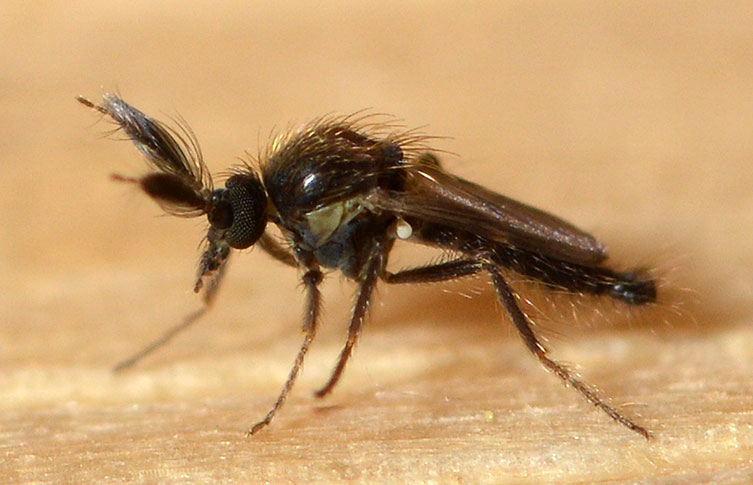
A 2025 global analysis tracked cocoa yields across Brazil, Ghana, and Indonesia and found that pollination, not soil nutrients, is the real bottleneck to production. When researchers hand-pollinated cacao flowers themselves, yields jumped by 20% — proof that, when left to nature, most cacao flowers would not get enough pollination (Lander et al., 2025).
Midges, unlike bees, are especially heat-sensitive; warmer, drier conditions thin out their populations and shorten their already brief windows of activity (Van de Sande et al., 2026). So as the planet warms, chocolate isn't just dealing with stressed trees and erratic rain — it's losing the literal go-between that turns a flower into a pod in the first place.
It's a quiet kind of collapse. Nothing about a heat-stressed midge population makes headlines the way a 40% rainfall swing does. But with cocoa underpinning the livelihoods of roughly 5 million smallholder farmers worldwide (Lander et al., 2025), an invisible insect having a harder time finding cacao flowers may turn out to be one of the most consequential climate stories chocolate has.
Out of the Goldilocks Zone
Rising temperatures are only half the equation; climate change is also affecting rainfall patterns. This has led not only to increased precipitation in some regions but also to irregular and prolonged dry spells in others. It reflects a broader pendulum effect in the climate system, where conditions increasingly swing between wet and dry extremes. These factors push cacao cultivation out of its Goldilocks zone, where it depends on stable, consistent rainfall of about 1,500–2,000 mm annually, with dry periods ideally not exceeding 3 months (Climate Central, 2024).
In particular, climate change can intensify seasonal weather events such as El Niño, a climate pattern characterised by the abnormal warming of surface waters in the central and eastern Pacific Ocean that disrupts global wind and rainfall systems. The International Cocoa Organisation (ICCO) has linked these El Niño–related fluctuations to an estimated 11% decline in the year’s main cocoa harvest, as the resulting instability in growing conditions reduced yields and disrupted crop development (Myers, 2024). Drier conditions increase the likelihood of young cocoa trees dying, while excessive rainfall can encourage pest outbreaks and fungal infections during the production stage and prevent proper drying of cocoa beans during the post-harvest stage, increasing the risk of mold growth, spoilage, and overall quality deterioration (Brehm, 2023; Climate Central, 2024). Increasingly, climate change is altering the environmental conditions that cacao depends on to grow, making production more difficult over time and likely to become even more challenging in the years ahead.
The Human Cost of Chocolate

Much has been said about the effects of climate change on consumers, particularly through price spikes that reduce their ability to purchase chocolate. However, a key pillar of the entire supply chain is often overlooked. More than the repercussions of the chocolate industry on consumer habits, there needs to be an urgent emphasis on the devastating effects climate change has on the livelihoods of over 5-6 million cocoa farmers and the further 40-50 million people worldwide who depend on this crop to survive (Cacao – Industry Strategic Science and Technology Plans (ISPs) Platform, n.d.).
For the smallholder farmers who grow the vast majority of the world's cacao, a failing crop threatens the stability of their everyday lives. Already earning only around $1.90 per day, many cocoa farmers are especially vulnerable to sudden price spikes throughout the supply chain (Tropical Cacao, 2024). Coupled with declining harvest yields and increasingly unpredictable weather patterns, these challenges further threaten their livelihoods and economic security, to say nothing of occupational and health-related hazards they face with worsening impacts of climate change.
As we look to the future of the chocolate industry, and indeed any agricultural sector, the conversation must move away from the mere convenience of our grocery bills to the survival and economic stabilisation of the millions of workers who struggle to make ends meet.
Climate impacts also make investing in cacao trees a gamble: a newly planted tree requires three to five years just to mature and bear fruit, leaving farmers with a massive income gap that cannot be easily adjusted for (Silverman, 2026). This is one reason farmers shift to other crops or leave the industry altogether in search of better-paying jobs. Even younger generations are becoming less incentivized to join an industry plagued by such uncertainty (Myers, 2024). Smallholder farmers face the highest economic risks in the entire supply chain, yet possess the lowest adaptive capacity. Unlike multinational chocolate corporations, individual farmers do not have the financial safety nets, access to credit, or resources needed to invest in costly climate adaptation strategies. When climate shocks hit, these farming communities absorb the blow directly. As we look to the future of the chocolate industry, and indeed any agricultural sector, the conversation must move away from the mere convenience of our grocery bills to the survival and economic stabilisation of the millions of workers who struggle to make ends meet.
In all this, we, as consumers, are called to do our part in preserving a stable climate. Through the small choices we make each day, we can contribute to meaningful change. This conversation extends far beyond chocolate; it encompasses agriculture as a whole, the livelihoods of millions of farmers, and the health of the ecosystems upon which we depend. The challenges facing the chocolate industry serve as a reminder that climate change is not only an environmental issue but it is also a human one, affecting the future of communities in more ways than one.
References
activist360. (2025, February 16). The Future of Chocolate is at Risk – How Climate Change is Harming Cocoa Farms. Activist360. https://www.activist360.co/2025/02/16/chocolate-cocoa-farms/
Agusto, F. B., Maria, Owusu-Ansah, F., Owusu Domfeh, Natali Hritonenko, & Chen-Charpentier, B. (2024). Cacao sustainability: The case of cacao swollen-shoot virus co-infection. PloS One, 19(3), e0294579–e0294579. https://doi.org/10.1371/journal.pone.0294579
Brehm, M. (2022, August 3). The impact of climate change on cocoa farming in Ghana. Fairafric. https://www.fairafric.com/en/blogs/blog/die-auswirkungen-des-klimawandels-auf-den-kakaoanbau-in-ghana
Cacao – Industry Strategic Science and Technology Plans (ISPs) Platform. (n.d.). PCAARRD’s ISP-IS. https://ispweb.pcaarrd.dost.gov.ph/isp-commodities/cacao/
Chen, E. (2024, June 25). Bittersweet: The harsh realities of chocolate production in West Africa. Harvard International Review. https://hir.harvard.edu/bittersweet-the-harsh-realities-of-chocolate-pr…
Climate Central. (2022). Climate Change is Heating Up West Africa’s Cocoa Belt | FAO. Fao.org. https://www.fao.org/family-farming/detail/en/c/1735252/
Department of Trade and Industry. (2017). The Philippines in the cocoa-chocolate global value chain (DTI Policy Briefs Series No. 2017-09).
Gateau-Rey, L., Tanner, E. V. J., Rapidel, B., Marelli, J.-P., & Royaert, S. (2018). Climate change could threaten cocoa production: Effects of 2015-16 El Niño-related drought on cocoa agroforests in Bahia, Brazil. PLOS ONE, 13(7), e0200454. https://doi.org/10.1371/journal.pone.0200454
Lander, T. A., Atta-Boateng, A., Toledo-Hernández, M., Wood, A., Malhi, Y., Solé, M., Tscharntke, T., & Wanger, T. C. (2025). Global chocolate supply is limited by low pollination and high temperatures. Communications Earth & Environment, 6(1), 97. https://doi.org/10.1038/s43247-025-02072-z
Mensah, E. O., Vaast, P., Asare, R., Amoatey, C. A., Owusu, K., Asitoakor, B. K., & Ræbild, A. (2023). Cocoa Under Heat and Drought Stress. In Agroforestry as Climate Change Adaptation (pp. 35–57). https://doi.org/10.1007/978-3-031-45635-0_2
Njoroge, D. (2026, February 25). Major chocolate brands sourcing African Cocoa 2026. Know Afrika. https://knowafrika.com/major-chocolate-brands-sourcing-african-cocoa-2026/
Myers, A. (2024, March 4). ICCO predicts 11% drop in global cocoa output, after El Niño effect. ConfectioneryNews.com. https://www.confectionerynews.com/Article/2024/03/04/ICCO-predicts-11-drop-in-global-cocoa-output-after-El-Nino-effect/
Philippine Consulate General in Vancouver. (n.d.). The Philippine cacao industry. https://www.vancouverpcg.org/wp-content/uploads/2020/09/7-The-Philippine-Cacao-Industry-Rev3.pdf
Philippine News Agency. (2026). Climate change is coming for your chocolate, study says. Philippine News Agency. https://www.pna.gov.ph/articles/1244157
Silverman, N. (2026, May 13). The Long Patience of a Cacao Tree. Kampura. https://kampura.com/blogs/cacao-library/the-long-patience-of-a-cacao-tr…;
Tropical Cacao. (2024, November 22). The Economics of Cacao Farming: Breaking the Cycle of Poverty – Tropical Cacao – Sustainable Chocolate. Tropicalcacao.com. https://tropicalcacao.com/the-economics-of-cacao-farming-breaking-the-c…;
UNCTAD. (2024, March 28). Chocolate price hikes: A bittersweet reason to care about climate change | UNCTAD. Unctad.org. https://unctad.org/news/chocolate-price-hikes-bittersweet-reason-care-about-climate-change
Van Deelen, G., & Van Deelen, G. (2026, May 19). Why the IPCC Seems Poised to Eliminate Its Most Extreme Emissions Scenario. Eos. https://eos.org/research-and-developments/why-the-ipcc-seems-poised-to-…
Van de Sande, E., Vroman, S., Kratz, F., Mohamed, N. Z., Salim, J. M., Vandromme, M., & Vanschoenwinkel, B. (2026). Revisiting cacao pollination: New behavioural and pollen-based evidence for the key role of Ceratopogonidae. Basic and Applied Ecology, 94, 24–33. https://doi.org/10.1016/j.baae.2026.05.006
Recent News
You may also like these articles

Updating of Medical Records Second Semester SY 2026-2027
14 November 2026 TO: Undergraduate and Graduate Students FROM: Higher Education Office of Health Services-College SUBJECT: Updating of Medical Records Second Semester SY 2026-2027 Please

Promotion of Faculty in the Senior High School (Memo U2627-050)
(Memo # U2627-050) I am pleased to announce that upon the recommendation of the Senior High School Committee on Faculty Rank and Permanent Appointment and the endorsement of the Vice President for Basic Education, I am approving the promotion of the following faculty members in the Senior High School:

Demise of Mr Silvestre P Villarin(Memo U2627-049)
(Memo U2627-049) We extend our condolences to Fr Jose Ramon “Jett” T Villarin SJ and his family on the passing of his father, Mr Silvestre Villarin, on 18 November 2026 at the age of 96. Fr Villarin is the former University President, a faculty member of the Department of Physics, and the Executive Director of the Manila Observatory.

Growing with purpose: How Mekeni Food Corporation turns adversity into shared value
From a small backyard operation in Porac, Pampanga, to an internationally recognized food brand exporting to 25 countries, Mekeni Food Corporation's journey demonstrates how businesses

[AGS] National Book Week
Open a Book, Stories Unfold, Wonders Flow Let us come together as one AGS community to celebrate the 92nd National Book Week with the theme

Three Ateneo-incubated startups secure DOST-PCIEERD’s startup grant fund
Last 9 November, during the opening day of Philippine Startup Week 2026, Soolok Properties Inc, Pili AdheSeal Inc, and Saltric Power (PDG Engineering Services), three