Klim@Ube
18 Jun 2026 | Coleene Roumel Cortez & Tanja Zsofia Escalona




What if the vibrant purple swirl in your ice cream or cake is more than just a trendy flavor? What if it reflects a deeper story about climate, culture, agriculture, and global demand?
Once considered a humble root crop grown in backyard farms across the Philippines, ube (Dioscorea alata) has transformed into an international food phenomenon. From ube lattes and cheesecakes to ice cream and pastries, the bright purple yam has become a visual and culinary sensation often compared to matcha in terms of popularity and marketability (The Guardian, 2026; FoodNavigator, 2026).
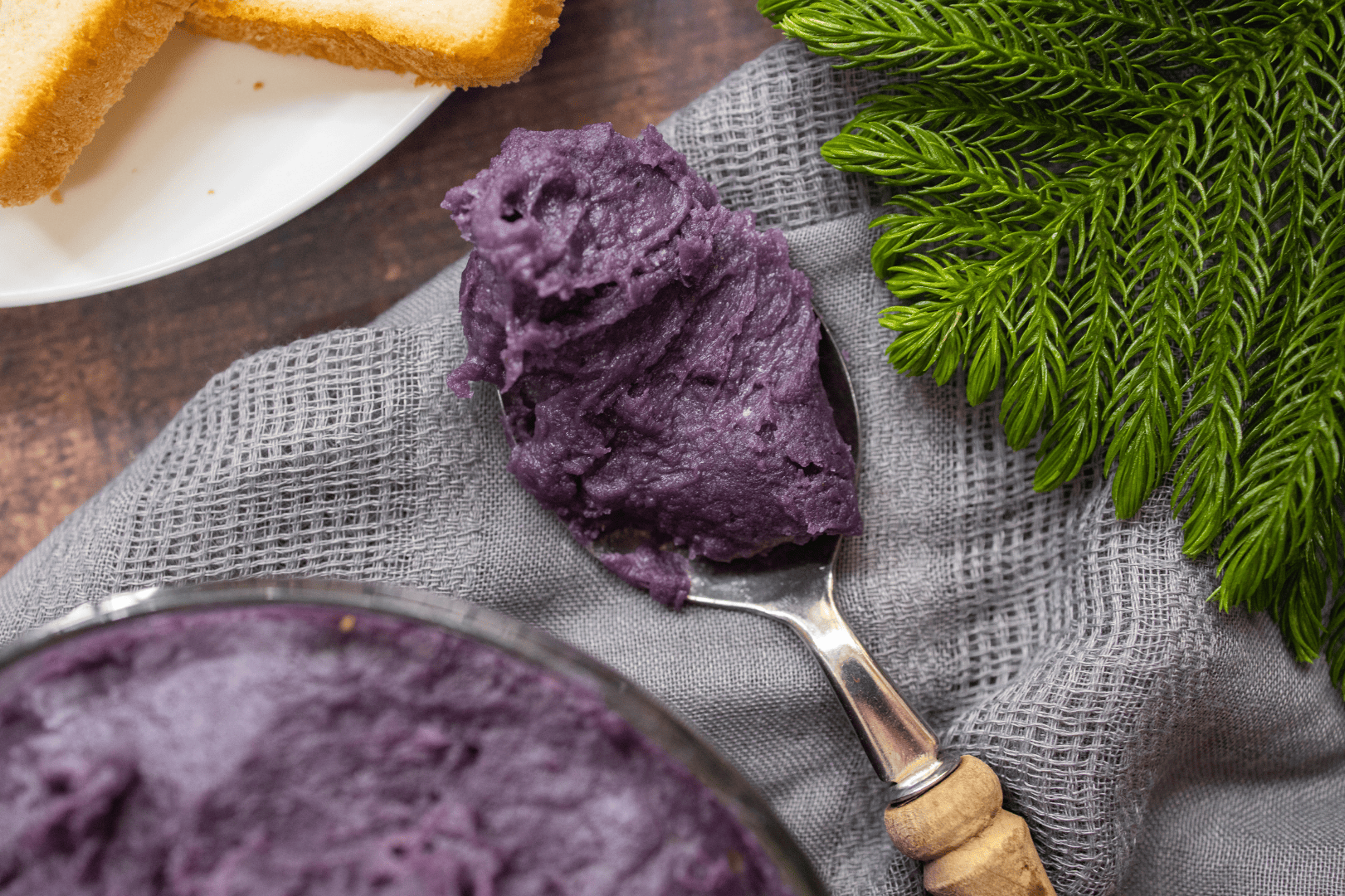
Even though the culture is deeply familiar with it, ube remains scientifically underexplored in Philippine agricultural history compared to other staple crops. There is scientific research that confirms that Philippine yam varieties contain phenolic compounds and exhibit strong antioxidant activity, linking ube not only to cuisine but also to nutritional science (Cornago, Rumbaoa, & Geronimo, 2011; Lubag, Laurena, & Tecson-Mendoza, 2008).
Yet, behind the aesthetic appeal of ube lies a growing environmental crisis. With the increasing threats brought about by climate change, the conditions required for its cultivation become more difficult to maintain as stronger typhoons, unpredictable rainfall patterns, flooding, and rising temperatures are disrupting harvest cycles and reducing yields in the Philippines (ABS-CBN News, 2019a). More concerning for those who anchor their familiarity with the crop to its color, the environmental stress affects anthocyanin stability, which is the pigment responsible for ube’s purple appearance (Moriya et al., 2015; Wu et al., 2015), leading to the emergence of the so-called “white ube phenomenon.”
As ube becomes a global symbol of Filipino flavor and identity, its future depends not only on demand but also on climate resilience and agricultural sustainability.
Rooted in memory: The cultural journey of Ube
Long before becoming a global dessert trend, ube had been a staple in Filipino households, used in ube halaya (pudding), cakes, halo-halo, and traditional kakanin (sticky rice cakes), and is also eaten during Filipino celebrations such as fiestas, reunions, and holidays. Recipes are passed down through generations, making it a cultural and familial memory embedded in everyday life.
However, despite its popularity, ube remains underdocumented in Philippine historical literature. Compared to major agricultural products such as rice, corn, or sugar, it has received limited academic attention. This is partly because its overfamiliarity caused it to be overlooked, as ube is so common in rural and household agriculture that it is often not considered historically significant enough for documentation. This reveals a historical paradox in Philippine food studies where ube is one of the most culturally recognizable ingredients in the Philippines, yet one of the least historically studied. Beyond nutrition, ube also holds cultural and emotional significance. It is strongly associated with childhood experiences, family gatherings, and Filipino identity. However, these cultural dimensions likewise remain largely under-researched, despite their importance in shaping food memory and heritage.
Scientific studies confirm its nutritional value. Ube varieties contain significant phenolic content and antioxidant properties, supporting their functional food potential (Cornago et al., 2011; Lubag et al., 2008). The purple color of ube comes from anthocyanins, natural pigments highly sensitive to environmental conditions (Moriya et al., 2015). These compounds are regulated by flavonoid biosynthesis pathways that respond to temperature, soil conditions, and water availability (Wu et al., 2015). Recent scientific studies confirm that ube contains bioactive compounds such as phenolics and anthocyanins, which contribute to its antioxidant activity (Cornago et al., 2011; Lubag et al., 2008). Anthocyanins isolated from purple yams have been shown to exhibit antioxidant properties and potential functional food applications (Moriya et al., 2015). While these findings are promising, further research is needed to determine clinical health benefits.
Climate jam in purple yam
The commercialization of ube reflects a tension between cultural heritage and global food trends. While it has become a viral aesthetic ingredient, its production remains rooted in small-scale farming systems highly exposed to environmental risk.
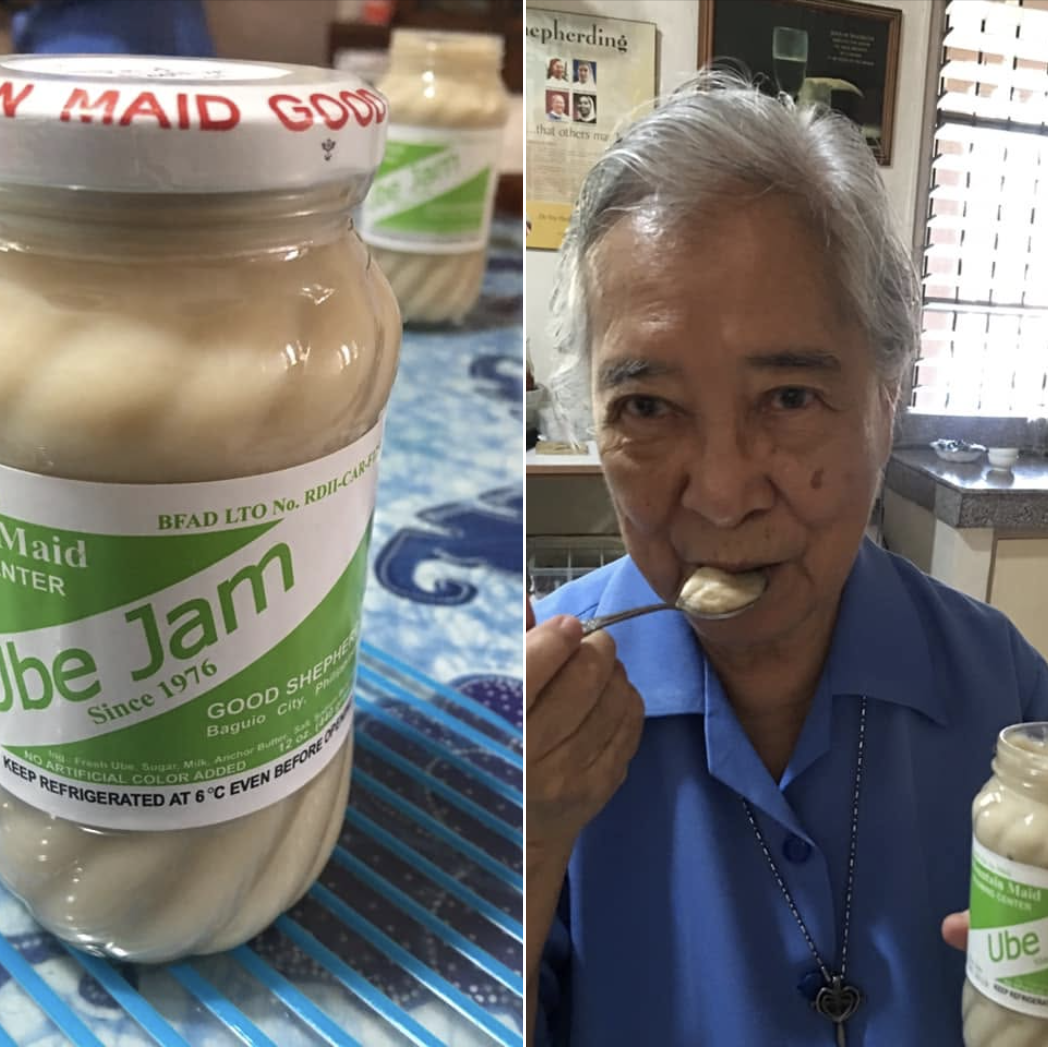
In the Philippines, climate change has significantly disrupted agriculture. Stronger typhoons, irregular rainfall, and flooding have increasingly affected root crops like ube (ABS-CBN News, 2019a; Philippine Star, 2019). One of the most visible impacts is the emergence of “white ube,” where environmental stress reduces pigment expression. This was widely reported when Good Shepherd Convent in Baguio temporarily sold white ube jam due to shortages in purple yam supply (ABS-CBN News, 2019b; GMA News, 2019). These changes affect agricultural instability and biochemical shifts in pigment production caused by environmental stress.
The rapid global recognition of ube, often described as “the new matcha” due to its vibrant color and aesthetic appeal, has led it to become a staple in cafés, bakeries, and dessert menus across the world (The Guardian, 2026; FoodNavigator, 2026). This global demand has transformed ube into a high-value commodity. However, the Philippines struggles to meet this demand consistently due to climate vulnerability and limited agricultural infrastructure. The commercialization of ube reflects a tension between cultural heritage and global food trends. While it has become a viral aesthetic ingredient, its production remains rooted in small-scale farming systems highly exposed to environmental risk.
Beyond the trend: Securing ube for future generations
The future of ube depends on both cultural appreciation and scientific understanding. While global demand continues to rise (The Guardian, 2026), agricultural systems in the Philippines face increasing pressure from climate change and environmental instability (ABS-CBN News, 2019a; Philippine Star, 2019). Future research may explore ube’s role in medicine, nutrition, childhood food memory, cultural identity, and climate-resilient agriculture. Its genetic diversity and biochemical sensitivity make it an important crop for both food security and cultural preservation (Wu et al., 2015).
Ube, nowadays, may be seen as a trendy purple ingredient. However, it also serves as a cultural artifact, a nutritional resource, and a climate-sensitive crop whose story reflects the broader challenges of Filipino agriculture, identity, and environmental change.
ERRATUM: An earlier version posted featured the incorrect root crop on our graphics. We would like to thank the community for their kind correction to our post! Looks like it was not meant tU-BE! We hope that you also consider reading the full article!
References:
ABS-CBN News. (2019a, September 23). Changing climate forces Good Shepherd to sell white ube jam. https://www.abs-cbn.com/news/09/23/19/changing-climate-lack-of-purple-y…
ABS-CBN News. (2019b, September 26). Ilocos farmers deliver purple yam to Good Shepherd. https://www.abs-cbn.com/news/09/26/19/ube-jam-back-soon-ilocos-farmers-…
Cornago, D. F., Rumbaoa, R. G. O., & Geronimo, I. M. (2011). Philippine yam phenolic content and antioxidant capacity. Philippine Journal of Science, 140(2), 145–152. https://scholar.google.com/scholar?q=Philippine+yam+phenolic+content+an…
FoodNavigator. (2026). Ube: The next matcha in global food trends. https://www.foodnavigator.com/Article/2026/04/23/ube-the-next-matcha
GMA News. (2019). Fancy some white ube jam? That's what we can get from Good Shepherd Baguio in the mean time. https://www.gmanetwork.com/news/lifestyle/food/708968/fancy-some-white-…
Lubag, A. J. M., Laurena, A. C., & Tecson-Mendoza, E. M. (2008). Antioxidants of purple and white greater yam (Dioscorea alata L.). Philippine Journal of Science, 137(1), 61–67. https://www.researchgate.net/profile/Antonio-Laurena-2/publication/2674…
Moriya, C., Hosoya, T., Agawa, S., Sugiyama, Y., Kozone, I., Shin-ya, K., Terahara, N., & Kumazawa, S. (2015). New acylated anthocyanins from purple yam and their antioxidant activity. Bioscience, Biotechnology, and Biochemistry, 79(9), 1484–1492. https://doi.org/10.1080/09168451.2015.1027652
Philippine Star. (2019). Baguio’s famous ube jam turns white amid shortage. https://www.philstar.com/nation/2019/09/24/1954348
The Guardian. (2026). Ube and the global “new matcha” food trend. https://www.theguardian.com/food/2026/apr/16/ube-cocktails-coffees-tikt…
Wu, Z.-G., Jiang, W., Mantri, N., Bao, X.-Q., Chen, S.-L., & Tao, Z.-M. (2015). Flavonoid biosynthesis in Dioscorea alata. BMC Genomics, 16, 346. https://doi.org/10.1186/s12864-015-1547-8
Recent News
You may also like these articles

Updating of Medical Records Second Semester SY 2026-2027
14 November 2026 TO: Undergraduate and Graduate Students FROM: Higher Education Office of Health Services-College SUBJECT: Updating of Medical Records Second Semester SY 2026-2027 Please

Promotion of Faculty in the Senior High School (Memo U2627-050)
(Memo # U2627-050) I am pleased to announce that upon the recommendation of the Senior High School Committee on Faculty Rank and Permanent Appointment and the endorsement of the Vice President for Basic Education, I am approving the promotion of the following faculty members in the Senior High School:

Demise of Mr Silvestre P Villarin(Memo U2627-049)
(Memo U2627-049) We extend our condolences to Fr Jose Ramon “Jett” T Villarin SJ and his family on the passing of his father, Mr Silvestre Villarin, on 18 November 2026 at the age of 96. Fr Villarin is the former University President, a faculty member of the Department of Physics, and the Executive Director of the Manila Observatory.

Growing with purpose: How Mekeni Food Corporation turns adversity into shared value
From a small backyard operation in Porac, Pampanga, to an internationally recognized food brand exporting to 25 countries, Mekeni Food Corporation's journey demonstrates how businesses

[AGS] National Book Week
Open a Book, Stories Unfold, Wonders Flow Let us come together as one AGS community to celebrate the 92nd National Book Week with the theme

Three Ateneo-incubated startups secure DOST-PCIEERD’s startup grant fund
Last 9 November, during the opening day of Philippine Startup Week 2026, Soolok Properties Inc, Pili AdheSeal Inc, and Saltric Power (PDG Engineering Services), three