Dr Kinglsey Bolton's public lecture on “World Englishes: From foundations to the present”
14 Jan 2026 | Keische Mae D Enciso



Ateneo de Manila University’s Department of English is delighted to have organized Dr Kingsley Bolton’s public lecture that traced the history and development of World Englishes (WE) in a span of a 40-year period all over the globe. It was an enlightening and audience-filled Zoom webinar, viewed and participated in by approximately 300 scholars and students around the world, as it was made free of access to all.
The event was spearheaded by Dr Maria Luz Elena N Canilao and Dr Elineth Elizabeth L Suarez, Chair and Associate Chair of the English Department, respectively. Mr Michael Benedict Ian Estipona, a faculty member, hosted the program while Ms Elaine M Masangya , a PhD student, moderated the open forum during the event.
The discussion of Dr Bolton covered and illuminated four major concerns. First, the beginnings of World Englishes were tackled. World Englishes primarily started with Braj B Kachru and Larry E Smith headed two scholarly conferences which led to their seminal works in WE (Kachru, 1982; Smith, 1981) and in the founding of World Englishes journal and the International Association for World Englishes (IAWE). Second, the premier scholars of WE such as Braj B Kachru, Yamuna Kachru, and Larry E Smith, including their written works of research and theories in the field, were reintroduced. Third, WE’s groundbreaking theorization, growth and contextualization in the Asian context which Braj B. Kachru termed as Asian Englishes, as well as WE’s Three Circles Model in Asia, were reviewed. In addition to this, the progression of WE approaches and methodologies were surveyed and the significant WE journals were presented. Fourth, the Philippine English’s positionings, purposes, particularities and probings were highlighted. Incorporated in the discussion were the significant publications that focused on Philippine English, how English has now become “ours” as “we have colonized it, too” (Abad 1996 in Bolton, 2025), and current conversations on WE such as hybridity, multilingualism, translingualism, and others.
The last part of the lecture opened the floor to questions from the audience which pursued contemporary interests, namely WE’s trajectory, its role in linguistic diversity, multiculturalism and pluralism, English-Only Policy in schools in the Philippines, and the current United States government’s emboldening of the English language as the only language of the state in an executive order released recently. These themes on World Englishes along with countless others encourage further dialogues, consultations, and research works as they open up concerns that we can look forward to answering and resolving.
Recent News
You may also like these articles
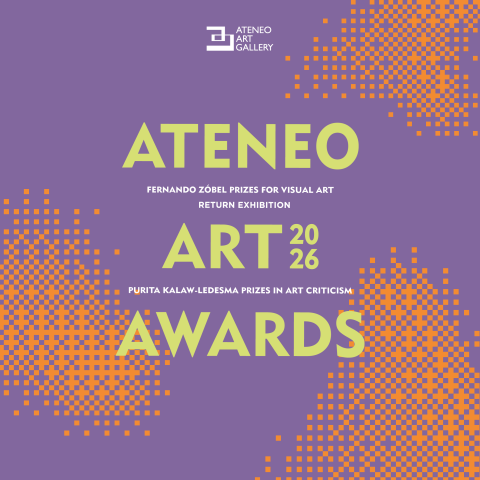
Ateneo Art Gallery presents Ateneo Art Awards 2026—Awarding Ceremony and Exhibition Opening on 6 December
The Ateneo Art Gallery (AAG) presents the 2026 Ateneo Art Awards (AAA), featuring twelve (12) shortlisted writers for the Purita Kalaw-Ledesma (PKL) Prizes in Art
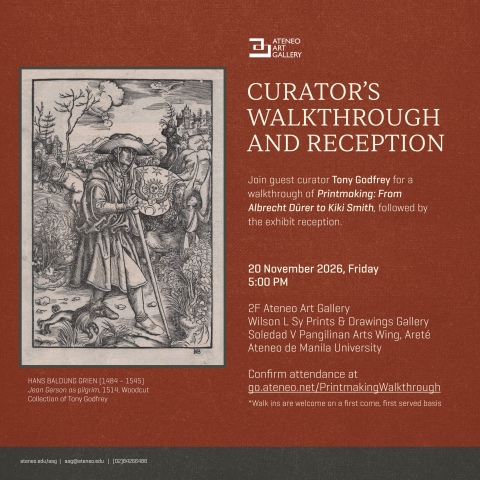
Join Ateneo Art Gallery for the Curator's Walkthrough and Exhibition Reception of "Printmaking: From Albrecht Dürer to Kiki Smith"
Ateneo Art Gallery presents a Curator’s Walkthrough of Printmaking: From Albrecht Dürer to Kiki Smith with guest curator Tony Godfrey on 20 November 2026 (Friday)

Libraries are more than just infrastructure: Kritika Kultura hosts lecture by Dr Bono Olgado on rethinking libraries as infrastructure
Kritika Kultura hosted a public lecture by Benedict “Bono” Salazar Olgado, PhD, offering a critical re-examination of how modern society conceptualizes infrastructure, libraries, and archival
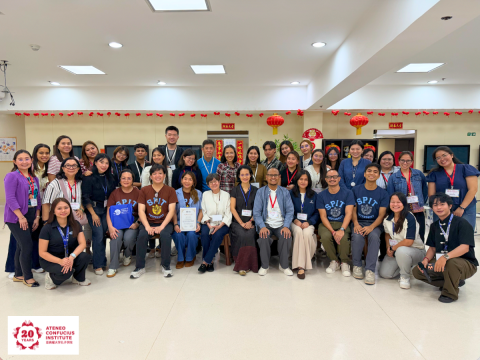
Ateneo Confucius Institute empowers local Chinese teachers through creative skills workshop
The Confucius Institute at Ateneo de Manila University (CI-Ateneo) held its annual training program for local Chinese language teachers on 24 October 2026, adopting a

Trace the History of Western Printmaking in “Printmaking: From Albrecht Dürer to Kiki Smith”
The Ateneo Art Gallery presents Printmaking: From Albrecht Dürer to Kiki Smith, an exhibition tracing the history of printmaking in the Western art tradition. On

Join Us for Dekada Solidarity Night on 29 October
As Dekada ng Sama-samang Pag-alala: Isang Eksibisyon ng mga Likhang Sining draws to a close, the public is invited to gather for an evening of