Libraries are more than just infrastructure: Kritika Kultura hosts lecture by Dr Bono Olgado on rethinking libraries as infrastructure
10 Nov 2026


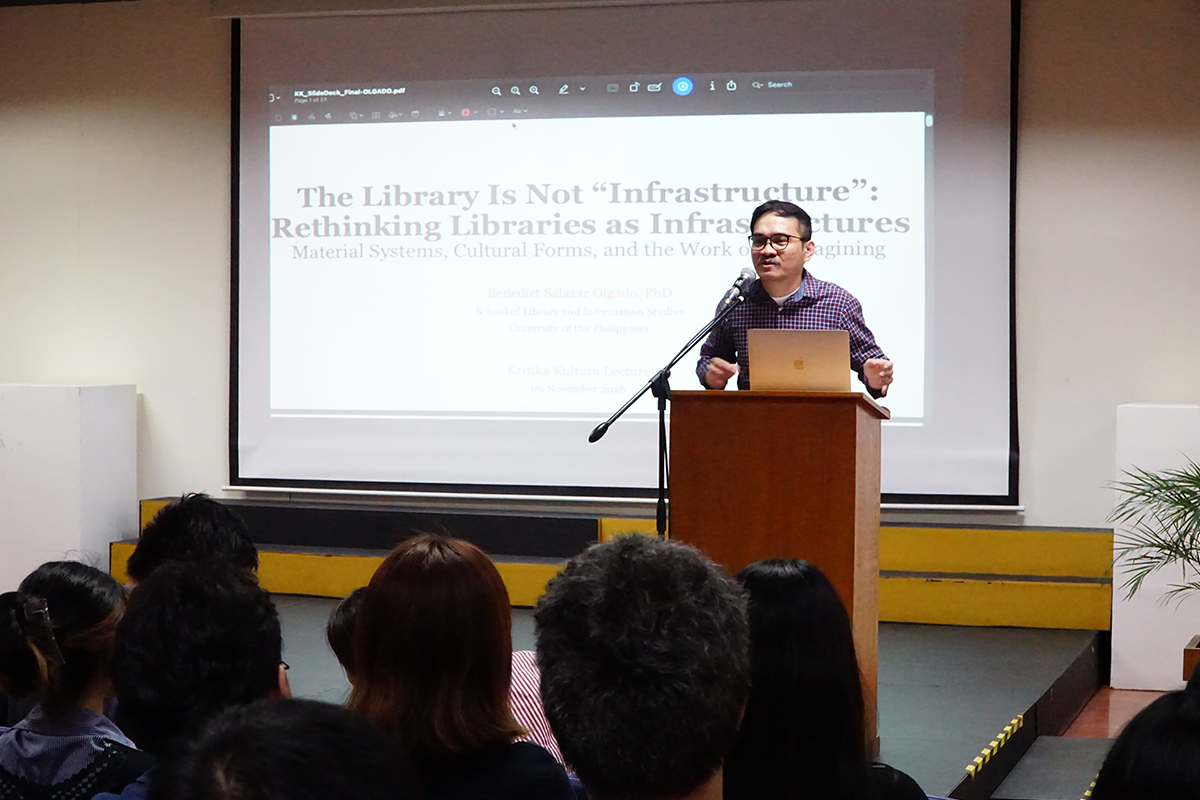
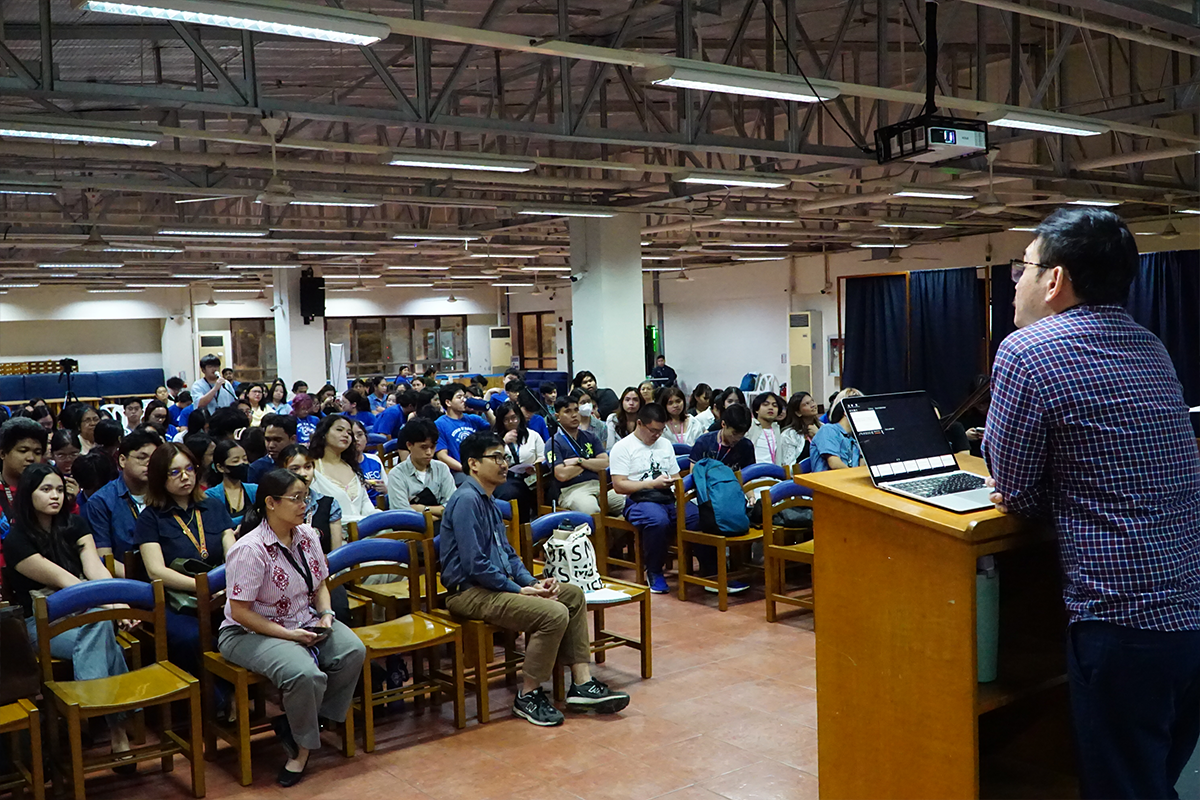
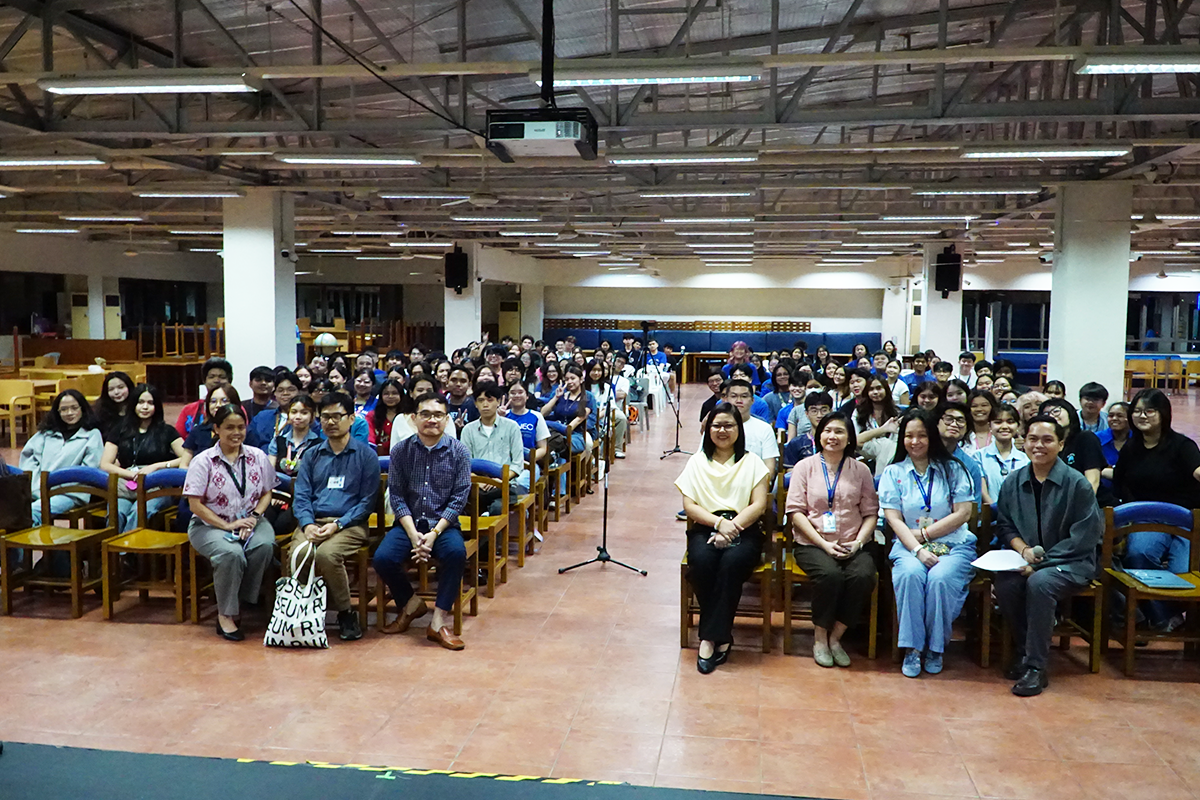
Kritika Kultura hosted a public lecture by Benedict “Bono” Salazar Olgado, PhD, offering a critical re-examination of how modern society conceptualizes infrastructure, libraries, and archival systems. The lecture — which was held in partnership with the Literary and Cultural Studies Program of the School of Humanities, PLUME, and the Rizal Library — took place at the First Pacific Hall on the 5th floor of the New Rizal Library, Ateneo de Manila University.
Dr Olgado is an Associate Professor at the University of the Philippines School of Library and Information Studies and a recognized University Social Scientist. His research focuses on information systems, transitional justice, and human rights documentation.
Kritika Kultura is an international, open-access journal of literary, language, and cultural studies published by the Literary and Cultural Studies Program of Ateneo de Manila University. It is acknowledged by a host of Asian and Asian American Studies libraries and scholarly networks and indexed in the MLA International Bibliography, Arts and Humanities Citation Index (Clarivate), Scopus, EBSCO, the Directory of Open Access Journals, and the International Consortium of Critical Theory Programs (ICCTP).
He serves as Founding Director of the Publics, Archives, and Data Lab (PANDA Lab), Deputy Director for Research at the UP Intelligent Systems Center, and Director for Documentation, Archives, and Memorialization for the Philippine Truth Commission. He previously served as Senior Documentalist at HURIDOCS (Human Rights Information and Documentation Systems) and founding director of the National Film Archives of the Philippines. He holds degrees from Ateneo de Manila University, New York University, and the University of California, Irvine.
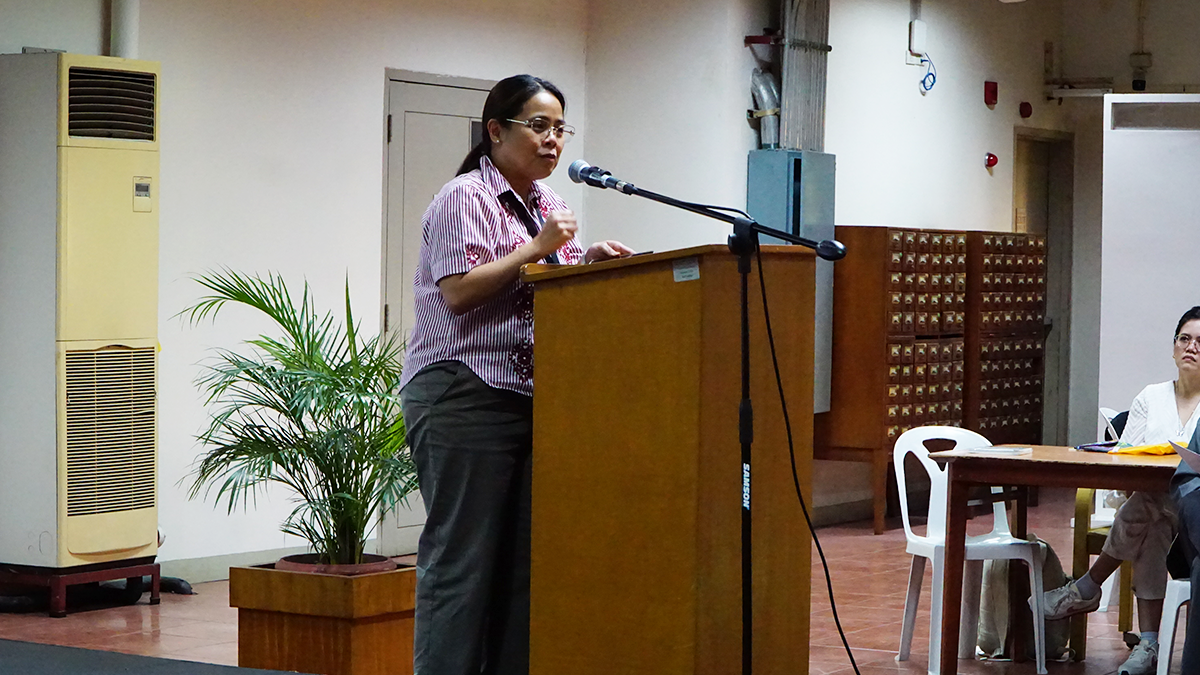
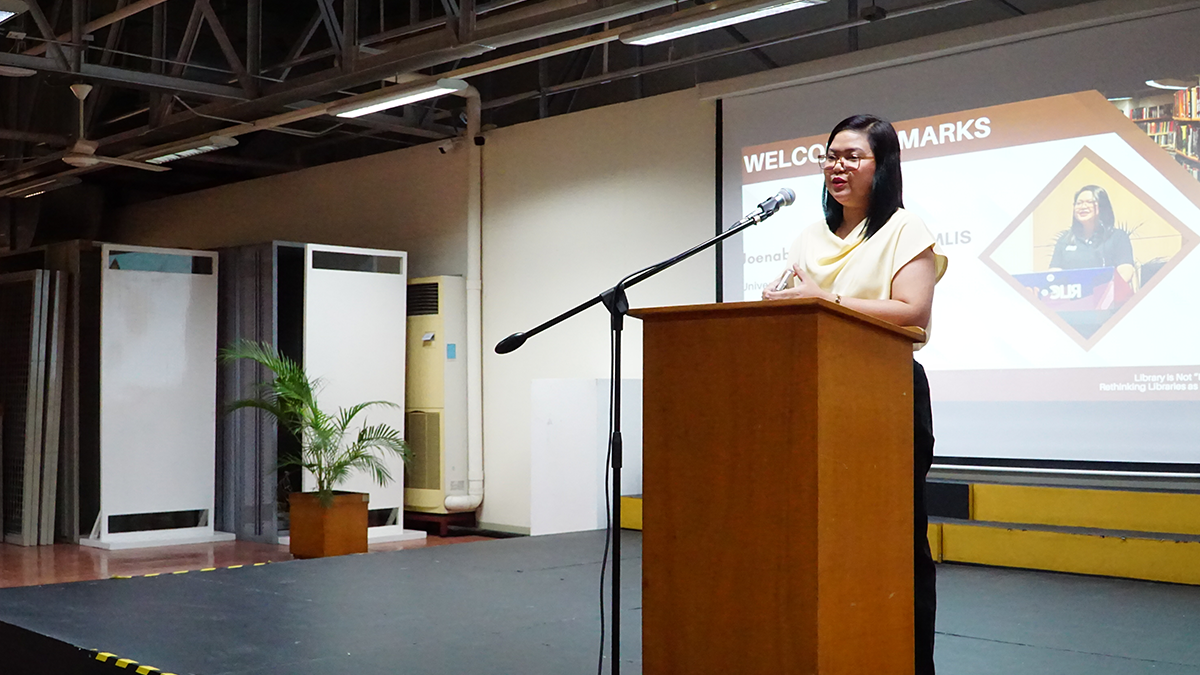
Welcoming Dr Olgado to the event were Joenabie E Arevalo, Ateneo de Manila University Librarian; and Patricia P Lambino, PhD, Dean of the School of Humanities, who both delivered opening remarks.
In his lecture Dr Olgado emphasized that infrastructures, including libraries, are both technical and cultural. Libraries do more than store information; they shape which voices and records are easy to find and which ones are left out. He called for a porous politics of expertise, asking humanists to focus on the real-world work behind infrastructure while encouraging information professionals to remain open to outside input.
As part of this, he also discussed some local examples, sharing his observations on the state of public libraries in the Philippines, including his hopes and criticisms on them.
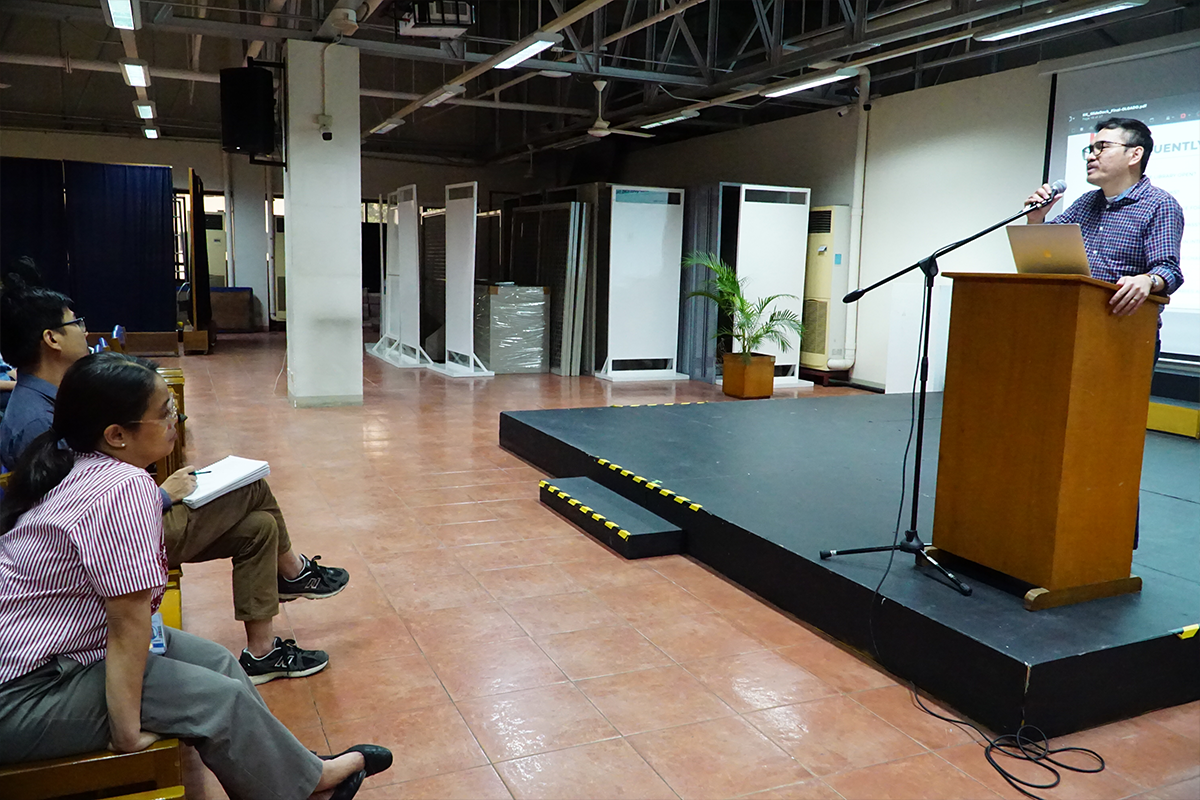
The lecture articulated a dual imperative for the future of information systems, calling on the humanities to attend more closely to the concrete material practices, maintenance, repair, and labor through which infrastructures endure, while encouraging librarianship and information science to take situated professional expertise seriously without allowing it to harden into insular gatekeeping.
Dr Olgado urged scholars and practitioners alike to rethink how public information systems are governed, maintained, and imagined.
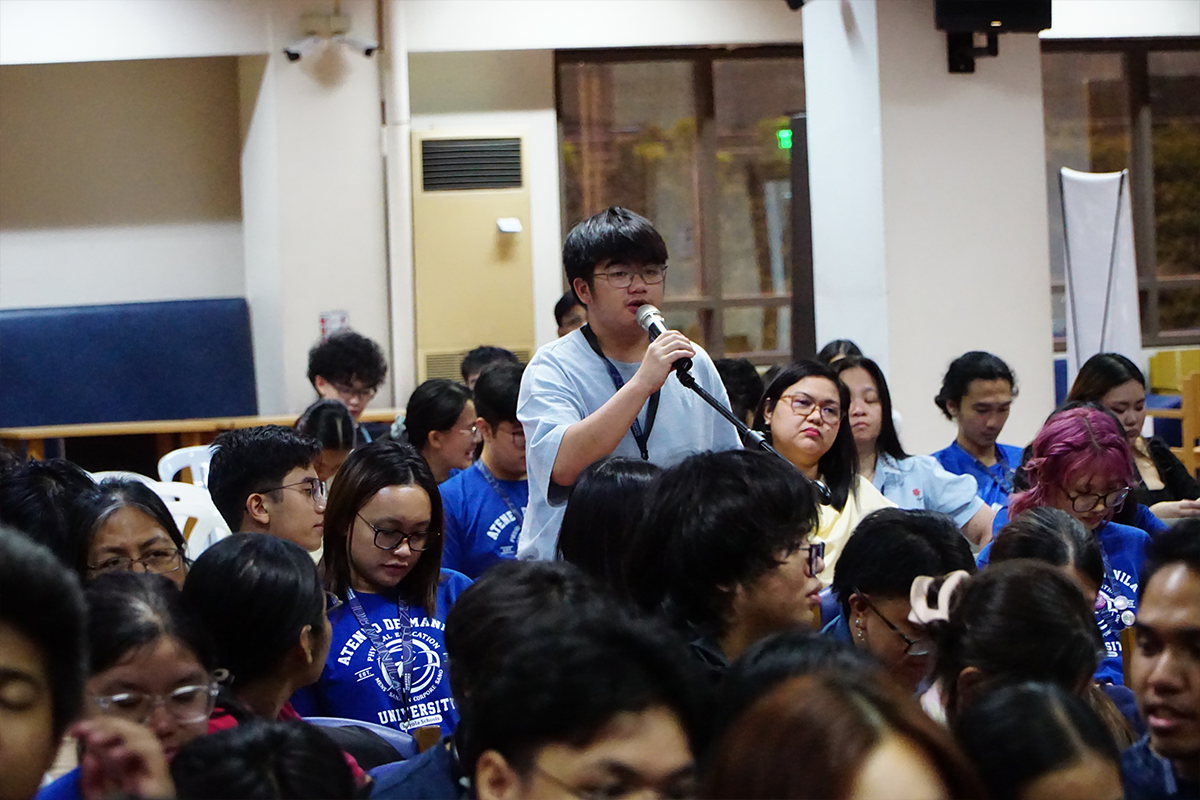
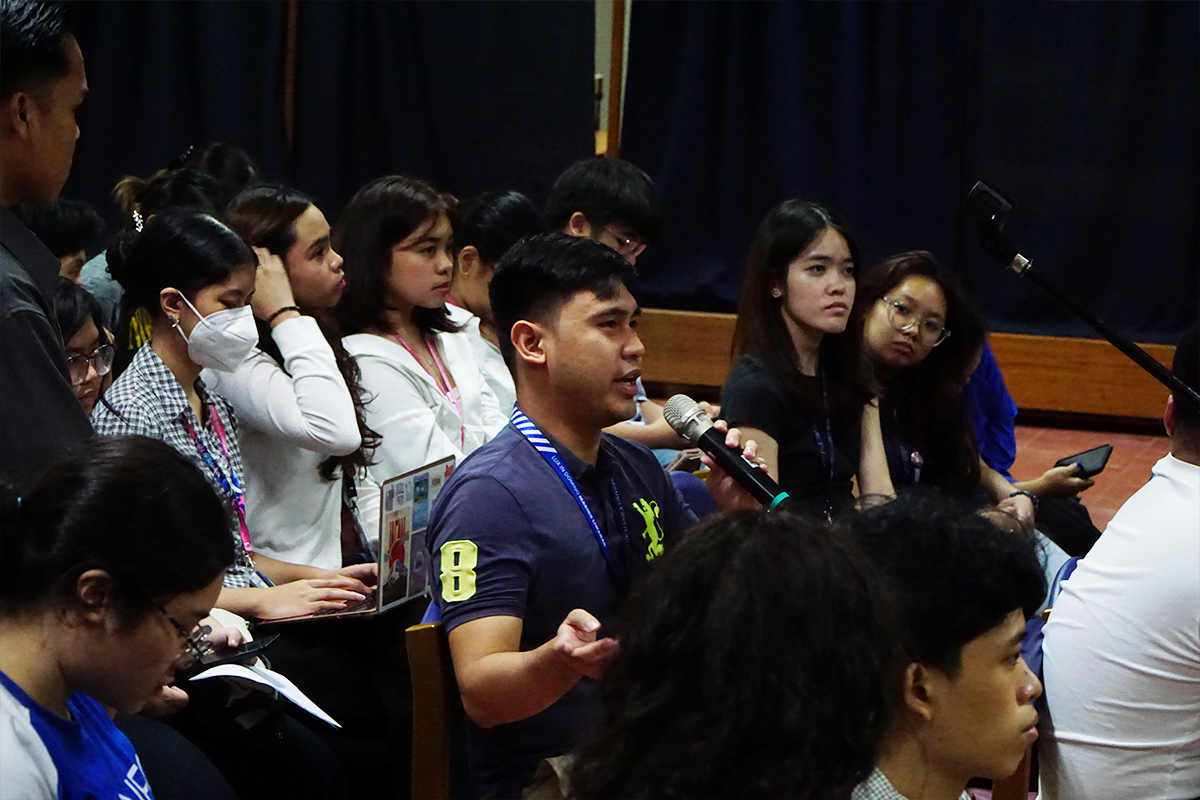
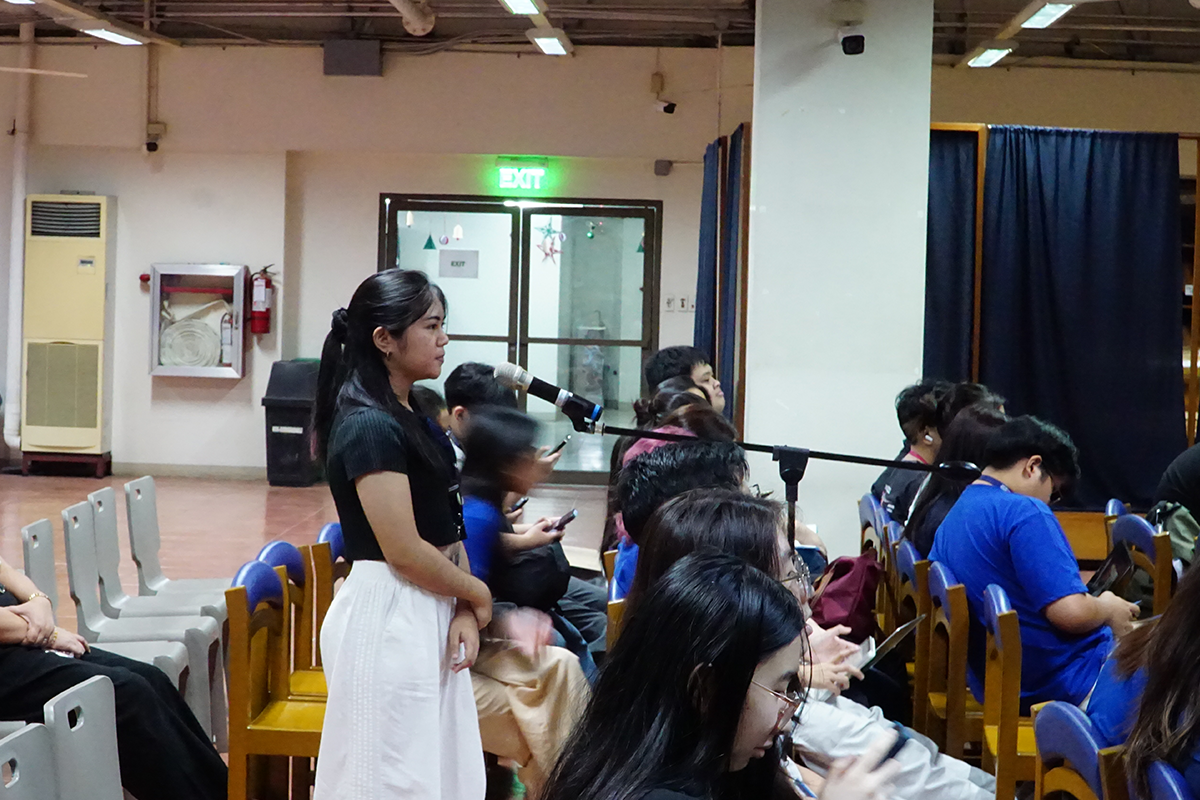
Following the lecture, Dr Olgado engaged in a short open forum where he answered questions and engaged in a discussion with with members of the audience.
Recent News
You may also like these articles
Updating of Medical Records Second Semester SY 2026-2027
14 November 2026 TO: Undergraduate and Graduate Students FROM: Higher Education Office of Health Services-College SUBJECT: Updating of Medical Records Second Semester SY 2026-2027 Please

Promotion of Faculty in the Senior High School (Memo U2627-050)
(Memo # U2627-050) I am pleased to announce that upon the recommendation of the Senior High School Committee on Faculty Rank and Permanent Appointment and the endorsement of the Vice President for Basic Education, I am approving the promotion of the following faculty members in the Senior High School:

Demise of Mr Silvestre P Villarin(Memo U2627-049)
(Memo U2627-049) We extend our condolences to Fr Jose Ramon “Jett” T Villarin SJ and his family on the passing of his father, Mr Silvestre Villarin, on 18 November 2026 at the age of 96. Fr Villarin is the former University President, a faculty member of the Department of Physics, and the Executive Director of the Manila Observatory.

[AGS] National Book Week
Open a Book, Stories Unfold, Wonders Flow Let us come together as one AGS community to celebrate the 92nd National Book Week with the theme

Three Ateneo-incubated startups secure DOST-PCIEERD’s startup grant fund
Last 9 November, during the opening day of Philippine Startup Week 2026, Soolok Properties Inc, Pili AdheSeal Inc, and Saltric Power (PDG Engineering Services), three
Ateneo Policy Center presents study on local health spending at DBM Fiscal Policy Conference 2026
On 19 October 2026, the Ateneo School of Government, through its research and policy unit, the Ateneo Policy Center (APC), presented findings from a study