A Foreigner in a Land that is Not Foreign
19 Aug 2019 | Abu Hanifah

Anambas Pos, 29 May- 15 June, 2019 Edition
Translated by Amirul[1] (a student shipmate on the NUS sailing trip to Anambas, June 5 – 17, 2019)
In the past 10 years, there has been an open mass hunt for big islands. The hunters are not only local but hunters who come from foreign lands. Apparently, they have become experts in planning, strategizing and obtaining knowledge on every nook and cranny of the islands, and of their potentials and beauty. There is only one objective: to buy the islands at a cheap price.

It has become a disease for us to easily forget our history and to easily forget to give back to our ancestors. Do recall how hard the times were when our ancestors would plant coconut trees in a remote, desert island, or went against the storm, fighting death in the middle of the ocean. For the sake of the families that they loved, they overcame all odds. Even bathing in sweat, paddling day and night, until they reach home at dawn.
However, now, with every generation, as the islands are not taken care of, comes the foreign buyers who claim that they are buying the islands at a high price. Without further consideration, after bargaining as a form of pleasantries, we sell the lands from where we once received blessings. Generally, these buyers receive help from our own locals to lobby and tempt the owners into selling their islands. So that certificates of ownership that are decades old are quickly and easily sold for money.
The buyers of the islands now leave, and the money received is split among all the heirs and members of the family. From the original amount of billions, it is split to tens of thousands.
For a few days it is very enjoyable, one got so much money that one cannot even count it. But the island and beach and all that it contains, are gone. The name of the new owner is now on the contract. The buyer is a citizen of Indonesia, but the real owner is usually a foreigner.
Time then passes by, and the islands are developed by their new owners, beautiful and enchanting. The visitors of these islands come with their families, joking around the beach filled with happiness. Obviously, it is not free and people have to pay to visit these islands. The people then recall how back in the day, they visit these islands with their families and are free to play and swim from dusk to dawn. However, all of these have become memories and now are painful to relive because the price for entering these islands costs a month’s wages.
In actuality, owning an island is a symbol of the people’s sovereignty. The people are powerful and sovereign in their land and country. The island also brings about economic benefits, a sense of bond and togetherness. Normally, in each island, it is known to everybody that anyone can visit these islands and harbor. Help yourselves to the young coconuts and its firewood or play on the white sands- the islands belong to all of us.
However now, the happiness has waned and the money gone to who knows where; life is not getting any better but becoming more miserable. The island in the sea is now no more, the land contains a worthless, old garden. Thank God the sea does not run out of its contents, that the fisherman searches for fish, although often adrift in the middle of the sea, to do what he must do in order to find sustenance for his wife and children.
Now comes the question, who should we blame? People should not be blamed because in this difficult economy, money is a powerful temptation. The buyers should not be blamed because after all, they have the money and they have the permission as well as the license to buy these islands. Furthermore, after the island is sold and resold with manifold profit, that it is even forbidden to gather on the island or approach it– what can one say, except scratch one’s head.
Now the problem and what needs to be asked is the government’s policy that has opened grants to foreign people to control these islands in our archipelago. Facts show that, even with the pretext of investment, many conditions were actually not fulfilled. Among others, when a business is built on an island, that island should not be owned entirely; aside from commercial facilities, there should be public facilities.
Like the Anambas Archipelago, every island developed as a resort must have special areas for fishermen pompongs to harbor in case of rough seas and to rest at night. It should also include special areas for the public to enjoy the beauty of the island for free, without disturbing the guests and tourists who come with money.
However, in reality, the facts are ironic and tragic. The country should actually make the locals aware that foreigners are controlling our islands; in the end, we are “foreigners in a place that is not foreign” and it makes our people increasingly foreign to our own lands. Ideally, when investment comes, the important question that authorities should ask is: will the investment make people happy, is the business halal, and does not go against our norms, tradition and the wisdom of the citizens?
Ideally, the district administration has to intervene and prevent the buying and selling of the islands that is becoming increasingly worrying. If there are investors who want to work together, we should ensure that they work with the locals, the original owners, through a system that allows renting and sharing so that the people are happy and autonomous, without having to sell the island again. And every development of tourism in the island has to be halal, and according to our culture and tradition and not for the sake of chasing taxes, profit, and commissions. Because if not, it would mean inviting a disaster on the face of the earth, where in the end people suffer and lose.
[1] Abu Hanifah is an observer of social problems and public policy in the Anambas Archipelago
Recent News
You may also like these articles

Growing with purpose: How Mekeni Food Corporation turns adversity into shared value
From a small backyard operation in Porac, Pampanga, to an internationally recognized food brand exporting to 25 countries, Mekeni Food Corporation's journey demonstrates how businesses

Three Ateneo-incubated startups secure DOST-PCIEERD’s startup grant fund
Last 9 November, during the opening day of Philippine Startup Week 2026, Soolok Properties Inc, Pili AdheSeal Inc, and Saltric Power (PDG Engineering Services), three
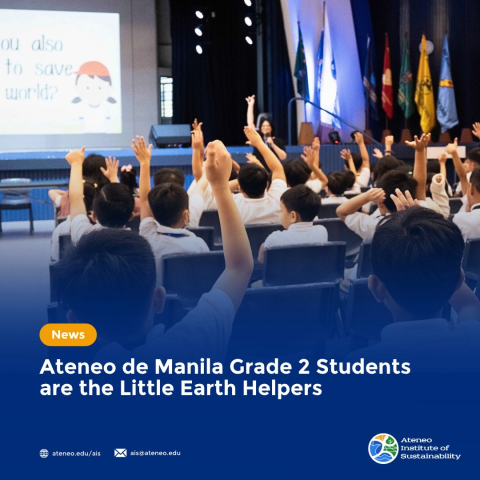
Ateneo de Manila Grade 2 students are the little Earth helpers
It was a great day for saving the world when Ateneo Institute of Sustainability (AIS) came to Ateneo Grade School to give a session on
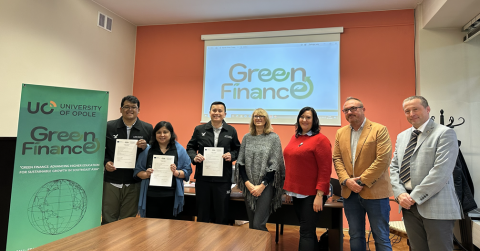
JGSOM representatives complete green finance training in Poland, sets sights on 2027 micro-credential launch
Representatives of Ateneo de Manila University's John Gokongwei School of Management (JGSOM) completed the second phase of their Erasmus+ Green Finance international mobility activities at
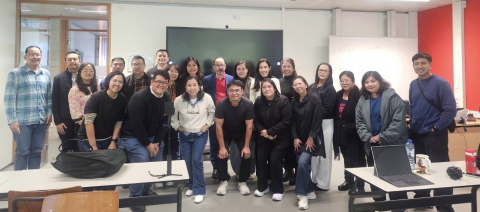
JGSOM Representatives Participate in Green Finance Training at the University of Twente
Enschede, Netherlands | October 15–16, 2026 Representatives of Ateneo de Manila University's John Gokongwei School of Management (JGSOM) participated in a specialized Green Finance training
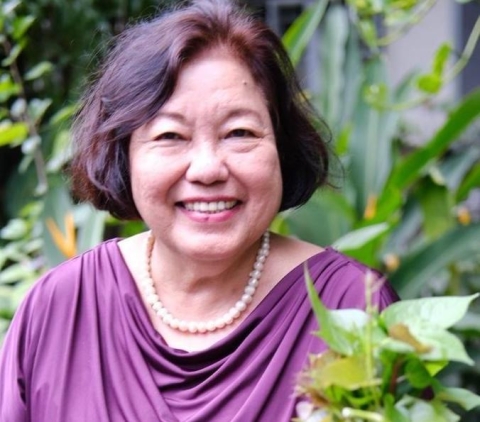
Professor Emeritus Dr Emma Porio highlights climate resilience and biodiversity at international conferences
Emma E Porio, PhD, Professor Emeritus of Ateneo de Manila University and Principal Investigator of Ateneo's Manila Observatory Center for Climate Resilience and Public Health