Changing Habits and Mindsets: The Challenge of Ecological Education
23 Jul 2019 | Dr. Nikki B. Carsi Cruz, IS department


Sometime in June, a couple of my students tagged me in a post on Facebook. “Look at this ma’am,” they said, referring to a memo announcing that the Ateneo de Manila Junior High School will gradually phase out P.E.T. bottles this coming school year. Bottled water and drinks will be sold only at dismissal time for the first term and only on selected days of the week for the second; they will no longer be sold at the J.H.S. cafeteria come the third term. My students eagerly alerted me to this development because of a thought-provoking discussion we had in class last semester on the topic of plastic waste.
One day, a group report on plastic pollution and the Great Pacific Garbage Patch in our History and Environmental Practice in Southeast Asia class ended on a very sobering note. After a passionate presentation by students who felt strongly about their environmental advocacy, the rest of the class was asked a “call-to-action” type of question—would you sign a petition for banning the sale of P.E.T. bottles on campus? The response was lukewarm, with one student even explaining in all candor that he would not sign such a petition for it would be “impractical, inconvenient, and not in his best interest,” and that he was speaking for many others who felt the same way. “If there’s a policy, I will be forced to comply, but while there isn’t any change in policy, I wouldn’t need to change my behavior.” After the class ended, a very frustrated classmate of his talked to me and asked, “How could he think like that?”
Pope Francis, in his landmark encyclical on the environment Laudato Si’, points out how young people, while they “have a new ecological sensitivity and generous spirit, and some of them are making admirable efforts to protect the environment,” have also grown up in a “milieu of extreme consumerism and affluence which makes it difficult to develop other habits” (Laudato Si’ #209). Environmental education, which today has broader goals that go beyond consciousness-raising and the prevention of environmental risks, now tends to include “a critique of the ‘myths’ of a modernity grounded in a utilitarian mindset (individualism, unlimited progress, consumerism…)” (Laudato Si’ #210).
What the world needs is an ecological conversion, a paradigm shift, a radical change in how we think about our relationship with nature and people, and, most of all, a change of heart so we can hear the cry of the earth and the cry of the poor. We are encouraged in Laudato Si’ to be like St. Francis, the role model of care for nature, for the poor, and of nonviolence. All of creation for him is like a book through which God reveals His beauty and goodness. We are invited to see the world less like a “problem to be solved” and more like a “joyful mystery to be contemplated with gladness and praise” (Laudato Si’ #12). How we see the world and our place in it spells a vast difference in our attitude and behavior toward the rest of Creation.
“If we approach nature and the environment without this openness to awe and wonder, if we no longer speak the language of fraternity and beauty in our relationship with the world, our attitude will be that of masters, consumers, ruthless exploiters, unable to set limits on their immediate needs. By contrast, if we feel intimately united with all that exists, then sobriety and care will well up spontaneously. “(Laudato Si’ #11)
As teachers, this is what we are hoping to see in our students—a spontaneous welling up of care for the earth and for others, and not just as a matter of compliance with policies or to fulfill academic requirements. We hope that they would refrain from consuming single-use plastics such as P.E.T. bottles not just because they are no longer for sale in the cafeteria but more so because they see that there is a connection between their habits of consumption and the destruction of nature. Surely anyone who sees nature’s beauty and bounty would be motivated to protect and preserve it? The challenge for us teachers, therefore, is not just to provide information about the environmental crisis but to engage also in a kind of ecological education that equips students with proper mindsets and instills in them values like solidarity, responsibility, and compassionate care. Ecological education can take place in a variety of contexts, and everyone is invited to contribute to ecological conversion from their own corner. For someone like me from the School of Humanities, for example, this particular passage from Laudato Si’ spoke to my heart:
“The relationship between a good aesthetic education and the maintenance of a healthy environment cannot be overlooked.” By learning to see and appreciate beauty, we learn to reject self-interested pragmatism. If someone has not learned to stop and admire something beautiful, we should not be surprised if he or she treats everything as an object to be used and abused without scruple. If we want to bring about deep change, we need to realize that certain mindsets really do influence our behaviour. Our efforts at education will be inadequate and ineffectual unless we strive to promote a new way of thinking about human beings, life, society and our relationship with nature. Otherwise, the paradigm of consumerism will continue to advance, with the help of the media and the highly effective workings of the market.” (Laudato Si’ #215)
How do we get students to care for the earth and for the poor? Train them to appreciate beauty and they will learn to see it—in art, in nature, in people. Build in them a sense of awe and reinforce their capacity for wonder and they will more likely care for other living beings spontaneously.
Policies that ban the sale of P.E.T. bottles and reduce plastic waste are welcome news of course; hopefully even more reduction could take place and spread to all other cafeterias on campus—and hopefully even to vending machines as well! Measures like these can compel students (like the one I had in my class) to change their habits and hopefully train them to be more responsible citizens. The bigger challenge, however, is in creating the occasion for real ecological conversion, for personal transformation to take place, for a change in mindset that will allow for the Atenean to make a selfless ecological commitment to care for the earth and for the poor even outside the campus and for the rest of her life, and to do so out of love and respect for God’s wonderful Creation. That is the educational challenge we face.
The views expressed in this piece are those of the author and do not necessarily represent the views of School of Humanities or the Ateneo de Manila University.
Recent News
You may also like these articles

Growing with purpose: How Mekeni Food Corporation turns adversity into shared value
From a small backyard operation in Porac, Pampanga, to an internationally recognized food brand exporting to 25 countries, Mekeni Food Corporation's journey demonstrates how businesses

Three Ateneo-incubated startups secure DOST-PCIEERD’s startup grant fund
Last 9 November, during the opening day of Philippine Startup Week 2026, Soolok Properties Inc, Pili AdheSeal Inc, and Saltric Power (PDG Engineering Services), three
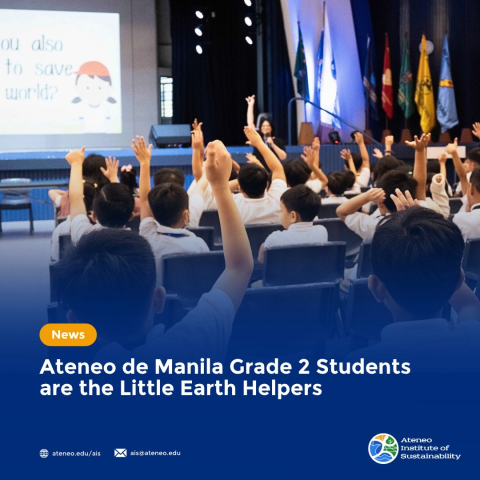
Ateneo de Manila Grade 2 students are the little Earth helpers
It was a great day for saving the world when Ateneo Institute of Sustainability (AIS) came to Ateneo Grade School to give a session on
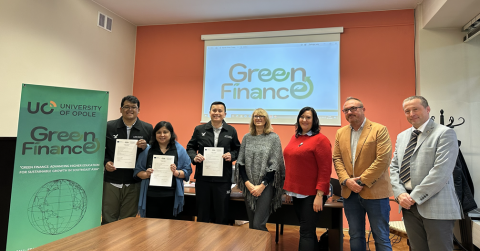
JGSOM representatives complete green finance training in Poland, sets sights on 2027 micro-credential launch
Representatives of Ateneo de Manila University's John Gokongwei School of Management (JGSOM) completed the second phase of their Erasmus+ Green Finance international mobility activities at

Karin Fernandez of AJHS guidance team presents paper on inclusive education in Chengdu
Karin Isabel O Fernandez, School Counsellor Associate of Ateneo de Manila Junior High School (AJHS), presented her research at the International University Social Responsibility Summit
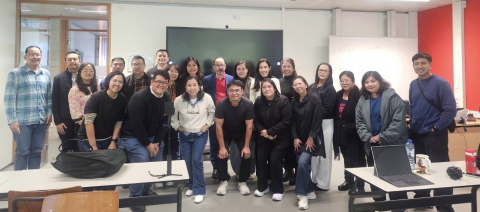
JGSOM Representatives Participate in Green Finance Training at the University of Twente
Enschede, Netherlands | October 15–16, 2026 Representatives of Ateneo de Manila University's John Gokongwei School of Management (JGSOM) participated in a specialized Green Finance training