Interdiscipline: Global and Area Studies Conversations
20 Oct 2026 | Ricardo Leong Institute for Global and Area Studies



Doing Area Studies through In-Country Field Studies
By: Javier R Tionloc*
There are substantial debates about how universities should teach and design area studies courses and curricula. Area Studies are considered allied fields in the disciplines of political science, sociology, anthropology, and history. Each of these disciplines has contributed substantially to how we generate disciplinal knowledge about various nation-states and regions in universities. However, there is still much to be desired in a purposively interdisciplinary approach to area studies course design, curriculum development, and pedagogy, especially as higher education institutions pivot towards more integrative student-centered learning.
Interdisciplinarity in the area studies could be effectively done through in-country field studies. At the same time, doing area studies through in-country field studies could also spark greater interest in the interdisciplinarity of area studies. The demand for student mobility, global-oriented concepts, and intercultural interactions have consistently remained high among higher education students.
The School of Social Sciences, later named as the Dr Rosita G Leong School of Social Sciences, has provided students opportunities to participate in in-country field studies across various countries in Southeast Asia through the course SEAS 101: Southeast Asia In-Country Field Study offered by the Ateneo Initiative for Southeast Asian Studies (AISEAS) with the support of the Ricardo Leong Institute for Global and Area Studies.
The first in-country field study was held in Brunei Darussalam in 2017. Following a six-year breather, the field studies have visited Surabaya, Indonesia in 2023; Malaysia Sabah in 2024; and Vietnam in 2025; while in-country field studies to Cambodia and Laos are planned for SY 2027-2028.
As the former AISEAS coordinator (SY 2022-2025) described it, the in-country field study “integrate[s] experiential learning and transformative pedagogy” with the goal “to enhance students’ academic experiences about Southeast Asia through cultural immersion and intercultural encounters in the host country” while still being rooted in their Filipino identity. As a summer field school for Southeast Asian Studies, the course also hones “students’ intercultural awareness and cross-cultural adaptability.” By learning in and about other countries, students also learn more about themselves and their country.
The field studies are designed to have themes that reflect the national attributes, historical narratives, and cultural nuances of the host country, while also being situated in the larger flows of Southeast Asia. The themes are interdisciplinary in order to encourage students to simultaneously engage various disciplines and perspectives for a more holistic understanding of the area being studied. The last four field studies worked on themes about the various intersections in Southeast Asia of multiculturalism, people-centered social and economic transformations, ecotourism, environmental conservation and biodiversity, peace, memory, nation-building and engaged citizenship.
These summer in-country field schools consist of a two-week learning itinerary that includes visits to important cultural and ecological sites, interactions with local community development initiatives, and conversations with key local partners such as government officials, industry leaders, and civil society groups. These field studies also include classroom-based lectures and learning activities hosted by the professors from partner universities. As students embark on their journey, they are guided by faculty advisers and field directors as they develop projects that employ field methods such as photovoice, ethnography, and direct observation. These are supplemented by field notes and journaling that give students the space to reflect about global citizenship, intercultural encounters, and their own positionality as young researchers. The field study culminates with a forum and exhibit where students present the creative projects they developed during and after the field school.
Field students have shown comfort and interest in the interdisciplinary approach to area studies. The array of projects developed by AISEAS field school students includes paintings, literary works, travel photography, abstract art, soundscape art,
sculpture, classical music compositions, costume, and garment design. These projects express perspectives and critiques about phenomena they engaged in the host country. The students have developed projects about issues that were framed in a way that integrates at least two traditional disciplines. Projects have focused on interdisciplinary concepts such as cultural heritage preservation and urbanization, cultural appropriation in tourism initiatives, nation-building in contested multicultural spaces, and responsible consumption.
In-country field studies reinforce the interdisciplinary nature of the area studies because field studies expect students to link their knowledge from various disciplines they take in coursework to their complex phenomena they observe and experience through on the field. By letting students join in-country field studies, even only for a brief period, students are also able to learn from the experiential interactions with the norms and values of the host country. As their own cultural norms interact with the norms of the host country, students learn through first-hand practice intercultural communication and bridging cultural divides. This enriches how students understand the interdisciplinary knowledge learning outcomes of the course while simultaneously contributing to the values and attitudinal formation of students.
In-country field studies also generate excitement about the area studies among students. The idea of international mobility sparks energy and interest from students because of the new viewpoint that being abroad offers. Students become excited about program itineraries, excursions, and the overall idea of a learning adventure as self-discovery. Integral to any AISEAS in-country field study is how students are also given the opportunity to explore cities on their own, or with their peers. This allows them to explore places in a way that is curated to meet the individual student’s personal academic interests. They enrich their understanding of these interests because of these less structured excursions, or “free days” in a program itinerary. In many ways, the students’ projects are more nuanced by the perspectives they gained from these “free days”.
Interdisciplinary area studies are crucial to how universities generate geographic area specialization and knowledge that can be mobilized to aid policymakers, industry, enterprise, and civil society. As discussions about innovative designs for the area studies curricula continue, in-country field studies provide effective pedagogical tools to facilitate experiential interdisciplinary learning. If one of the primary goals of an area study is the holistic understanding of areas and regions in- country, field studies provide students with an exciting synergy of fields and disciplines to fulfill those objectives.
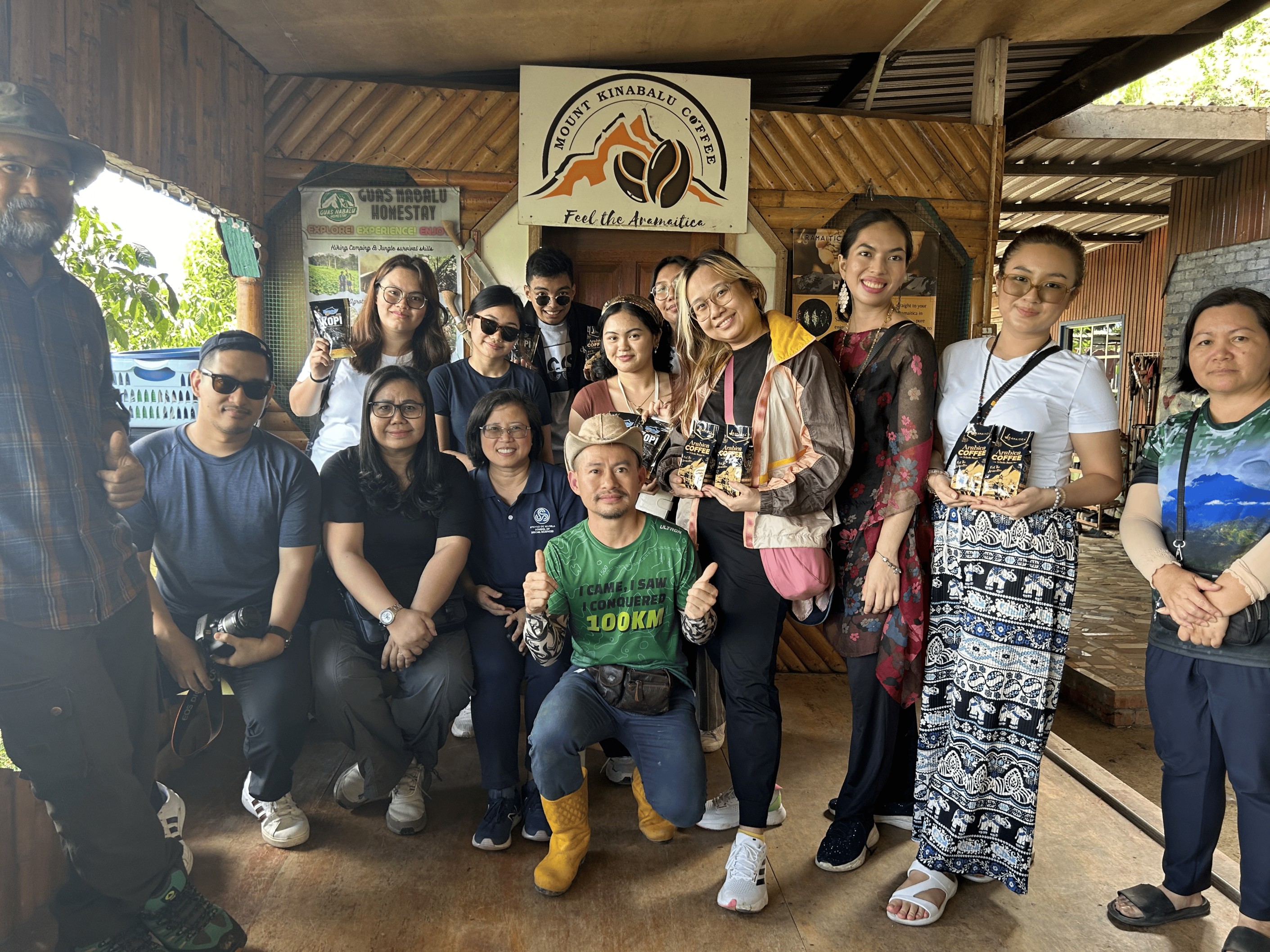

*Javier R Tionloc is currently the Coordinator of AISEAS, Instructor of European Studies, and Lecturer of Political Science. He has been Field Co-Director of two Southeast Asian In-Country Field Studies: Malaysian Borneo (2024) and Vietnam (2025). He is also currently a Ricardo Leong Institute Research Fellow (collaborative research) in Ateneo de Manila University.
Interdiscipline: Global and Area Studies Conversations is a community space for commentaries, dialogue, and expert analysis by RGLSOSS faculty and researchers working across global and area studies. It brings together scholars of China, Europe, Japan, Korea, Southeast Asia, and other regions to examine pressing regional and global issues while reflecting on the changing ways in which we understand regions, connections, and the world.
Area studies has long brought disciplinary perspectives into conversation through sustained attention to particular places, histories, languages, societies, and cultures. Yet the boundaries that define regions and fields of study are neither natural nor fixed. They have been shaped by changing political, economic, and intellectual contexts, and continue to be reworked as people, ideas, institutions, commodities, and problems move across borders (Cumings, 1997).
Global studies responds to these connections by moving beyond exclusively national or disciplinary frames. Rather than treating the “global” as a scale that supersedes the regional or local, it invites interdisciplinary, multicentric, and multilevel approaches that examine interactions among global, regional, national, and local processes (Nederveen Pieterse, 2013). From this perspective, global and area studies are complementary forms of inquiry: global perspectives illuminate connections and processes that traverse regions, while area-based knowledge provides the historical, cultural, and empirical grounding necessary to understand how those processes take different forms in particular places.
Interdiscipline creates a space for this conversation. Taking interdisciplinarity to mean the interaction and hybridization of knowledge across established disciplinary boundaries (Frickel, 2004, as cited in Fuchsman, 2012), the forum encourages scholars to think across disciplines, regions, and scales. In doing so, it seeks more context-sensitive, critically reflexive, and plural understandings of contemporary regional and global affairs.
Works cited
Cumings, B. (1997). Boundary displacement: Area studies and international studies during and after the Cold War. Bulletin of Concerned Asian Scholars, 29(1), 6–26.
Fuchsman, K. (2012). Interdisciplines and interdisciplinarité: Political psychology and psychohistory compared. Issues in Integrative Studies, 30, 128–154.
Nederveen Pieterse, J. (2013). What is global studies? Globalizations, 10(4), 499–514.
Recent News
You may also like these articles

Tickets available for Heiwa no Senritsu: Mga Himig ng Kapayapaan
Tickets are now available for the upcoming orchestral concert, Heiwa no Senritsu: Mga Himig ng Kapayapaan, which will take place on 8 December 2026, 7:00
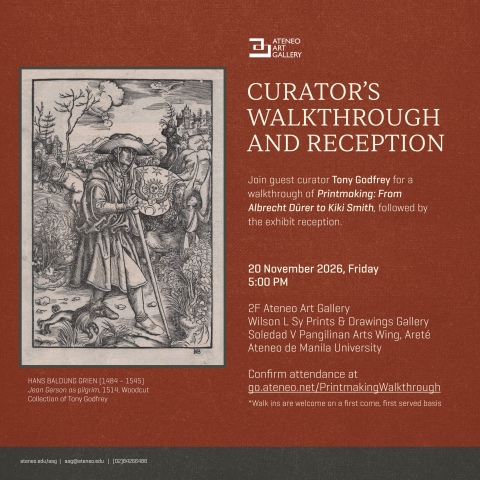
Join Ateneo Art Gallery for the Curator's Walkthrough and Exhibition Reception of "Printmaking: From Albrecht Dürer to Kiki Smith"
Ateneo Art Gallery presents a Curator’s Walkthrough of Printmaking: From Albrecht Dürer to Kiki Smith with guest curator Tony Godfrey on 20 November 2026 (Friday)

Interdiscipline: Global and Area Studies Conversations
Imagining the Mahjong Table as a Third Space By: Erwin Guile Dizon* Once a game reserved for private gatherings at home, mahjong is seeing a
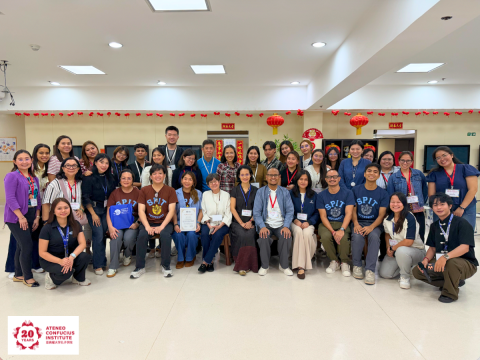
Ateneo Confucius Institute empowers local Chinese teachers through creative skills workshop
The Confucius Institute at Ateneo de Manila University (CI-Ateneo) held its annual training program for local Chinese language teachers on 24 October 2026, adopting a

Cultures of care: Mental health and pathways to well-being in Southeast Asia
The Ateneo Initiative for Southeast Asian Studies (AISEAS) and the Department of Psychology, both under the Dr Rosita G Leong School of Social Sciences (RGLSOSS)

Interdiscipline: Global and Area Studies Conversations
Public Mental Health in Southeast Asia By: Maria Regina Hechanova* In 2021, 80.4 million cases of mental disorders were reported across ASEAN countries - an