AJHS blesses AMDG for SDG Green Park, advancing environmental education
14 Oct 2026



The Ateneo de Manila Junior High School (AJHS) blessed its AMDG for SDG Green Park on 13 October 2026, marking a new milestone in the school's commitment to environmental education and sustainability. The blessing was presided over by Fr Roberto Yap SJ, University President, and Fr Mamert Mañus SJ, AJHS Chaplain.
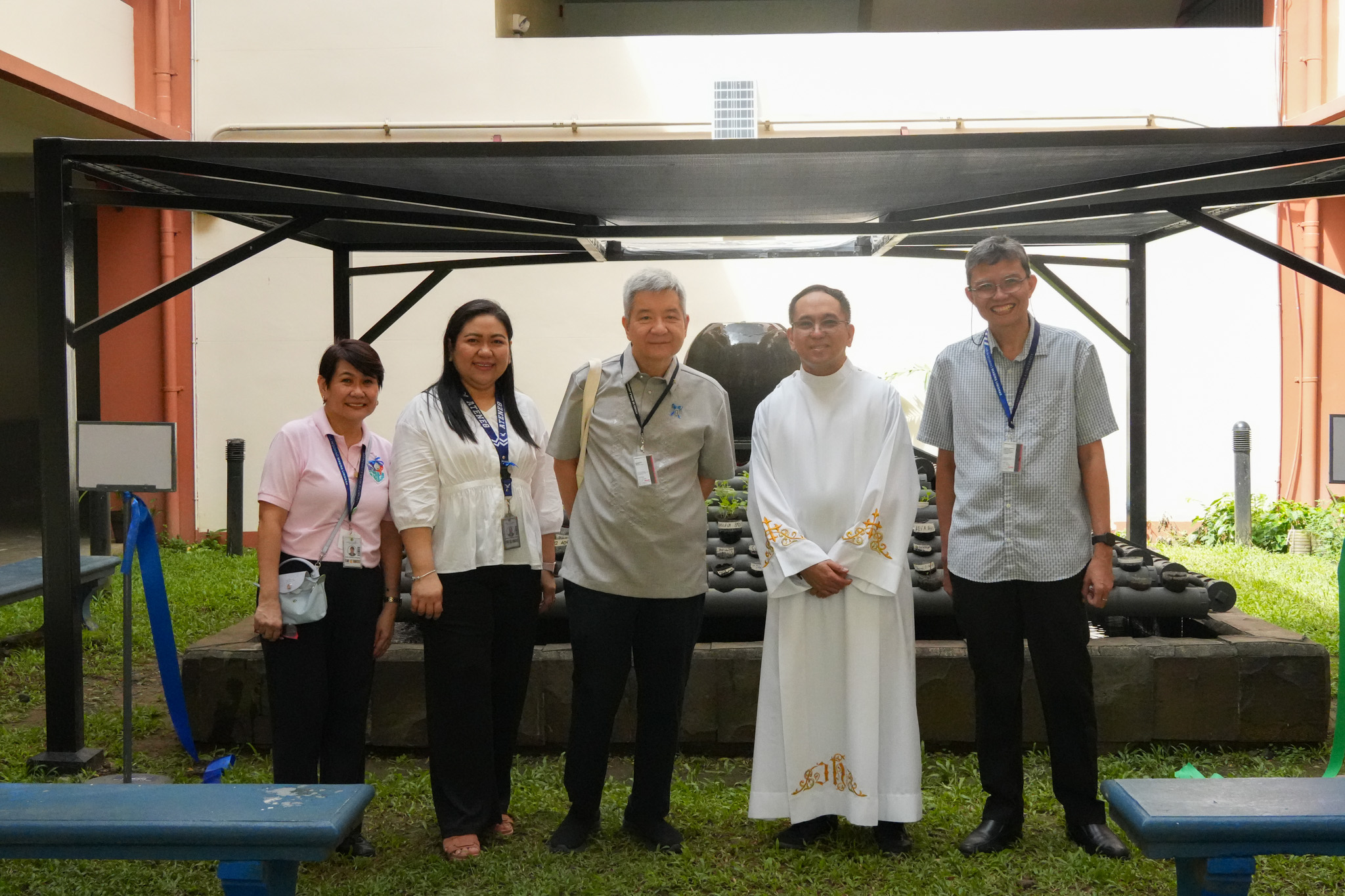
The program also featured a reading from Sacred Scripture by Ms Christina Galban, AJHS Science Subject Area Coordinator; the Prayers of the Faithful led by Dr Leland Dela Cruz, Assistant Vice President for Social and Environmental Engagement for Development and Sustainability (SEEDS); and acknowledgements delivered by Ms Gen Sanvictores, AJHS Principal.
The Green Park serves as a new learning hub for the AJHS Green Education Program under the Science subject area. It provides students with opportunities to apply scientific concepts through hands-on activities, conduct experiments, and explore sustainable approaches to caring for the environment.
Conceptualized in line with Laudato Si' Magis Aspiration of the Ateneo de Manila University, the Green Park supports the University's priority area of integral ecology. It also aligns with the United Nations Sustainable Development Goals (SDGs) and the Jesuit Universal Apostolic Preferences, particularly the call to care for our common home.
Learning sustainability through experience
The AJHS Green Education Program is built on five pillars: a transdisciplinary approach, discovery and experiential learning, project-based learning, community engagement, and technology integration. Together, these provide opportunities for students to examine environmental challenges, conduct experiments, develop practical solutions, and collaborate with members of the community.
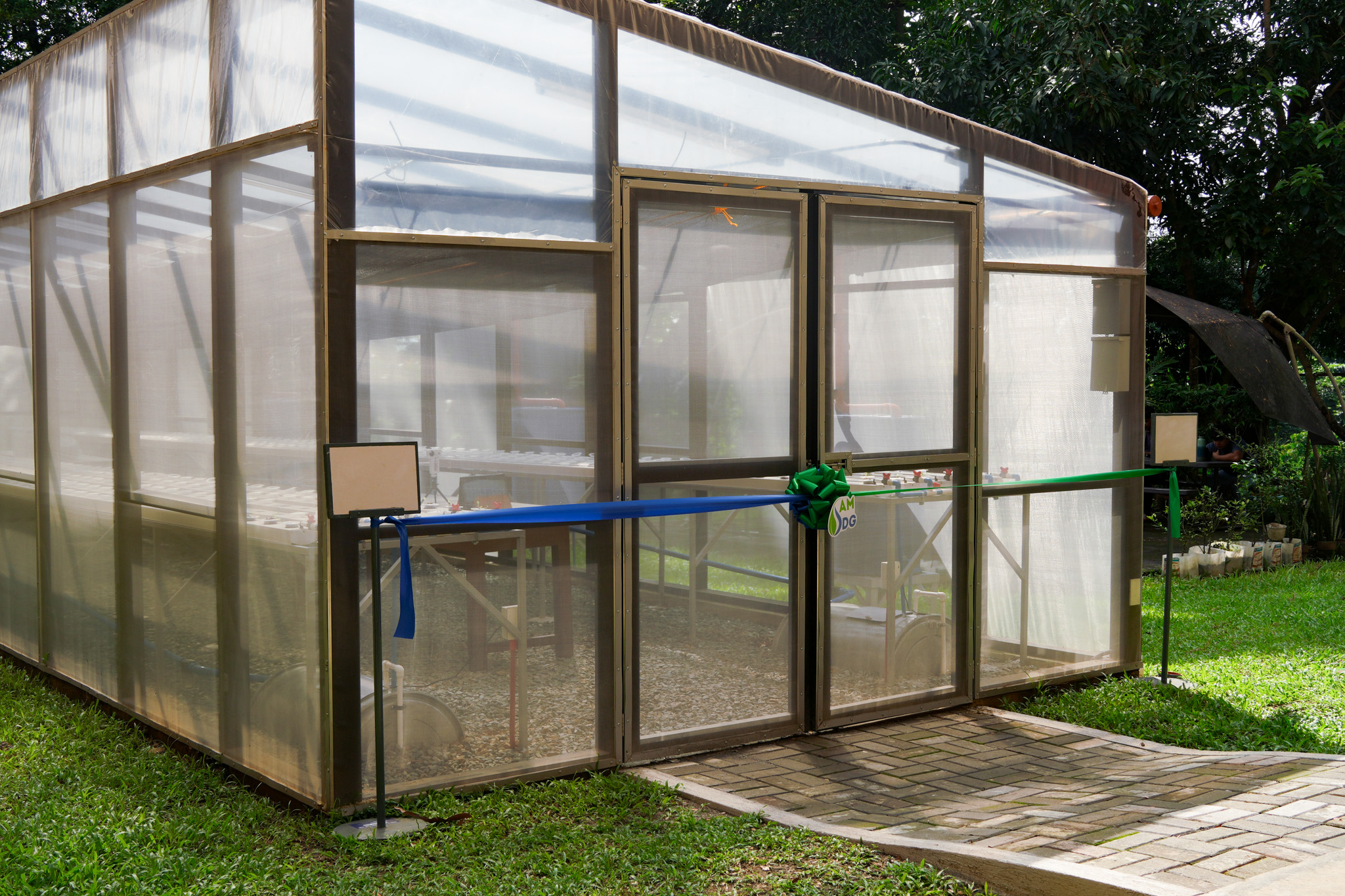
The Green Park builds on the Blue Goes Green mini-greenhouse project developed through the Grade 10 Physics program. In the project, students applied their understanding of heat transfer and optics by constructing functional greenhouses from upcycled materials, including discarded PVC pipes, wood, and plastic bottles. These greenhouses were subsequently used by younger students in Biology classes to grow plants and microgreens.
Building on this initiative, the Green Park features a larger greenhouse that serves as a laboratory for classroom experiments and plant cultivation. It includes individual growing pods, a rainwater catchment system for irrigation, and sensors that monitor greenhouse conditions. The facility also offers members of the school community opportunities to explore the science behind plant care and cultivation.
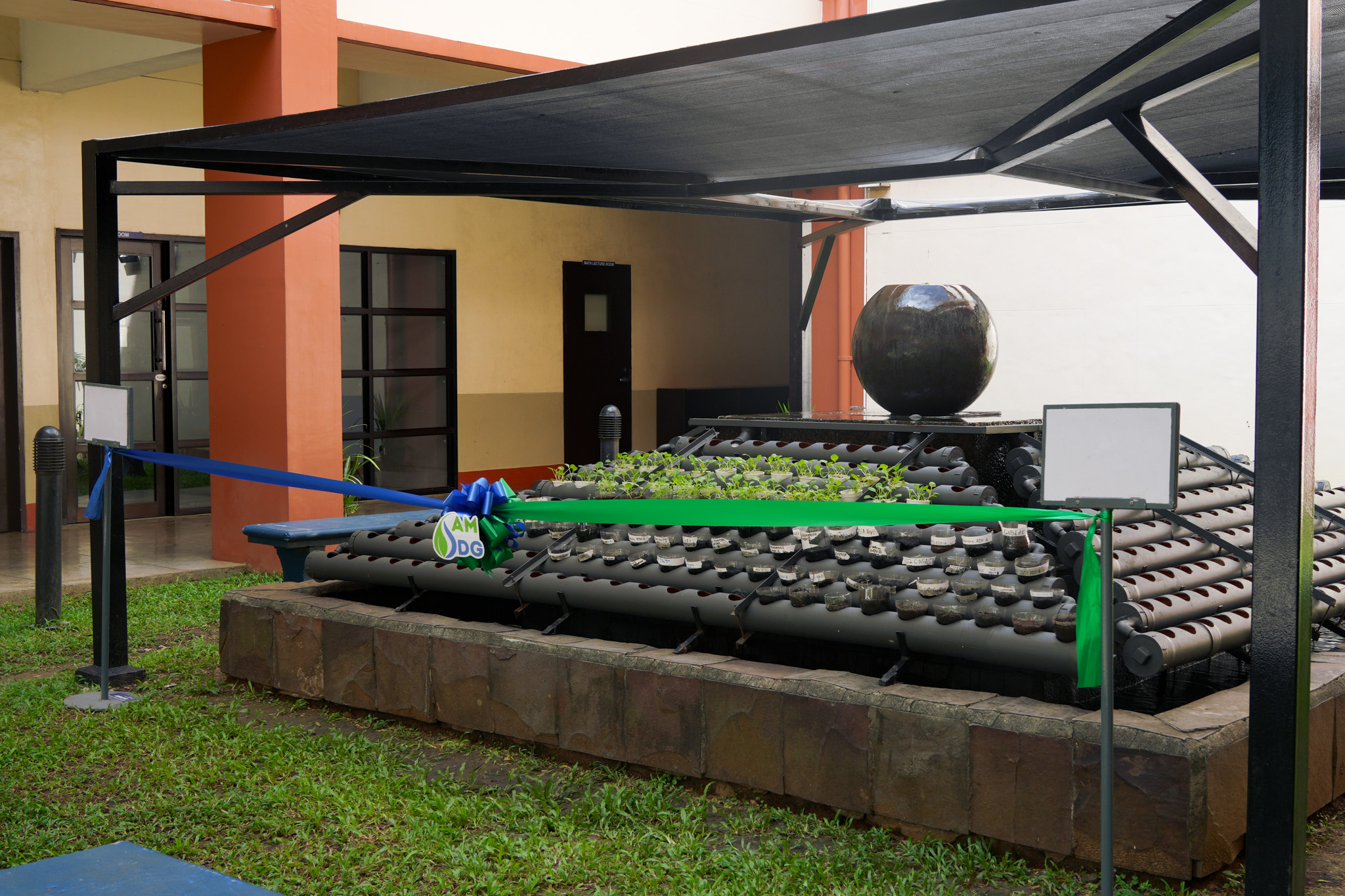
Beside the greenhouse is an aquaponics farm built around the Center for Math, Science and Technology (CMST) fountain, which is home to a school of small fish. The system uses water from the fountain and collected rainwater to support plant cultivation. Microorganisms convert fish waste into nutrients that nourish the plants, while water circulation helps aerate the pond. This closed-loop system demonstrates how interconnected natural processes can promote sustainable plant cultivation, fish care, and resource management.
Growing a culture of care for our common home
The Green Park is envisioned to expand in the coming years through additional facilities, including a mushroom and fungi farm, a plant nursery, and an outdoor science laboratory. These planned developments will further strengthen the park's role as a learning center for environmental science and sustainability.
Through the AMDG for SDG Green Park, AJHS continues to integrate environmental awareness with scientific inquiry and experiential learning. By giving students opportunities to observe, experiment, and engage with sustainable systems, the initiative seeks to cultivate a deeper understanding of their role in caring for the environment.
Aligned with the University's commitment to integral ecology and the Universal Apostolic Preferences, the Green Park reflects the importance of putting learning into practice in service of the common good.
Recent News
You may also like these articles

Growing with purpose: How Mekeni Food Corporation turns adversity into shared value
From a small backyard operation in Porac, Pampanga, to an internationally recognized food brand exporting to 25 countries, Mekeni Food Corporation's journey demonstrates how businesses

Three Ateneo-incubated startups secure DOST-PCIEERD’s startup grant fund
Last 9 November, during the opening day of Philippine Startup Week 2026, Soolok Properties Inc, Pili AdheSeal Inc, and Saltric Power (PDG Engineering Services), three
Ateneo de Manila Grade 2 students are the little Earth helpers
It was a great day for saving the world when Ateneo Institute of Sustainability (AIS) came to Ateneo Grade School to give a session on
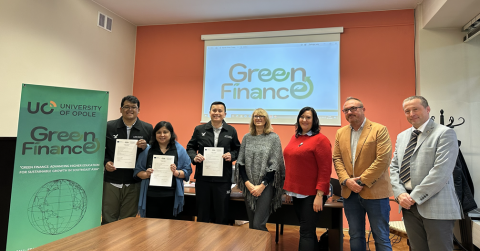
JGSOM representatives complete green finance training in Poland, sets sights on 2027 micro-credential launch
Representatives of Ateneo de Manila University's John Gokongwei School of Management (JGSOM) completed the second phase of their Erasmus+ Green Finance international mobility activities at
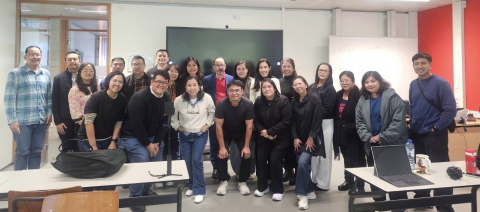
JGSOM Representatives Participate in Green Finance Training at the University of Twente
Enschede, Netherlands | October 15–16, 2026 Representatives of Ateneo de Manila University's John Gokongwei School of Management (JGSOM) participated in a specialized Green Finance training

Professor Emeritus Dr Emma Porio highlights climate resilience and biodiversity at international conferences
Emma E Porio, PhD, Professor Emeritus of Ateneo de Manila University and Principal Investigator of Ateneo's Manila Observatory Center for Climate Resilience and Public Health