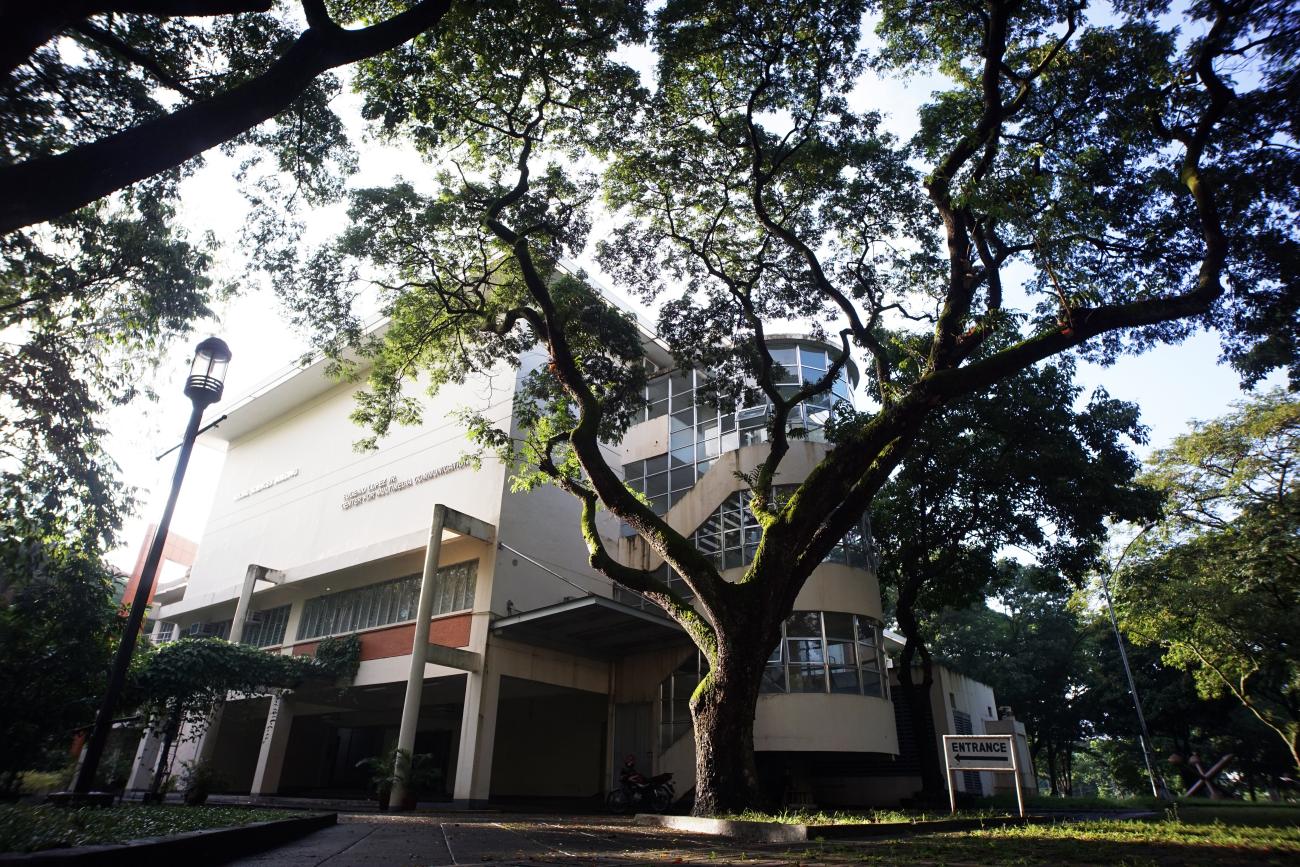
Through close collaboration with other academic departments within the university, the Korean Studies Program offers a wide variety of courses on Korea for undergraduate students, covering themes across various disciplines in the Social Sciences and Humanities.
KOREAN STUDIES PROGRAM
KRN 11: Basic Korean 1 Language and Culture
Pre-requisite: None
The course teaches students communicative competence in Korean in practical situations and introduces them to Korean life and culture.
KRN 12: Basic Korean 2 Language and Culture
Pre-requisite: KRN 11
The course reviews the communicative skills and grammar learned in KRN 11 and continues to advanced basic grammar and functional use of the language.
KRN 13: Korean Language and Culture 3
Pre-requisite: KRN 12
The course focuses on vocabulary expansion and refinement of speech and written compositions through the study of more complex grammar structures. It also introduces the students to Korean proverbs and folktales.
KRN 14: Korean Language and Culture 4
Pre-requisite: KRN 13
The course introduces students to low-intermediate Korean grammar and vocabulary covered by the Test of Proficiency in Korean (TOPIK) I Level 2. It also exposes students to other aspects of Korean culture. It begins with a review of KRN 11, 12, and 13.
KRN 15: Korean Language and Culture 5
Pre-requisite: KRN 14
The course is a continuation of KRN 14. It introduces students to high-intermediate Korean grammar and vocabulary covered by the Test of Proficiency in Korean (TOPIK) I Level 3. It also exposes students to diverse aspects of Korean culture. Lessons on basic Korean business terms are also included and it begins with a review of KRN 13 and 14.
KOR 20: Korea Study Tour(offered during the Intersession only)
Pre-requisite: None
This three- to four-week tour of Korea is designed to immerse and expose students to the language and culture of Korea. While in Korea, students enroll in an intensive language and culture course in a reputable language school to have a deeper appreciation and understanding of both language and culture and at the same time, stay with Korean families. As a complementary module to language, they are introduced to and participate in cultural activities.
KOR 21: Korean for Business Communication
Pre-requisite: KRN 11
The course introduces vocabulary and expressions used in the Korean workplace and in a business context. Students are trained to improve their reading, speaking, listening, and writing skills using appropriate Korean grammar patterns.
KOR 111: Introduction to Korean Culture and Nationalism
Pre-requisite: None
The course introduces students to Korean culture and history with particular attention to Korean nationalism and identity. Course discussions include theoretical examination and categories of nationalism, nationalist movements and civil society in colonial and modern Korea, globalization and modernity, and the emergence of feminist nationalism. At the end of the course, the students are expected to understand how nationalism evolves and shapes Korean society and its similarities and differences in the Philippine context.
KOR 112: Korean Cultural Heritage
Pre-requisite: None
The course serves as an introduction to the UNESCO World Heritage Sites in Korea. It guides students towards understanding Korea’s history, government, architecture, religion, culture, and politics. It also allows students to compare the cultural heritages of Korea and the Philippines, and to suggest ways to effectively protect and promote their own culture and history.
KOR 113: Korean Popular Culture
Pre-requisite: None
The course provides a general survey of Korean culture. Developments are examined through the multiple influences of history, art, literature, music, film, and food.
KOR 114: Modern South Korean Literature and Society
Pre-requisite: KRN 11, KRN 12, and KRN 13
The course introduces selected works of modern South Korean literature and examines their connection to the history, values, culture and social issues of Korea. Through in-depth reading, research, reflection and class discussions, this course provides a deeper understanding of the Korean people and their society. It also explores how literature depicts different aspects of Korean life and how it can be used to call for social change.
KOR 115: Korean History through K-drama
Pre-requisite: None
The course provides an overview of the history in ancient, modern and contemporary Korea through the lens of Korean drama (K-drama). It examines the crucial roles of certain leaders and historical figures in shaping Korean history. It also analyzes social problems and issues prevalent during the different periods as they are portrayed in K-drama. Parallelisms can also be drawn from the Philippine and Korean experience as history unfolds in K-drama.
KOR 121: Korea-Japan Relations
Pre-requisite: None
The course aims to give an introductory survey of Korea-Japan relations, with special reference to the post-1945 period. Course discussions include the two countries’ political culture, foreign policy decision-making and socio-economic background. At the end of the course, students are expected to identify the implications of Korea-Japan relations to the Philippines in light of their respective foreign policies.
KOR 131: Philippines – South Korea Bilateral Trade Relations
Pre-requisite: None
The course provides an overview of the history and development of bilateral trade relations between the Philippines and South Korea from the Cold War era to the present time. It examines the process of crafting and implementing trade policies within the context of Philippines – South Korea relations. It takes into consideration the different theories, perspectives, and frameworks in trade relations. It also includes an in-depth and critical analysis of the issues, prospects and challenges in trade relations between the two countries as seen from various levels, i.e. domestic, regional, and international.
KOR 180.1: Special Topics in Korean Studies: The Korean Cinema through Its Film Auteurs
Pre-requisite: None
The course examines the South Korean cinema through the works of Korean film auteurs. It seeks to understand how the narratives, techniques, and artistic signatures of the Korean auteurs represent and convey social realities in Korean society. Modules are divided into Korean auteurs with a selection of their films that have emerged since the age of the New Korean Cinema up to the present.
DEPARTMENT OF COMMUNICATION
COMM 191.06: Film Seminar: The Korean Cinema
Pre-requisite: None
The course explores different aspects of South Korean cinema and its place in the Korean Wave (i.e. hallyu). By saying this, the class will focus on films produced and released in the mid-1990s onwards. These films, as part of hallyu, allow the current global society to see and understand Korea's society, culture, and history, and more importantly, how South Korea wants others to see the country. Films are arranged thematically (and chronologically within each theme) to see the change in trends per theme.
COMM 183.09 Special Topics in Culture and Communication: The Korean Wave
Pre-requisite: None
The course explores the Korean Wave in a globalized world. Drawing from sociocultural, economic, political, and media studies perspectives, students learn about the production, distribution, and audience reception of various hallyu products including, but not limited to, television series, music, film, webtoons, food, beauty and fashion, and tourism in Asia (especially ASEAN), U.S., and Europe in the context of a communication landscape that is increasingly digitized, wired, and globalized. Students also delve into issues springing from hallyu, such as fandom, anti-hallyu sentiments, and hallyu as soft power, to name a few. At the end of the course, students should have a multidisciplinary understanding of the hallyu phenomenon as well as a deeper understanding of hallyu as a confluence of global factors and new media technologies, and how this phenomenon affects their daily lives.
DEPARTMENT OF ECONOMICS
EC 185.70: Special Topics in Economics: South Korean Economic Development Pre-requisite: None
The course provides an overview of the economic development of South Korea from the end of World War II to the present time. It reviews South Korea’s economic development policies, culture, and social value system to explain its success and, more importantly, distill valuable learning insights for the Philippine economy.
DEPARTMENT OF ENGLISH
EnLit 111.40: Asian Literature III: Modern South Korean Literature in Translation
Pre-requisite: None
The course explores fiction produced in South Korea after 1945 up to the early 2000s when the country economically developed. Through close reading and contextualizing of short stories, novellas, and novels by authors like Chae Man-Sik, Cho Se-Hui, Yi Mun-yŏl and Kim Young-Ha, the course shows complex changes in South Korea from its establishment as a democratic republic to its global influence today as a cultural center in Asia and a key player in global economy. Focus is on topics like the development of nationalism and identity as well as the country’s changes within the context of transnationalism and globalization.
DEPARTMENT OF HISTORY
Hi 131.07: History of Korea
Pre-requisite: None
The course is a general survey of the history of the Korean peninsula from its early beginnings until the modern period. It details with the history of traditional and modern Korea respectively. It includes the establishment of the Three Kingdoms, Chinese and Japanese hegemony in the peninsula, the creation of North and South Korea, and the current state of the peninsula.
DEPARTMENT OF POLITICAL SCIENCE
PolSc 130.30: Korea-ASEAN Relations
Pre-requisite: None
The course is an introduction to the political, economic and socio-cultural relationship between Korea and the ten member-states of the ASEAN. It examines the key role Korea plays, particularly in developing partnerships on various levels of cooperation (i.e. culture, trade, ICTs, tourism, security), harnessing economic growth, and shaping future policy directions within the context of ASEAN+3. At the end of the course, students are expected to gain a critical understanding of Korea’s increasing interest to serve as a development model in the region, and the challenges and prospects that come with the redirection of its diplomatic attention to Southeast Asia.
Korean Studies Program
Address: Room 306, Ricardo & Dr. Rosita Leong Hall Ateneo de Manila University Loyola Height Campus Katipunan Avenue, Quezon City 1108
Contact Numbers: +63(2)8351-1620 +63(2)8426-6001 local 5245