
Low-cost DO Sensor
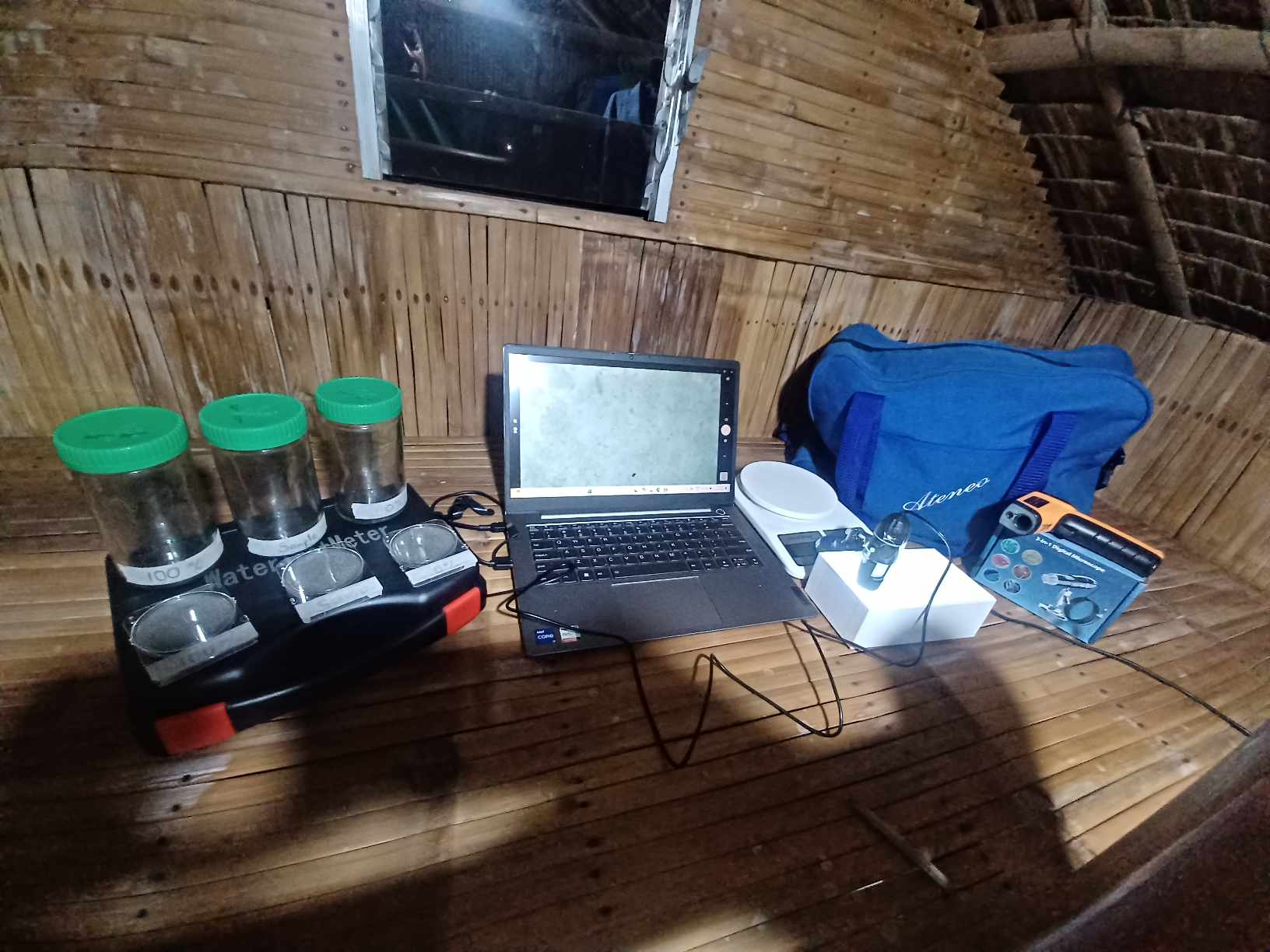
Dissolved oxygen (DO) depletion is a primary cause of catastrophic crop failure in global aquaculture. While commercial monitoring tools exist, their high costs often create a "data desert" in developing regions, leaving smallholder farmers vulnerable to undetected environmental changes. This project introduces a disruptive sensing paradigm—Frugal Digital Volumetry—designed to eliminate the economic barriers to precision agriculture.
The Project: Turning Waste into Scientific Instruments
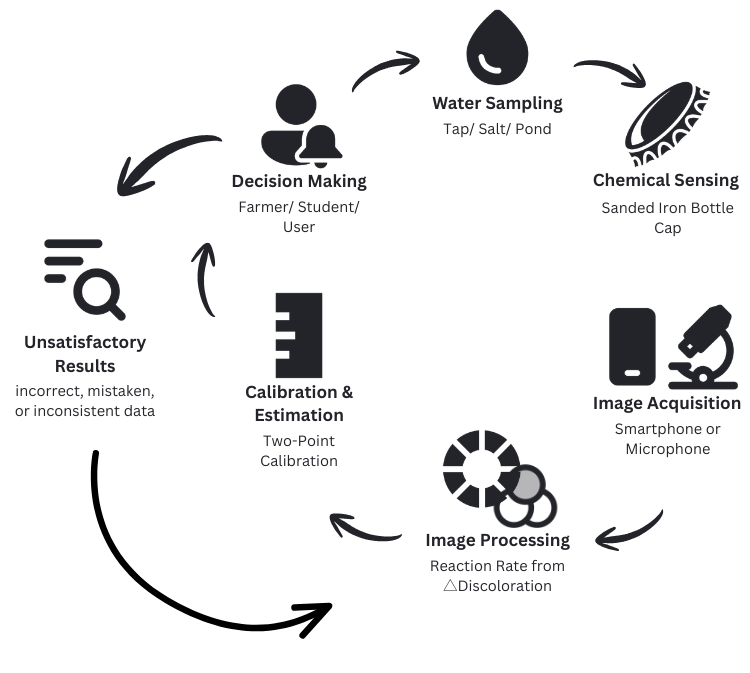
The framework utilizes iron oxidation colorimetry, a process where common metal waste is repurposed into a precision sensor. By using upcycled bottle caps and a standard smartphone, farmers can now monitor critical water quality levels without the need for expensive commercial probes.
- How it Works: The system uses the kinetic rate of rust formation as a biochemical proxy for DO concentration. When iron is exposed to oxygenated water, it undergoes a predictable oxidation process.
- Computer Vision Integration: A custom computer vision pipeline analyzes the color change of the metal surface. By performing RGB-to-CIE Lab
transformations, the system quantifies oxidation levels with mathematical rigor, ensuring reliable readings across different lighting conditions and mobile devices. - Accessible Science: Every component and analytical step is designed to be accessible to individuals with no formal scientific background. The system provides sufficient temporal resolution to identify critical hypoxia thresholds, allowing for proactive ecological management.
Community Impact and Scalability
Beyond the hardware, this project focuses on socio-technical resilience. In field implementations, like those in Pampanga, Philippines, the project has successfully transformed high school students into community technical resources. Through a peer-to-peer knowledge transfer framework, the technology is placed directly into the hands of the community, enabling a transition from reactive crisis management to long-term sustainability.
Key Features
- Zero-CAPEX Framework: Utilizes household waste like bottle caps and plastic jars.
- High-Fidelity Results: Validated against industry-standard sensors with high correlation in both freshwater and hypersaline environments.
- Field-Ready: Optimized for use with standard smartphone cameras.
- Rapid Adoption: Designed for high replicability, even among non-specialist users and students.
Ateneo Innovation Center
CTC 416, PLDT Convergent Technologies Center
Ateneo de Manila University Loyola Heights campus
Katipunan Avenue, Loyola Heights
1108 Quezon City
Philippines