

Turning research to real-world products and services
Accomplishments and Activities
Ateneo Innovation Center (AIC)
SEC B Smart Aeroponics and Aquaponics Greenhouse
by Vincent Dylan R. Evangelista
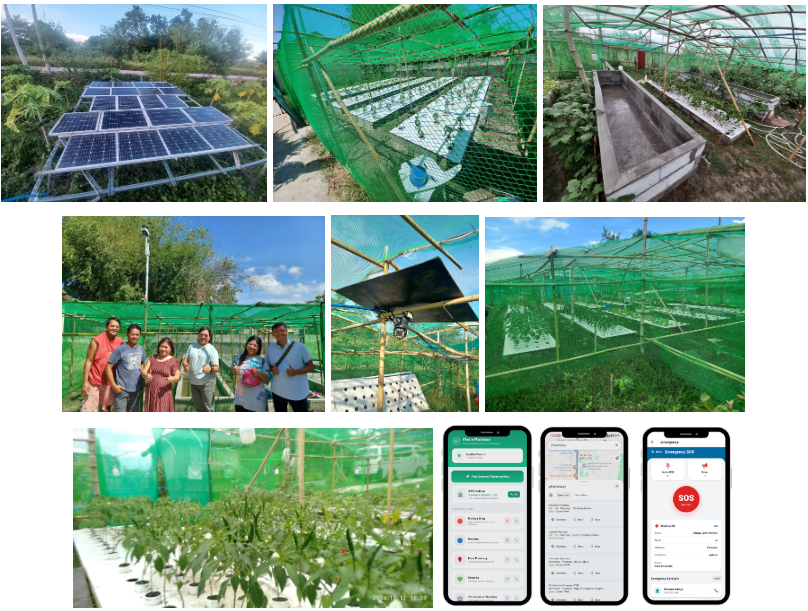
The SEC B Smart Aeroponics and Aquaponics Greenhouse project leverages a decentralized treatment train, low-cost Internet of Things (IoT) telemetry, artificial intelligence, and renewable solar power to transform untreated wastewater into safe, nutrient-rich irrigation and aquaculture water.

This circulation system is managed by several integrated technical subsystems that ensure operational stability and safety. An IoT sensing network utilizes ESP32 microcontrollers interfaced via RS-485 to push real-time readings to a cloud platform over HTTPS. Multi-parameter NPK and Electrical Conductivity (EC) sensors monitor nutrient availability at the inlet and discharge points to balance liquid fertilizer concentrations, while submerged pH, EC, temperature, and ammonia sensors continuously track conditions in the aquaponics tank. Operational intelligence is driven by a dual-layer AI framework. A MobileNetV2 Convolutional Neural Network (CNN) analyzes camera feed imagery of the plant canopy using Grad-CAM visualization to detect nutrient stress or disease early. In parallel, an XGBoost machine learning model predicts ammonia fluctuations 15 minutes in advance based on real-time pH, temperature, and EC data, computing un-ionized toxic ammonia levels using aqueous equilibrium equations to trigger automated alerts before toxicity thresholds ($>0.5\text{ mg/L}$) threaten aquatic life. The entire ecosystem is powered by an off-grid 1.0 kW solar array coupled with a 12V, 400Ah battery bank buffer, which delivers the stable DC supply required for precise IoT sensor readings and maintains uninterrupted pump and UV-C operations during grid power outages.
The smart greenhouse also integrates tilapia aquaculture, soil beds, and aeroponic sprinklers through an interconnected hardware and data layout. Environmental conditions in the garden zone are tracked by a smart monitoring setup that features a dedicated weather station, dual air temperature and humidity sensors, and a Light Dependent Resistor (LDR) sensor. Data gathered from these sensors feeds directly into the system to automate garden lighting and decorative fairy lights based on real-time ambient light and weather metrics. The crops within the soil bed and aeroponic sprinkler system receive water managed by an integrated irrigation unit, which dynamically blends recycled aquaculture water with public faucet water while continuously tracking fluid parameters via submerged pH and temperature sensors.
At the core of the greenhouse operations is a centralized control and data processing architecture. The Observation Unit serves as the system's neural center, pairing an Arduino unit and a Raspberry Pi to aggregate environmental sensor inputs alongside a Wi-Fi camera for visual crop monitoring. This data is transmitted to the Processing hub, the network backbone composed of a Pocket Wi-Fi router and a Monitor Server, to enable wireless communication and high-level analytical processing. Powering all active electronics, water pumps, and lighting fixtures is a dedicated solar system consisting of solar panels that charge a central charge controller and battery bank to ensure continuous operation.
The aquatic ecosystem centers on a tilapia aquarium equipped with vital sign tracking for water level, water temperature, and pH levels. The system executes automated actions by controlling an automated fish feeder and an overflow drain valve based on real-time sensor thresholds. Water from the aquarium continuously enters a biofiltration cycle by flowing into a biofilter sump for treatment. Once treated, this biofiltered water is either pumped back directly into the fish tank to maintain water quality or diverted into the main irrigation system alongside recycled water lines to nourish the aeroponic sprinklers and soil beds.
Ateneo Innovation Center (AIC)
Accomplishment Report 2025–2026:
For 2025–2026, the Ateneo Innovation Center advanced community resilience through 'anticipatory action'—applying advanced modeling and climate-adaptive AI/IoT tools to mitigate system failures before they occur. By translating complex scientific frameworks into practical community tools, AIC delivered scalable solutions across smart agriculture, health biosecurity, and disaster preparedness.
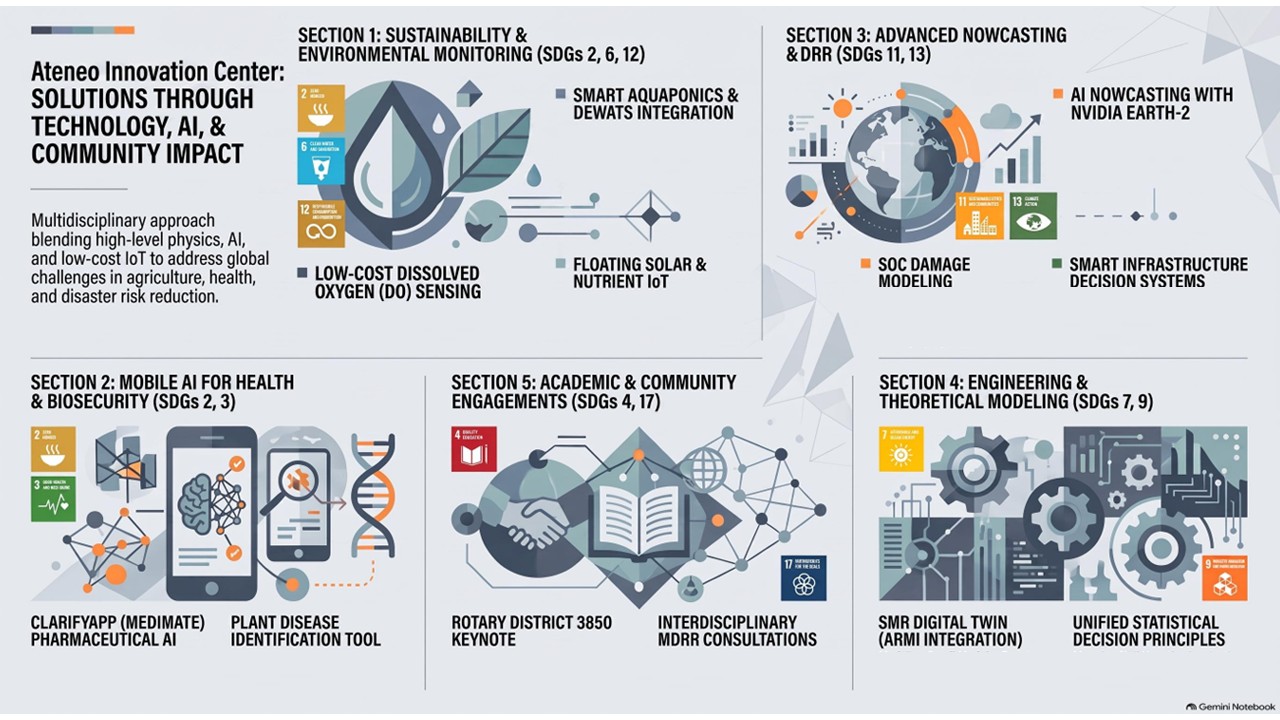
1. Smart Agriculture & Environmental Systems
SDG 2 (Zero Hunger), SDG 6 (Clean Water)
Community Farming Tech: Deployed solar-powered DIY Dissolved Oxygen (DO) sensors, nutrient monitors, and weather stations at Tagulod High School to empower local agriculture.
Aquaponics & Wastewater: Engineered Decentralized Wastewater Treatment Systems (DEWATS) alongside greenhouse aquaponics setups cultivating tilapia, hito, and duckweed.
AI Crop Diagnostics: Created a Plant Disease Identification mobile app that uses image analysis to assess crop health, determine urgency, and recommend field actions.
Renewable Energy: Initiated project proposals for floating solar PV cells in Laguna de Bay.
2. Health, Energy and Disaster Resilience
Healthcare Innovation: Developed ClarifyApp (MediMate) for AI-driven medication tracking and utilized Meta Quest 3S headsets to conduct Senior Memory Lab experiments.
Climate Nowcasting: Leveraged NVIDIA Earth-2 AI to forecast extreme weather events, optimizing early warnings for highly sensitive airport and dam operations.
Complex Systems Modeling: Applied Self-Organized Criticality (SOC) and power law distributions, mathematically represented as P(s) = C s^{-\alpha}, to predict cascading failures in super typhoons, athletic injuries, and Small Modular Reactor (SMR) digital twins.
ADMU-Boston College (BC) Collaboration
In partnership with Boston College, the AIC deployed a "Smart Farming" ecosystem in Candaba, Pampanga, and at Tagulod High School. This ecosystem provides real-time decision support through:
● Nutrient Sensors: Monitoring soil/water health for optimized growth cycles.
● Weather Stations: Localized monitoring of wind, precipitation, and visibility.
● Solar-Powered Infrastructure: Installation of Solar-powered Smart Nutrient Sensors at the Ateneo DEWATS (Decentralized Wastewater Treatment System) to ensure sustainable monitoring.
The "So What?" Layer: The DIY Dissolved Oxygen (DO) Sensor
The AIC has engineered a Low-Cost DO sensor that democratizes precision aquaculture by replacing expensive commercial probes with upcycled materials and computer vision.
● Iron Oxidation Colorimetry: The system utilizes the kinetic rate of "rust" formation on iron as a biochemical proxy for DO concentration.
● Engineering Workflow: Using upcycled metal bottle caps, a smartphone captures time-lapse images of the oxidation process.
● Mathematical Rigor: The computer vision pipeline performs RGB-to-CIE L a b * transformations; the rate of change in this color space allows for the precise quantification of oxygen levels regardless of ambient lighting conditions.
Infrastructure and Systems
AIC projects integrate these sensors into robust systems, including:
● DEWATS: Five-chamber treatment structures (primary/secondary digestive, settling, transition, and reedbed) supporting localized fingerling production.
● Aquaponics: Greenhouse configurations optimized for the production of Black Tilapia, Red Tilapia, Hito (Catfish), and Dalag (Mudfish) using sustainable duckweed and algae feed.
UN SDG Mapping: Agriculture and Environment
Initiative, SDG Mapping
Smart Farming & Fingerling (Tilapia/Hito/Dalag) Production, SDG 2: Zero Hunger
Solar-powered DEWATS & Water Quality Monitoring,SDG 6: Clean Water and Sanitation
Upcycled Sensors (DO) & Low-cost Materials,SDG 12: Responsible Consumption and Production
This environmental monitoring at the farm level provides the groundwork for digital biosecurity and decentralized health management.
Accomplishment Report 2024-2025
The Ateneo Innovation Center (AIC) continues to lead the way in community-focused technological solutions. From June 2024 to May 2025, the center achieved significant milestones in smart agriculture, environmental monitoring, and sustainable infrastructure, directly impacting underserved communities and fostering the next generation of innovators.
1. Smart Agriculture and Food Security (SHIELDS Program)
The Smart Hydroponics with IoT for Education, Livelihood, and Disaster-resilient Sustainability (SHIELDS) initiative saw major infrastructure and technological expansions.
-
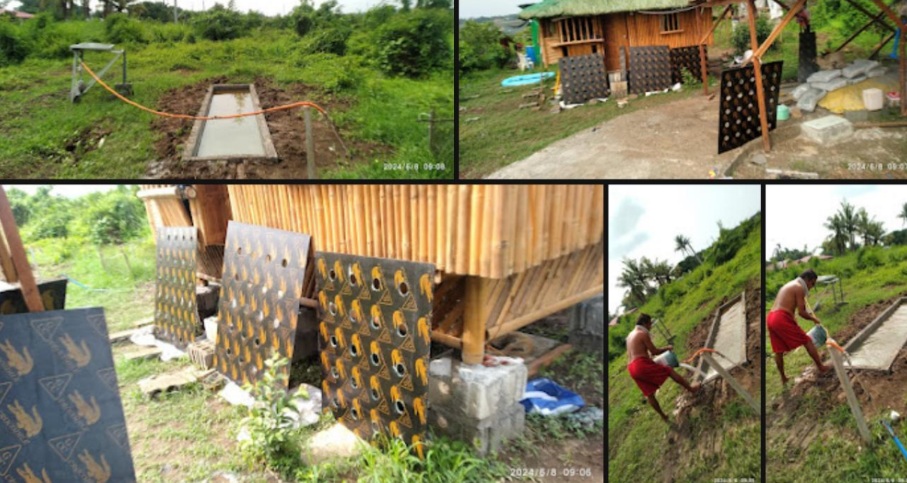
AIC Farm Development: Completed an 11-meter by 11-meter hydroponics greenhouse in Pampanga, alongside multiple concrete hydroponics boxes for high- value crops like chilies, eggplants, and tomatoes.
-
Technological Innovations: Implemented AI-based lettuce plant detection using image processing, installed solar-powered nutrient and soil moisture sensors, and repurposed excess LED strips from phototherapy projects for artificial lighting to induce photosynthesis.
-
Community Extension: Donated a hydroponics greenhouse to Tagulod High School and provided hands-on training to students, teachers, parents, and local government officials on maintaining these climate- resilient systems.
-
Post-Harvest Efficiency: Demonstrated that removing 85-90% of moisture from crops significantly prolongs shelf life, supporting long-term food security.
SDGs Addressed:
• SDG 2 (Zero Hunger): Enhancing local food production and shelf-life.
• SDG 9 (Industry, Innovation, and Infrastructure): Developing IoT-integrated smart farming.
2. Sustainable Water and Renewable Energy
AIC prioritized access to clean resources through renewable energy integration and innovative water management. 
-
Clean Water Systems: In partnership with Boston College, a clean water system was installed at Salapungan National High School. AIC also conducted training on solar-powered clean water technologies for Development Studies students.
-
Solar Integration: Deployed a 1 kW Solar PV system at the AIC Farm in Pampanga to provide a supplemental energy source and mitigate rising electricity costs.
-
Water Resource Management: Installed a 24-meter deep ground water pump with a pressure tank and implemented rainwater harvesting systems using inflatable pools.
-
Advanced Sensors: Initiated experiments on DIY Dissolved Oxygen (DO) sensors designed specifically for affordable applications in poor farming communities.
SDGs Addressed:
• SDG 6 (Clean Water and Sanitation): Deploying solar-powered water filtration and harvesting.
• SDG 7 (Affordable and Clean Energy): Utilizing solar power for farm operations and street lighting.
3. Disaster Resilience and Visibility Monitoring
The center advanced its data-driven monitoring capabilities to support disaster risk reduction (DRR).
-
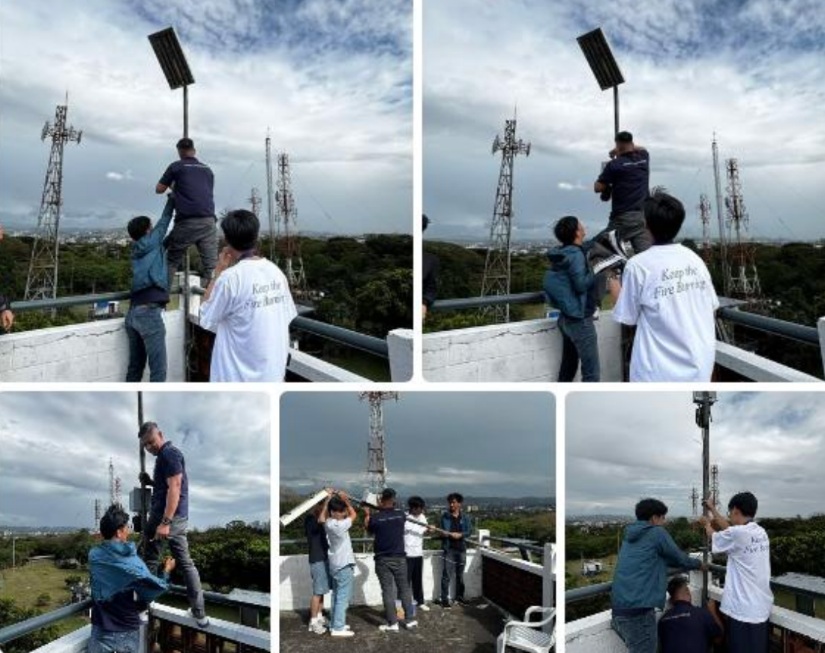
Visibility Monitoring System: Developed a system using Raspberry Pi and secure VPNs to monitor camera visibility (measuring brightness, contrast, and clarity) at the CTC Rooftop and Manila Observatory.
-
Weather Intelligence: Installed the AIC Farm Weather Station to track rainfall, wind speed, and humidity, providing real-time data for agricultural planning and disaster preparedness.
-
Remote Data Access: Deployed NearCloud systems for remote data management and visibility tracking, which were presented to local disaster risk management (MDRR) classes.
SDGs Addressed:
• SDG 11 (Sustainable Cities and Communities): Improving community resilience through advanced monitoring.
• SDG 13 (Climate Action): Utilizing real-time weather data for agricultural adaptation.
4. Education, Capacity Building, and Global Partnerships
AIC served as a vibrant hub for mentorship and multi-sectoral collaboration.
-
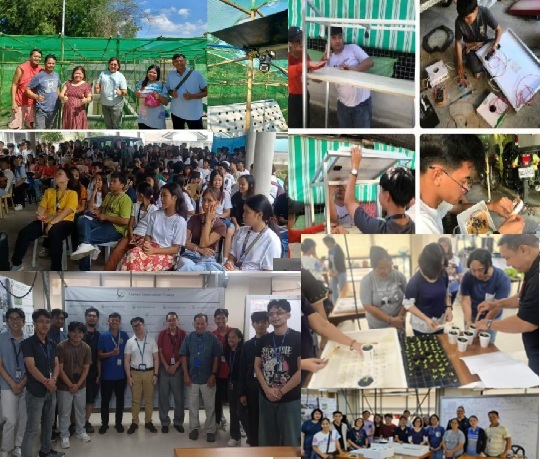
Mentorship and Internships: Hosted batches of interns from the Technological Institute of the Philippines (TIP) and Bulacan State University (BulSU), who worked on projects including face recognition, senior meal apps, and the Sandpile Model for avalanche prediction.
-
Institutional Training: Conducted free hydroponics training for teachers from Marist School and the Center for Positive Futures.
-
Strategic Collaborations: Engaged in technical exchanges with Weather News Inc. Japan, ICAM France, and the Electric Vehicle Association of the Philippines (EVAP).
-
Professional Development: Staff participated in high-level workshops on
technology market potential (DOST) and "Training of Trainers on Participatory Guarantee Systems" (DA).SDGs Addressed:
• SDG 4 (Quality Education): Providing specialized technical training and internships.
• SDG 17 (Partnerships for the Goals): Fostering local and international
collaborations across academia, government, and industry.
Building Total Community Resilience: The Ateneo Innovation Center Ecosystem
In an era of increasing climate volatility, the Ateneo Innovation Center (AIC) is transforming high-tech research into life-saving, community-managed assets. As of 2026, our Total Community Resilience framework provides a strategic response to the Philippines' status as a high-risk nation, ensuring that the "informational and social fabric" remains intact even during total infrastructure collapse.
Our ecosystem utilizes an Edge-Mobile-Web (Offline-first) architecture, powered by solar energy with Starlink satellite backup to bridge the "Golden Hour" between disaster and recovery.
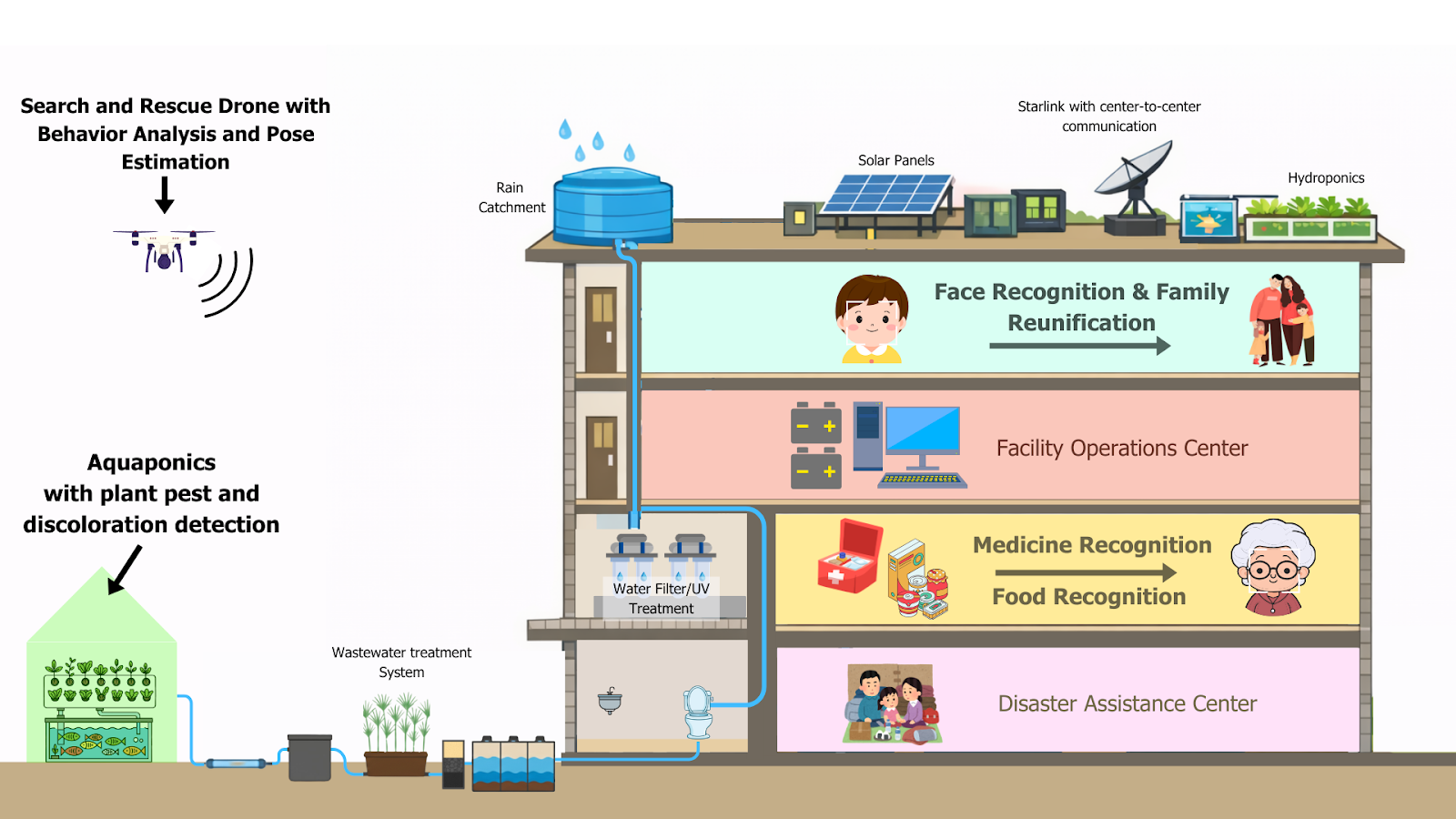
Core Technology Pillars
1. CLEAR: Next-Generation Rainfall Sensing
Traditional rain gauges suffer from "measurement lag" and mechanical failure during extreme storms. The CLEAR (Cloud, Light, and Environmental Analysis of Rain) system is an AI-driven framework that "sees" and "hears" the storm:
- Acoustic Advantage: High-sensitivity sensors identify storm onset 9 seconds faster than mechanical gauges by capturing the kinetic "click" of raindrops.
- Visual Intelligence: 3D ResNet-18 and CNNs track cloud dynamics and precipitation patterns in real-time.
- PAGASA Integration: Automatically categorizes rainfall into six discrete levels—from "No Rain" to "Super Heavy"—to trigger immediate municipal response protocols.
- Visibility Analysis: Uses an AI "Blur Meter" to quantify hazards like heavy rain, fog, or smoke, ensuring safety even in low-light urban environments.
2. Protection & Humanitarian Intelligence
We leverage advanced AI to accelerate search and rescue operations:
- UAV Triage Pipeline: Autonomous drones use YOLOv8 person detection and skeletal pose analytics to prioritize medical care in disaster zones.
- Biometric Matching: An AI-driven system designed for family reunification, capable of identifying missing persons within the first 72 hours.
3. Health & Medical Continuity
Our flagship REVIVE Mobile App, powered by Google Gemini 2.5 Flash, serves as a digital health assistant for refugees:
- Safety Features: Detects dangerous drug interactions (Polypharmacy) and authenticates pharmaceuticals via camera.
- Nutritional Intelligence: Uses OCR to read relief goods' labels, protecting patients with diabetes or hypertension through a Nutrient Risk Index.
- Life-Saving Devices: Includes the A-Vent (a low-cost mechanical ventilator) and solar-compatible Intelligent Incubators for rural health units.
4. Connectivity, Food, & Water Security
We ensure communities remain self-sufficient when the grid goes down:
- Near Cloud (AIC EduCloud): A "cloud in a box" providing offline access to Wikipedia and disaster manuals via local Wi-Fi.
- Decentralized Coordination: Uses LocalSend Architecture for peer-to-peer file sharing without any external network.
- Resource Security: Solar-powered water filtration, zero-electricity sewage treatment (DEWATS), and AI-monitored smart aquaponics to turn evacuation centers into food-production hubs.
A Scalable Blueprint for Resilience
The CLEAR system and the broader AIC ecosystem offer "radar-grade" intelligence at a 90% cost reduction compared to industrial standards. By deploying these tools on rooftops and in schools, we create a localized "Digital Oasis" that restores safety and dignity to at-risk communities.
CLEAR: Seeing and Hearing the Storm with Next-Gen AI Weather Intelligence
In an era of increasing climate volatility, traditional weather monitoring is no longer enough for urban survival. The Ateneo Innovation Center (AIC) introduces CLEAR (Cloud, Light, and Environmental Analysis of Rain), a transformative AI-driven framework that transcends the limitations of legacy hardware to provide hyper-local, real-time weather intelligence.
By merging "digital ears" with "contextual eyes," CLEAR bridges the vital data gap in modern smart city architectures, offering a scalable and resilient model for environmental monitoring.
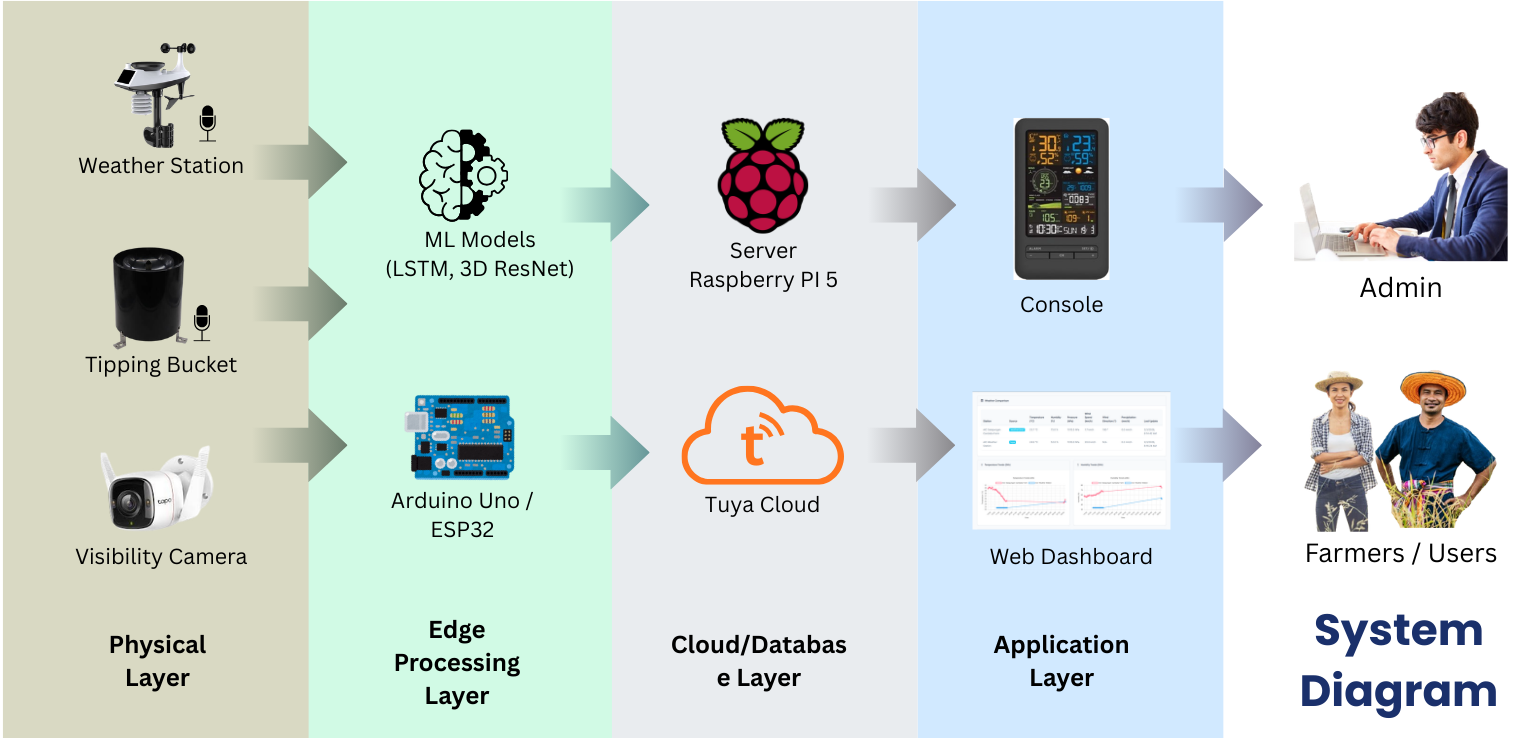
Why CLEAR? Overcoming the "Measurement Lag"
Standard tipping-bucket rain gauges—the global industry standard—suffer from inherent physical limitations:
- Measurement Lag: They require a specific volume of water to accumulate (typically 0.5mm) before registering a "tip," often masking the exact onset of a storm.
- Mechanical Vulnerability: They are prone to saturation and failure due to debris during extreme tropical events.
- Cost Barriers: Industrial systems can cost between $2,000 and $40,000+, making wide-scale deployment difficult.
The CLEAR Advantage: By utilizing low-cost edge hardware ($300–$1,500), CLEAR offers a 90% cost reduction, enabling the deployment of dense sensor meshes across at-risk communities.
How It Works: Multi-Modal AI Fusion
CLEAR doesn't just measure rain; it "audits" and "maps" the storm using a sophisticated four-tier architecture:
- Acoustic Sensing (The "Ear"): High-sensitivity microphones capture the unique sonic "fingerprint" of raindrops hitting a surface. This allows the system to identify storm onset 9 seconds faster than mechanical gauges.
- Computer Vision (The "Eye"): Using 3D ResNet-18 and CNNs, the system analyzes video feeds to track cloud dynamics and identify rain patterns.
- Visibility Analytics: The system integrates a physics-based "Blur Meter" (Dark Channel Prior) to quantify atmospheric turbidity, fog, and smoke, ensuring accuracy even in low-light urban environments.
- LSTM Networks: These "Long Short-Term Memory" networks synthesize heterogeneous data streams to categorize rainfall into six discrete PAGASA-aligned levels, from "Super Light" to "Super Heavy".
Proven Resilience & Community Impact
CLEAR is more than a technical tool; it is a living socio-ecological infrastructure.
- Zero-Lag Intelligence: The system provides near-instantaneous feedback, which is critical for early warnings of flash floods and landslides.
- Hysteresis Management: CLEAR’s multi-sensor logic distinguishes between active rain and the "Wet-Surface Effect" (residual droplets on a camera lens), reducing false alarms by 35%.
- Participatory Resilience: Validated at Tagulod High School, the system features an inclusive UI with color-coded iconography (e.g., Blue Droplets for "Heavy" rain), allowing non-technical users to make data-driven decisions for agricultural planning and disaster safety.
"Even in the face of infrastructure collapse, localized intelligence can restore the safety and dignity of at-risk communities."
AI-Enhanced Circular Sanitation: Transforming Waste into Value
In the face of rapid urbanization and the escalating climate crisis, the Ateneo Innovation Center (AIC) is redefining urban resilience. Our latest breakthrough integrates Artificial Intelligence (AI) with nature-based solutions to solve one of the most pressing challenges in the Philippines: inadequate wastewater management.
By combining Decentralized Wastewater Treatment Systems (DEWATS) with Smart Aquaponics, we have created a circular economy model that turns septic effluent into high-value ornamental assets.
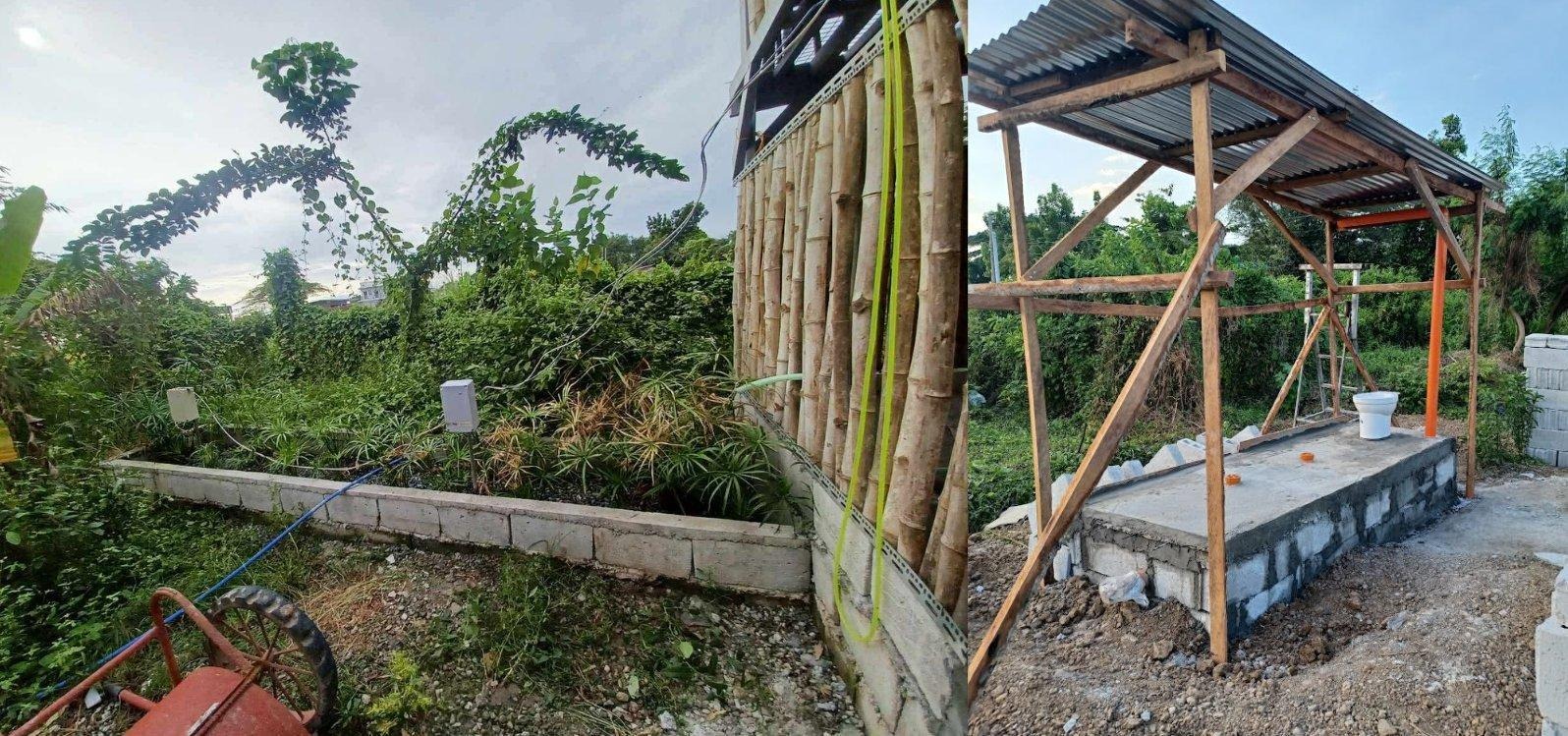
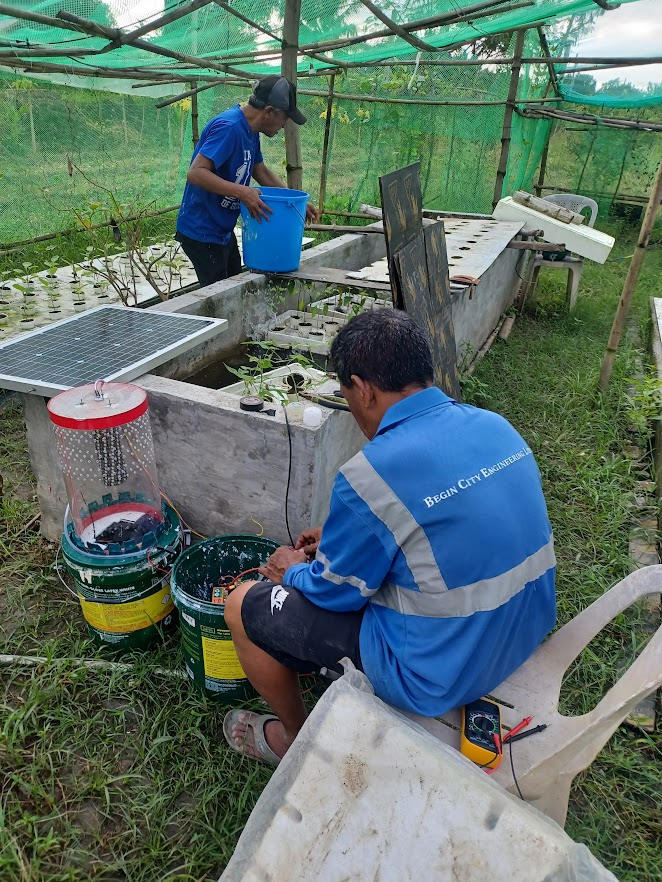
The Innovation: From Septic Tank to Golden Koi
Traditional septic systems often fail to meet environmental standards, leading to the contamination of water bodies. Our system disrupts this cycle through a sophisticated, multi-stage process:
- Primary Treatment (DEWATS): Wastewater is first treated in an Anaerobic Baffled Reactor (ABR), reducing organic pollutants through natural microbial processes without the need for electricity.
- Nature-Based Polishing: The effluent then passes through a Constructed Wetland (CW), where gravel beds and specialized plants further filter out pathogens and nutrients.
- The "Circular" Leap: Instead of discharging this nutrient-rich water, it is diverted into an Ornamental Aquaponics system.
- Value Generation: High-value ornamental fish, such as Golden Koi, thrive on the recycled nutrients, transforming "waste" into a localized economic asset.
Smart Resilience: AI-Driven Monitoring
To ensure safety and efficiency, the system is backed by the CLEAR (Cloud, Light, and Environmental Analysis of Rain) framework:
- Real-Time Analytics: IoT sensors and AI-driven computer vision monitor water quality and fish health 24/7.
- Edge Computing: Using a Raspberry Pi 5 and NearCloud architecture, the system remains operational even during network outages.
- Transparency Dashboard: Stakeholders can monitor the "Nutrient-to-Value" conversion through a localized web dashboard.
Why It Matters
This project represents more than just technical achievement; it is a blueprint for Total Community Resilience. By deploying these systems in schools and community centers—like our pilot at Tagulod High School—we are:
- Protecting Public Health: Eliminating untreated discharge into local environments.
- Securing Livelihoods: Creating decentralized food and ornamental production hubs.
- Empowering the Youth: Engaging students in climate-smart technologies that bridge the gap between AI and agriculture.
Our Vision: To transform every septic tank from an environmental liability into a source of community wealth and ecological health.
From Rust to Resilience: Frugal AI for Smarter Aquaculture
In the face of increasing environmental challenges, small-scale fish farmers often find themselves vulnerable to catastrophic crop loss due to sudden drops in water quality. The Ateneo Innovation Center (AIC) is bridging this gap with a disruptive, low-cost solution: a computer vision framework that transforms common metal waste into a precision instrument for monitoring Dissolved Oxygen (DO).
Our "Frugal Digital Volumetry" system eliminates the financial barriers to advanced aquaculture management, providing farmers with the data they need to protect their livelihoods.
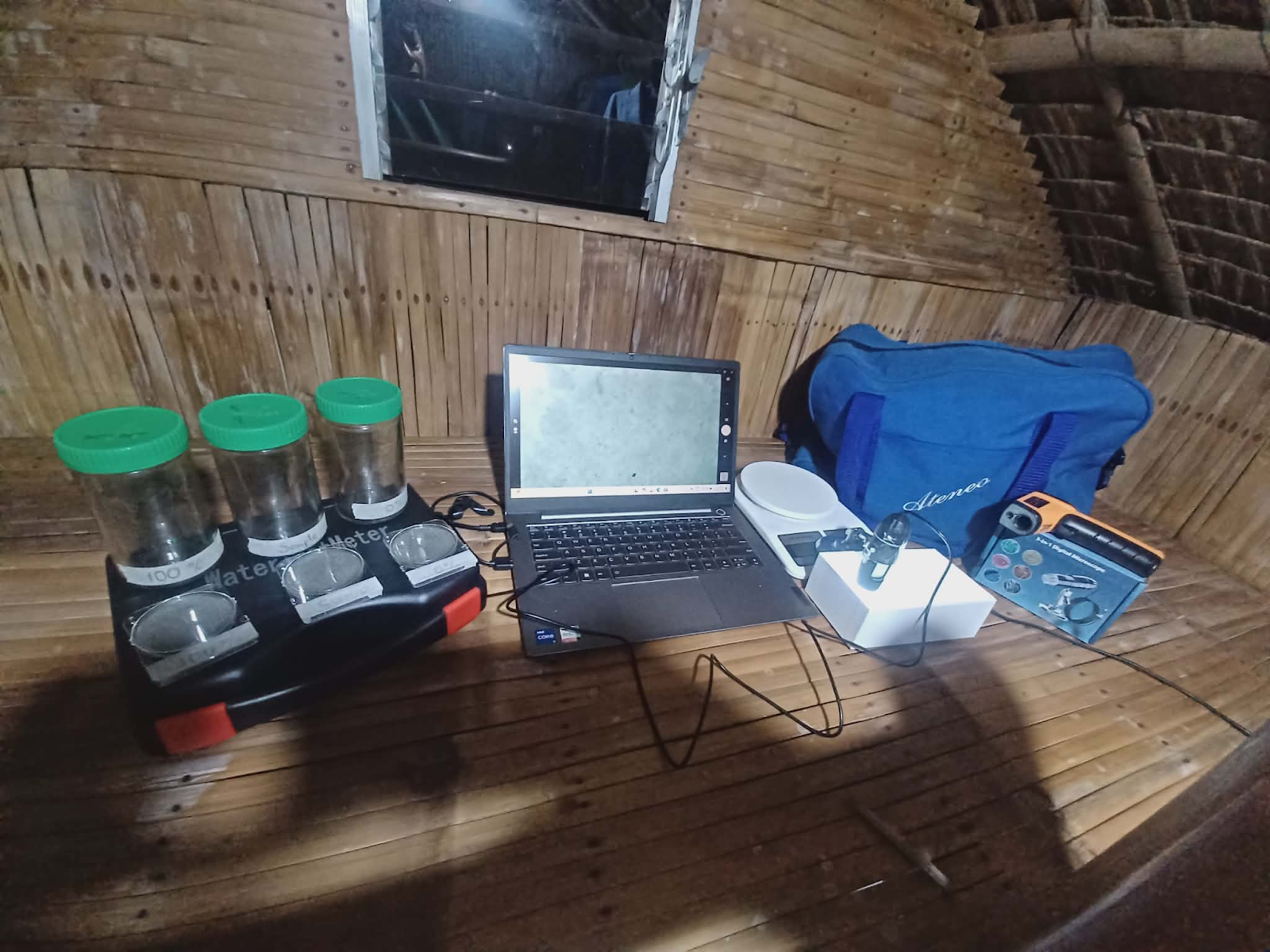
To address the prohibitive $1,350 cost barrier of commercial dissolved oxygen probes—an expense totaling up to 15 months of income for smallholders—our research at the Ateneo Innovation Center introduces a frugal yet high-tech alternative using upcycled iron waste as a biochemical oxygen proxy. By leveraging smartphone-integrated digital microscopy and an AI-driven computer vision pipeline—employing RGB-to-CIE L*a*b* transformations and CIEDE2000 formulas—we have reduced capital expenditure by over 98% while maintaining professional-grade accuracy. Validated through field implementation in Pampanga, Philippines, the system demonstrates high-fidelity performance with mean deviations as low as 1.88% to 2.51%, reliably identifying critical hypoxia thresholds (3–6 mg/L) to prevent aquaculture failure. This democratized approach to precision farming empowers at-risk communities to transition from survival to economic resilience, proving that sophisticated AI-augmented monitoring can be both accessible and sustainable.
Empowering Communities: The 2026 Ateneo Resilience Technology Ecosystem
In an era where the Philippines faces increasing environmental challenges, the Ateneo Innovation Center (AIC) is leading the transition from high-tech research to life-saving, community-managed assets. Our Total Community Resilience framework is designed to bridge the "Golden Hour" of disasters, ensuring that when infrastructure fails, the social and informational fabric of a community remains intact.
Built on an offline-first, Edge-Mobile-Web architecture and powered by solar energy with Starlink satellite backups, these technologies are rugged, decentralized, and ready for the front lines.
Core Innovation Pillars
1. Protection & Humanitarian Intelligence
We leverage AI to save lives when every second counts:
-
UAV Triage Pipeline: Autonomous drones using YOLOv8 person detection and skeletal pose analytics to prioritize medical care in disaster zones.
-
Biometric Matching: A CNN-based system (InsightFace) designed to reunify families by identifying missing persons within the critical first 72 hours.
-
AI Visibility System: A "Blur Meter" that quantifies environmental hazards like heavy rain or smoke to score safety levels in real-time.
2. Health & Medical Continuity
Our flagship REVIVE Mobile App acts as an AI-powered health assistant, utilizing Google Gemini 2.5 Flash to provide:
-
Polypharmacy Detection: Flagging dangerous interactions for patients on multiple medications.
-
Nutritional Intelligence: Using OCR to read relief goods' labels and calculate a Nutrient Risk Index for refugees with comorbidities like diabetes.
-
Smart Medical Hardware: Including low-cost A-Vent mechanical ventilators, solar-compatible Intelligent Incubators, and AI-monitored Smart Phototherapy Lights.
3. Connectivity & Data Resilience
When the grid goes down, our "Near Cloud" systems stay up:
-
AIC EduCloud: A low-power "cloud in a box" providing offline access to terabytes of educational and disaster manuals.
-
Solar Radio & Image Transmission: Sending digital data over long distances without cellular or internet grids.
-
LocalSend P2P: A decentralized protocol allowing community members to share files and coordinate without any external network.
4. Food, Water, and Energy Security
We transform evacuation centers into active hubs for survival and production:
-
Clean Water & DEWATS: Solar-powered filtration and nature-based, zero-electricity wastewater treatment.
-
Smart Agriculture: IoT-integrated aquaponics and hydroponics that use computer vision to monitor fish health and plant nutrients.
-
Hybrid Weather Monitoring: Using acoustic sensing (microphones) to measure extreme rainfall that traditional gauges often miss.
Our Mission: To ensure that no community is left in the dark. By integrating sustainable energy with advanced AI, we are building a future where resilience is a local resource.
Master on Disaster Risks and Resilience Student Fr. Cireneo Matulac Excels at MCT4SD 2025
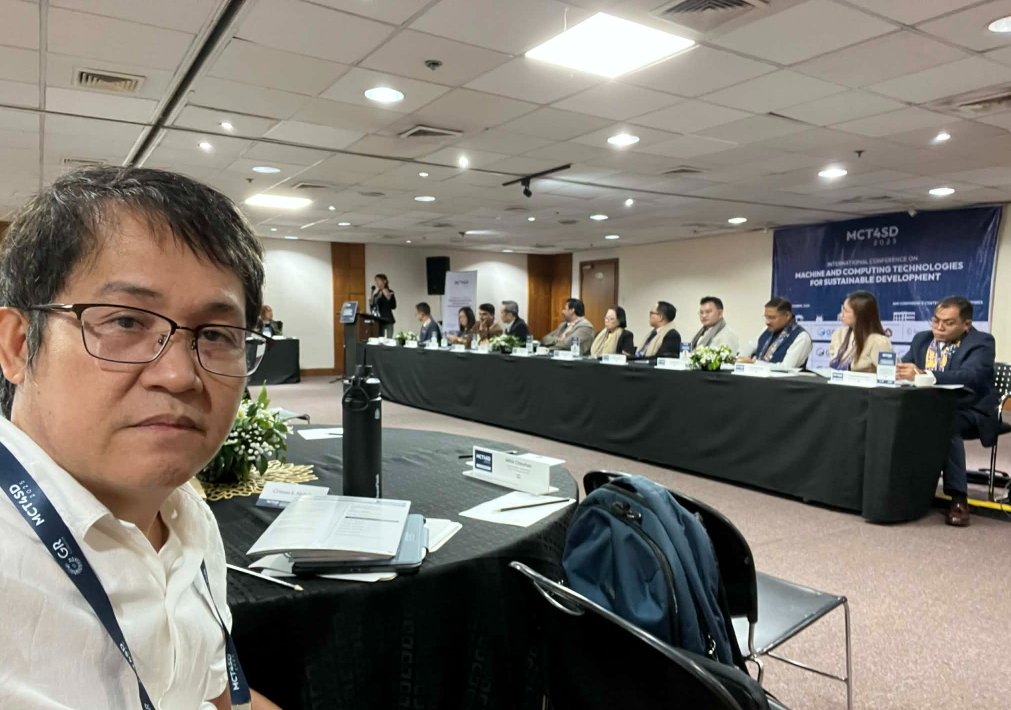
We are proud to celebrate the achievement of one of our most promising graduate students, Fr. Cireneo Matulac from the Master on Disaster Risks and Resilience program, for his successful and impactful presentation at the recently concluded International Conference on Machine and Computing Technologies for Sustainable Development (MCT4SD) 2025.
The conference, a prestigious international forum for cutting-edge research in the convergence of technology and sustainability, provided Fr. Matulac with an excellent platform to share his master’s research with a global audience of academics, industry professionals, and policymakers.
Fr. Matulac presented his study focusing on leveraging advanced computing technologies for disaster risk reduction and enhancing community resilience. His work demonstrates the critical and innovative role that machine learning and other computing solutions can play in:
-
Improving the accuracy and speed of disaster forecasting and early warning systems.
-
Analyzing large datasets for effective pre-disaster preparedness and resource allocation.
-
Developing smart, sustainable strategies for post-disaster recovery and reconstruction.
This successful presentation is a significant milestone, highlighting the rigorous academic quality and real-world applicability of the research conducted within the Master on Disaster Risks and Resilience program. Fr. Cireneo Matulac’s efforts exemplify our institution's commitment to cultivating experts who can utilize technology to address some of the world’s most pressing challenges in disaster resilience and sustainable development.
We extend our warmest congratulations to Fr. Cireneo Matulac for this outstanding achievement and for proudly representing his program and the institution on the international stage.
Visibility and Rainfall Estimation through Global and Local Research
The Ateneo Innovation Center (AIC) is proud to showcase the successful results of its international and local research collaborations, which are advancing the field of disaster resilience and smart monitoring for tropical environments. Two parallel projects—one stemming from a foreign exchange internship and the other from an AIC-guided local thesis—are currently developing next-generation visibility and rainfall estimation systems.
Global Collaboration: Hybrid Sensor Fusion for Reliable Rainfall Estimation
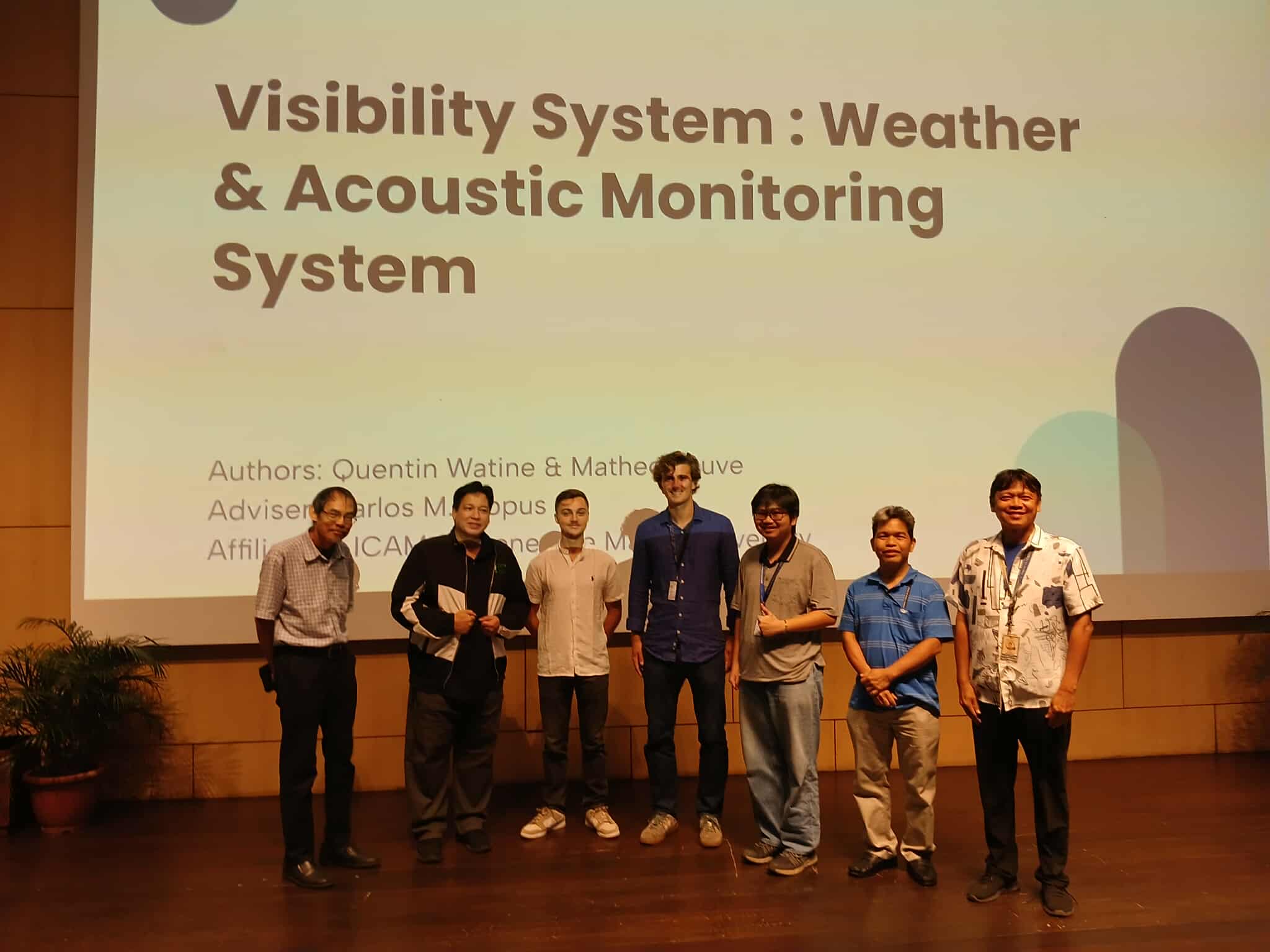
The recent foreign internship program, in partnership with ICAM (Institut Catholique d'Arts et Métiers), successfully concluded with the research of French students Matheo Jouve and Quentin Watine, advised by Carlos M. Oppus.
Their project, the Visibility System: Weather & Acoustic Monitoring System, addresses the critical issue of conventional tipping-bucket rain gauges underestimating real rainfall rates due to saturation during extremely intense tropical rainfall.
The innovation is a hybrid system that combines the traditional tipping bucket with an acoustic sensor (microphone) to achieve robust, continuous, and reliable measurement regardless of wind or rain angle. Key findings validated the system’s effectiveness:
-
For controlled, vertical rain, the system achieved approximately 99% accuracy.
-
During inclined rain (up to 45° inclination), the acoustic sensor compensated for the tipping bucket’s errors, providing a stable measurement.
This low-cost solution is highly applicable for critical operations, such as airport meteorology and general disaster warning systems.
Local Innovation: Urban Visibility Estimation Using Image Processing
Running in parallel is a research project led by Ateneo student Carl Steven L. Sumadsad (with co-authors Jan Kevin A. Galicia, Nathaniel Joseph C. Libatique, and Carlos M. Oppus), which focuses on another crucial aspect of public safety: Urban Visibility Estimation.
Visibility measurements are vital for transportation operation and safety, particularly when intense rainfall causes significant reductions in visibility. The research aims to develop a visibility estimation system that uses cost-effective camera systems and image processing techniques.
This image-based solution offers a reliable, low-cost method for continuous observation and can be easily integrated with existing infrastructure like traffic cameras and smart CCTVs.
Revolutionizing Healthcare: AI-Powered Medical Devices for Low-Resource Settings
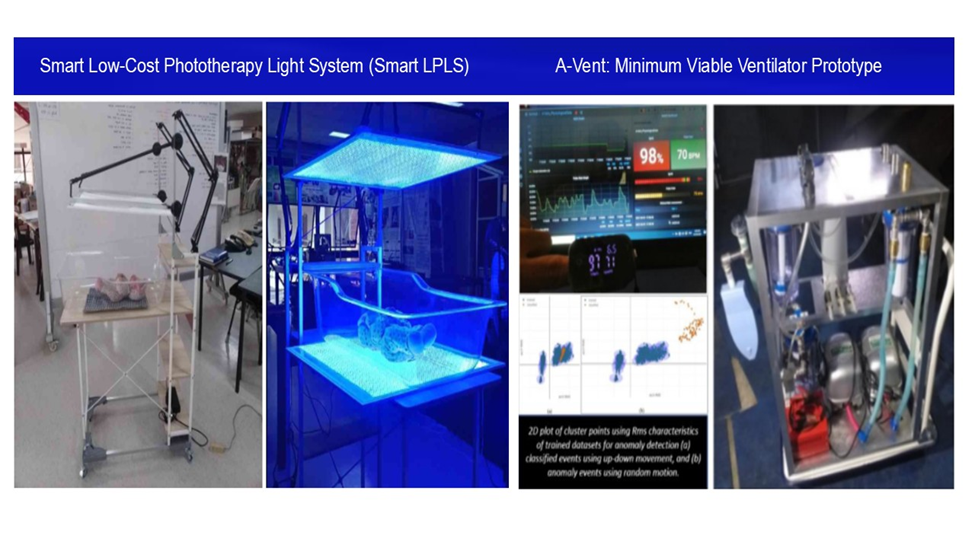
In many developing regions, healthcare systems are severely challenged by high equipment costs, limited access to advanced medical technology, and insufficient maintenance capacity. To address this urgent need, the Ateneo Innovation Center, led by Paul M. Cabacungan, has developed a portfolio of AI-driven healthcare innovations designed to be both intelligent and affordable.
Our work leverages Artificial Intelligence (AI), Internet of Things (IoT), and digital twin technologies to democratize access to life-saving medical tools.
Key Innovations for Critical Care
Our integrated systems bring cutting-edge intelligent monitoring to challenging environments:
-
The A-Vent (Ateneo Ventilator): This low-cost ventilator was developed to provide affordable mechanical ventilation, integrating mobile cloud caching and embedded machine learning for enhanced adaptability. Its control algorithm continuously analyzes sensor data to automatically adjust airflow based on a patient's breathing patterns.
-
Waveform Tracker Alarm System: This critical companion system uses deep learning models, trained on respiratory waveform data, to automatically detect Patient-Ventilator Asynchrony (PVA). This enhances patient safety and minimizes complications by alerting healthcare providers to asynchrony events.
-
Digital Twin Model for Predictive Monitoring: A virtual replica of the A-Vent's wireless sensor system, the Digital Twin model mirrors its real-time operation. This innovation allows for remote diagnostics, performance prediction, and preventive maintenance, supporting long-term reliability and continuous optimization.
Advancing Neonatal Health
We have also addressed critical needs in newborn care with an intelligent system for monitoring and treatment:
-
Computer Vision-Based Jaundice Monitoring and Smart Low-Cost Phototherapy Light: This system is specifically designed for neonatal care. It uses a low-cost camera and AI algorithms to analyze skin color and non-invasively estimate bilirubin levels. The Smart Phototherapy Light System complements this by automatically adjusting light intensity and duration based on the monitoring feedback, improving treatment precision and safety.
Our Mission and Impact
By developing these affordable, intelligent medical devices, our project contributes directly to two of the United Nations Sustainable Development Goals (SDGs): SDG (Good Health and Well-being) and SDG (Industry, Innovation, and Infrastructure). We are committed to fostering innovations that enhance patient safety, increase access to critical healthcare services, and empower low-resource settings.
Ateneo-Boston College Partnership Brings AI-Enabled, Sustainable Farming Tech to Pampanga
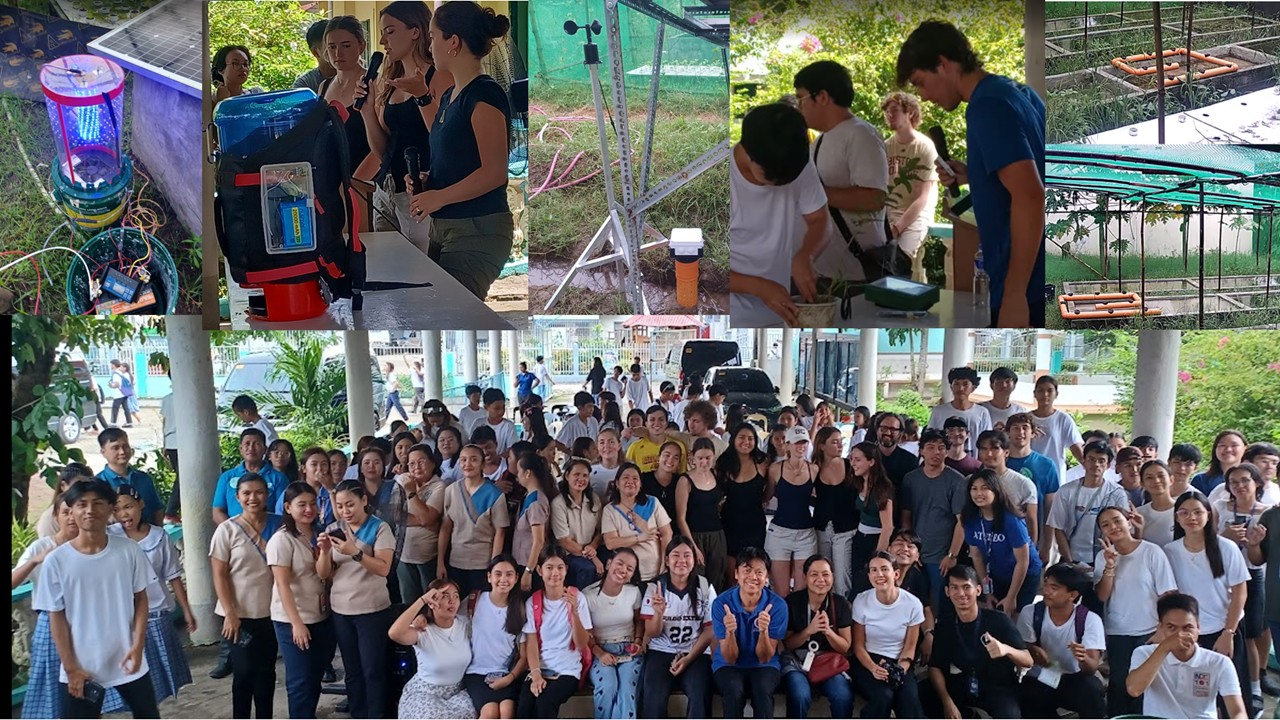
The continued partnership between Ateneo de Manila University (Ateneo) and Boston College (BC) has successfully engaged teachers, students, parents, farmers, and local government officials at Tagulod High School and the Barangay Hall of Candaba, Pampanga in the introduction of innovative farming technologies. These include a black bug trap using blue LED strips, a rice seed scatterer, a portable NPK sensor, water level and wind sensors, and an aquaponics system—all powered by lithium-ion batteries and recharged through solar PV panels. The technologies are now being managed by the school and have earned strong approval from members of the partner community.
Through this joint initiative of the two Jesuit institutions, we look forward to more exchanges of technical expertise and practical knowledge that can help farmers improve their crop yields, sustain their families, and inspire the youth. With the right mindset, motivation, and creativity, farming can become a viable and rewarding career path for the next generation.
Cultivating Hope: Ateneo and Boston College Partner to Support Candaba Farmers and the Next Generation
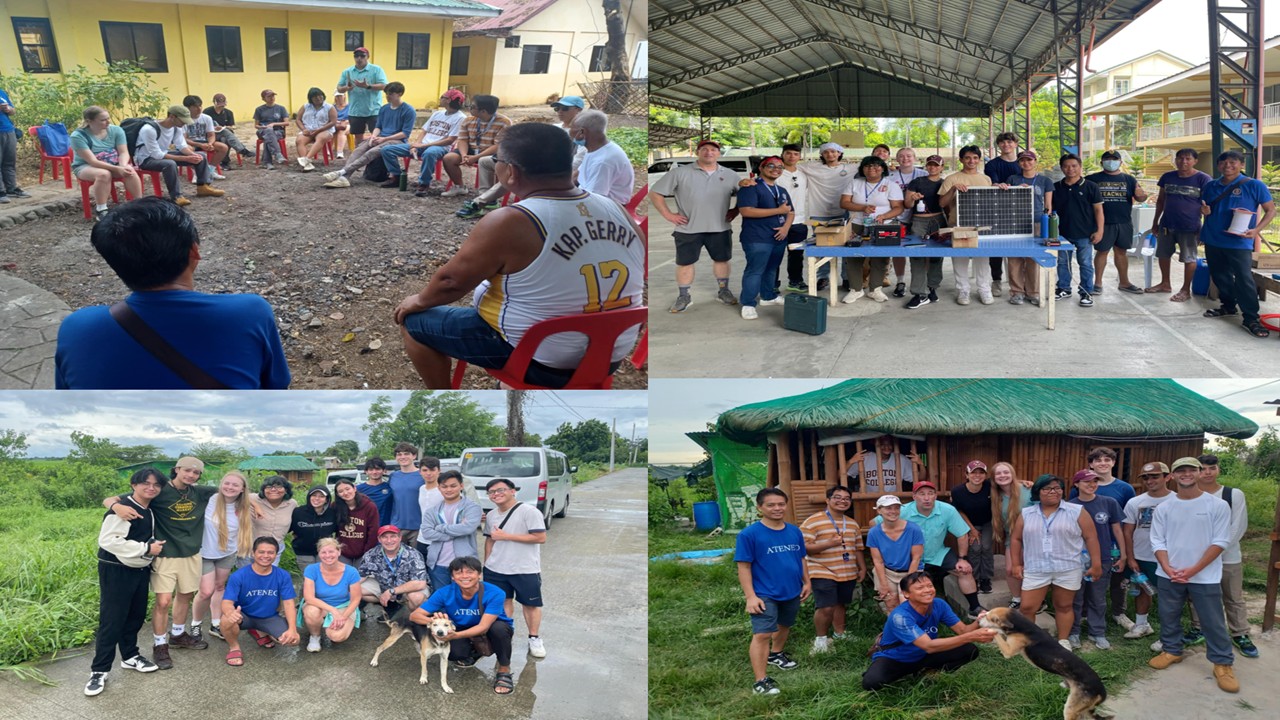
Ateneo de Manila University (Ateneo) and Boston College (BC) have successfully partnered to support rice farmers in addressing key challenges such as water scarcity, golden snail infestation, and the lack of effective rice-drying solutions during the rainy season. The Ateneo Innovation Center (AIC) led the community engagement activities with rice farmers in Salapungan, Candaba, Pampanga during June and July 2024. During these sessions, they presented prototype solutions and gathered valuable feedback from the partner farming community, the Dean of the School of Science and Engineering, and the Director of AIC.
Building on this collaboration, BC will continue its partnership with Ateneo in June 2025, further engaging with the underserved rice farming communities in Candaba. Through the sharing of technical expertise and practical knowledge, the initiative aims to help farmers improve their crop yields and ultimately support their families—especially by enabling them to send their children to school.
Innovation in Service: Ateneo Innovation Center Delivers Smart Systems for Climate Action and Public Health
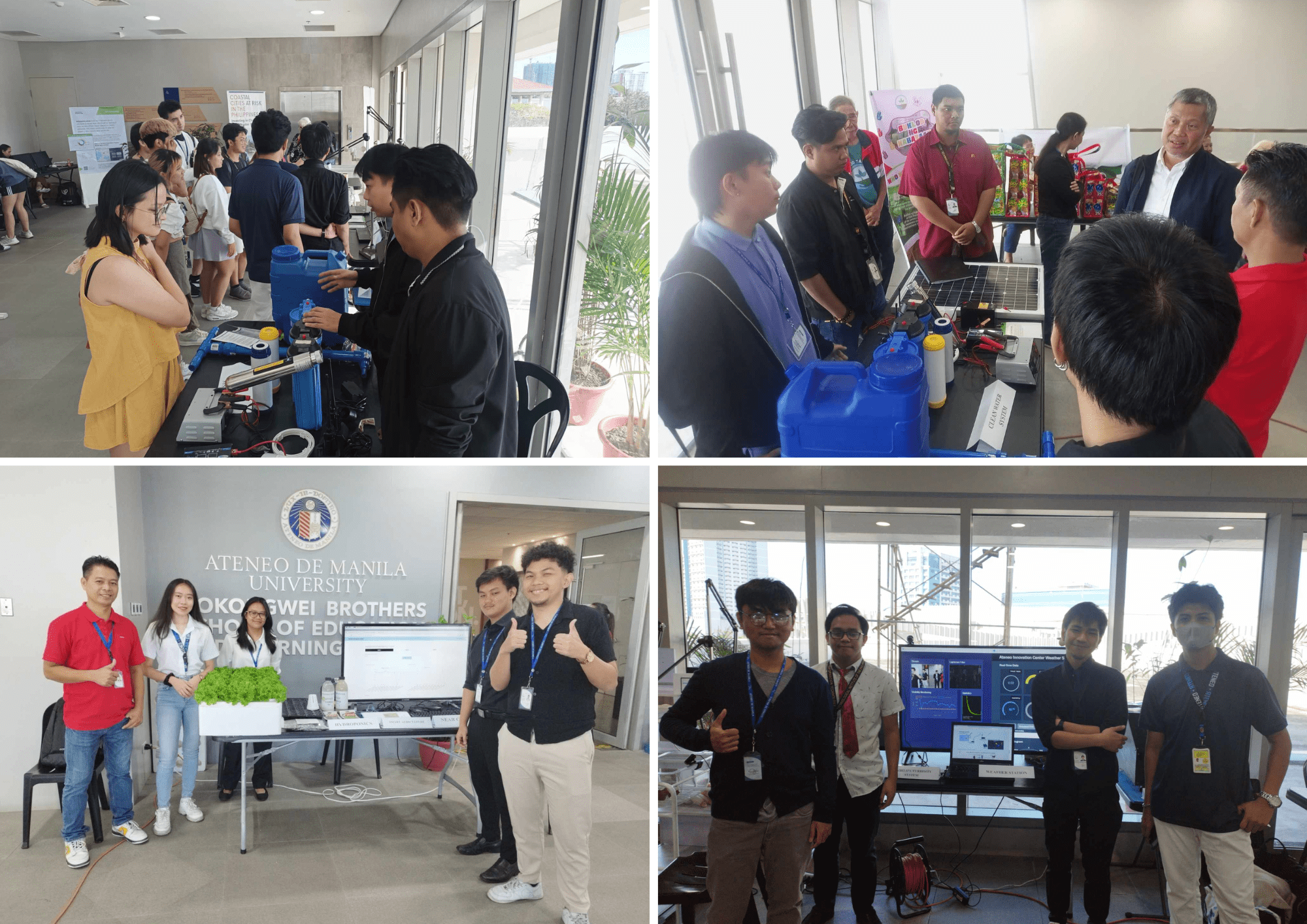
On the 1st of March, 2024, we, the Ateneo Innovation Center, in collaboration with Coastal Cities at Risk in the Philippines, the National Resilience Council, and the Manila Observatory, were honored to present our most recent progress in climate change and disaster resilience technologies at the Technologies for Anticipatory Action conference and exhibition.
Healing in the Highlands: AIC's Phototherapy Reaches Benguet

Laudato Si in the Lab: Hydroponics Training for Ateneo Grade School

The teachers at Ateneo Grade School (AGS) recently participated in a Hydroponics seminar organized by the Ateneo Innovation Center. In line with the school's dedication to promoting Laudato Si, the Art & SiPag teachers from the Grade School have expressed keen interest in a similar session. The primary objective is to equip them with the necessary knowledge to effectively guide students in hydroponics, especially given the imminent completion of the school's greenhouse facility, slated for a March launch.
During the training session, the teachers will explore the fundamentals of seed germination. The training encompass topics such as seedling transplantation, techniques for nutrient dilution, and practical aspects, including the proper utilization of TDS (Total Dissolved Solids) and pH testers. The training will also focus on understanding the critical pH levels and TDS/PPM (Parts Per Million) requirements, ensuring a well-rounded and practical approach to hydroponics education.
Empowering the Next Generation: SNHS Receives Advanced Tech and Training from Ateneo Innovation Center

The Pandemic's Plate: Analyzing Food Distribution Trends for Future Disaster Preparedness
Under the guidance of AIC researchers Dr. Gregory Tangonan and Dr. Lea Cristina Macaraig, Charles Opaque's thesis investigates food delivery trends before, during, and after the pandemic. Employing a multi-agent programmable modeling environment, Opaque's methodology combines simulation and interviews to discern patterns in food distribution scenarios. The research offers insights for strengthening disaster responses within the food supply chain. You can watch the video below for a comprehensive overview.
Bringing Smart Health to Famy: Successful Demonstration of Low-Cost Phototherapy in Laguna

Water & Wisdom: AIC's Double Impact at GK Sta. Rita

Gawad Kalinga Sta. Rita, located in Cabiao, Nueva Ecija, relies on a windmill for water supply. The community faced a significant setback when the system broke down. Through a collaborative effort with the Ateneo Innovation Center, the root cause was identified—a broken plunger rod. Local technicians, armed with this insight, are now capable of addressing the issue, ensuring the restoration of the windmill's functionality.

The Future of Farming is Here: AIC in Candaba

The Ateneo Innovation Center conducted an ocular inspection and meeting at Salapungan National High School in Candaba, Pampanga, as part of the preparation for the upcoming URC project slated for the next year. During the visit, AIC showcased a demonstration of smart agriculture technologies, including sensors, monitoring systems, Near Cloud technology, and camera systems that operate seamlessly with or without an internet connection.
Smart Light, Saving Lives: The Smart Low-Cost Phototherapy System (SLPLS) for Neonatal Jaundice

In collaboration with DOST Technicom, Ateneo Innovation Center (AIC) has developed advancements in jaundice treatment through the creation of the Smart Low-cost Phototherapy Light System (SLPLS). This innovative system incorporates a smart monitoring feature and utilizes cutting-edge computer vision technology to enhance the monitoring and treatment of neonatal jaundice.
For more details, you can read the full article here.
The Blur Meter: AIC's New Visibility System
Ateneo Innovation Center has successfully introduced a system designed to assess the blur level of images or videos captured by cameras. Drawing on a comprehensive study, the system calculates image blurriness by analyzing variance, providing a quantitative measure of visibility. This solution holds significant applicability across diverse scenarios where visibility is crucial.
Tech for the Tiller: AIC Farm Visit Brings Innovative Solutions to AGAP Laguna Farmers

Ateneo Innovation Center (AIC) conducted a visit to Ahon Sa Hirap, Inc. (ASHI), AGAP Laguna branch, as part of an AIC Farm visit initiative. During the visit, we engaged with farmers to understand their challenges. AIC took the opportunity to showcase innovative technologies, including precision farming tools such as monitoring systems and image processing detection technologies. These technologies focus on aspects like plant discoloration and pest detection, providing farmers with valuable tools to monitor and enhance their farming practices. The collaborative effort aims to empower farmers with effective solutions for improving agricultural productivity.
Solar Water for QC: The Talanay HOA Initiative
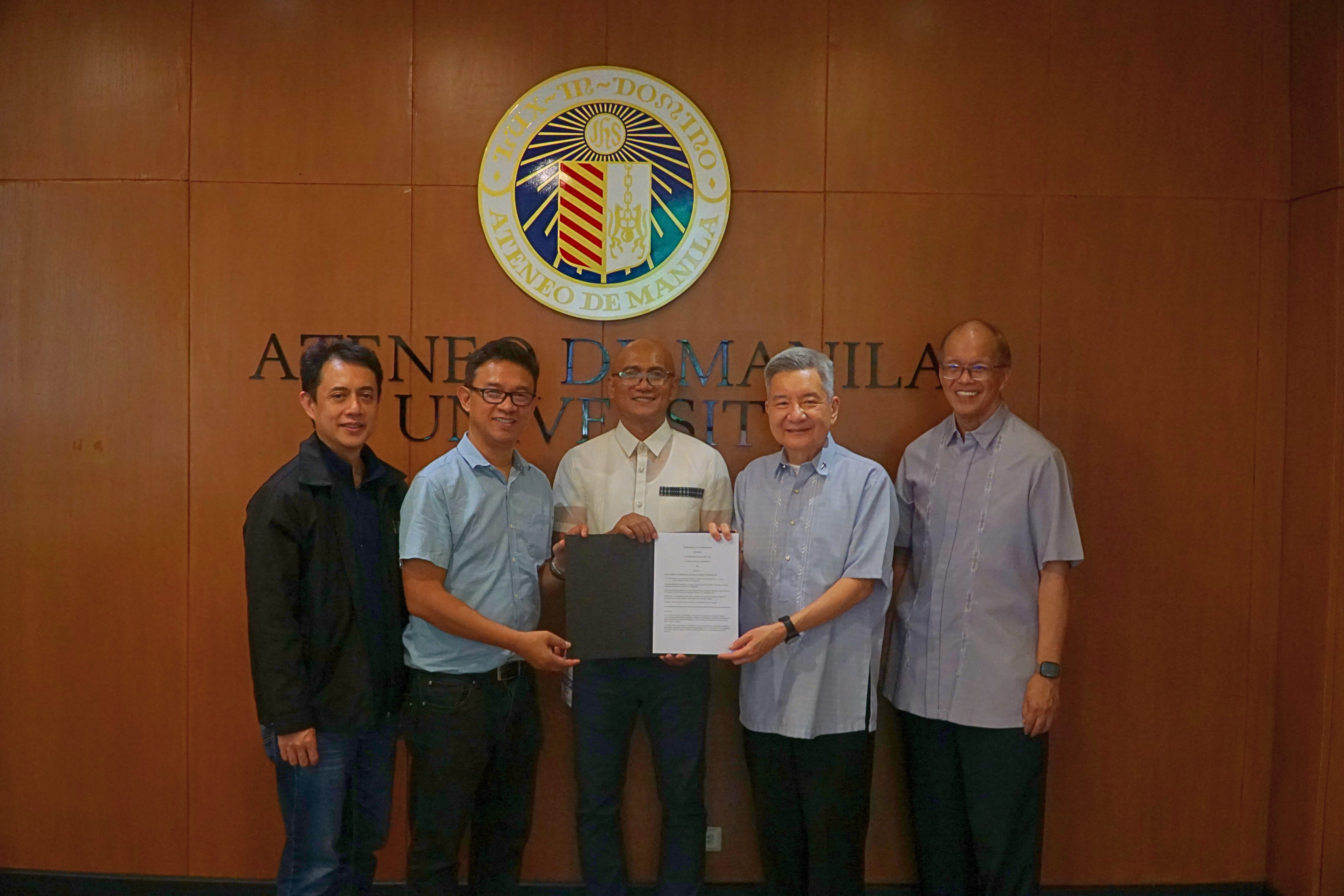
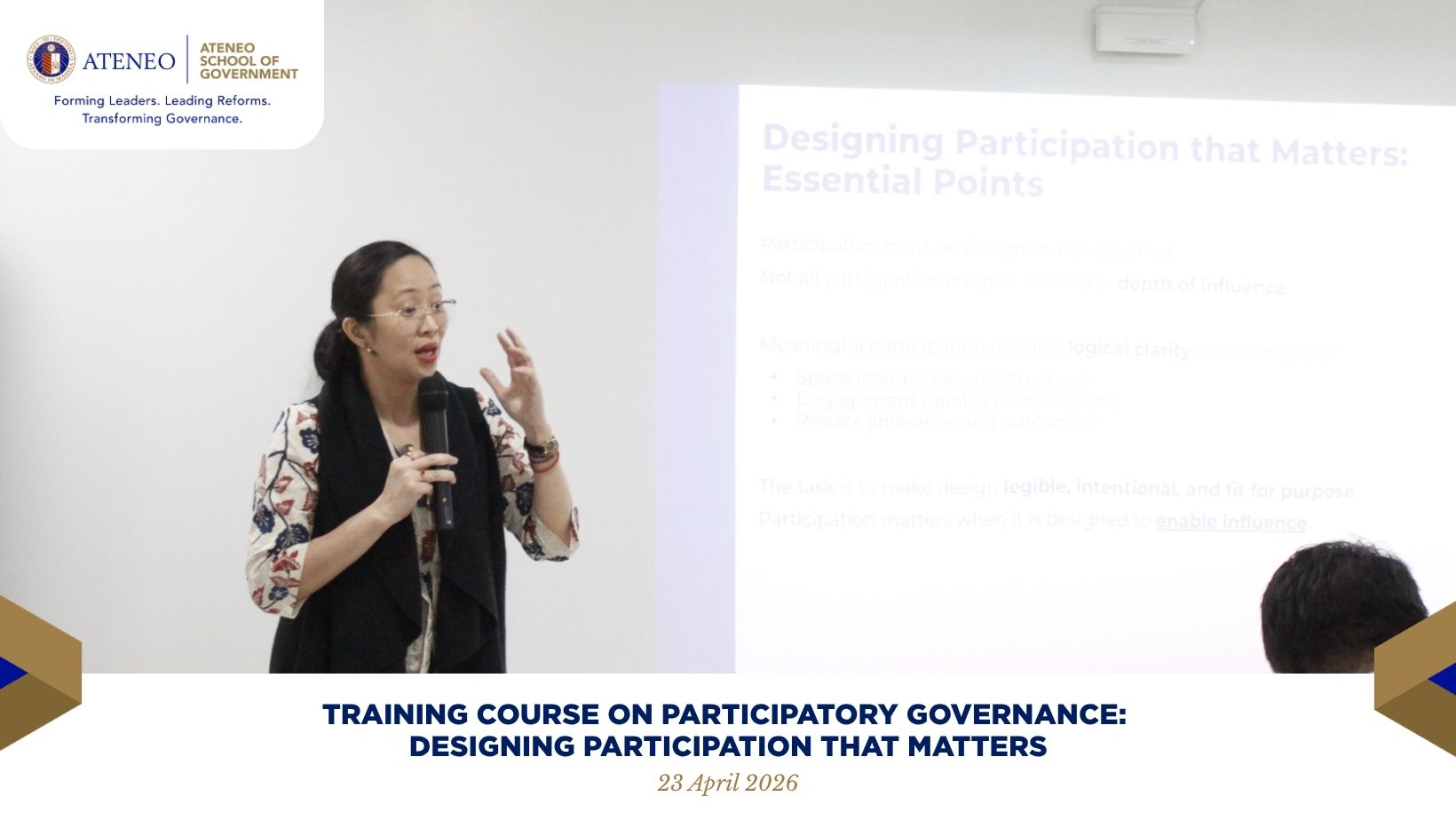
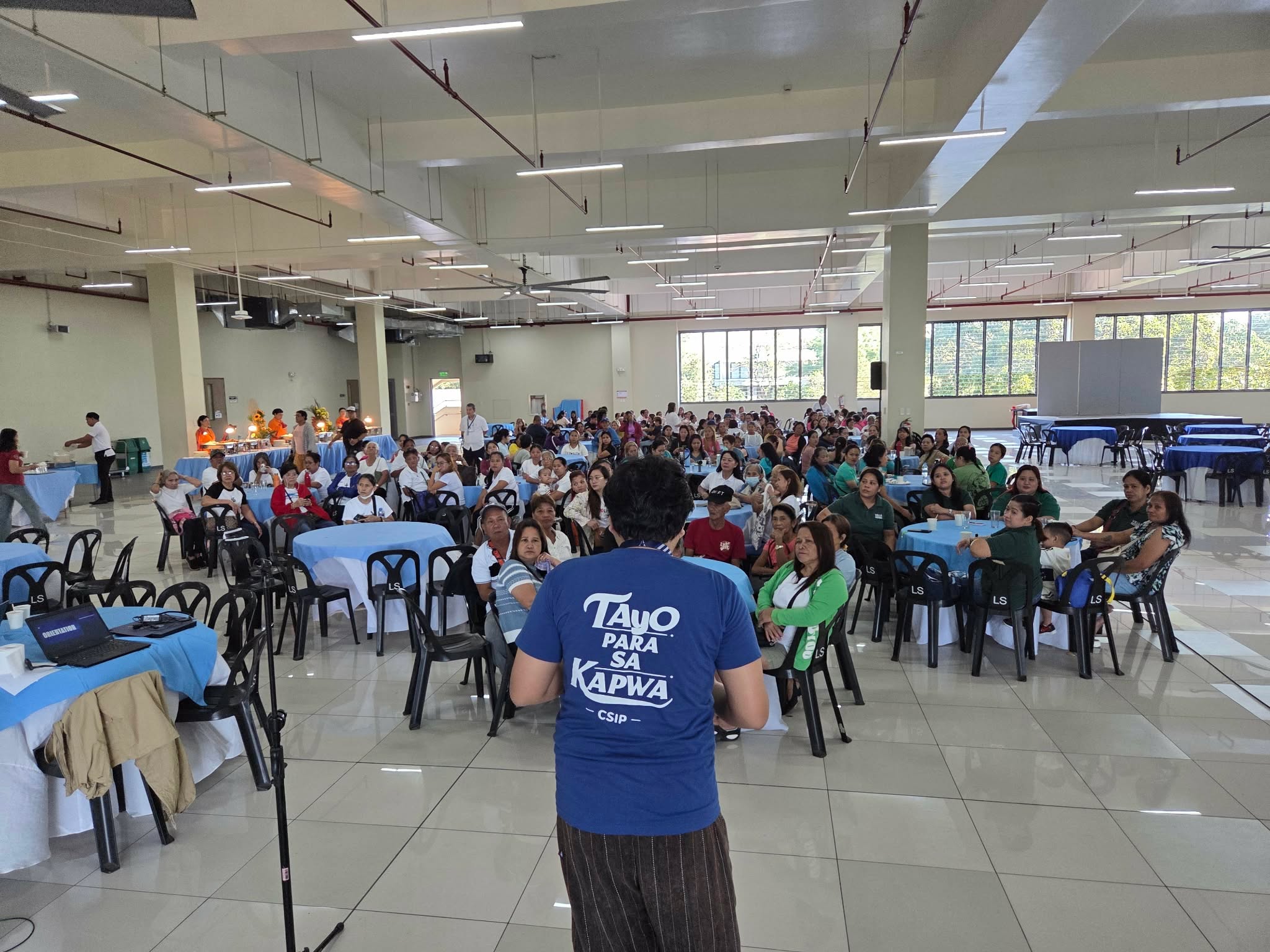
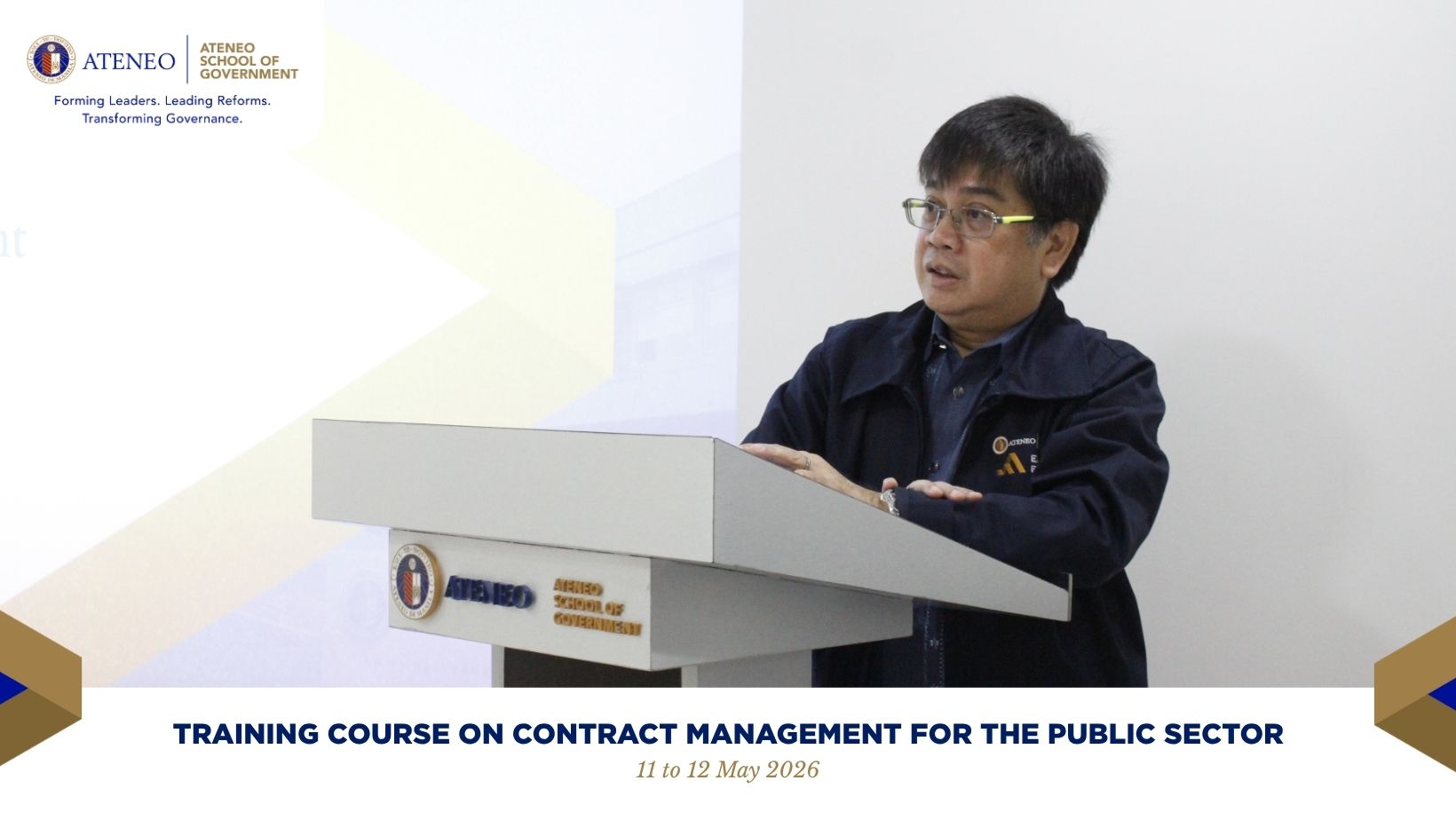
Ateneo Innovation Center (AIC) is actively contributing to the Communal Solar-Powered Clean Water System Project in Talanay, Quezon City. Funded by Staff Search Asia Service Cooperative, the initiative includes 89 household-members of Tinig at Lakas na Naninirahan sa Talanay Homeowners Association, Inc. (TALANAY HOA) with about 180 families and around 70 families from the neighboring areas, aiming to provide filtered water during disasters. AIC provides technical support during the construction phase, working collaboratively with TALANAY HOA and FDUP.
From Lab to Livelihood: Projecting $10K-$20K Returns from AIC's Hydroponic Lettuce Model


The Ateneo Innovation Center is currently conducting an ongoing research project within the SOSE Greenhouse laboratory, focusing on high-yield hydroponic cultivation. At our current scale, this project successfully cultivates 500 cups of lettuce per harvest. Crucially, the economic viability of this method is substantial: an extrapolation of this technology to a one-hectare farm projects a potential gross return of $10,000 to $20,000 per harvest cycle.
Data-Driven Cultivation: Comprehensive Sensor Monitoring in the SOSE Hydroponics Lab
To access soil sensor:
https://solisolcap.grafana.net/public-dashboards/5f813ad60cfd4d5495ee33fbac349c34
To access water sensor:
https://solisolcap.grafana.net/public-dashboards/36aa33cfd13c44d5a43422afa6fa1235
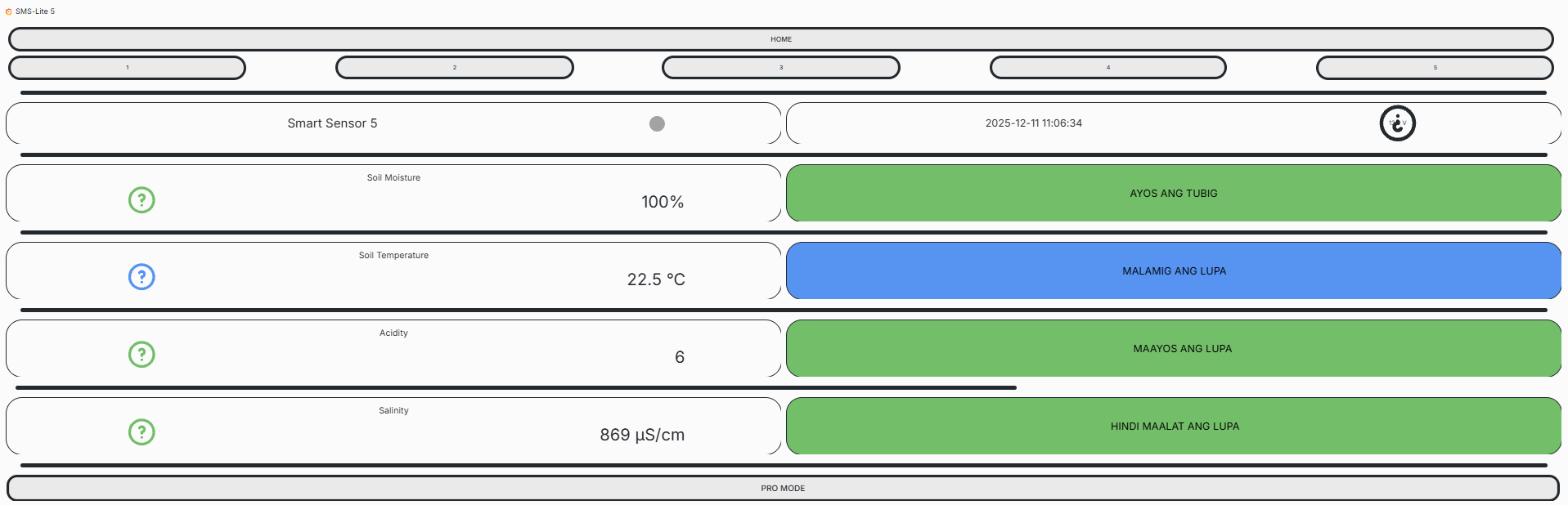
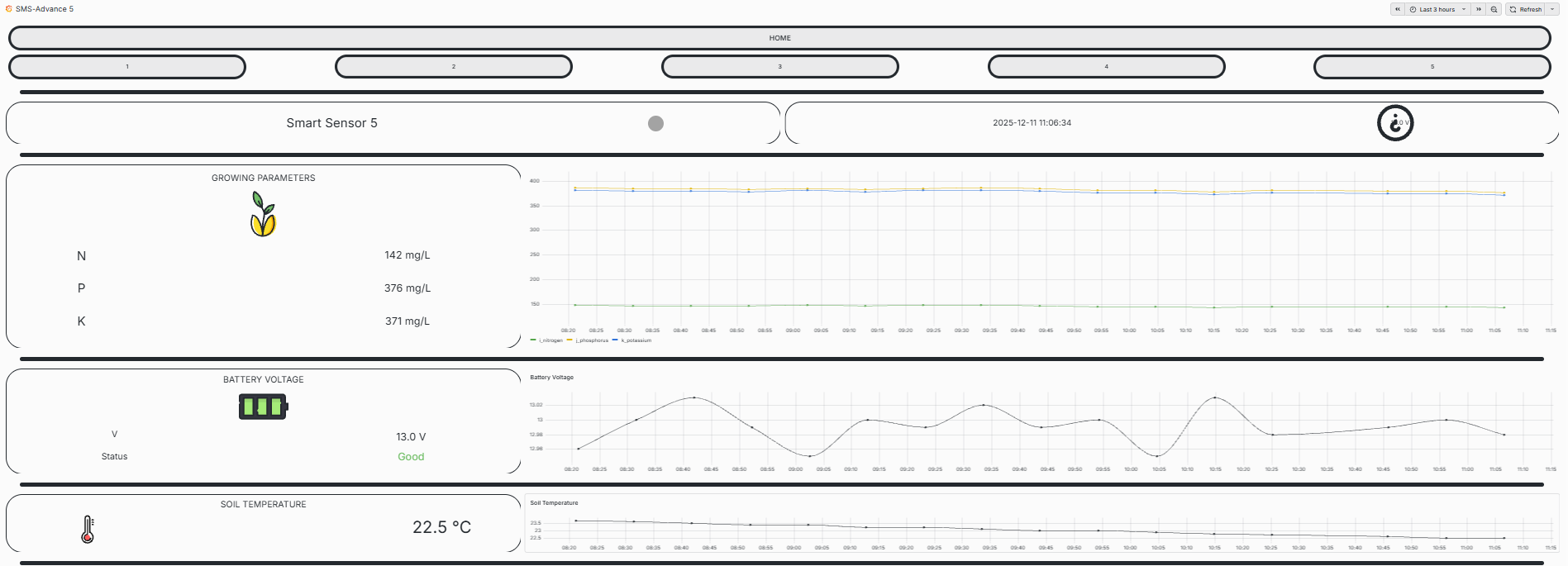

To ensure precision agriculture and continuous optimization, we utilize LoRa-based sensors to wirelessly transmit comprehensive cultivation data to the ThingSpeak IoT platform. This real-time monitoring system captures crucial environmental and nutritional parameters within the greenhouse, including:
-
Ambient Temperature and Water Levels
-
Electrical Conductivity (EC)
-
Acidity/Alkalinity (pH levels)
-
Essential Nutrient Concentrations (Nitrogen, Phosphorus, and Potassium - NPK)
-
Salinity
This data is vital for maintaining the ideal growth environment for the lettuce. To explore the real-time sensor data and trends, please visit our dedicated ThingSpeak channel.
The Blueprint for Resilience: Designing Safe Zones and Emergency Centers for Cascaded Disasters
Moreover, we delve into the crucial aspects of ensuring safety and preparedness in the face of potential cascaded disasters within both urban and rural settings. This is the DOST-SEI capstone presentation of Maria Theresa Joy Rocamora.
In this presentation, we will explore the critical topic of "DESIGN OF SAFE ZONES AND EMERGENCY CENTERS WITH ANTICIPATORY TECHNOLOGIES: Preparing for Cascaded Disasters in Large Rural and Urban Cities." You can view the presentation below:
AIC News & Features

A Clear Picture of the Rain
Using a microphone and a camera, the Ateneo Innovation Center (AIC) has painted a better picture of rain events. The traditional use of a tipping...

Ateneo de Manila-Ateneo de Naga research collaboration: Prepositioning of innovative technologies
These technologies address the primary lifeline gaps during and after the disaster

AIC Events

Mass
Remembering Lino
Sat, 03 Aug 0024
Immaculate Conception Chapel (College Chapel), Gonzaga Hall

Fair / Festival
Feast of the Holy Guardian Angels 2025 Day 1
Wed, 02 Oct 0205
Ateneo de Manila Grade School Campus
The Ateneo de Manila Grade School will commemorate the Feast...
Fair / Festival
Feast of the Holy Guardian Angels 2025 Day 2
Thu, 03 Oct 0205
Ateneo de Manila Grade School Campus
The Ateneo de Manila Grade School will commemorate the Feast...
Ateneo Innovation Center
CTC 416, PLDT Convergent Technologies Center
Ateneo de Manila University Loyola Heights campus
Katipunan Avenue, Loyola Heights
1108 Quezon City
Philippines