2026 | SDG 10 Highlights
05 Oct 2026



Reduce inequality within and among countries
By accepting applicants without regard to their country, religion, gender, location of residence, or financial situation, the institution upholds non-discriminatory admission standards. According to the Employee Code of Decorum, the institution is committed to equality among all units and the international human rights values.
Enhancing Accessibility: Ateneo's Commitment to an Inclusive Campus for All
With the implementation of the Sustainability Policies and Specific Guidelines (v. 2024), the Ateneo campus has become increasingly accessible to persons with disabilities (PWDs). The University upholds policies outlined in the Student Handbook, ensuring every student has access to facilities supporting learning inside and outside the classroom.
In line with this, Ateneo has installed ramps in various buildings, including the busy Science Education Complex. The Rizal Library in the First Pacific Building has been designed to be fully accessible to wheelchair users, as is the long path leading to Leong Hall in the School of Social Sciences. Ramps are also available in other buildings, such as the student study hall Mateo Ricci. Additionally, nearly all buildings on campus now feature covered walkways as part of the university's phase 1 and 2 construction plans.
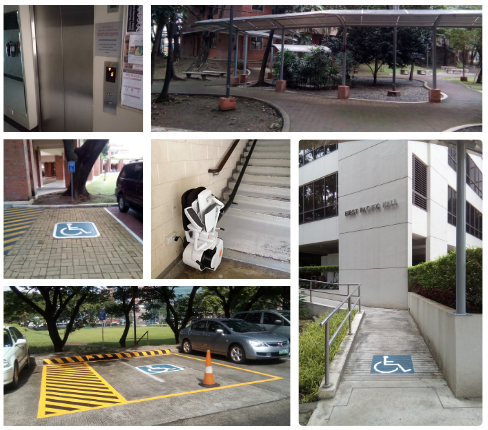
Furthermore, the Campus Facilities and Management Office has created designated PWD parking spaces in areas like the University Dormitory and Bellarmine Hall. Accessible parking is also available at the Gonzaga and SEC buildings. Elevators are installed in each building to assist students with mobility challenges, and many of them are equipped with Braille buttons for ease of use.
Lastly, chair lifts have been added to staircases on the ground floor, providing support for elderly faculty and students with mobility issues.
Accommodation Policy and Strategy for PWDs (with Funding Support)
Ateneo de Manila University implements a robust accommodation strategy for persons with disabilities (PWDs), grounded in national and international frameworks.
I. Reasonable Accommodation in Admissions and Testing
The University provides individualized testing accommodations, such as extended time, accessible venues, and modified test administration, to ensure equitable access to graduate education.
For more information see: Admission Testing Guidelines for Accommodation of Applicants with Special Needs
II. Financial Support and Scholarships
Targeted funding is provided through:
- Tuition (20%) Scholarship for PWDs, with allocated slots per school and;
- Through international support such as the AUN-DPPnet Scholarship, funded by The Nippon Foundation.
III. Inclusive Access and Equity Framework
Eligibility and support mechanisms are guided by national laws (e.g., RA 10754), ensuring that PWDs are supported from admission through completion.
Accessible Campus Infrastructure for Persons with Disabilities (PWDs)
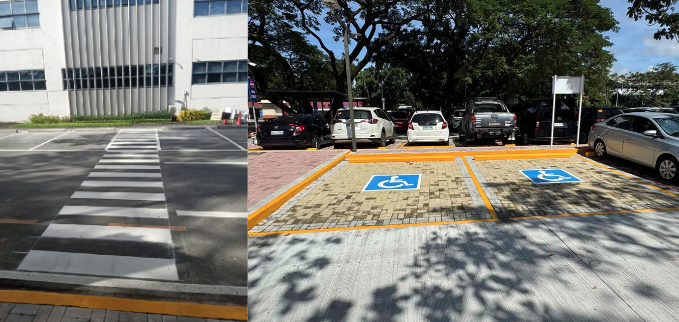
The University provides designated PWD parking slots (e.g., Xavier Hall and North Carpark) located near building entrances to facilitate convenient access. Pedestrian lanes and crossings in key areas such as the Northwest Carpark are clearly marked and integrated with accessible pathways.
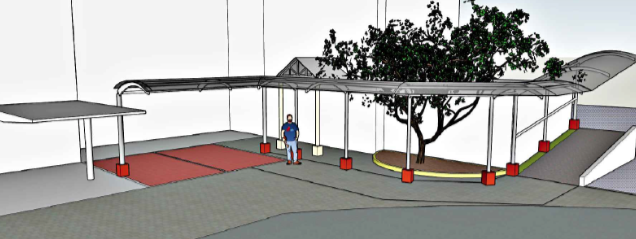
To ensure barrier-free mobility, Ateneo has installed ramps with handrails across multiple buildings and spaces, including the Blue Eagle Gym, Social Sciences Building, Bellarmine Hall, Leong Hall, Faura Hall, SEC buildings, MVP Building, SOM Building, Matteo Ricci Hall, CTC Building, and Gonzaga–Schmitt Hall covered walkways. These ramps are complemented by hazard identification markings and safety features such as high-visibility strips and speed tables to ensure safe use.
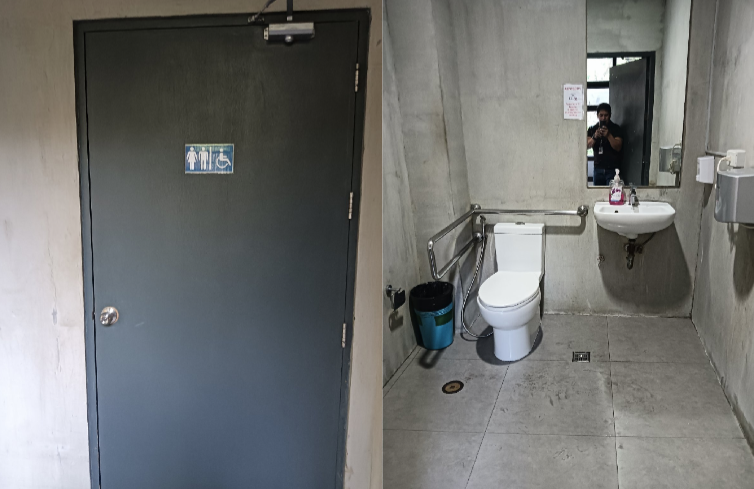
Buildings are equipped with accessible toilets (PWD CRs) featuring assistive railings (e.g., Arete, APS Rockwell, IRH). Tactile guide strips and mats are installed in entrances and walkways to support persons with visual impairments.
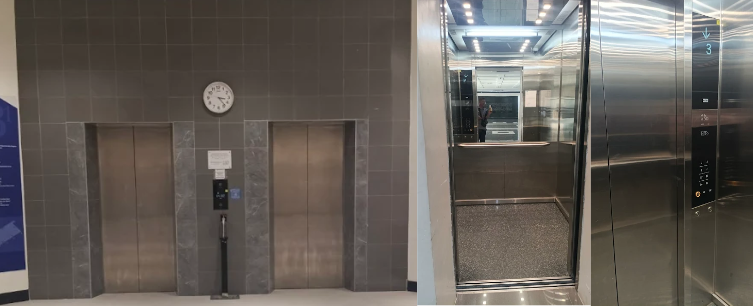
Vertical mobility is supported through elevators with Braille buttons (e.g., SHS, IRH, APS Rockwell, Matteo Ricci Hall) and hands-free elevator systems, enhancing accessibility for users with varying needs. In areas where elevators are not feasible, stair lifts (e.g., Social Sciences Building and Bellarmine Hall) are available.
These measures ensure that campus infrastructure remains functional, safe, and responsive to the needs of persons with disabilities.
Non-Discrimination Policies
Ateneo de Manila University has implemented policies and initiatives to promote gender inclusivity and equal opportunities within its community. These policies include a Code of Decorum addressing sexual harassment, a Gender Policy promoting a gender-inclusive and gender-safe community, and the Loyola Schools Gender Hub providing support services for gender-based violence. Ateneo also has specific policies for accommodating applicants with special needs during admission testing and evaluates applicants based on their potential, irrespective of gender or other factors.
Health And Well-Being
The Policy Statement on University Health and Well-Being (2021) of Ateneo de Manila University promotes inclusivity by ensuring health promotion without discrimination based on any factors,
Gender
Ateneo de Manila University Loyola Schools released a Policy Statement in December 2018 to establish The Ateneo de Manila University Loyola Schools Policy Statement on Building a Gender Inclusive, Gender Responsive, and Gender Safe Community. The policy was based on three pillars: inclusivity, gender-responsiveness, and safety. It aimed to create a community that respects the dignity of every individual, regardless of their sex, gender, or sexuality. To achieve this goal, the policy promoted transformative practices and supporting services that addressed sexual and gender-based violence.
In August 2019, the Loyola Schools Gender Hub was established as the university's diversity and equality office within the Loyola Schools. The Gender Hub offered a safe space for members of the LGBTQIA+ community to address issues related to sexual orientation, gender identity, and expression (SOGIE). Its strategic priorities included developing gender-responsive procedures and standards, organizing sensitivity training programs, and offering support services for cases of sexual harassment, sexual misconduct, and sexual and gender-based violence.
On September 26, 2020, the University introduced the Code of Decorum | Policies & Regulations | Ateneo de Manila University. This policy focuses on defining sexual harassment, addressing various forms of sexual misconduct, and regulating inappropriate behavior. The policy applies to University students and personnel, replacing the prior Anti-Sexual Harassment Policy.
Special Needs
Moreover, our Policy for Addressing Students with Special Needs is driven by principles of non-discrimination, inclusivity, and the right to quality education. We recognize our responsibility to provide reasonable accommodation to Persons with Disabilities (PWDs), and admissions must comply with international and national frameworks such as the UN Convention on the Rights of PWDs, the Magna Carta for PWDs (RA 7277), and the Mental Health Law (RA 11036).
Faculty And Students
The Loyola Schools Faculty Manual 2019 actively advocates for the culture of human rights, respect, and diversity appreciation among faculty members. Student handbooks, such as Undergraduate Manual 2023 and Graduate Student Handbook 2019, also recognize all forms of discrimination as an offense, emphasizing the importance of an inclusive environment.
Admissions
Graduate Education (LS) Admissions: "OADGP Admission Testing Guidelines for Accommodation of Applicants with Special Needs", demonstrating its dedication to inclusivity, legal compliance, and ensuring an environment that respects the rights and dignity of all members of its community. Additionally, Tuition (20%) Scholarship for Persons with Disabilities" and its commitment to admitting qualified individuals, irrespective of their backgrounds.
Undergraduate Education: Admissions: Ateneo is committed to admitting qualified individuals, regardless of nationality, creed, gender, residence, or financial capability, and values openness and inclusivity. Ateneo emphasizes the evaluation of applicants based on their preparation, fitness, and potential to contribute to the academic community and serve others, echoing the importance of ensuring that all university community members receive equal treatment, respect, and dignity, regardless of their backgrounds or characteristics.
Centering Neurodivergence in Inclusive Support
Ateneo de Manila University places neurodivergence at the core of its inclusive education efforts, recognizing diverse ways of thinking and learning. Guided by cura personalis, the University provides a holistic system of support for neurodivergent individuals and persons with disabilities (PWDs) through student services, scholarships, and research.
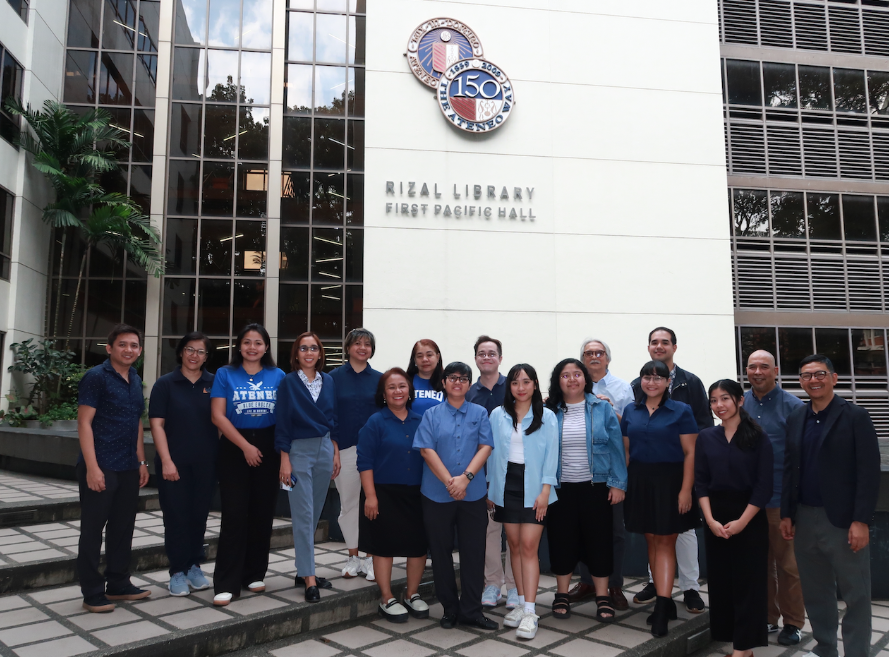
Ateneo Office of Guidance and Counseling - Higher Education
Through the Office of Guidance and Counseling (OGC), Ateneo offers inclusive support for undergraduate and graduate students, including Neurodiverse Narratives, one-on-one counseling, and wellness programs such as Paws & Recharge, Blue Snooze, and CrEAte. These initiatives create safe, affirming spaces that support mental health, a sense of belonging, and personal development.
At the graduate level, Ateneo expands access through disability-inclusive scholarships, including the Tuition (20%) Scholarship for Persons with Disabilities and the AUN Disability and Public Policy Network (AUN-DPPnet) Scholarship, alongside other financial aid mechanisms.
Beyond campus, the Ateneo Center for Research and Innovation (ACRI) advances research on Autism Spectrum Disorder (ASD), while public initiatives such as “Getting to Know Neurodivergence” promote awareness and inclusive education.
Recent News
You may also like these articles

Growing with purpose: How Mekeni Food Corporation turns adversity into shared value
From a small backyard operation in Porac, Pampanga, to an internationally recognized food brand exporting to 25 countries, Mekeni Food Corporation's journey demonstrates how businesses

Three Ateneo-incubated startups secure DOST-PCIEERD’s startup grant fund
Last 9 November, during the opening day of Philippine Startup Week 2026, Soolok Properties Inc, Pili AdheSeal Inc, and Saltric Power (PDG Engineering Services), three
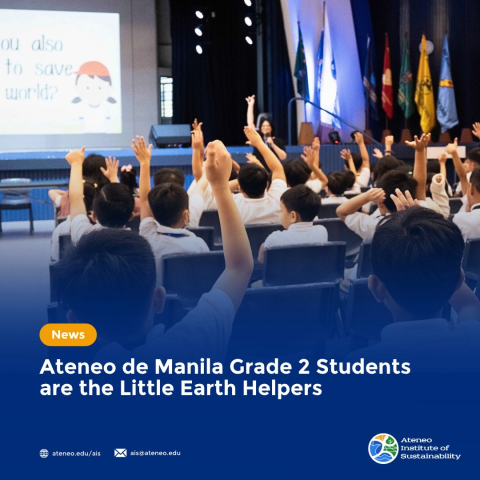
Ateneo de Manila Grade 2 students are the little Earth helpers
It was a great day for saving the world when Ateneo Institute of Sustainability (AIS) came to Ateneo Grade School to give a session on
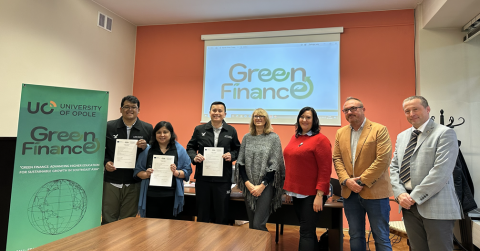
JGSOM representatives complete green finance training in Poland, sets sights on 2027 micro-credential launch
Representatives of Ateneo de Manila University's John Gokongwei School of Management (JGSOM) completed the second phase of their Erasmus+ Green Finance international mobility activities at
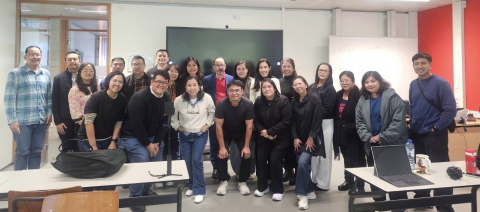
JGSOM Representatives Participate in Green Finance Training at the University of Twente
Enschede, Netherlands | October 15–16, 2026 Representatives of Ateneo de Manila University's John Gokongwei School of Management (JGSOM) participated in a specialized Green Finance training

Professor Emeritus Dr Emma Porio highlights climate resilience and biodiversity at international conferences
Emma E Porio, PhD, Professor Emeritus of Ateneo de Manila University and Principal Investigator of Ateneo's Manila Observatory Center for Climate Resilience and Public Health