7.2.5 Waste Energy Identification
01 May 2025


Ateneo de Manila University Energy Wastage Identification: Institutional Energy Reviews and Mitigation Impact
Ateneo de Manila University proactively undergoes structured institutional energy reviews and utilizes advanced technological frameworks to track energy usage, conduct site assessments, and systematically isolate areas of high energy wastage. Guided by the University's Sustainability Guidelines and Policies alongside its evolving Climate Action Plan, these reviews directly inform campus-wide technological upgrades and behavioral interventions designed to maximize conservation.
Institutional Energy Reviews and SCADA Monitoring System
The core of Ateneo’s energy wastage identification framework relies on rigorous monitoring and data-driven site reviews:
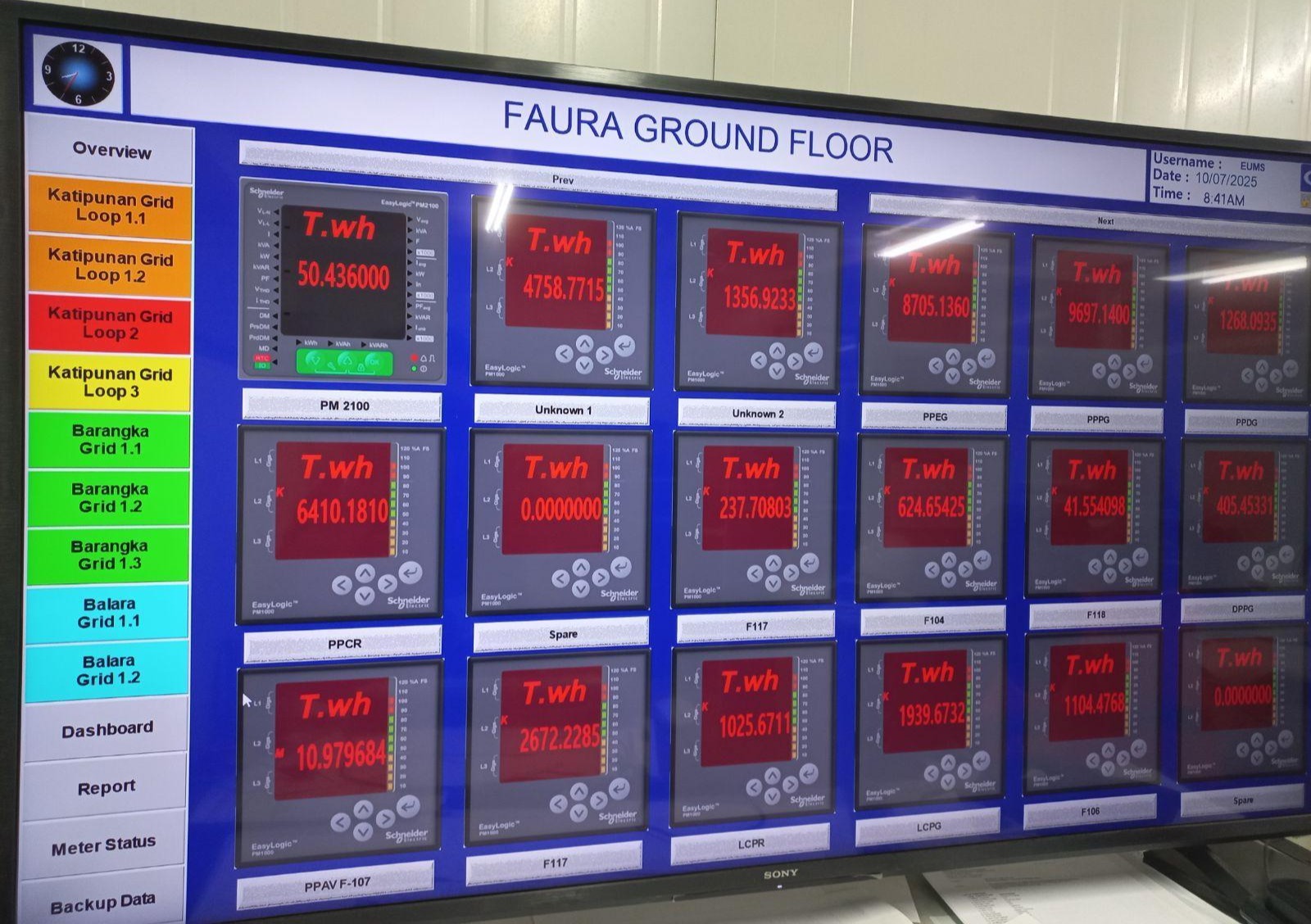 SCADA Integration: University offices and school units have submeters for power, and integrate it into a SCADA (Supervisory Control and Data Acquisition) system, which allows for a high-level supervision of equipment and energy use. Previous work by university stakeholders, such as the report prepared by the Carbon Neutrality Project Team led by Fr Jose Ramon T Villarin SJ lists recommendations for opportunities to increase our collective efficiency as a University. Among them are robust monitoring systems, and increasing capacity for data collection, processing, and reporting. The SCADA system is a step towards more robust monitoring for energy efficiency and conservation, as it promotes a sense of ownership among stakeholders.
Targeted Projects & Structural Interventions
Once areas of excessive energy consumption or potential wastage are identified via SCADA and facilities reviews, the University executes targeted replacement and optimization projects under a strict Greenhouse Gas Management Hierarchy:
- Phased Efficiency Upgrades: Conventional, high-waste appliances are systematically replaced with energy-efficient alternatives across all campuses.
Table: Summary of relevant equipment in campus
| Appliance | Total Number | Energy Efficient appliances | Percentage |
|---|---|---|---|
| Lights | 15,947 | 13,557 | 85% |
| Airconditioning Units | 3,842 | 2,707 | 70% |
| Commercial Space Ventilation | 46 | 18 | 39% |
| PAHU/AHU/PFCU | 20 | 20 | 100% |
| Pumps/Motors | 60 | 28 | 47% |
| Average Efficiency | 82% |
-
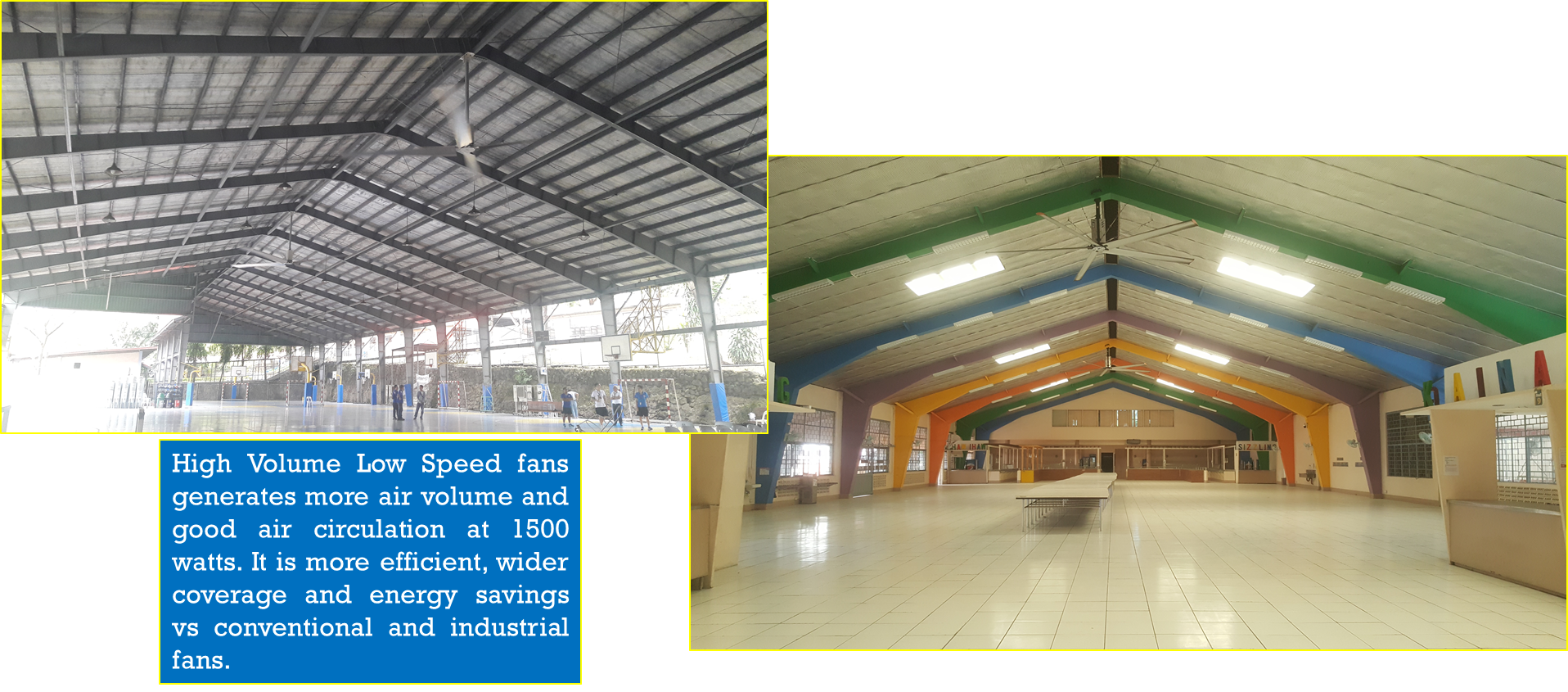
High Volume Low Speed (HVLS) Fans: High-wattage industrial fans in large common areas (e.g., sports complexes, cafeterias) have been replaced with HVLS fans that generate superior air volume and circulation optimizing large-scale cooling demands.
- Contractual Maintenance Safeguards: To eliminate fugitive emissions and chemical energy waste, the University’s Terms of Reference (TOR) legally bind contractors to strict containment protocols regarding the responsible capture and replacement of refrigerants during ACU maintenance.
Behavioral Interventions & Cultural Adaptation
Recognizing that operational wastage is heavily influenced by user habits, the identification of high-consumption zones feeds directly into targeted community campaigns:
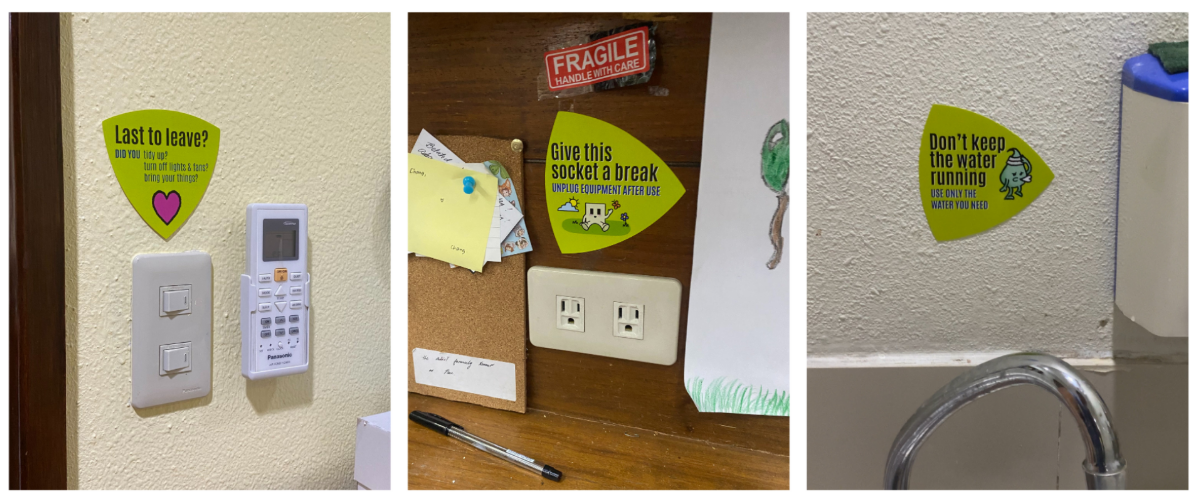
The Green Nudge initiative represents a collaborative behavioral intervention framework, co-developed by university administrative offices and student organizations to foster institutional sustainability. Central to this campaign is the distinctive chartreuse Reuleaux triangle, a visual anchor conveying critical messages on resource stewardship. These interventions utilize strategically placed vinyl stickers that address energy and water conservation, waste mitigation, and responsible office citizenship. By leveraging unique geometry and high-visibility color, the campaign gently shifts community habits toward sustainable practices. While institutional deployment continues to expand, these assets remain publicly accessible via the University website, empowering all stakeholders to independently implement these behavioral safeguards.
Recent News
You may also like these articles

Growing with purpose: How Mekeni Food Corporation turns adversity into shared value
From a small backyard operation in Porac, Pampanga, to an internationally recognized food brand exporting to 25 countries, Mekeni Food Corporation's journey demonstrates how businesses

Three Ateneo-incubated startups secure DOST-PCIEERD’s startup grant fund
Last 9 November, during the opening day of Philippine Startup Week 2026, Soolok Properties Inc, Pili AdheSeal Inc, and Saltric Power (PDG Engineering Services), three
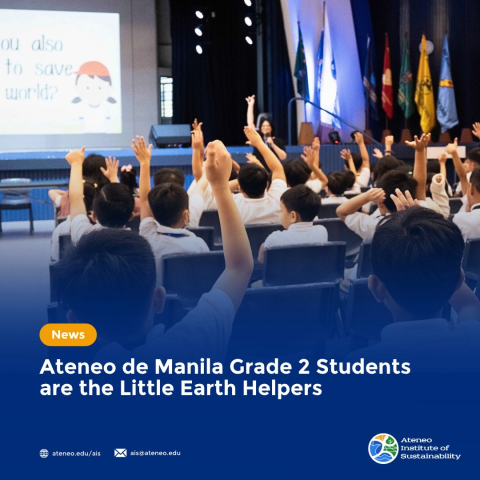
Ateneo de Manila Grade 2 students are the little Earth helpers
It was a great day for saving the world when Ateneo Institute of Sustainability (AIS) came to Ateneo Grade School to give a session on
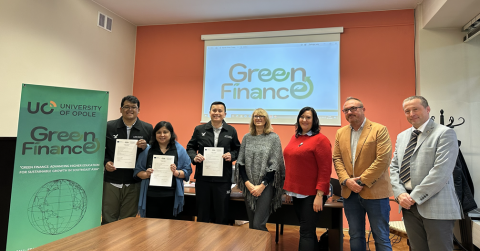
JGSOM representatives complete green finance training in Poland, sets sights on 2027 micro-credential launch
Representatives of Ateneo de Manila University's John Gokongwei School of Management (JGSOM) completed the second phase of their Erasmus+ Green Finance international mobility activities at
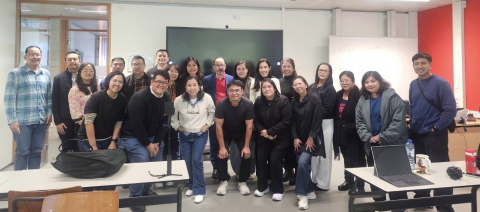
JGSOM Representatives Participate in Green Finance Training at the University of Twente
Enschede, Netherlands | October 15–16, 2026 Representatives of Ateneo de Manila University's John Gokongwei School of Management (JGSOM) participated in a specialized Green Finance training

Professor Emeritus Dr Emma Porio highlights climate resilience and biodiversity at international conferences
Emma E Porio, PhD, Professor Emeritus of Ateneo de Manila University and Principal Investigator of Ateneo's Manila Observatory Center for Climate Resilience and Public Health