6.3.5 Water-Conscious Planting
01 May 2025


Water-Conscious Landscaping Through Native and Drought-Tolerant Planting
Ateneo de Manila University integrates water-conscious landscaping into its campus development and environmental stewardship strategy by prioritizing the planting, protection, and propagation of native, endemic, and drought-adapted plant species that require minimal irrigation while enhancing biodiversity and ecological resilience. Guided by the University's Sustainability Policies and Specific Guidelines (SPSG), the Campus Flora Program, the Campus Master Plan, and its commitment to the principles of Laudato Si' and the United Nations Sustainable Development Goals (SDGs), Ateneo recognizes that landscape management plays a critical role in reducing campus water consumption while conserving the natural environment. The University adopts an ecosystem-based approach that emphasizes species naturally adapted to the Philippine climate, enabling campus landscapes to thrive under local environmental conditions with significantly lower water requirements.
Campus Flora Program: Integrating Biodiversity Conservation and Water Stewardship
The University's Campus Flora Program serves as the foundation of its water-conscious landscaping strategy. The program is dedicated to ensuring the conservation, restoration, and sustainable management of the University's terrestrial ecosystem while increasing awareness and appreciation of urban biodiversity among students, faculty, staff, researchers, and visitors. By documenting, studying, and protecting the University's diverse plant life, Ateneo develops evidence-based measures that conserve campus ecosystems while minimizing the impacts of human activities on biodiversity.
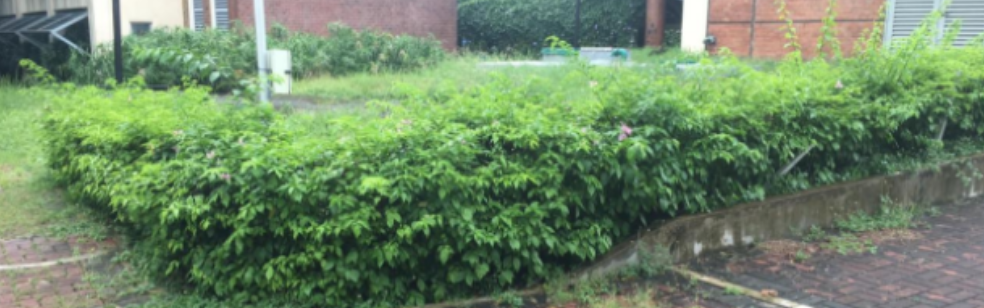
Recognizing that trees and green spaces are among the University's most valuable environmental assets, Ateneo has institutionalized a comprehensive system governing the planting, maintenance, protection, and removal of trees across campus. This system is designed not only to preserve the ecological health of the Loyola Heights campus but also to ensure that landscape development contributes to sustainable water management by favoring species that naturally require less irrigation and are well adapted to local climatic conditions.
Institutional Policy on Native and Endemic Tree Planting
Ateneo de Manila University maintains an institutional policy to plant and propagate endemic and native tree species in appropriate locations throughout campus. This policy represents a deliberate shift toward sustainable landscape management by prioritizing species that have naturally evolved within Philippine ecosystems and are therefore more resilient to local weather conditions, seasonal rainfall variability, and periods of drought.
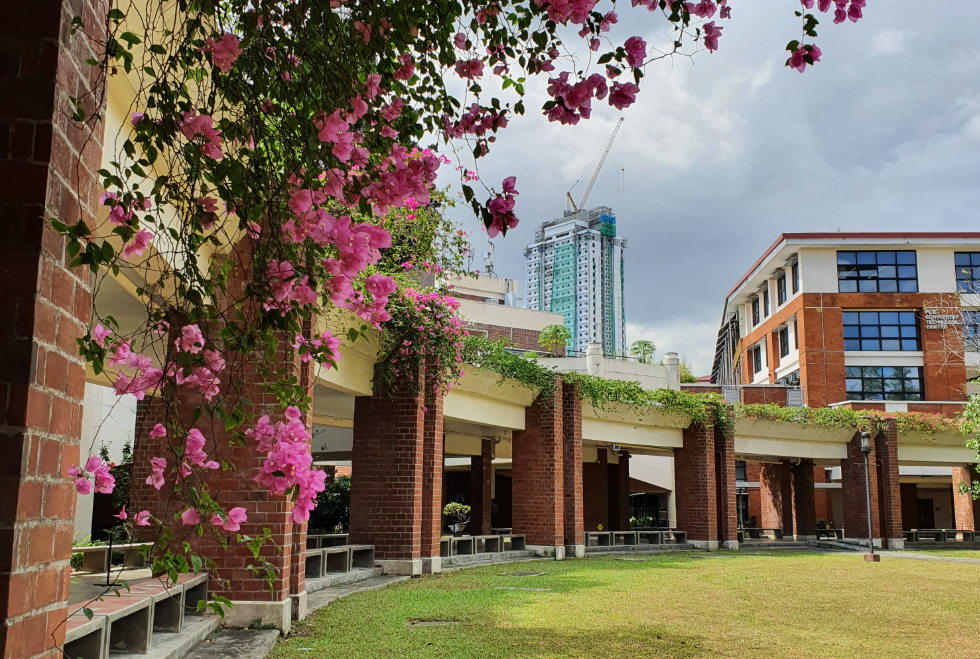
Unlike non-native ornamental species that often require frequent watering, fertilization, and intensive maintenance, native and endemic trees are better adapted to local soil conditions and rainfall patterns. As a result, they require less supplemental irrigation once established, making them an effective strategy for reducing campus water demand while maintaining healthy and vibrant green spaces.
This long-term policy also contributes to ecological restoration by supporting indigenous wildlife, enhancing habitat connectivity, preserving native biodiversity, and strengthening the ecological resilience of the University's urban forest.
Planting Drought-Tolerant Species to Minimize Water Consumption
A central component of Ateneo's water-conscious landscaping strategy is the deliberate selection of drought-adapted and climate-resilient tree species that can flourish with minimal water inputs while remaining compatible with the University's biodiversity conservation objectives.
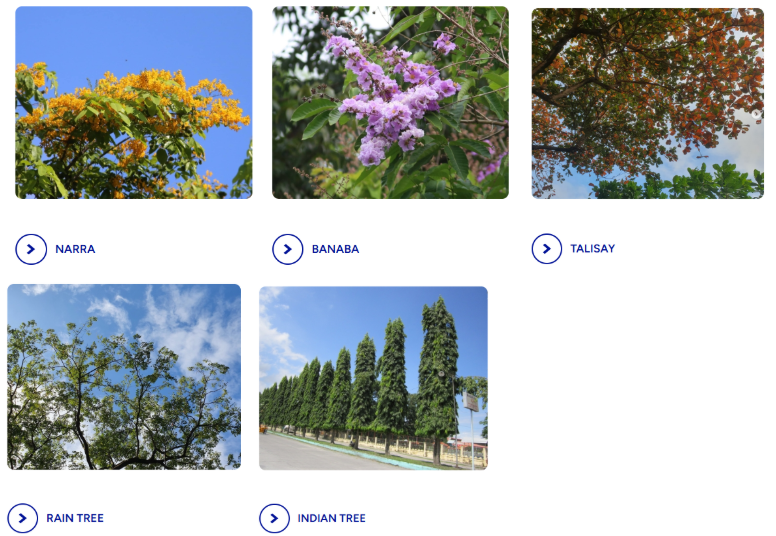
Among the species prioritized under the Campus Flora Program are:
- Narra (Pterocarpus indicus), the Philippine national tree, valued for its adaptability, deep root system, and ability to thrive under local climatic conditions with relatively low irrigation requirements.
- Banaba (Lagerstroemia speciosa), a drought-deciduous native species that naturally sheds its leaves during prolonged dry periods to reduce water loss, making it particularly suited for water-efficient landscaping.
- Talisay (Terminalia catappa), a hardy tree capable of thriving under varying environmental conditions while requiring relatively little supplemental watering once mature.
- Rain Tree (Samanea saman), whose expansive canopy provides shade that lowers ground temperatures, reduces soil moisture loss through evaporation, and contributes to improved campus microclimates.
- Indian Tree and other locally adapted species selected for their resilience, ecological compatibility, and ability to withstand seasonal fluctuations in rainfall.
By prioritizing these species, Ateneo reduces irrigation requirements across landscaped areas while simultaneously supporting biodiversity conservation, carbon sequestration, urban cooling, and habitat creation. These trees not only minimize water consumption but also strengthen the ecological stability of the campus by creating conditions favorable for native birds, insects, and other wildlife.
Nature-Based Solutions for Sustainable Water Management
The Campus Flora Program complements Ateneo's broader water conservation strategy by integrating vegetation into campus water management systems.
Native and drought-tolerant landscapes work together with the University's rainwater harvesting facilities, detention ponds, porous pavements, Building Wastewater Treatment Systems (BWATS), and Decentralized Wastewater Treatment Systems (DEWATS) to create a holistic approach to sustainable water management.
Water-efficient plant species reduce irrigation demand, allowing harvested rainwater and recycled wastewater to be utilized more effectively for landscape maintenance. At the same time, tree canopies reduce soil temperatures and evaporation, while root systems improve soil infiltration and groundwater recharge. Vegetated landscapes surrounding detention ponds and permeable pavements further enhance stormwater absorption, reducing runoff that could otherwise contribute to flooding or water pollution.
This integration of ecological infrastructure with engineered water systems demonstrates how landscape planning contributes directly to campus water conservation while strengthening climate resilience and environmental sustainability.
Planting A Water-Resilient Ateneo
Ateneo’s trees and green spaces are an important part of campus life. They provide shade, help moderate heat, support biodiversity, enhance the character of the campus, and create spaces where students, faculty, staff, and visitors can connect with nature. As Ateneo looks toward a more sustainable and climate-resilient future, maintaining a green campus also means considering what we plant, how much water plants require, and how they interact with the soil and surrounding vegetation.
Water-conscious planting offers an opportunity to rethink the campus landscape without sacrificing its greenery. Some existing trees—including gmelina, fire trees, rain trees, and mahogany—are large, established species that have become familiar parts of the campus. The goal is not to remove healthy trees indiscriminately. Instead, Ateneo plans to gradually phase out selected species by 2050 by no longer automatically replacing them when they reach the end of their natural life. When a tree dies, becomes hazardous, or needs to be removed, its replacement can be selected based on long-term goals for water conservation, biodiversity, soil health, and climate resilience.
Water requirements are only one consideration. Some of these species may also exhibit allelopathic effects, in which naturally occurring compounds can influence the growth of neighboring plants. Their extensive root systems may also compete with surrounding vegetation for water, nutrients, light, and growing space. These characteristics are important considerations when creating a more diverse, healthy, and water-efficient campus ecosystem.
By 2050, the goal should be more than simply reducing certain tree species. Ateneo can cultivate a landscape that uses water more efficiently, supports healthier soils, encourages biodiversity, and is better prepared for a changing climate. Thoughtful tree replacement can help Ateneo maintain the shade and character of its campus while creating a more diverse, resilient, and sustainable landscape for the years ahead.
Water-Conscious Landscaping as Part of Institutional Sustainability
The University's water-conscious planting strategy is embedded within its broader sustainability framework, where landscape management is recognized as an essential component of responsible campus operations.
Rather than relying on irrigation-intensive landscaping, Ateneo minimizes water consumption by selecting climate-appropriate species, implementing long-term biodiversity management, maintaining scientifically informed tree inventories, and integrating green infrastructure into campus planning. These measures reduce operational water demand while increasing ecological resilience, lowering maintenance requirements, enhancing carbon sequestration, and improving the overall environmental quality of campus.
Through the coordinated efforts of the Central Facilities Management Office (CFMO), the Campus Ground Advisory Committee (CGAC), the Ateneo Institute of Sustainability (AIS), the Department of Environmental Science, and the Department of Biology, the University ensures that landscape management remains aligned with institutional sustainability objectives and national environmental priorities.
Source:
Recent News
You may also like these articles

Growing with purpose: How Mekeni Food Corporation turns adversity into shared value
From a small backyard operation in Porac, Pampanga, to an internationally recognized food brand exporting to 25 countries, Mekeni Food Corporation's journey demonstrates how businesses

Three Ateneo-incubated startups secure DOST-PCIEERD’s startup grant fund
Last 9 November, during the opening day of Philippine Startup Week 2026, Soolok Properties Inc, Pili AdheSeal Inc, and Saltric Power (PDG Engineering Services), three

Ateneo de Manila Grade 2 students are the little Earth helpers
It was a great day for saving the world when Ateneo Institute of Sustainability (AIS) came to Ateneo Grade School to give a session on

JGSOM representatives complete green finance training in Poland, sets sights on 2027 micro-credential launch
Representatives of Ateneo de Manila University's John Gokongwei School of Management (JGSOM) completed the second phase of their Erasmus+ Green Finance international mobility activities at

JGSOM Representatives Participate in Green Finance Training at the University of Twente
Enschede, Netherlands | October 15–16, 2026 Representatives of Ateneo de Manila University's John Gokongwei School of Management (JGSOM) participated in a specialized Green Finance training

Professor Emeritus Dr Emma Porio highlights climate resilience and biodiversity at international conferences
Emma E Porio, PhD, Professor Emeritus of Ateneo de Manila University and Principal Investigator of Ateneo's Manila Observatory Center for Climate Resilience and Public Health