10.6.2 Access to University Track Underrepresented Groups Applications
01 May 2025


Ateneo Institutional Data Systems and Strategic Tracking of Underrepresented Student Groups
Ateneo de Manila University systematically measures, tracks, and analyzes access, application, scholarship allocation, and enrollment metrics for underrepresented and diverse student groups across both undergraduate and graduate levels. Through integrated institutional data dashboards the university continuously evaluates demographic indicators, including household income brackets, sex distribution, civil status, and generational cohorts. These open-access and internal tracking mechanisms serve as the foundation for targeted policy formulation, financial assistance allocation, and inclusive admissions strategies designed to lower structural barriers for low-income, non-traditional, and marginalized student populations.
Longitudinal Socioeconomic Tracking and Scholarship Metrics
 |
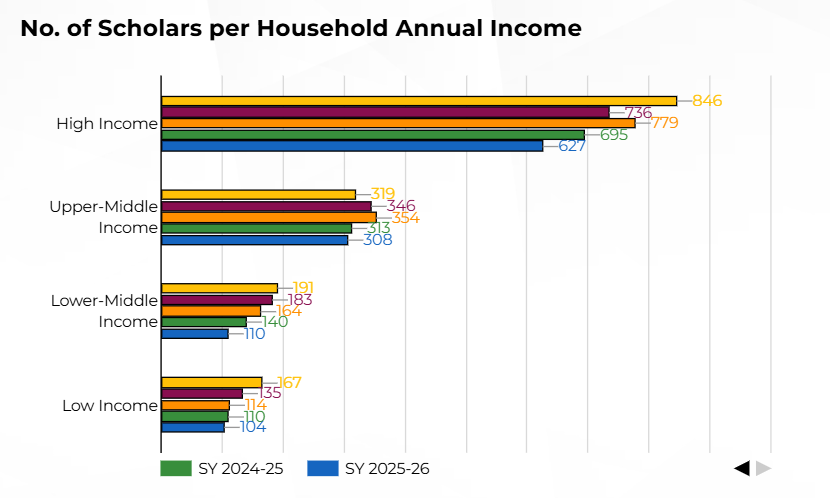 |
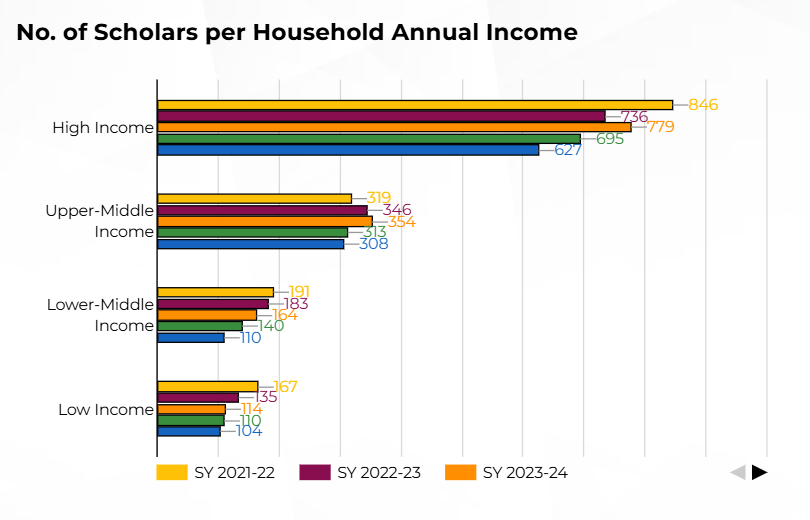
Ateneo de Manila University actively monitors equity in access by tracking undergraduate scholarship distribution across multi-tiered household annual income brackets. Using data models established across academic years (SY 2021–22 through SY 2025–26), the university tracks scholars categorized under Low Income (less than ₱116.02K to ₱152.14K), Lower-Middle Income (₱175.86K to ₱261.78K), Upper-Middle Income, and High Income tiers. The tracking system measures representation within the "Bottom 20%" and "Bottom 50%" income brackets, recording that Bottom 20% scholars accounted for 8.34% in SY 2021–22, 8.36% in SY 2022–23, 6.52% in SY 2023–24, 7.39% in SY 2024–25, and 7.57% in SY 2025–26. Concurrently, Bottom 50% scholars represented between 14.1% and 17.93% of the scholarship body over the same 5-year evaluation window. This granular income tracking directly informs institutional grant-funding schemes and open-access scholarship policies.
Gender Distribution and Sex Disaggregated Analytics
 |
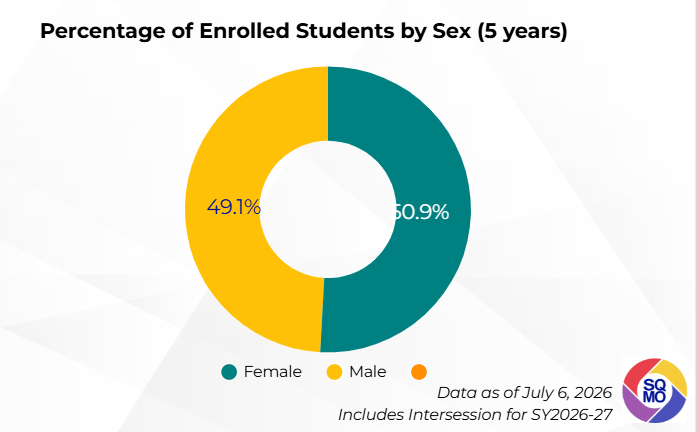 |
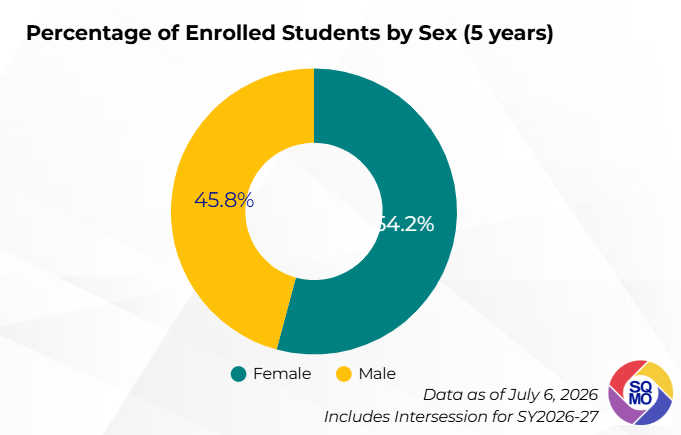
To ensure gender equity in access and admission outcomes, the university maintains longitudinal tracking of student enrollment disaggregated by sex across all degree programs over 5-year observation periods. Institutional tracking data reveals balanced gender representation across university cohorts, with female students comprising 54.2% of the enrolled population in the undergraduate tier and 50.9% in the graduate academic tier, compared to male student enrollment at 45.8% and 49.1%, respectively. These tracking analytics are evaluated per school, department, and degree level to guide admissions strategies, support gender-responsive policy frameworks, and ensure institutional environments remain accessible to women and underrepresented gender groups.
Non-Traditional Students, Generations, and Civil Status
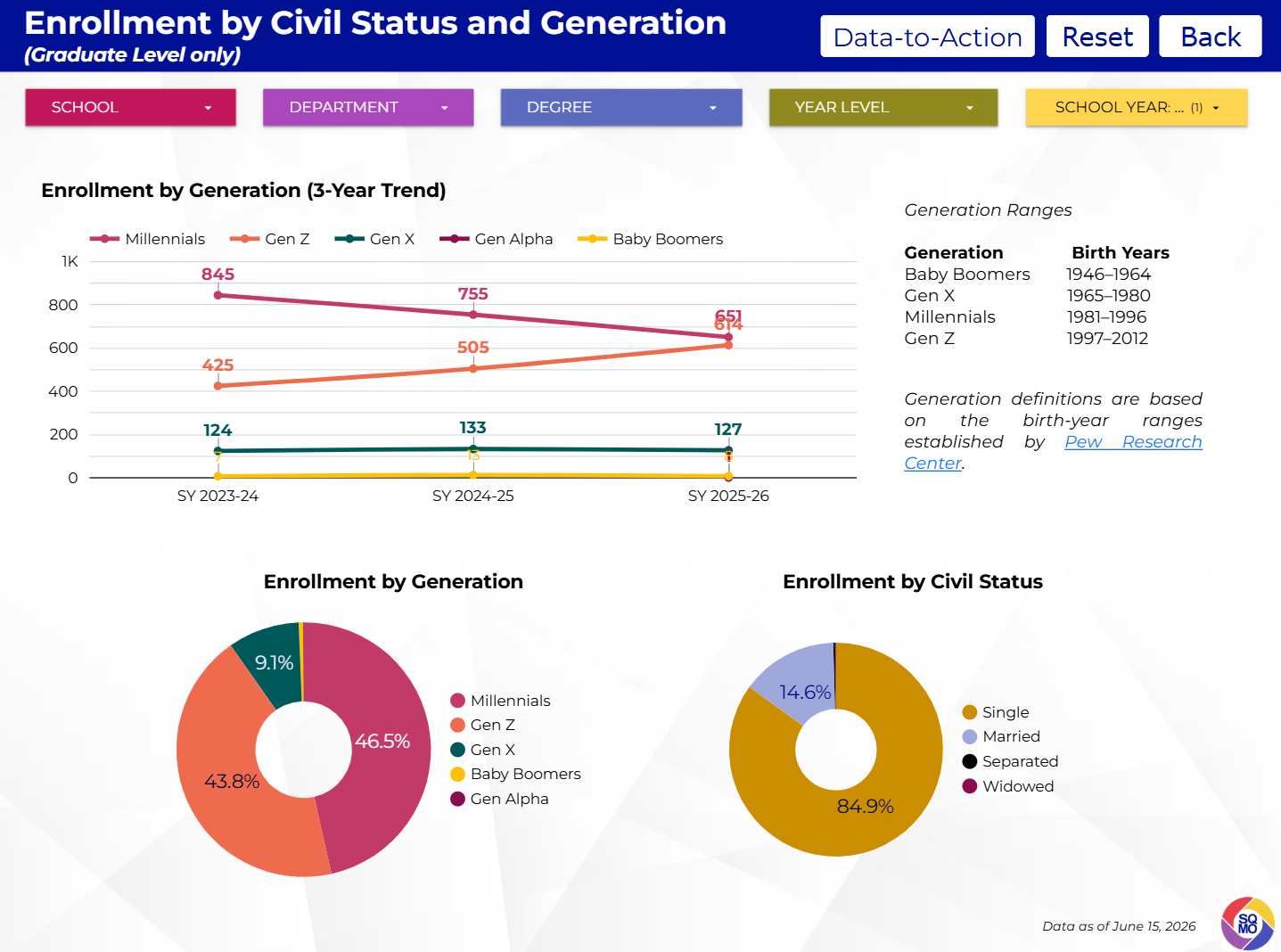
At the graduate level, Ateneo de Manila University tracks non-traditional student demographics through comprehensive civil status and generational cohort analytics using Pew Research Center birth-year classifications. Longitudinal tracking across SY 2023–24 to SY 2025–26 monitors representation across Gen Z (1997–2012; peaking at 505 enrolled students in SY 2024–25), Millennials (1981–1996; maintaining high enrollment between 755 and 845 students), Gen X (1965–1980; averaging 124–133 students), and Baby Boomers (1946–1964). Furthermore, institutional monitoring captures civil status diversity, revealing that 84.9% of enrolled graduate students are single, 14.6% are married, with distinct tracking maintained for separated and widowed students. By evaluating these intersecting demographic variables, the university aligns its academic delivery models, financial aid programs, and non-traditional student support services to foster inclusive higher education access.
Recent News
You may also like these articles

Growing with purpose: How Mekeni Food Corporation turns adversity into shared value
From a small backyard operation in Porac, Pampanga, to an internationally recognized food brand exporting to 25 countries, Mekeni Food Corporation's journey demonstrates how businesses

Three Ateneo-incubated startups secure DOST-PCIEERD’s startup grant fund
Last 9 November, during the opening day of Philippine Startup Week 2026, Soolok Properties Inc, Pili AdheSeal Inc, and Saltric Power (PDG Engineering Services), three

Ateneo de Manila Grade 2 students are the little Earth helpers
It was a great day for saving the world when Ateneo Institute of Sustainability (AIS) came to Ateneo Grade School to give a session on
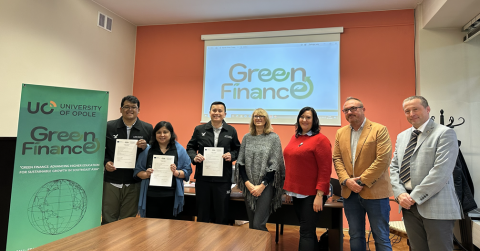
JGSOM representatives complete green finance training in Poland, sets sights on 2027 micro-credential launch
Representatives of Ateneo de Manila University's John Gokongwei School of Management (JGSOM) completed the second phase of their Erasmus+ Green Finance international mobility activities at
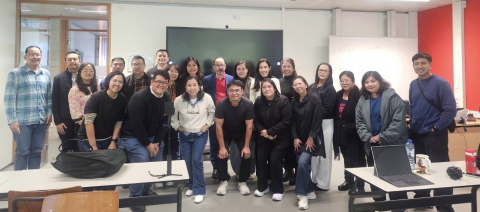
JGSOM Representatives Participate in Green Finance Training at the University of Twente
Enschede, Netherlands | October 15–16, 2026 Representatives of Ateneo de Manila University's John Gokongwei School of Management (JGSOM) participated in a specialized Green Finance training

Professor Emeritus Dr Emma Porio highlights climate resilience and biodiversity at international conferences
Emma E Porio, PhD, Professor Emeritus of Ateneo de Manila University and Principal Investigator of Ateneo's Manila Observatory Center for Climate Resilience and Public Health