6.5.1 Water Management Educational Opportunities
01 Mar 2025


Educational Opportunities for Local Communities on Good Water Management
Education is a vital part of building communities that are better equipped to understand, manage, and protect their water resources. The University recognizes that sustainable water management is not achieved through infrastructure and technology alone, but also through the ability of communities to understand local water conditions, recognize environmental risks, and apply appropriate practices in their everyday activities. By bringing scientific knowledge closer to communities, the University helps make complex water and environmental issues more accessible and relevant to local experiences.
These efforts emphasize knowledge-sharing and capacity-building as important pathways toward long-term water resilience. Through engagement with local stakeholders, schools, farmers, community leaders, and other groups, educational activities create spaces where technical knowledge can be exchanged with local and lived experiences. This two-way process allows communities not only to learn about water resources and sustainable technologies, but also to contribute their own observations, needs, and knowledge to the development of appropriate responses.
At the heart of these initiatives is the goal of enabling communities to become more informed and active participants in water stewardship. In doing so, the University helps communities make more informed decisions and respond more effectively to water-related and environmental challenges. In this way, education becomes a foundation for sustaining water solutions beyond individual projects and strengthening community capacity over the long term.
EML and BGS visit the Upper Amburayan Watershed in Benguet
As part of the ongoing collaborative project between UP-NIGS Environment Monitoring Laboratory (EML) and the British Geological Survey (BGS), titled “Philippine Hydro Hub: Collaborative Hydrological Research for a Sustainable Water Future,” a field visit to the Upper Amburayan Watershed in Benguet was conducted from May 3 to 4, 2025. The delegation included Dr. Robert Michael DiFilippo from EML, and researchers Dr. Christopher Jackson, Dr. Andrew McKenzie, and Dr. Emmanuel Zarate from BGS. Mr. Jose Ernesto Wijangco, Director for Environment at the Cordillera Hydro Electric Power Corporation (COHECO), also participated and helped coordinate the trip.
The event began with a roundtable discussion in Baguio City, attended by representatives from local government units with jurisdictions within the watershed. These included the Municipal Planning and Development Officers, Municipal Environment and Natural Resources Officers, and a few barangay captains from the municipalities of Atok, Kapangan, Kibungan, and Tublay. Also present were engineers from the Baguio City Environment and Parks Management Office, the Department of Environment and Natural Resources CAR - Water Resources Utilization Section, the National Irrigation Administration - Operations and Maintenance Unit, and the Department of Agriculture CAR - Regional Agricultural Engineering Division. Key themes that emerged from the discussion included resiliency and adaptation strategies to climate change on water resource management and their influence on growing/production strategies.
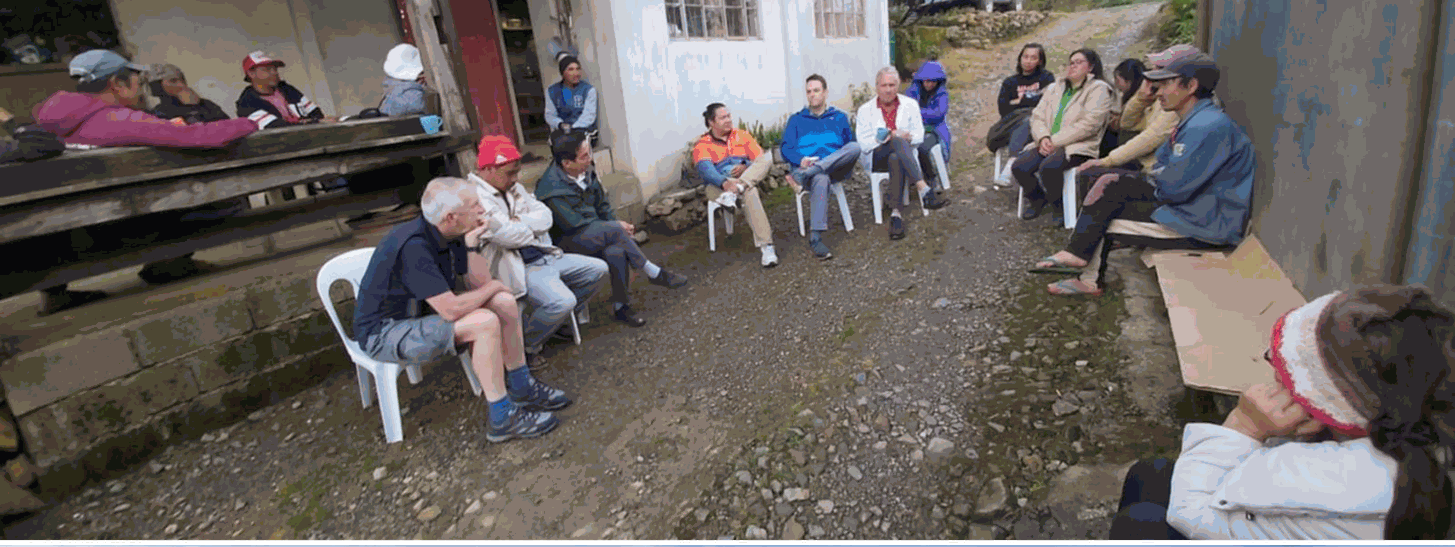
Following the roundtable, the group visited the Madaymen Barangay Hall in Kibungan, Benguet, located at the headwaters of the Watershed. There, Mr. Edgar Ablos, President of the Madaymen Water Users Association, and Mr. John Olayo, Barangay Kapitan, provided a tour of local farms and the land use system, and highlighted pressing challenges in water use and management, including operational limitations and environmental stressors.
Advancing Clean Water, Renewable Energy, and Sustainable Agricultural Technologies
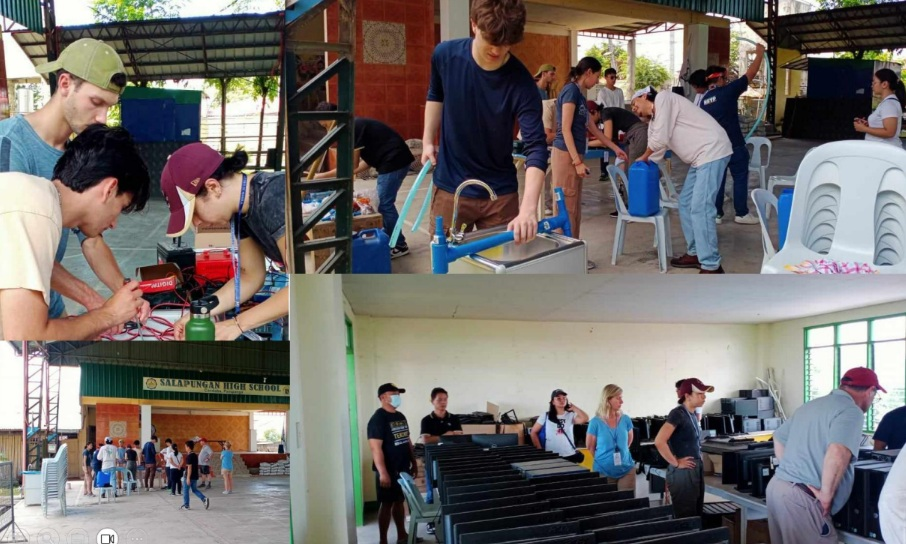
The University's sustainability and community engagement initiatives extend beyond the campus to support practical solutions for communities, schools, and farming areas. In partnership with Boston College, a clean water system was installed at Salapungan National High School, helping strengthen access to reliable and safe water resources within the school community. The Ateneo Innovation Center (AIC) also conducted training on solar-powered clean water technologies for Development Studies students. The training provides students with practical knowledge of renewable-energy applications for water access and treatment, while highlighting how appropriate technologies can be adapted to communities with limited resources.
Educating for Sustainable and Climate-Smart Agriculture
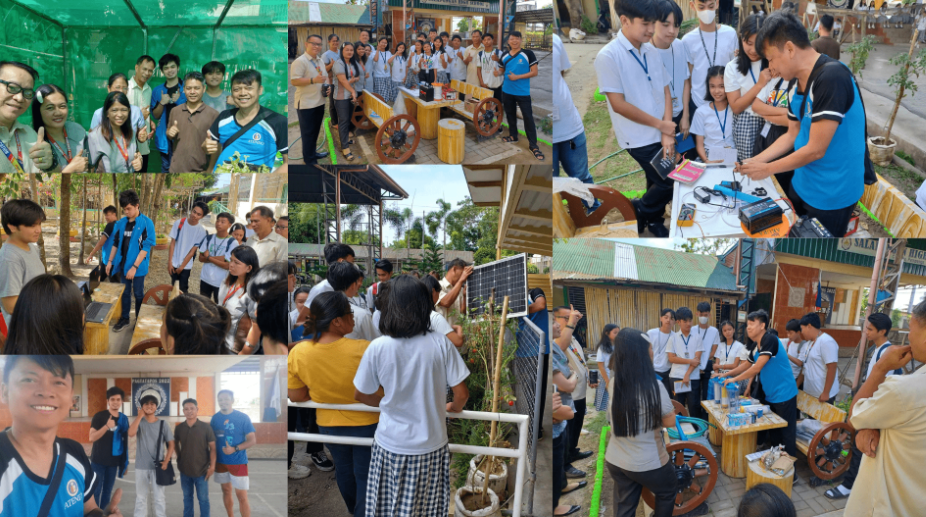
The Ateneo Innovation Center (AIC) promotes sustainable agriculture and climate action through its Smart Hydroponics Greenhouse Laboratory, combining smart sensors, monitoring systems, and hands-on learning. Implemented in schools by March 2025 such as Salapungan National High School and Ateneo Grade School, the initiative engages students, teachers, farmers, and local communities in learning and applying technology-driven hydroponics.
Through technologies such as soil sensors, weather stations, AI-assisted lighting, and nutrient monitoring, the project demonstrates how hydroponics can serve as a water-efficient, low-carbon, and climate-resilient approach to food production. Its strong educational component equips learners and communities with practical skills in sustainable farming, technology, and climate adaptation, helping build local capacity and encouraging future generations to become active participants in climate-smart agriculture.
Connecting Water Management, Farming, and Community Education
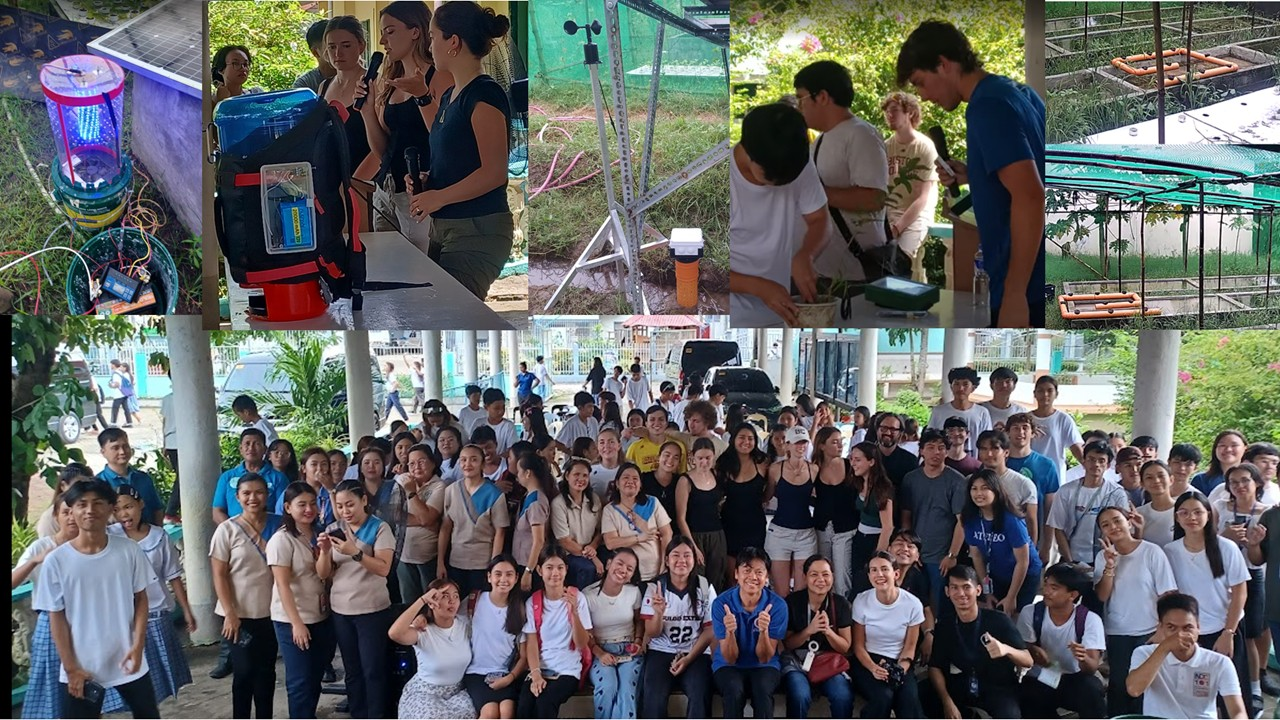
The continued partnership between Ateneo de Manila University (Ateneo) and Boston College (BC) has successfully engaged teachers, students, parents, farmers, and local government officials at Tagulod High School and the Barangay Hall of Candaba, Pampanga in the introduction and practical application of innovative farming technologies. The initiative provides communities with opportunities to learn about accessible technologies that can support agricultural productivity, resource efficiency, and climate resilience.
Among the technologies introduced are a black bug trap using blue LED strips, a rice seed scatterer, a portable NPK sensor, water-level and wind sensors, and an aquaponics system. These technologies are powered by lithium-ion batteries and recharged through solar PV panels, demonstrating how renewable energy can be integrated into agricultural applications. Beyond simply providing equipment, the initiative gives participants hands-on exposure to how these tools can be used to monitor environmental conditions, improve farming practices, and address common challenges in agricultural production.
The engagement also serves as a platform for knowledge transfer and community-based learning. Teachers and students gain practical experience with emerging agricultural technologies, while farmers and local stakeholders are introduced to tools that may be adapted to their own farming activities. The involvement of parents and local government officials further expands the reach of the initiative, encouraging broader awareness of technology-based approaches to sustainable agriculture within the community.
Importantly, the technologies are now being managed by the school, providing an opportunity for continued use, learning, and experimentation beyond the initial implementation. The strong approval expressed by members of the partner community reflects the value of introducing technologies that are not only innovative but also practical, accessible, and responsive to local needs.
Source:
1. EML and BGS Visit the Upper Amburayan Watershed in Benguet
2. Training on Solar-Powered Clean Water Technologies
3. Educating for Climate-Smart Agriculture
4. Water Management, Farming, and Community Education
Recent News
You may also like these articles

Growing with purpose: How Mekeni Food Corporation turns adversity into shared value
From a small backyard operation in Porac, Pampanga, to an internationally recognized food brand exporting to 25 countries, Mekeni Food Corporation's journey demonstrates how businesses

Three Ateneo-incubated startups secure DOST-PCIEERD’s startup grant fund
Last 9 November, during the opening day of Philippine Startup Week 2026, Soolok Properties Inc, Pili AdheSeal Inc, and Saltric Power (PDG Engineering Services), three
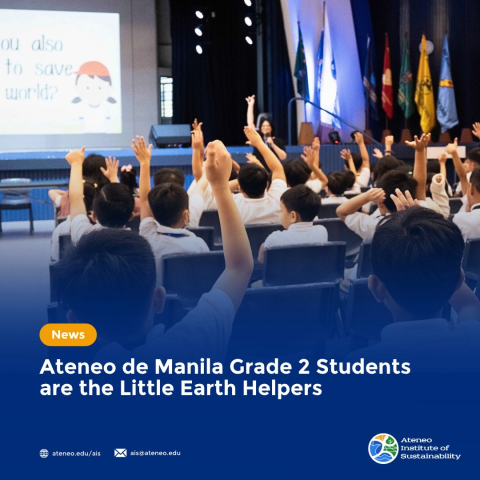
Ateneo de Manila Grade 2 students are the little Earth helpers
It was a great day for saving the world when Ateneo Institute of Sustainability (AIS) came to Ateneo Grade School to give a session on
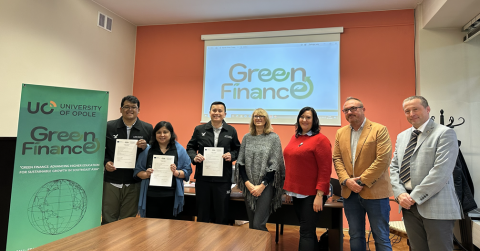
JGSOM representatives complete green finance training in Poland, sets sights on 2027 micro-credential launch
Representatives of Ateneo de Manila University's John Gokongwei School of Management (JGSOM) completed the second phase of their Erasmus+ Green Finance international mobility activities at
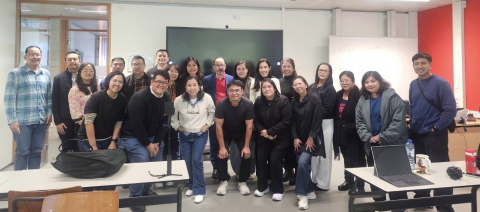
JGSOM Representatives Participate in Green Finance Training at the University of Twente
Enschede, Netherlands | October 15–16, 2026 Representatives of Ateneo de Manila University's John Gokongwei School of Management (JGSOM) participated in a specialized Green Finance training

Professor Emeritus Dr Emma Porio highlights climate resilience and biodiversity at international conferences
Emma E Porio, PhD, Professor Emeritus of Ateneo de Manila University and Principal Investigator of Ateneo's Manila Observatory Center for Climate Resilience and Public Health