13.3.3 Co-operative Planning for Climate Change Disasters
17 Mar 2025


Ateneo’s Multi-Stakeholder Collaboration for Climate Change Communication and Disaster Preparedness Across Communities
Between March and November 2025, Ateneo de Manila University engaged in multi-stakeholder collaborative initiatives and formal partnerships spanning local, national, and regional levels to advance climate change communication, disaster risk reduction, and urban resilience planning.
At the local level throughout March and April 2025, student researchers and the Ateneo Institute of Sustainability partnered with the Barangay Tumana Creekside Homeowners Association in Marikina City alongside municipal emergency services, including the Marikina City Bureau of Fire Protection and the Armedsafe Safety and Rescue Center. This collaboration executed Project CIMULA, a capacity-building program encompassing climate literacy, fire and earthquake response, first aid, and survival swimming that reached adult residents and children across five residential blocks, delivering household Survival Go-bags provided by the Alagang Kapatid Foundation.
Nationally, on 17 March 2025, leadership from the Manila Observatory and Coastal Cities at Risk in the Philippines participated in the National Resilience Council’s 2025 RLUP Colloquium, bringing together over 150 stakeholders to review transformative disaster risk reduction and climate resilience strategies across multiple Philippine cities such as Baguio, Iligan, Mandaue, Tiwi, Naga, Cagayan de Oro, Iloilo, Bataan, Manila, and Ormoc and supporting the launch of the Resilience Competency Assessment tool.
Regionally, the ASEAN University Network on Ecological Education and Culture, housed at the Ateneo Institute of Sustainability, formalized a Memorandum of Understanding spanning 2025 with Deutsche Gesellschaft für Internationale Zusammenarbeit GmbH under the South-South Collaboration on Climate Information and Services. This regional initiative focuses on knowledge sharing, climate communication methodologies, and joint events, including a climate talk on 30 April 2025, the 6th AUN-EEC Conference on 27–29 August 2025, and a multi-stakeholder systems workshop co-organized with Australian National University in November 2025.
Ateneo Institute of Sustainability and GIZ Partner to Advance Climate Change Education
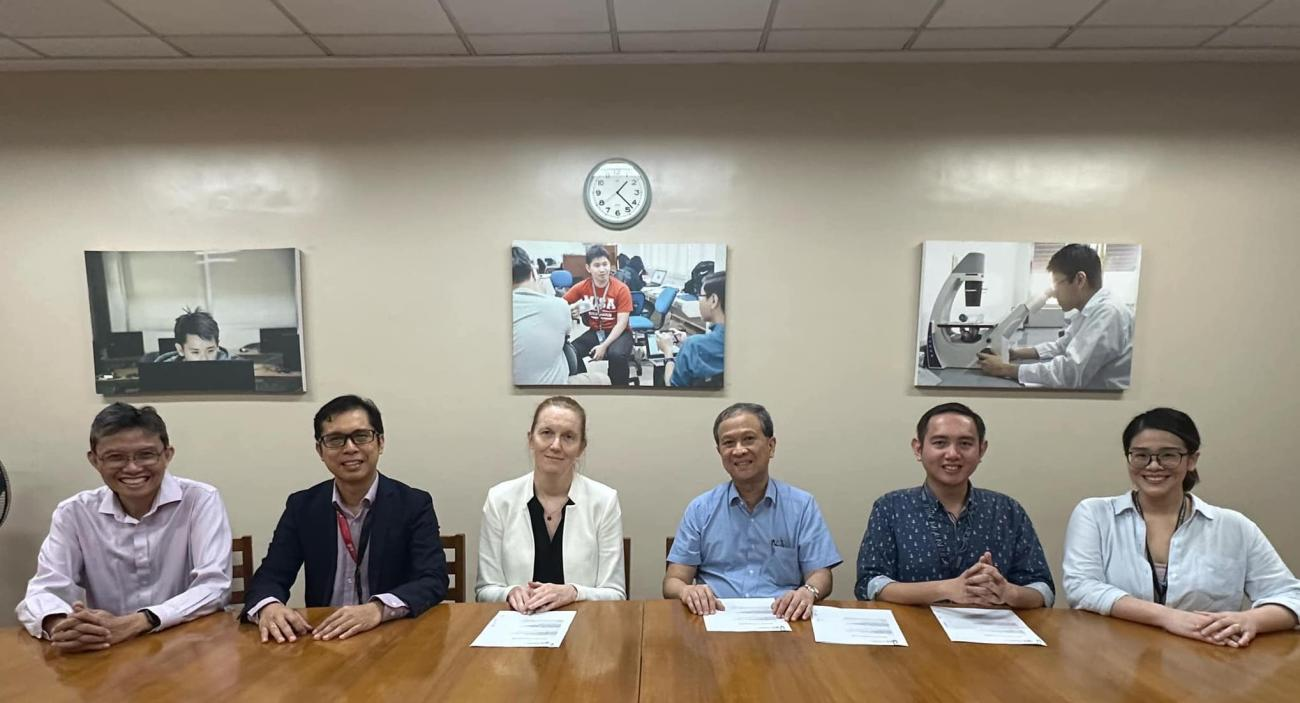 In April 2025, the ASEAN University Network on Ecological Education and Culture (AUN-EEC), housed at the Ateneo Institute of Sustainability, entered into a Memorandum of Understanding spanning through 2025 with Deutsche Gesellschaft für Internationale Zusammenarbeit (GIZ) GmbH to collaborate on the South-South Collaboration on Climate Information and Services (SS-CIS). The partnership focuses on knowledge-sharing in climate information and climate change communication, developing methodologies to make climate science accessible to diverse audiences. Planned joint hybrid activities include a climate talk titled "Temperature Check: Not just a weather talk" on 30 April 2025, the 6th AUN-EEC Conference on Ecological Education and Culture scheduled for 27–29 August 2025, and a multi-stakeholder systems workshop co-organized with Australian National University tentatively scheduled for November 2025. Institutional representation during the agreement signing included key leadership from GIZ’s Climate Action and Disaster Risk Management Cluster and SS-CIS team, alongside Ateneo de Manila University’s Vice President for Mission Integration, Assistant Vice President for SEEDS, AIS Director and AUN-EEC Executive Director, AIS Program Head for Sustainable Development Goals, and AUN-EEC Secretariat members.
The formal partnership establishes institutional coordination between a university-hosted regional academic network and an international development agency to enhance public engagement and accessible science communication regarding climate change. By engaging in joint event execution and capacity building across Southeast Asian academic networks and international institutions, the activity covers a regional geographic scope.
Disaster Risk Reduction and Management Capacities Enhanced in Barangay Tumana
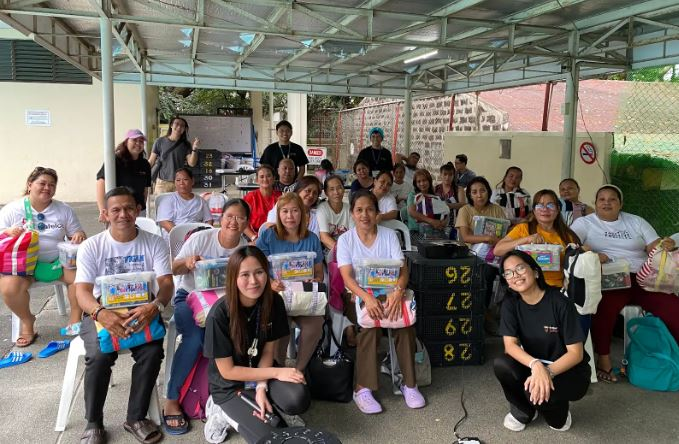
Throughout March 2025, student researchers from the AB Development Studies program, guided by faculty from the DEV 107 Project Management course and co-hosted by the Ateneo Institute of Sustainability, executed Project CIMULA (Collaborative Initiatives for Disaster Management and Understanding through Local Action). The community-based disaster risk reduction and management program was implemented in direct partnership with the Barangay Tumana Creekside Homeowners Association, covering Blocks 29, 30, 34/35, 68, and Tuazonville in Marikina City. The program consisted of three consecutive weekly workshops: "Kalakasan at Klima," an interactive climate literacy workshop held at the Tumana Palay Covered Court; a Fire and Earthquake Preparedness Seminar led by Fire Officer 1 Mary Ann Porazo of the Marikina City Bureau of Fire Protection; and "Langoy at Ligtas," a first aid and survival swimming workshop held at the Ateneo Grade School Pool in partnership with the Armedsafe Safety and Rescue Center and student volunteers. On 22 March 2025, participating households received Survival Go-bags donated by the Alagang Kapatid Foundation, and the initiative concluded on 6 April 2025 with a community evaluation session and the issuance of certificates of participation.
The initiative delivered community-level disaster preparedness, hazard safety training, and climate literacy directly to residents living in flood-prone creekside areas. By coordinating directly with local homeowners' association leadership, municipal fire protection personnel, safety rescue organizations, and civil society donors, the project implemented localized disaster risk management training within a specific city barangay.
Keynote Message at the 2025 National Resilience Council Colloquium
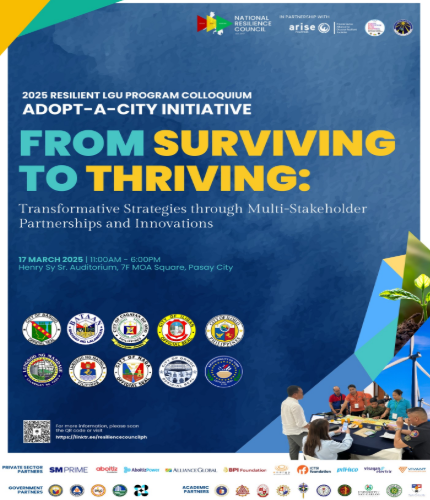 On 17 March 2025, the National Resilience Council convened over 150 stakeholders for the 2025 RLUP Colloquium – Adopt-a-City Initiative under the theme "From Surviving to Thriving: Transformative Strategies through Partnerships and Innovation." University representation included the Director of the Manila Observatory (serving as NRC Vice Chair for Scientific Organizations and Academe) and the Lead Investigator of Coastal Cities at Risk in the Philippines (CCARPH). The colloquium served as a science and technology-driven platform aligned with the Sendai Framework for Disaster Risk Reduction, the Sustainable Development Goals, the Paris Climate Agreement, and the New Urban Agenda. Participating local government units including Baguio, Iligan, Mandaue, Tiwi, Naga, Cagayan de Oro, Iloilo, Bataan, Manila, and Ormoc presented progress on disaster preparedness, risk reduction, environmental stewardship, and long-term resilience programs undertaken through corporate and academic partnerships under the Adopt-a-City Initiative. The event also featured the official launch of the Resilience Competency Assessment (CompAss) tool designed to evaluate and strengthen local government resilience capacities.
The participation of academic researchers and institute leadership in this national gathering supports multi-sectoral planning and policy alignment for urban disaster risk reduction. By contributing scientific research and leadership to a national resilience framework that directly assists local government units across the Philippines.
Sources:
1. AIS and GIZ inked a partnership to promote climate change education
2. Students enhance DRRM capacities of HOAs in Barangay Tumana
3. 2025 National Resilience Council (NRC) colloquium keynote message
Recent News
You may also like these articles

Growing with purpose: How Mekeni Food Corporation turns adversity into shared value
From a small backyard operation in Porac, Pampanga, to an internationally recognized food brand exporting to 25 countries, Mekeni Food Corporation's journey demonstrates how businesses

Three Ateneo-incubated startups secure DOST-PCIEERD’s startup grant fund
Last 9 November, during the opening day of Philippine Startup Week 2026, Soolok Properties Inc, Pili AdheSeal Inc, and Saltric Power (PDG Engineering Services), three
Ateneo de Manila Grade 2 students are the little Earth helpers
It was a great day for saving the world when Ateneo Institute of Sustainability (AIS) came to Ateneo Grade School to give a session on
JGSOM representatives complete green finance training in Poland, sets sights on 2027 micro-credential launch
Representatives of Ateneo de Manila University's John Gokongwei School of Management (JGSOM) completed the second phase of their Erasmus+ Green Finance international mobility activities at
JGSOM Representatives Participate in Green Finance Training at the University of Twente
Enschede, Netherlands | October 15–16, 2026 Representatives of Ateneo de Manila University's John Gokongwei School of Management (JGSOM) participated in a specialized Green Finance training

Professor Emeritus Dr Emma Porio highlights climate resilience and biodiversity at international conferences
Emma E Porio, PhD, Professor Emeritus of Ateneo de Manila University and Principal Investigator of Ateneo's Manila Observatory Center for Climate Resilience and Public Health