15.2.5 Sustainable Management of Land of Agriculture
01 Nov 2024


Advancing Sustainable Agriculture Through Technology and Education
Sustainable agriculture increasingly depends on innovative technologies, efficient resource use, and the sharing of practical knowledge. By combining new approaches to food production with education and community engagement, agricultural initiatives can help address climate challenges while strengthening local food security.
Smart Agriculture and Food Security Through SHIELDS
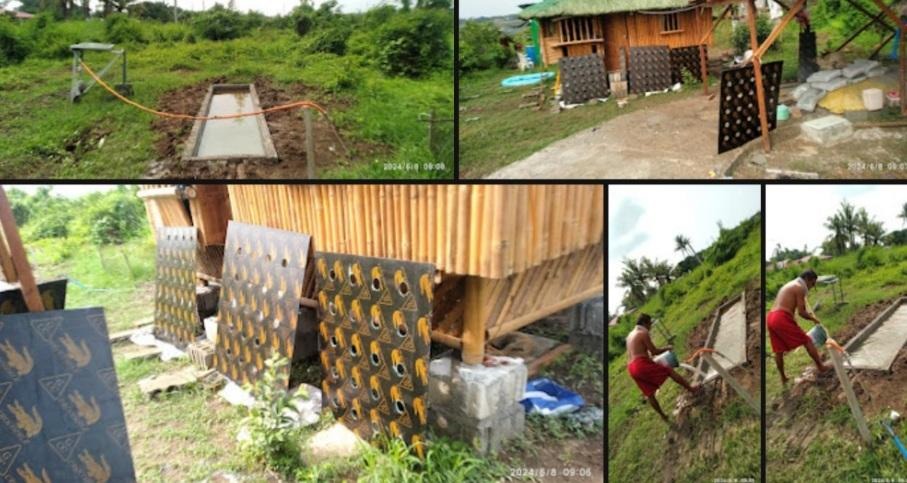
The Smart Hydroponics with IoT for Education, Livelihood, and Disaster-resilient Sustainability (SHIELDS) program is advancing climate-resilient agriculture by combining hydroponic farming, smart technologies, renewable energy, and community education. The initiative, carried out in February 2025, demonstrates how technology can help communities produce food more efficiently while strengthening resilience to climate and environmental challenges.
As part of its infrastructure development, the program completed an 11-meter by 11-meter hydroponics greenhouse in Pampanga, along with concrete hydroponics growing boxes for high-value crops such as chilies, eggplants, and tomatoes. These facilities provide controlled environments for crop production and demonstrate alternative approaches to agriculture where conventional farming may be affected by climate and resource constraints.
SHIELDS also integrates emerging technologies into agricultural production. The program implemented AI-based lettuce plant detection using image processing, as well as solar-powered sensors for monitoring nutrient levels and soil moisture. Excess LED strips from previous phototherapy projects were also repurposed as artificial lighting to support photosynthesis, demonstrating how existing technologies can be adapted for agricultural applications.
Beyond technological innovation, the program places strong emphasis on community capacity-building. A hydroponics greenhouse was donated to Tagulod High School, where students, teachers, parents, and local government officials received hands-on training on operating and maintaining climate-resilient hydroponic systems. This approach allows agricultural knowledge and technology to extend beyond research facilities and into local communities.
The program also addresses post-harvest management and food security. Demonstrations showed that removing approximately 85–90% of moisture from harvested crops can significantly extend their shelf life. Improved preservation can help reduce food losses and make agricultural products available for longer periods, contributing to more reliable food supplies.
Through SHIELDS, smart agriculture becomes more than a method of growing crops. It connects technology, education, renewable energy, food preservation, and community participation to develop practical solutions for food security and climate resilience. By equipping communities with knowledge and adaptable technologies, the initiative demonstrates how innovation can support more sustainable and disaster-resilient food systems.
Building Agricultural Skills Through Hydroponics Training
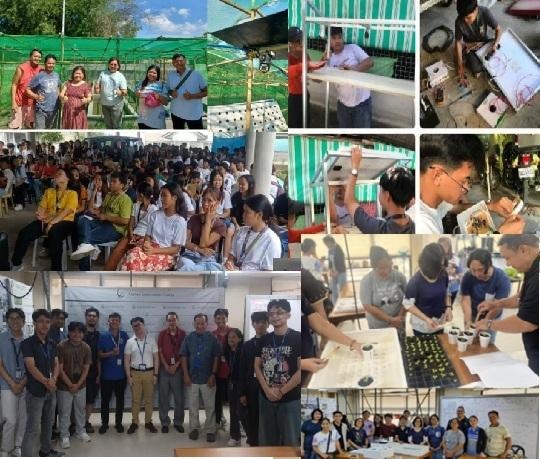
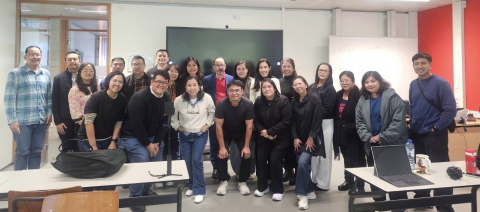
Ateneo de Manila University strengthened its commitment to sustainable agriculture and educational outreach by conducting free hydroponics training for teachers from Marist School and the Center for Positive Futures last November 2024.
The training introduced educators to hydroponic farming as an alternative approach to food production that can make efficient use of limited space and resources. By learning the basic principles and practices of hydroponics, participants gained practical knowledge that can be adapted for educational activities and community-based food production.
Providing the training at no cost also helps make agricultural knowledge and technology more accessible to educators. Teachers can potentially integrate hydroponics into learning activities, allowing students to gain firsthand experience in growing food while learning about sustainability, resource management, and climate-resilient agriculture.
Sources:
1. Smart Agriculture and Food Security
2. Free Hydroponics Training for Teachers
Recent News
You may also like these articles

Growing with purpose: How Mekeni Food Corporation turns adversity into shared value
From a small backyard operation in Porac, Pampanga, to an internationally recognized food brand exporting to 25 countries, Mekeni Food Corporation's journey demonstrates how businesses

Three Ateneo-incubated startups secure DOST-PCIEERD’s startup grant fund
Last 9 November, during the opening day of Philippine Startup Week 2026, Soolok Properties Inc, Pili AdheSeal Inc, and Saltric Power (PDG Engineering Services), three
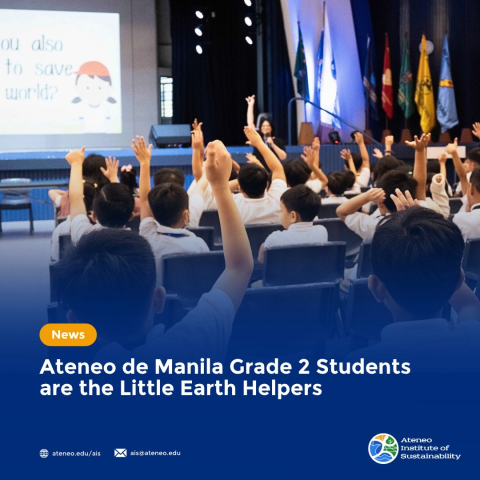
Ateneo de Manila Grade 2 students are the little Earth helpers
It was a great day for saving the world when Ateneo Institute of Sustainability (AIS) came to Ateneo Grade School to give a session on
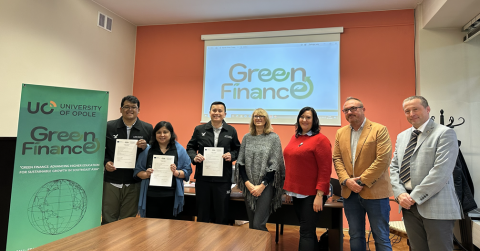
JGSOM representatives complete green finance training in Poland, sets sights on 2027 micro-credential launch
Representatives of Ateneo de Manila University's John Gokongwei School of Management (JGSOM) completed the second phase of their Erasmus+ Green Finance international mobility activities at
JGSOM Representatives Participate in Green Finance Training at the University of Twente
Enschede, Netherlands | October 15–16, 2026 Representatives of Ateneo de Manila University's John Gokongwei School of Management (JGSOM) participated in a specialized Green Finance training

Professor Emeritus Dr Emma Porio highlights climate resilience and biodiversity at international conferences
Emma E Porio, PhD, Professor Emeritus of Ateneo de Manila University and Principal Investigator of Ateneo's Manila Observatory Center for Climate Resilience and Public Health