14.3.4 Technologies towards Aquatic Ecosystem Damage Prevention (Direct Work)
01 Oct 2024


Technology and Innovation for Protecting Aquatic Ecosystems
Ateneo de Manila University advances the use of technology, scientific research, and nature-based solutions to prevent and monitor threats to aquatic ecosystems. Its initiatives demonstrate how innovative wastewater treatment can reduce pollution entering water bodies, while advanced monitoring technologies can identify and assess environmental risks in coastal areas. These efforts highlight the role of technological innovation in protecting water quality, strengthening environmental monitoring, and supporting the sustainable management of freshwater and coastal ecosystems.
From Septic Tank to Golden Koi: Innovative Wastewater Technology for Protecting Aquatic Ecosystems
Ateneo de Manila University is exploring innovative approaches to wastewater management that can help prevent pollution and protect aquatic ecosystems. The “From Septic Tank to Golden Koi” system combines engineered wastewater treatment with nature-based solutions to address the environmental impacts of inadequate septic systems.
The process begins with Decentralized Wastewater Treatment Systems (DEWATS), using an Anaerobic Baffled Reactor (ABR) to reduce organic pollutants through natural microbial processes without requiring electricity. The treated wastewater then passes through a Constructed Wetland (CW), where gravel and specialized plants provide additional treatment by filtering pathogens and nutrients.
By treating wastewater before it can contaminate rivers, lakes, and other water bodies, the system offers a practical approach to preventing aquatic pollution and protecting freshwater resources. Its combination of low-energy treatment and nature-based processes also demonstrates how sustainable technologies can support communities facing wastewater management challenges.
The innovation highlights the potential of combining technology and natural processes to transform wastewater management from a source of environmental risk into an opportunity for water protection, resource recovery, and sustainable development.
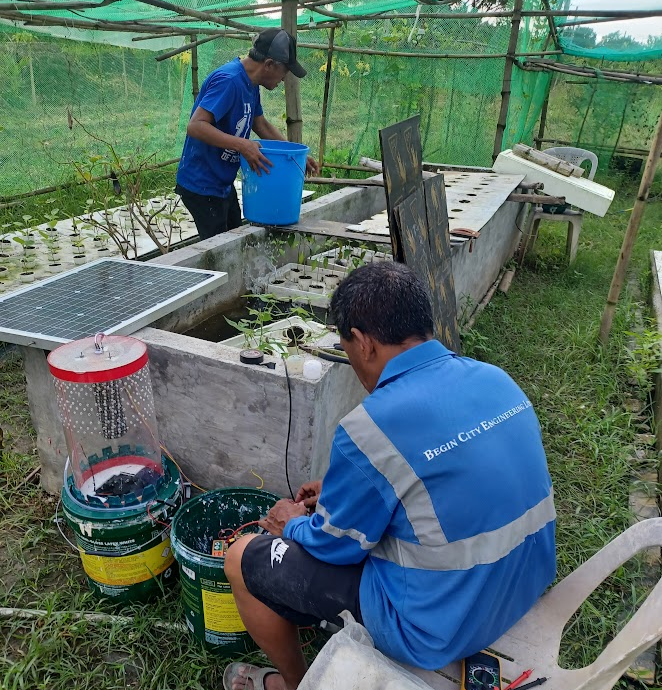
Technology-Based Monitoring of Submarine Groundwater Discharge
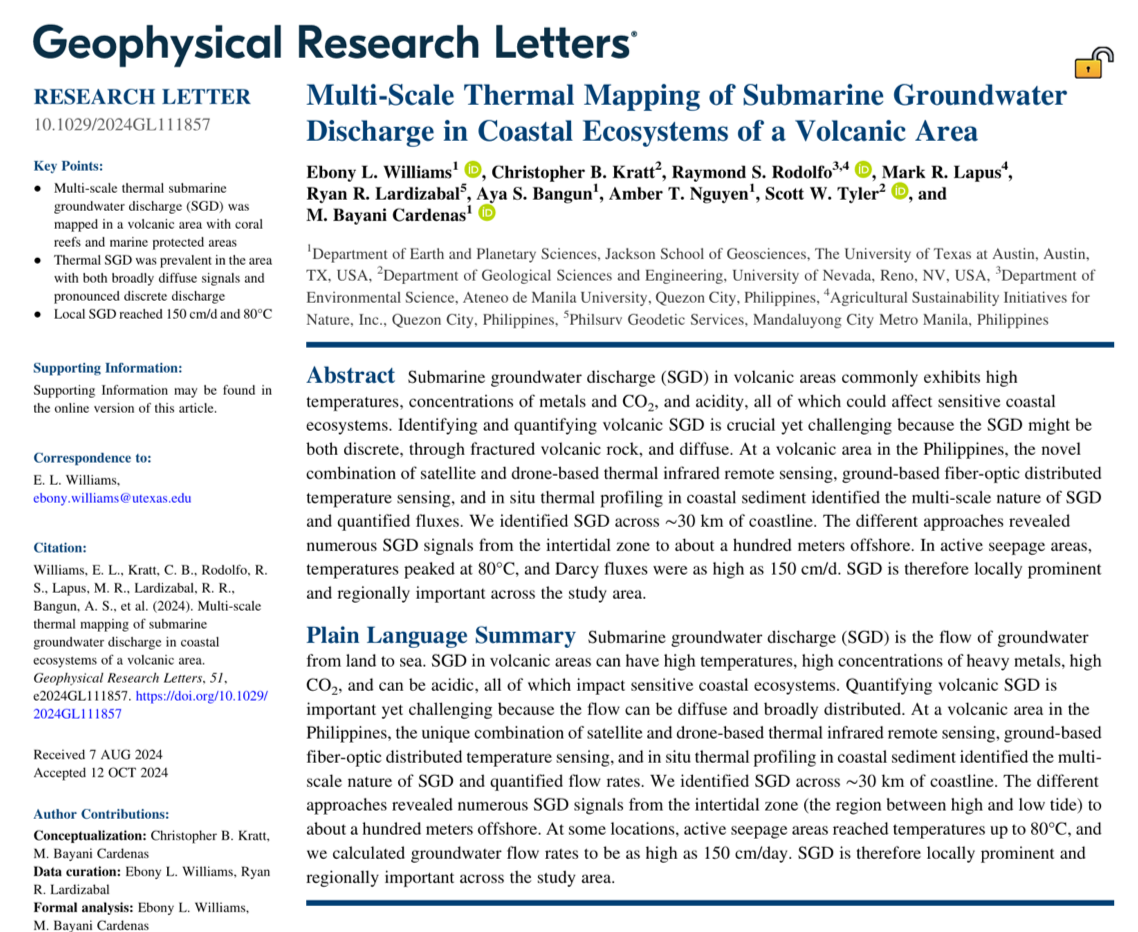
In October 2024, Ateneo de Manila University researchers used advanced monitoring technologies to assess submarine groundwater discharge (SGD) and its potential impacts on sensitive coastal ecosystems in a volcanic area of the Philippines. The study combined satellite and drone-based thermal infrared remote sensing, fiber-optic temperature sensing, and in-situ thermal profiling to detect and measure SGD across approximately 30 kilometers of coastline.
The research revealed that SGD can occur across multiple scales, from the intertidal zone to offshore areas, with some seepage areas reaching temperatures of up to 80°C. The study provides valuable information for understanding potential environmental risks associated with hot, acidic, and metal-rich groundwater.
This technology-based approach strengthens environmental monitoring and risk assessment, providing scientific evidence that can support the protection and sustainable management of coastal and aquatic ecosystems.
Sources:
1. From Septic Tank to Golden Koi
2. Using Advanced Technology to Monitor and Protect Coastal Ecosystem
Recent News
You may also like these articles

Growing with purpose: How Mekeni Food Corporation turns adversity into shared value
From a small backyard operation in Porac, Pampanga, to an internationally recognized food brand exporting to 25 countries, Mekeni Food Corporation's journey demonstrates how businesses

Three Ateneo-incubated startups secure DOST-PCIEERD’s startup grant fund
Last 9 November, during the opening day of Philippine Startup Week 2026, Soolok Properties Inc, Pili AdheSeal Inc, and Saltric Power (PDG Engineering Services), three
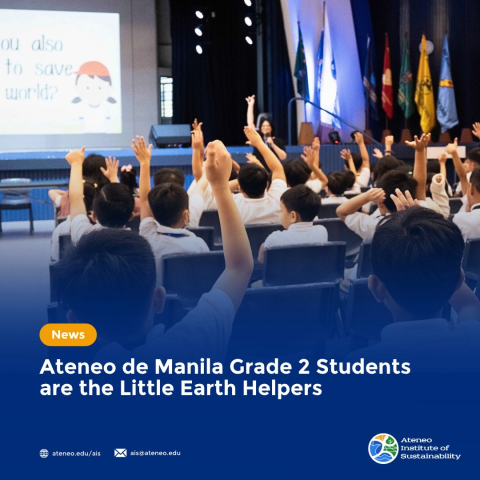
Ateneo de Manila Grade 2 students are the little Earth helpers
It was a great day for saving the world when Ateneo Institute of Sustainability (AIS) came to Ateneo Grade School to give a session on
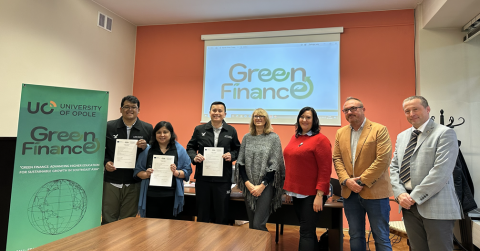
JGSOM representatives complete green finance training in Poland, sets sights on 2027 micro-credential launch
Representatives of Ateneo de Manila University's John Gokongwei School of Management (JGSOM) completed the second phase of their Erasmus+ Green Finance international mobility activities at
JGSOM Representatives Participate in Green Finance Training at the University of Twente
Enschede, Netherlands | October 15–16, 2026 Representatives of Ateneo de Manila University's John Gokongwei School of Management (JGSOM) participated in a specialized Green Finance training

Professor Emeritus Dr Emma Porio highlights climate resilience and biodiversity at international conferences
Emma E Porio, PhD, Professor Emeritus of Ateneo de Manila University and Principal Investigator of Ateneo's Manila Observatory Center for Climate Resilience and Public Health