17.4.3 Education for SDGs in the Wider Community
24 Aug 2024


Ateneo de Manila University advances sustainability not only through its academic programs and institutional initiatives, but also by sharing knowledge, building skills, and mentoring communities and professionals. These efforts create opportunities for students, educators, sustainability practitioners, farmers, and local stakeholders to develop practical knowledge and apply sustainability principles in their own organizations and communities.
Through its sustainability experts, academic units, and innovation initiatives, the University supports learning in areas such as systems thinking, sustainability management, climate resilience, sustainable agriculture, resource efficiency, and environmental stewardship. These activities combine technical knowledge with hands-on learning, helping participants understand both the broader sustainability challenges they face and the practical tools available to address them.
This approach also extends beyond the University. By working with schools, communities, organizations, and other institutions, Ateneo contributes to wider capacity-building and knowledge transfer. Participants are encouraged not only to learn about sustainability but also to apply what they learn, adapt solutions to local contexts, and share knowledge with others. In this way, sustainability education becomes a means of strengthening individual and community capacity for long-term environmental and social change.
AIS Staff Serve as Sustainability Mentors
Three colleagues from the Ateneo Institute of Sustainability served as Instructors of the 2024 Learn2Lead Sustainability (L2LS) program. L2LS is an annual multi-week hybrid learning program offered by SustainablePH, a non-profit organization that champions sustainability for the country. The program, now on its third cohort, covers multiple facets of sustainability management, and aims to build the skill sets of its participants.
Among the topics that are part of this year’s ten-week program are Materiality Assessment and Stakeholder Mapping, and Systems Thinking for Sustainability, with each topic having both an online video component and an on-site learning session at UnionBank Plaza.
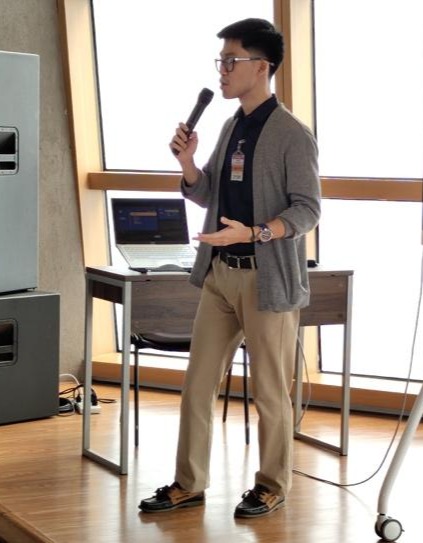
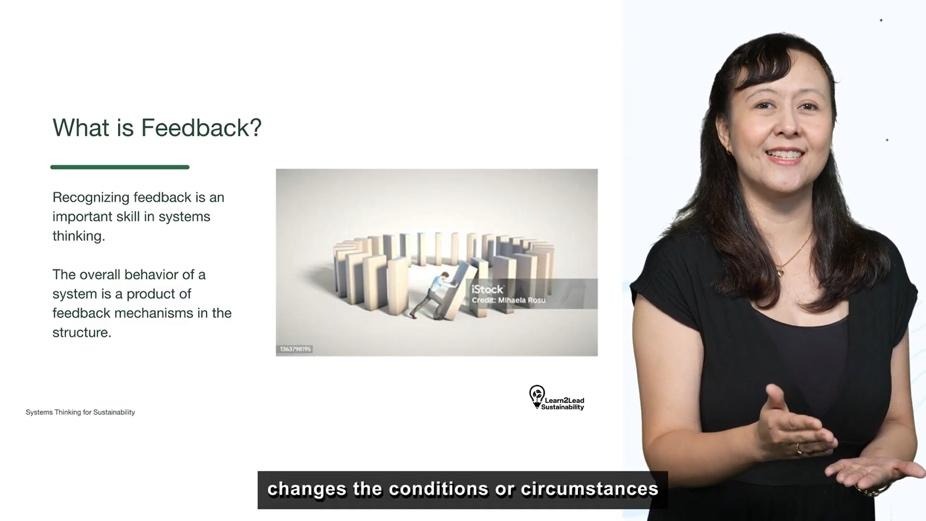
Ms Marimar E Baticulon, Program Head for Organizational Sustainability, facilitated an on-site lecture and workshop for the Materiality and Stakeholders module on 24 August 2024. Both Dr Charlotte Kendra Gotangco Gonzales, former Director of AIS, and Mr Daniel C Ratilla, Program Head for Climate and Disaster Resilience, tackled the Systems Thinking module. Dr Gotangco Gonzales filmed a lecture which formed the online component of the module, while Mr Ratilla facilitated the on-site lecture and workshop on 31 August 2024.
Materiality assessments allow organizations to focus on relevant aspects of their operations. This is particularly useful for organizations such as private companies to focus on sustainability-related initiatives, and when they prepare sustainability reports. A similar process is done within the University when the Ateneo Sustainability Reports are prepared. Beyond sustainability reporting, materiality assessments can help inform organizations of sustainability priorities for their strategy and programs.
Systems thinking, also known as “deep thinking” or “big picture thinking,” allows organizations to contextualize their operations within a larger context. It is useful in identifying root causes of certain issues, recognizing system structures and feedback loops, and preparing for unintended consequences of certain actions. AIS has also previously conducted systems thinking workshops for a variety of stakeholders.
 |
 |
Blue Roots: Stories of Filipino Sustainability Leaders (Alumni)
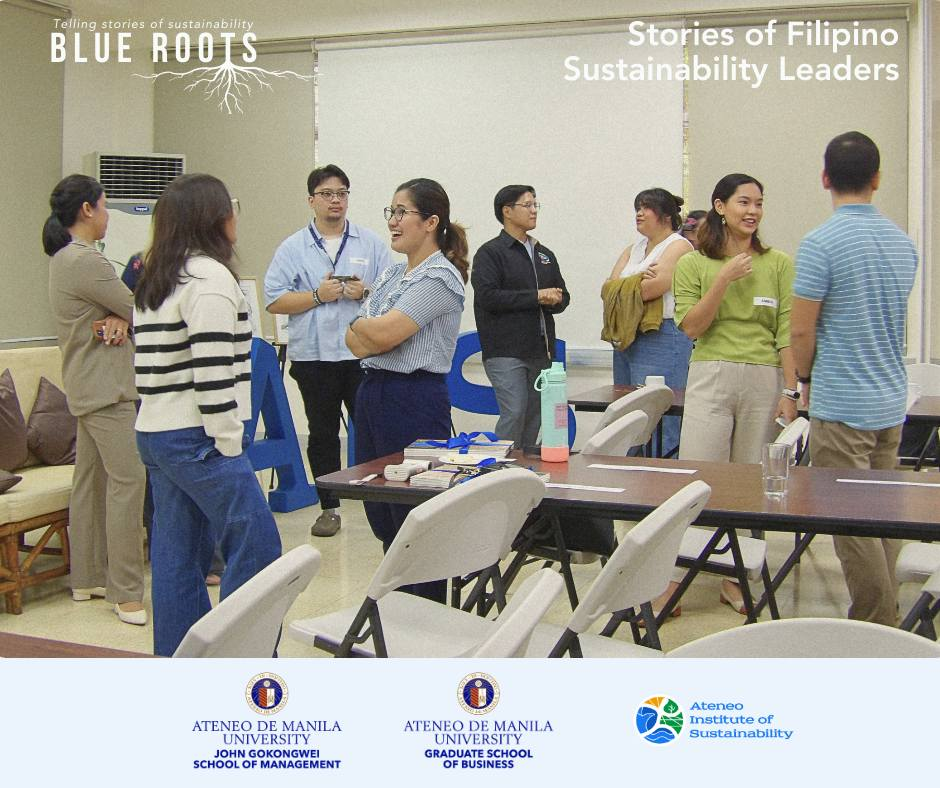
On June 19, the Ateneo Institute of Sustainability, with the support of the Ateneo Graduate School of Business and the John Gokongwei School of Management, brought together more than 60 participants for “Blue Roots: Stories of Filipino Sustainability Leaders.” The event continued conversations on sustainability among Ateneo alumni and professionals, creating a space to share experiences, career journeys, and perspectives on advancing sustainable development.
The keynote speaker was Ephi Banaynal dela Cruz, an Ateneo alumna and CEO of Context Nature, who shared her more than 20 years of experience in corporate sustainability in the United States. She reflected on how her early aspirations to become a teacher, doctor, or public servant eventually led her to sustainability. Her career demonstrated that sustainability can bring together diverse interests and professional experiences.
Dela Cruz emphasized the importance of finding a common language for sustainability. She noted that environmental initiatives were once often described as “process efficiency” or “good business,” and that sustainability professionals today still need to communicate in ways that different stakeholders can understand and relate to. She also highlighted the value of being willing to take on different roles and learn from opportunities, rather than being defined by a particular job title.
 |
 |
Her experience eventually led her to establish Context Nature, which aims to create jobs and give greater voice to communities affected by climate change, particularly Indigenous communities. She encouraged participants to continue pursuing sustainability and to recognize the connections between people and nature.
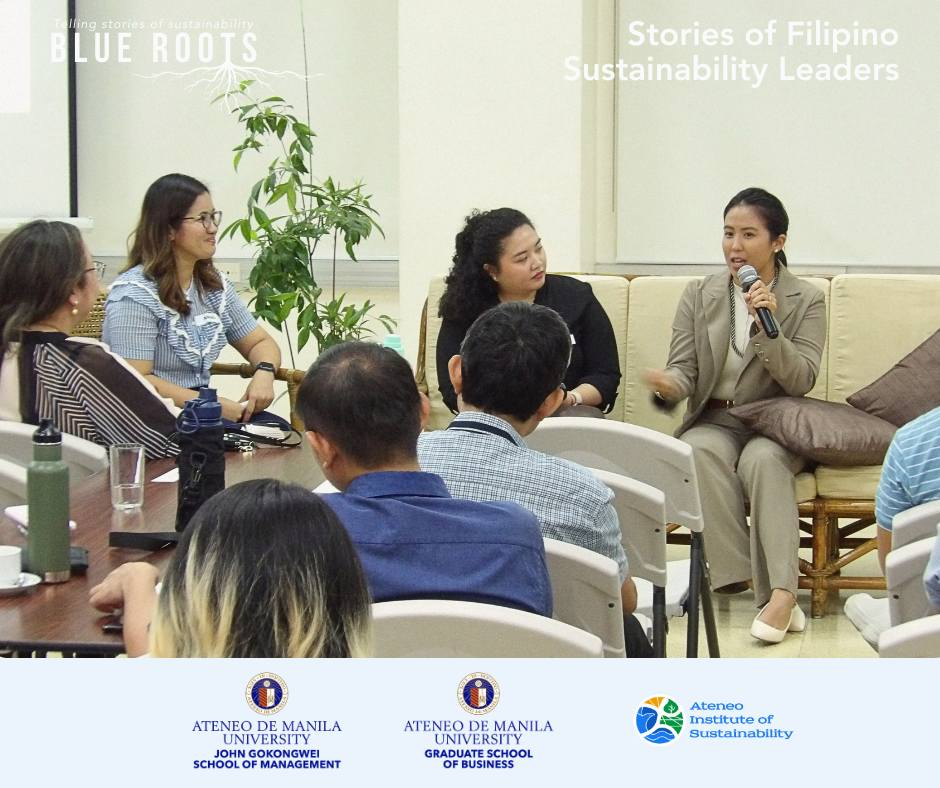
The event also featured a panel with Nikki Lizares, Sustainability Head at Security Bank, and Kristine Rowan, Head of Sustainability Programs at Meralco. Lizares shared how her upbringing in Negros Island and her family's conservation work sparked her interest in environmental issues. After studying Environmental Science at Ateneo and exploring different professional paths, she gained experience working across sectors and developed a deeper understanding of the private sector's role in addressing environmental challenges.
Rowan, meanwhile, moved into sustainability after years in corporate strategy when she joined Meralco's newly established sustainability department. She shared how the transition allowed her to contribute to long-term sustainability goals and find fulfillment in the field.
Together, the speakers demonstrated that there is no single path into sustainability. Their experiences highlighted the importance of continuous learning, collaboration, stakeholder engagement, and the willingness to apply one's skills to emerging environmental and social challenges. The event concluded with participants connecting with fellow professionals, mentors, alumni, and colleagues, strengthening the community of people working toward a more sustainable future.
Educating for Sustainable and Climate-Smart Agriculture
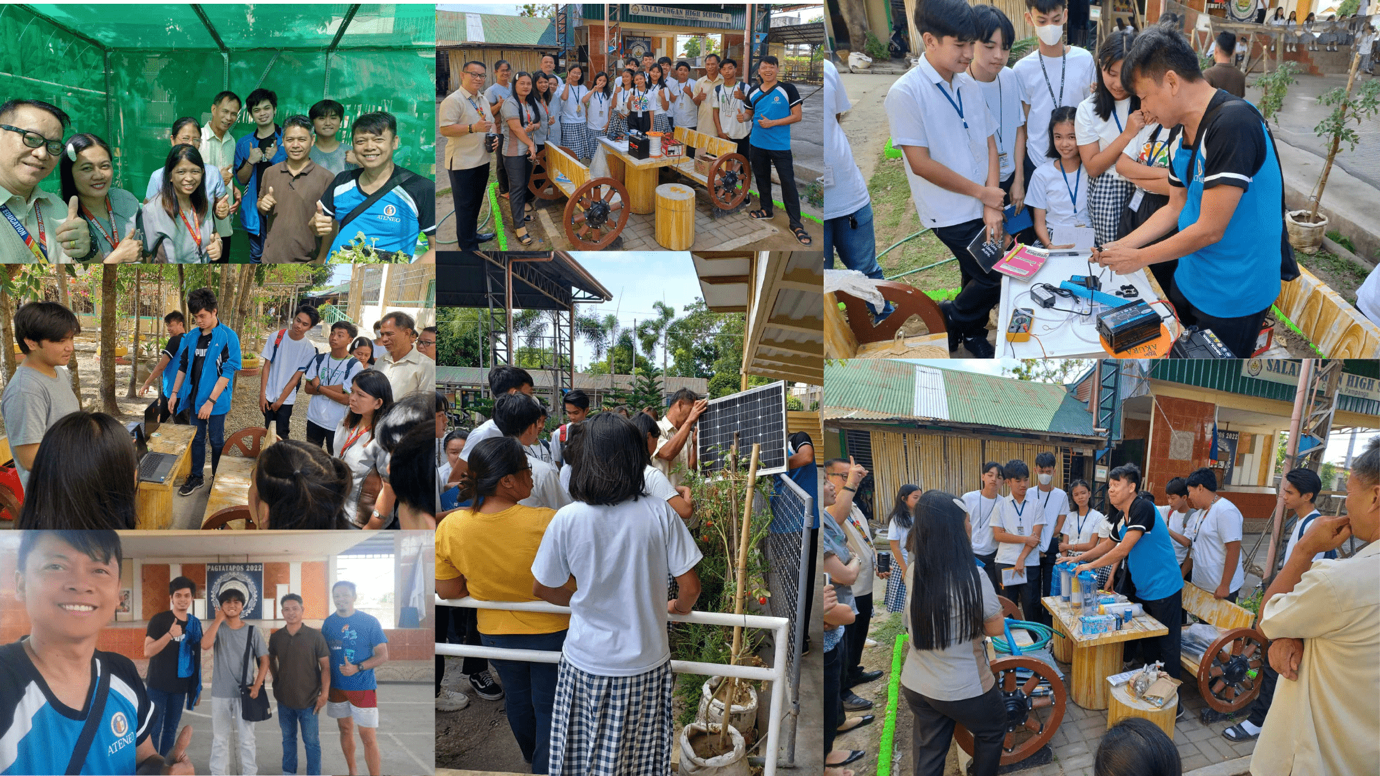
The Ateneo Innovation Center (AIC) promotes sustainable agriculture and climate action through its Smart Hydroponics Greenhouse Laboratory, combining smart sensors, monitoring systems, and hands-on learning. Implemented in schools by March 2025 such as Salapungan National High School and Ateneo Grade School, the initiative engages students, teachers, farmers, and local communities in learning and applying technology-driven hydroponics.
Through technologies such as soil sensors, weather stations, AI-assisted lighting, and nutrient monitoring, the project demonstrates how hydroponics can serve as a water-efficient, low-carbon, and climate-resilient approach to food production. Its strong educational component equips learners and communities with practical skills in sustainable farming, technology, and climate adaptation, helping build local capacity and encouraging future generations to become active participants in climate-smart agriculture.
Connecting Water Management, Farming, and Community Education
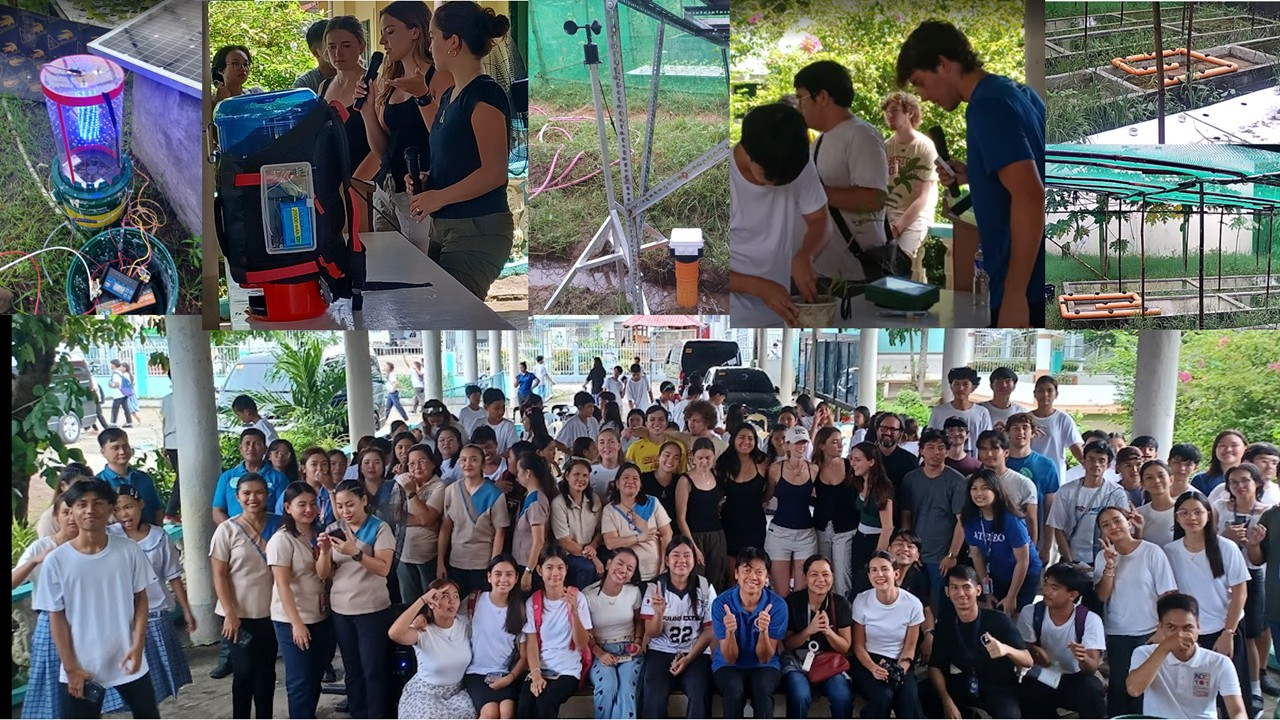
The continued partnership between Ateneo de Manila University (Ateneo) and Boston College (BC) in 2025 has successfully engaged teachers, students, parents, farmers, and local government officials at Tagulod High School and the Barangay Hall of Candaba, Pampanga in the introduction and practical application of innovative farming technologies. The initiative provides communities with opportunities to learn about accessible technologies that can support agricultural productivity, resource efficiency, and climate resilience.
Among the technologies introduced are a black bug trap using blue LED strips, a rice seed scatterer, a portable NPK sensor, water-level and wind sensors, and an aquaponics system. These technologies are powered by lithium-ion batteries and recharged through solar PV panels, demonstrating how renewable energy can be integrated into agricultural applications. Beyond simply providing equipment, the initiative gives participants hands-on exposure to how these tools can be used to monitor environmental conditions, improve farming practices, and address common challenges in agricultural production.
The engagement also serves as a platform for knowledge transfer and community-based learning. Teachers and students gain practical experience with emerging agricultural technologies, while farmers and local stakeholders are introduced to tools that may be adapted to their own farming activities. The involvement of parents and local government officials further expands the reach of the initiative, encouraging broader awareness of technology-based approaches to sustainable agriculture within the community.
Importantly, the technologies are now being managed by the school, providing an opportunity for continued use, learning, and experimentation beyond the initial implementation. The strong approval expressed by members of the partner community reflects the value of introducing technologies that are not only innovative but also practical, accessible, and responsive to local needs.
Outreach to Refugees and Displaced Communities
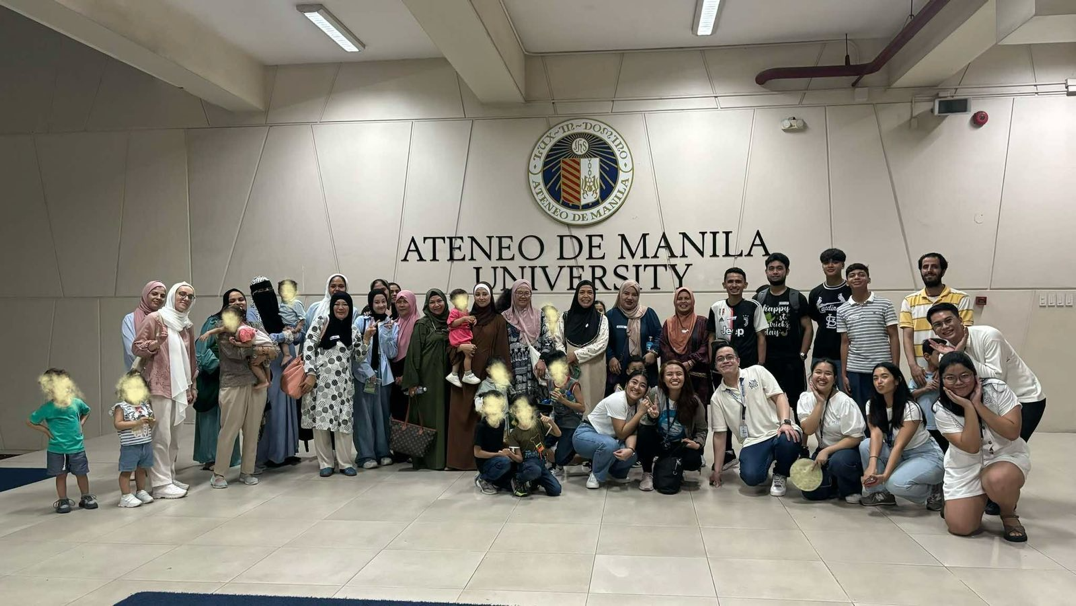
Ateneo de Manila University extends its health outreach to displaced and vulnerable populations through humanitarian service-learning and mental health initiatives that provide psychosocial support while preparing students for community-based humanitarian work.
Through the Disaster and Mental Health Program in July 2024, undergraduate and graduate students received specialized training in Mental Health and Psychosocial Support (MHPSS), Psychological First Aid (PFA), and trauma-informed care before working with organizations serving Filipino-Palestinian refugees. Under the supervision of mental health professionals, students facilitated psychosocial support sessions, psychoeducation, play-based therapeutic activities, group discussions, and community advocacy initiatives designed to promote healing, resilience, and emotional wellbeing among displaced children and families.
The program combined academic learning with community service, equipping future mental health practitioners with practical experience in humanitarian response while expanding access to culturally sensitive, evidence-informed psychosocial support for vulnerable populations affected by conflict and displacement.
Sources:
1. AIS Staff Serve as Sustainability Mentors
2. Blue Roots
3. Educating for Climate-Smart Agriculture
4. Water Management, Farming, and Community Education
5. Ateneo Disaster and Mental Health Program Supports Filipino-Palestinian Refugees
Recent News
You may also like these articles

Growing with purpose: How Mekeni Food Corporation turns adversity into shared value
From a small backyard operation in Porac, Pampanga, to an internationally recognized food brand exporting to 25 countries, Mekeni Food Corporation's journey demonstrates how businesses

Three Ateneo-incubated startups secure DOST-PCIEERD’s startup grant fund
Last 9 November, during the opening day of Philippine Startup Week 2026, Soolok Properties Inc, Pili AdheSeal Inc, and Saltric Power (PDG Engineering Services), three

Ateneo de Manila Grade 2 students are the little Earth helpers
It was a great day for saving the world when Ateneo Institute of Sustainability (AIS) came to Ateneo Grade School to give a session on

JGSOM representatives complete green finance training in Poland, sets sights on 2027 micro-credential launch
Representatives of Ateneo de Manila University's John Gokongwei School of Management (JGSOM) completed the second phase of their Erasmus+ Green Finance international mobility activities at

JGSOM Representatives Participate in Green Finance Training at the University of Twente
Enschede, Netherlands | October 15–16, 2026 Representatives of Ateneo de Manila University's John Gokongwei School of Management (JGSOM) participated in a specialized Green Finance training

Professor Emeritus Dr Emma Porio highlights climate resilience and biodiversity at international conferences
Emma E Porio, PhD, Professor Emeritus of Ateneo de Manila University and Principal Investigator of Ateneo's Manila Observatory Center for Climate Resilience and Public Health