16.2.4 Participatory Bodies for Stakeholder Engagement
01 Aug 2024


Participatory Bodies for Stakeholder Engagement
Ateneo de Manila University continues to drive its health and environmental efforts by keeping human experiences at the center of campus policy. Whether building accessible community health frameworks or rethinking everyday campus transit, the University relies on direct collaboration with the people who navigate these systems daily.
This commitment is clear in two recent initiatives. The Ateneo School of Medicine and Public Health’s Center for Research and Innovation (ACRI) recently partnered with mental health, disability, and civil society groups to address social barriers in healthcare and make community support systems more inclusive. Meanwhile, the Ateneo Institute of Sustainability (AIS) is running its Saan Tayo Lulugar? mobility study, gathering feedback from drivers, active commuters, and school parents to design a safer, low-carbon campus transit network. Rooted in cura personalis, these projects ensure that university policy is guided by real, lived experiences.
Advancing Inclusive Mental Health and Community Well-Being
In August 2024, the Ateneo School of Medicine and Public Health’s Center for Research and Innovation (ACRI) hosted the Rise and Thrive Philippine program team for a workshop and stakeholder consultation focused on gender equality, disability, and social inclusion (GEDSI).
The Rise and Thrive program, led by CBM Global Disability Inclusion and supported by the Australian Government, aims to develop more inclusive, community-based mental health services for people with mental health conditions and psychosocial disabilities. The workshop identified barriers, needs, and opportunities affecting marginalized groups and gathered insights to help shape the program’s GEDSI strategy.
Representatives from mental health, disability, gender, youth, and civil society organizations shared the experiences of vulnerable and minority communities, including challenges in accessing services and navigating social and gender-related expectations. These discussions will inform future community consultations in Bicol and Surigao del Norte.
For ACRI, the workshop strengthens its work toward universal health and well-being, inclusive healthcare, and culturally responsive policies and practices, while supporting a more equitable health system where marginalized communities can participate meaningfully.
Study on Community Sensing on Mobility
In alignment with its commitment to ecological conversion, carbon neutrality, and the principles of Laudato Si’, Ateneo de Manila University is re-evaluating its campus transport systems through the Saan Tayo Lulugar?: Mobility Study, an initiative led by the Organizational Sustainability Program of the Ateneo Institute of Sustainability. While historical infrastructure on the Loyola Heights campus has largely centered on motorized transport, this study builds on prior initiatives—such as the 2012 Ateneo Traffic Group, the 2024 Campus Mobility Forum, and the campus e-jeep system—by placing community experience at the center of future planning.
Grounded in the Ignatian Pedagogical Paradigm, the study examines the daily lived experiences and mobility patterns of key stakeholder groups, including car users, active mobility users, and Basic Education parents, to establish baseline data and develop evidence-based, socially acceptable, and context-sensitive transit interventions.
The Ateneo Institute of Sustainability (AIS) research team—led by Dr. Emmanuel D. Delocado, Josiah Theodore J. Cacayan, and Azriiel Eunice C. Teves—is conducting a campus mobility study to evaluate stakeholder transportation profiles, preferences, and receptivity to sustainable mobility alternatives. The study seeks to deliver actionable, data-driven, and community-informed recommendations to enhance campus transit policies for the Loyola Heights campus.
Currently in Phase 2 of community sensing, the team invites students, personnel, and parents of Basic Education students to participate through targeted online survey links tailored for private vehicle drivers, commuters/active mobility users, and parents.
Sources:
1. ASMPH Center Research Innovation Hosts Rise-Thrive-Program
2. Community Sensing on Mobility
Recent News
You may also like these articles

Growing with purpose: How Mekeni Food Corporation turns adversity into shared value
From a small backyard operation in Porac, Pampanga, to an internationally recognized food brand exporting to 25 countries, Mekeni Food Corporation's journey demonstrates how businesses

Three Ateneo-incubated startups secure DOST-PCIEERD’s startup grant fund
Last 9 November, during the opening day of Philippine Startup Week 2026, Soolok Properties Inc, Pili AdheSeal Inc, and Saltric Power (PDG Engineering Services), three
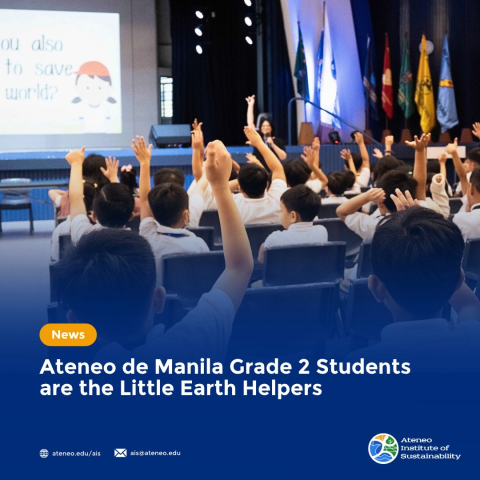
Ateneo de Manila Grade 2 students are the little Earth helpers
It was a great day for saving the world when Ateneo Institute of Sustainability (AIS) came to Ateneo Grade School to give a session on
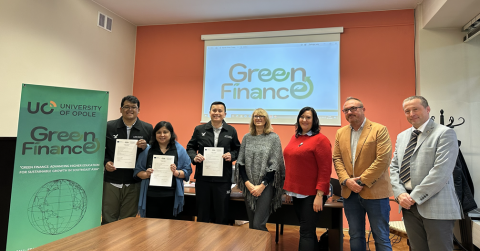
JGSOM representatives complete green finance training in Poland, sets sights on 2027 micro-credential launch
Representatives of Ateneo de Manila University's John Gokongwei School of Management (JGSOM) completed the second phase of their Erasmus+ Green Finance international mobility activities at
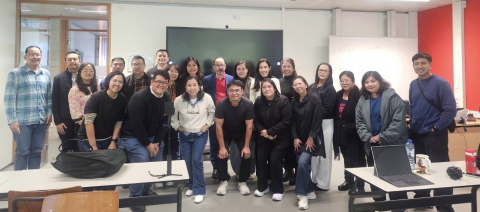
JGSOM Representatives Participate in Green Finance Training at the University of Twente
Enschede, Netherlands | October 15–16, 2026 Representatives of Ateneo de Manila University's John Gokongwei School of Management (JGSOM) participated in a specialized Green Finance training

Professor Emeritus Dr Emma Porio highlights climate resilience and biodiversity at international conferences
Emma E Porio, PhD, Professor Emeritus of Ateneo de Manila University and Principal Investigator of Ateneo's Manila Observatory Center for Climate Resilience and Public Health