13.3.5 Environmental Education Collaborate with NGO
18 Jul 2024


Ateneo de Manila Institutional Collaborations on Climate Adaptation and Disaster Resilience
Ateneo de Manila University engages in multi-sectoral collaborations, strategic partnerships, and capacity-building programs with non-governmental organizations, social enterprises, non-profit institutions, and local government units to enhance climate adaptation and disaster resilience across the Philippines. Through its specialized centers including the Ateneo Institute of Sustainability (AIS), the Ateneo School of Government (ASoG), and the Manila Observatory, the University contributes technical expertise, academic research, and pedagogical frameworks to multi-stakeholder initiatives aligned with international frameworks such as the Sendai Framework for Disaster Risk Reduction and the Paris Agreement.
Key non-governmental partners include the National Resilience Council (NRC), Catholic Relief Services (CRS), the Philippine Disaster Resilience Foundation (PDRF), and climate-tech enterprise Komunidad. These collaborations span local and national engagements, ranging from disaster risk reduction governance in coastal and urban centers to customized executive project management training for climate fund implementation and student-focused climate action initiatives.
Through initiatives like the Coastal Cities at Risk in the Philippines (CCARPH) project, the Adopt-a-City Initiative, and the regional hub of My Climate Risk, University academic leadership and research teams deliver actionable systems-thinking methodologies, practical tools, and structured frameworks that empower local government officials, community leaders, and civil society actors to transition from short-term disaster relief to long-term sustainable climate adaptation.
2025 National Resilience Council (NRC) Colloquium – Adopt-a-City Initiative
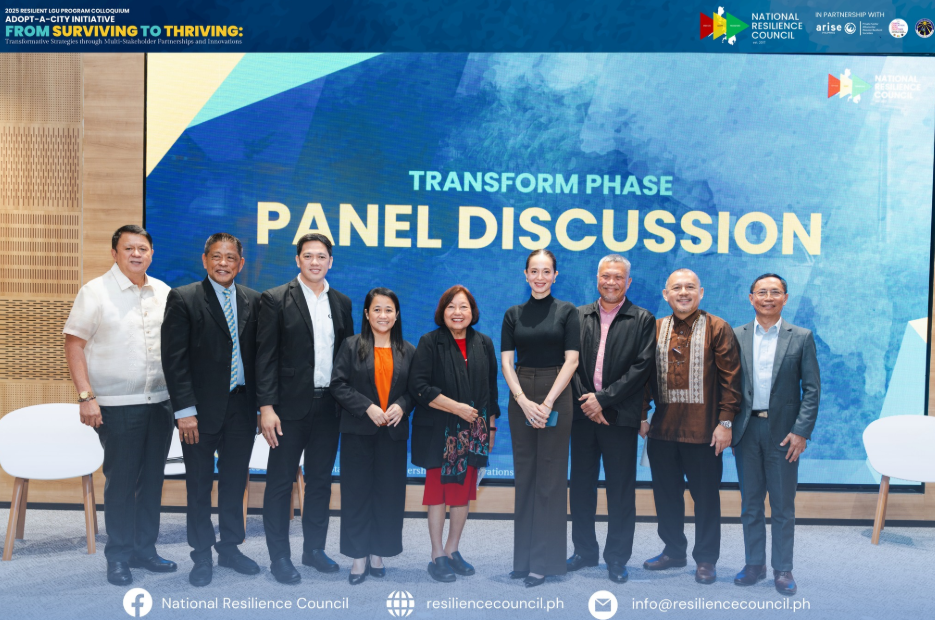
On 17 March 2025, the National Resilience Council (NRC), a science and technology-driven non-profit organization, organized the 2025 Resilient Local Government Unit Program (RLUP) Colloquium under the Adopt-a-City Initiative, gathering over 150 stakeholders to advance urban resilience and disaster risk reduction across Philippine municipalities.
University leadership and faculty actively participated in the proceedings, including Prof. Emeritus Emma Porio, lead investigator of the Coastal Cities at Risk in the Philippines (CCARPH) project, and Fr. Jose Ramon Villarin, SJ, Director of the Manila Observatory and Vice Chair of the NRC for Scientific Organizations and Academe. Local government units including Baguio, Iligan, Mandaue, Tiwi, Naga, Cagayan de Oro, Iloilo, Bataan, Manila, and Ormoc presented operational progress on disaster preparedness, environmental stewardship, and risk reduction. The colloquium also featured the launch of the Resilience Competency Assessment (CompAss), a tool developed to evaluate and strengthen local governance capacities.
The participation of University researchers and academic leadership in the NRC colloquium establishes formal collaboration between higher education research units and a prominent non-governmental resilience council. Through the CCARPH project and joint leadership structures with the NRC, University experts contribute scientific research, systems-thinking frameworks, and evidence-based methodologies directly to multi-sectoral resilience initiatives involving local governments and corporate partners.
Systems Thinking Approaches for Resilience and Environmental Management Workshops
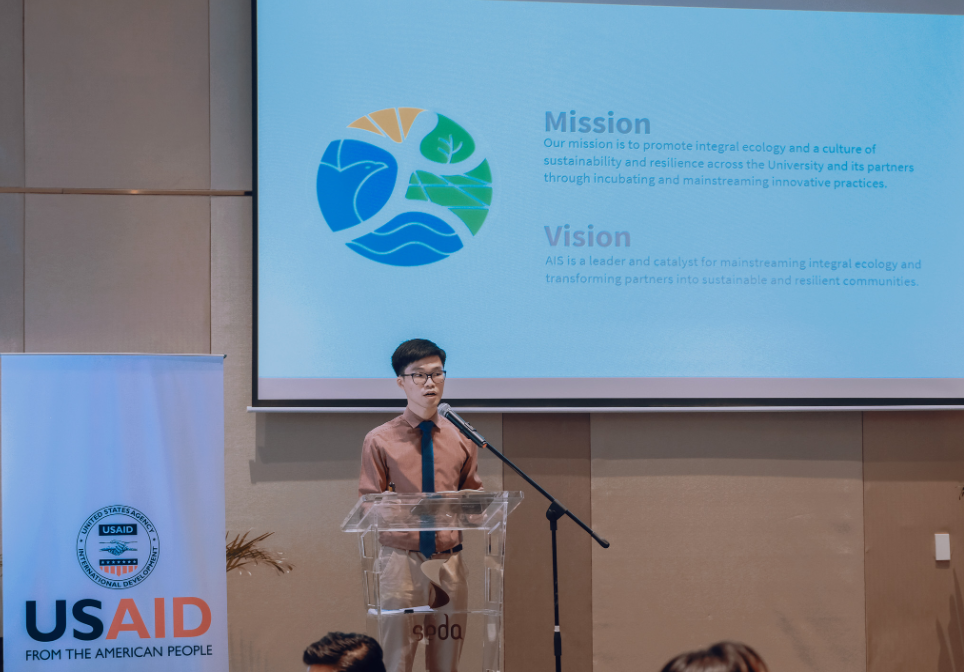
From 18 to 19 July 2024, the Philippine Disaster Resilience Foundation, through the USAID-Climate Resilient Cities Project, held a two-day event in observance of National Disaster Resilience Month. The event, “Resilient Horizons: Advancing Climate Resilience and Disaster Preparedness,” featured keynotes and presentations from various sectors on climate and disaster resilience.
Mr. Daniel C. Ratilla, Program Head for Climate and Disaster Resilience (CDR) of the Ateneo Institute of Sustainability, represented AIS during the first day of the event and opened the program with an address titled “Systems Thinking for Climate and Disaster Resilience.” His presentation covered the fundamentals of systems thinking, defining systems and systems thinking, discussing structure and feedback, feedback loops, and resilience as an emergent property of systems. He also discussed how systems thinking and a broader systems approach could be applied to resilience, as embodied in the NDRRMC’s NDRRM Plan 2011–2028 framework.
AIS, through the CDR Program, offers systems thinking workshops for multisectoral participants. The program carries out these workshops primarily through activities in the City Resilience Toolkit or CResT. CResT was developed by a multidisciplinary team in 2020, led by Dr. Charlotte Kendra Gotangco Gonzales, former Program Manager for Climate Change and Disaster Resilience and former Director of AIS, as part of the Coastal Cities at Risk Philippines (CCARPH) Project, led by Dr. Emma Porio.
The toolkit’s resilience planning activities are divided into three modules, arranged along the three phases of systems thinking: Problem Diagnosis, Stakeholder Engagement, and Action Planning.
These interactive workshops demonstrate structured, ongoing educational and capacity-building collaborations with non-governmental conservation foundations and civil society groups. By translating academic research tools like CResT into practical training modules, the University equips external non-governmental partners, community organizers, and multi-sectoral practitioners with systemic analytical tools to address local climate risks, natural resource pressures, and environmental governance challenges.
Executive Education Program Delivers Customized Project Management Course for Borongan City LGU
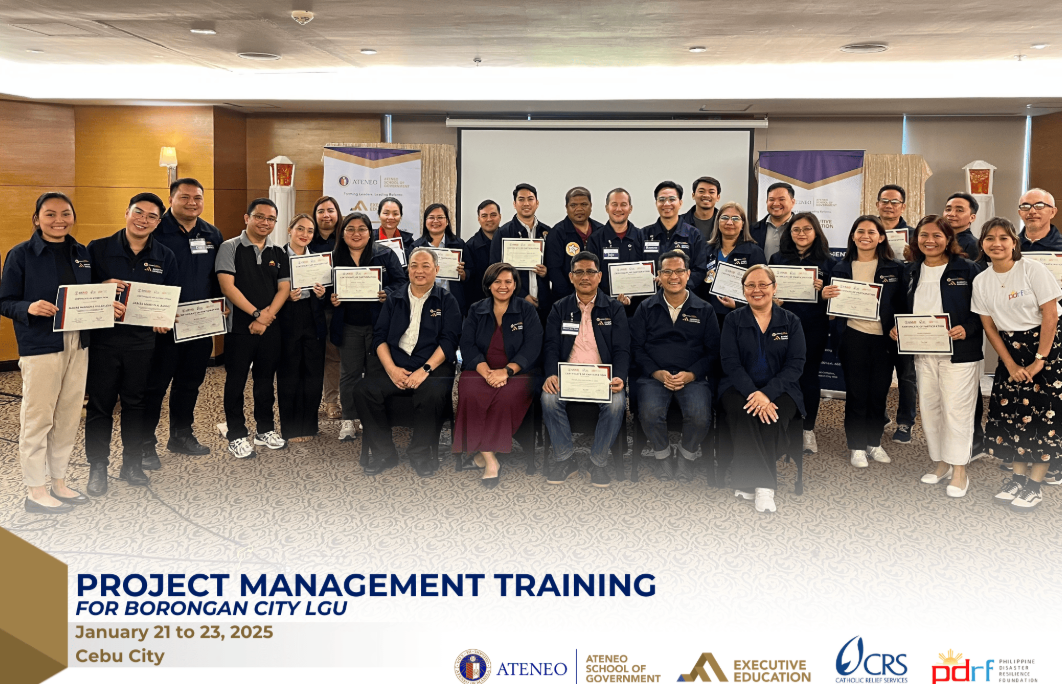
From 21 to 23 January 2025, the Ateneo School of Government (ASoG) Executive Education Program, in partnership with international non-governmental development organization Catholic Relief Services (CRS) and the Philippine Disaster Resilience Foundation (PDRF), delivered a customized Project Management Training course at the Quest Hotel and Conference Center.
Designed for the local government unit of Borongan City, Eastern Samar, the executive course was attended by Mayor Jose Ivan Dayan C. Agda, municipal department heads, and administrative staff. Facilitated by ASoG Executive Education Head Sharon Grace S. Yabut and adjunct faculty member Noel M. Macalalad, the training integrated the PRINCE2 project management framework to strengthen the city’s operational capacity to plan, budget, allocate resources for, and execute climate adaptation projects funded under the national People’s Survival Fund (PSF).
Program leadership from CRS (Chief of Party Alan Luis Silayan), PDRF (Development Programs and Innovation Unit Head Anna Katrina Aspuria), and ASoG (Dean Dr. Philip Arnold P. Tuaño) oversaw the delivery and completion of the program.
The execution of this customized training program establishes a direct operational partnership between University academic units, international non-governmental organizations (CRS), and national private-sector disaster management foundations (PDRF). By co-designing and facilitating specialized technical instruction for municipal officials, the University and its non-governmental partners directly build local government capacity to implement state-funded climate adaptation and community resilience infrastructure projects.
Ateneo Institute of Sustainability and Komunidad Partnership for Climate Action Projects
On 23 September 2024, the Ateneo Institute of Sustainability (AIS) executed a formal Memorandum of Understanding (MOU) with climate-tech organization Komunidad to implement joint environmental and climate action projects through August 2026.
The signing was led by Vice President for Mission Integration Dr. Benjamin Gerardo Tolosa, Jr. and AIS Director Dr. Emmanuel Delocado alongside Komunidad Chief Executive Officer Felix Ayque, Chief Operations Officer Allister Ayque, Chief Product Officer Jed Llanes, and Climate Action Suite Product Manager Marela Ann Codico.
The multi-year agreement focuses on deploying data-driven climate tools, supporting the global #EarlyWarningsForAll movement, and engaging University student leaders in community-level climate resilience and climate justice projects.
This formal agreement establishes an institutional partnership with a specialized climate-technology organization to enhance community-level climate action and early warning system capabilities. By combining academic institutional reach with external technical platforms, the collaboration creates structured avenues for student engagement, data-driven climate risk management, and resilience-building programs targeting partner communities.
Sources:
1. 2025 National Resilience Council (NRC) colloquium keynote message
2. AIS highlights systems thinking for National Disaster Resilience Month
3. Executive Education Program delivers customized project management course for Borongan City LGU
4. AIS inks partnership with Komunidad for climate action projects
Recent News
You may also like these articles

Growing with purpose: How Mekeni Food Corporation turns adversity into shared value
From a small backyard operation in Porac, Pampanga, to an internationally recognized food brand exporting to 25 countries, Mekeni Food Corporation's journey demonstrates how businesses

Three Ateneo-incubated startups secure DOST-PCIEERD’s startup grant fund
Last 9 November, during the opening day of Philippine Startup Week 2026, Soolok Properties Inc, Pili AdheSeal Inc, and Saltric Power (PDG Engineering Services), three
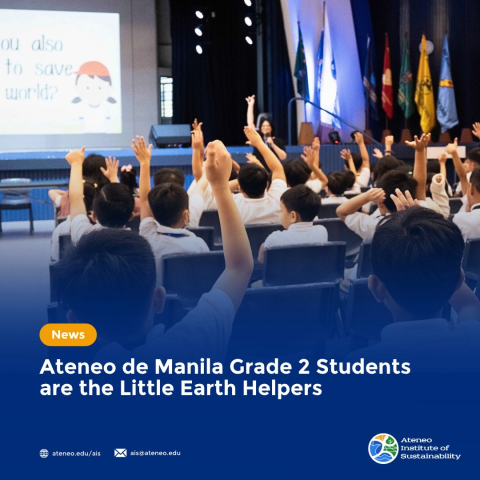
Ateneo de Manila Grade 2 students are the little Earth helpers
It was a great day for saving the world when Ateneo Institute of Sustainability (AIS) came to Ateneo Grade School to give a session on
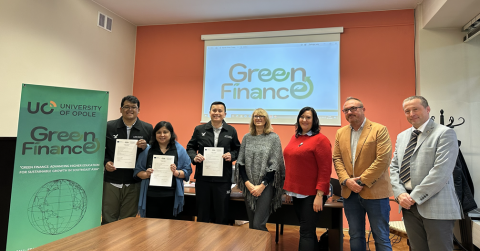
JGSOM representatives complete green finance training in Poland, sets sights on 2027 micro-credential launch
Representatives of Ateneo de Manila University's John Gokongwei School of Management (JGSOM) completed the second phase of their Erasmus+ Green Finance international mobility activities at
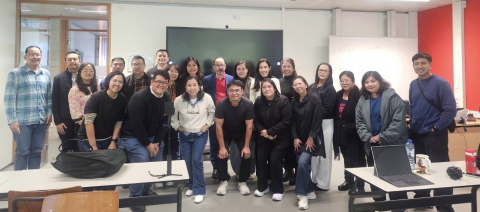
JGSOM Representatives Participate in Green Finance Training at the University of Twente
Enschede, Netherlands | October 15–16, 2026 Representatives of Ateneo de Manila University's John Gokongwei School of Management (JGSOM) participated in a specialized Green Finance training

Professor Emeritus Dr Emma Porio highlights climate resilience and biodiversity at international conferences
Emma E Porio, PhD, Professor Emeritus of Ateneo de Manila University and Principal Investigator of Ateneo's Manila Observatory Center for Climate Resilience and Public Health