APC hosts brownbag session on Southern Philippines maritime security
14 Nov 2026



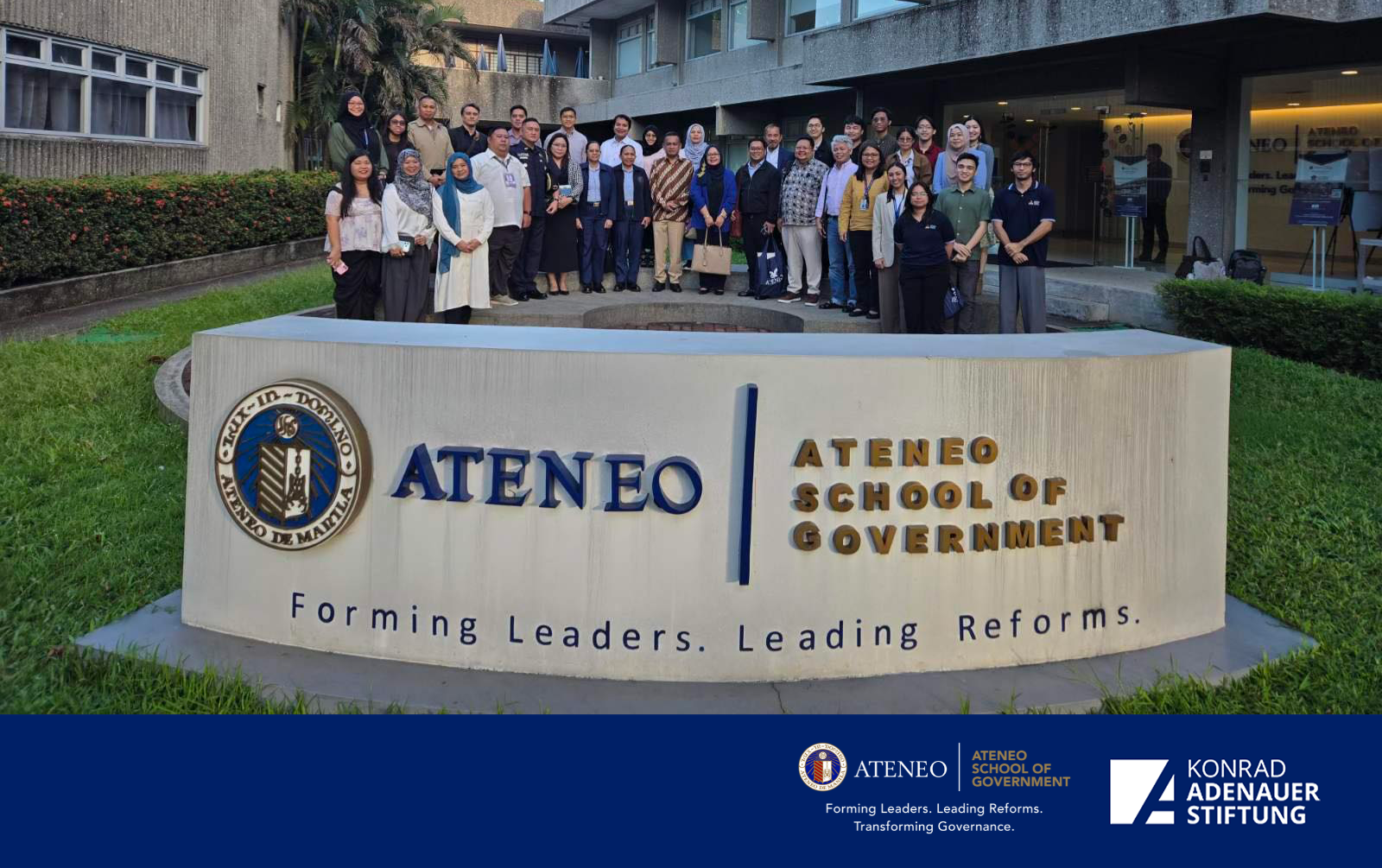
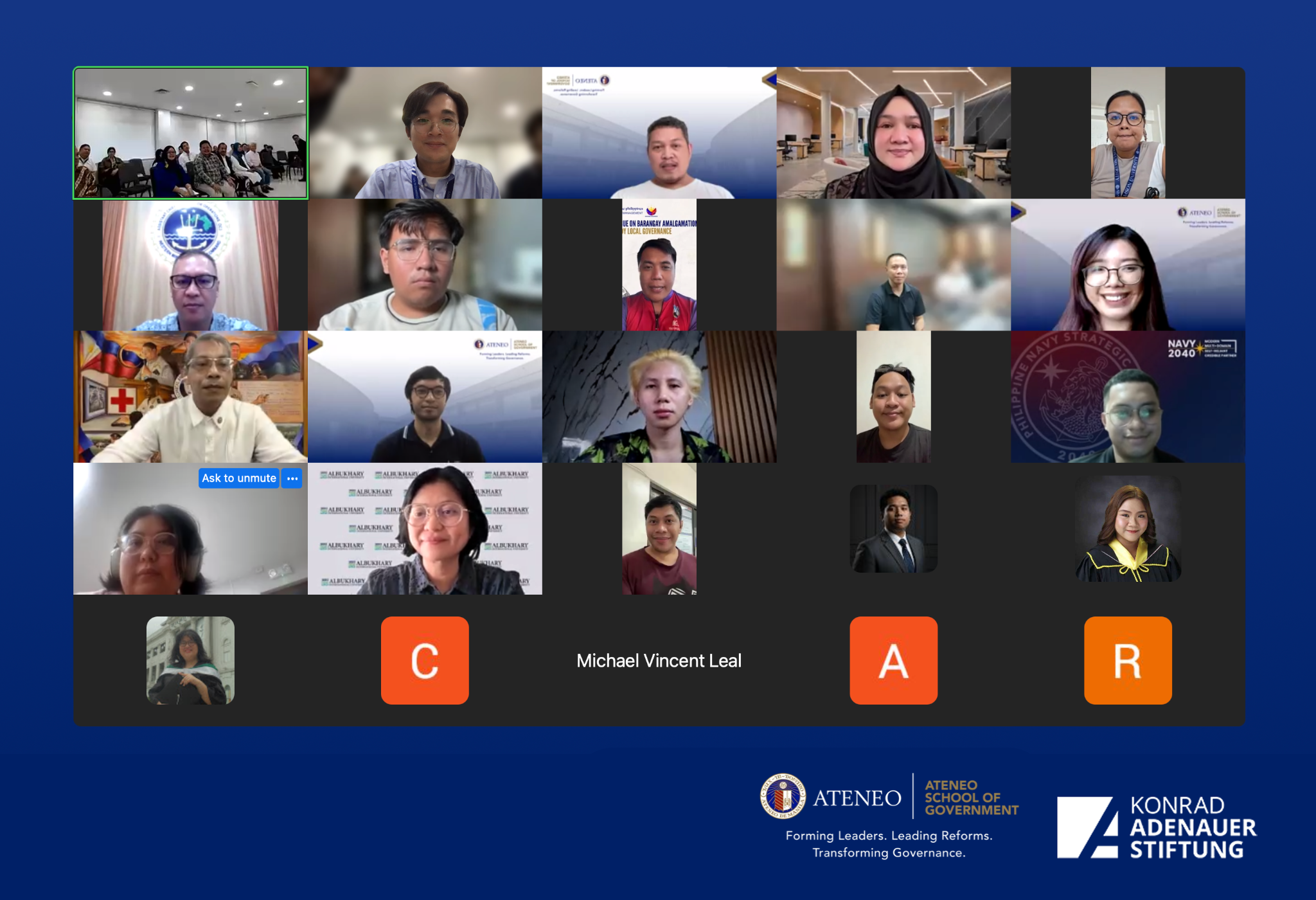
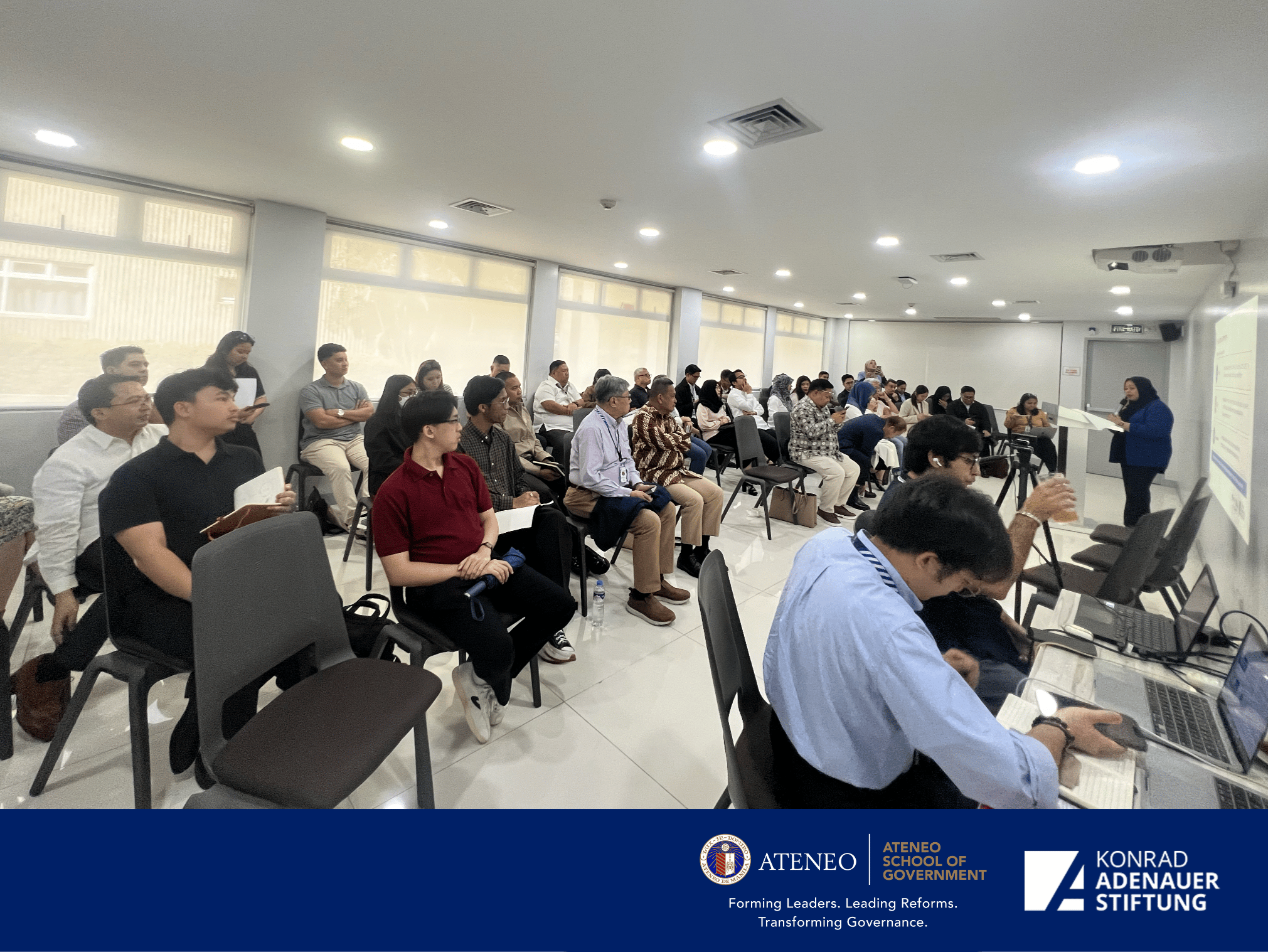
On 19 October 2026, the Ateneo School of Government (ASOG), through its research and policy unit, the Ateneo Policy Center (APC), and in partnership with the Konrad-Adenauer-Stiftung Philippines (KAS Philippines), hosted a hybrid brownbag session titled “The Southern Philippines in Focus: Illicit Flows and Regional Cooperation in Maritime Security.”
The session convened more than 80 participants, both onsite and online, representing national government agencies, Bangsamoro Autonomous Region in Muslim Mindanao (BARMM) ministries, civil society organizations, and academic institutions from across the country. It featured presentations and discussions of findings from two recently completed APC studies: “The Southern Backdoor: Examining the Southern Philippines’ Transnational Entry/Exit Point” and “Regional Cooperation in Motion: An Assessment of the INDOMALPHI Trilateral Cooperation Agreement (TCA) on Philippine Sulu-Sulawesi Maritime Security.”
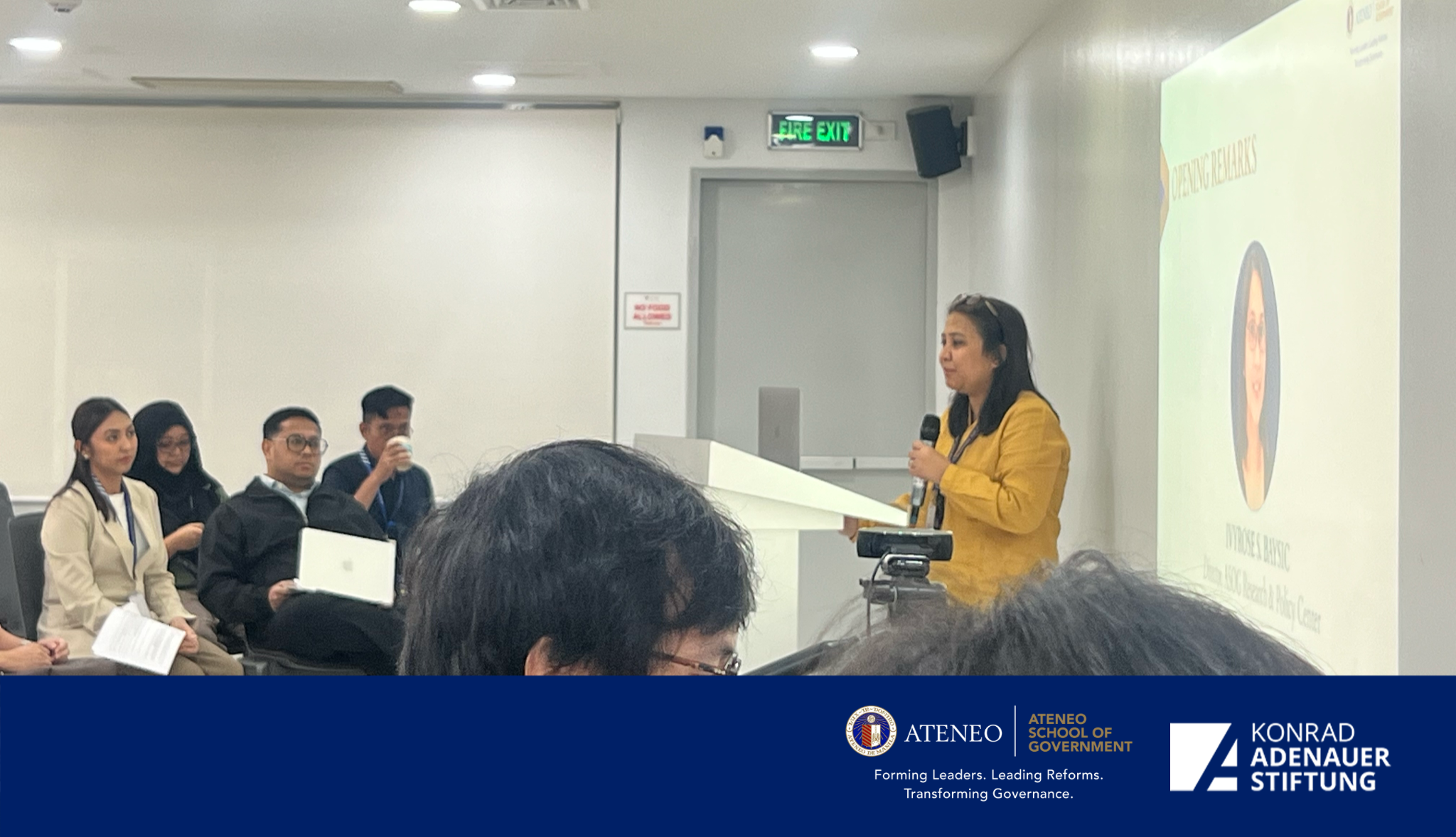
In her opening remarks, ASOG Research & Policy Center Director Ms Ivy Baysic highlighted the importance of focusing on policy issues that are not always given enough attention, such as that of the Southern Philippines’ maritime security. She added that the brownbag session was organized not only to discuss the findings of the concluded studies, but also to raise the profile of the issues, add evidence to policy debates, and stimulate the discussion that reflects the realities and perspectives of communities and institutions in the region.
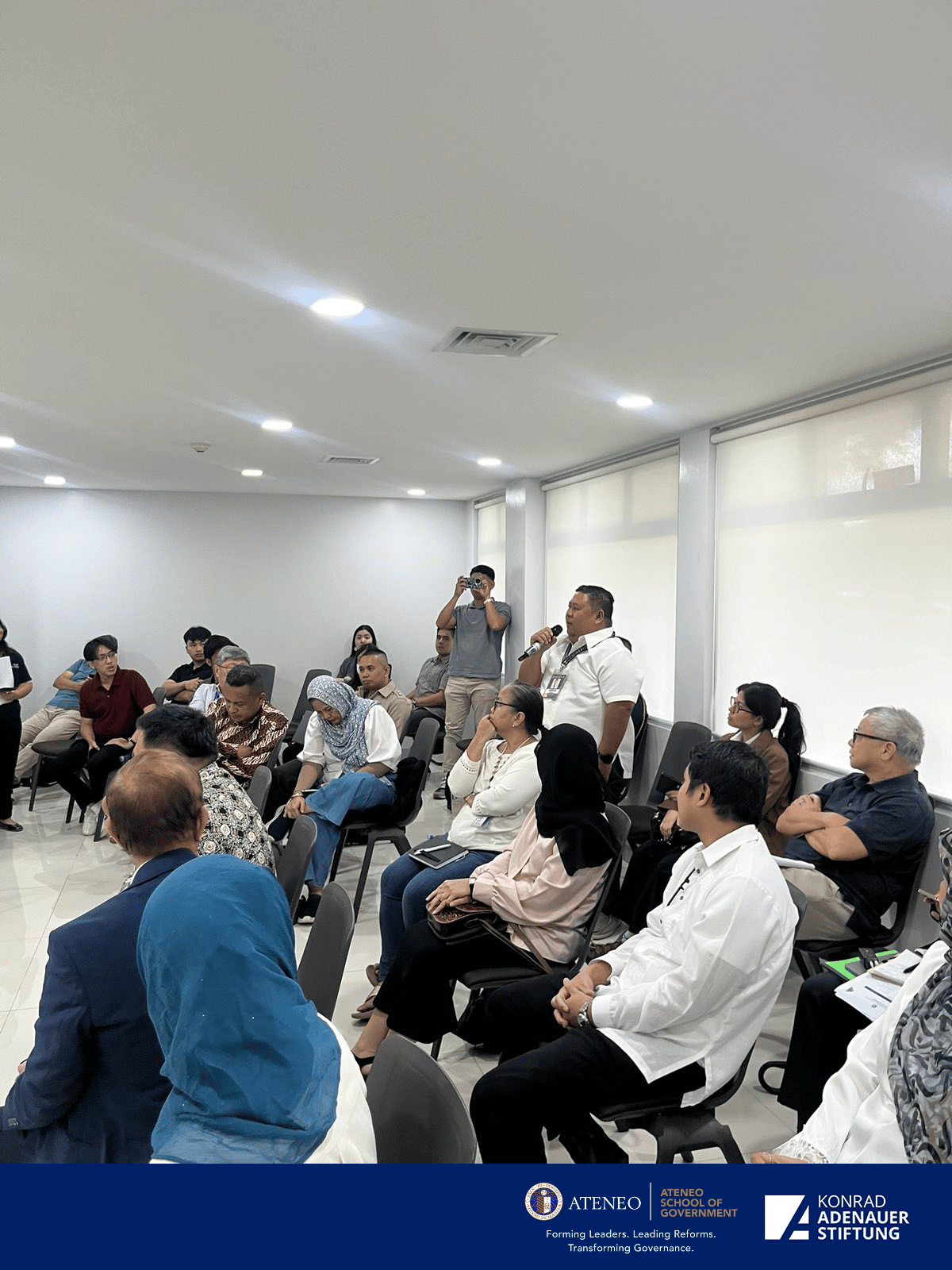
The first study, presented by Member of the Bangsamoro Parliament-elect Amir S Mawallil looks into the Southern Backdoor, a porous maritime border in the southern Philippines that serves as an illicit entry and exit corridor for people and goods, and how the region has become a hub for unauthorized cross-border activities. The findings of the study show that, over the past decade, the evolution of illicit flow typologies in the Sulu-Sulawesi maritime corridor is one of recomposition rather than recession, and the study has been able to periodize the evolution.
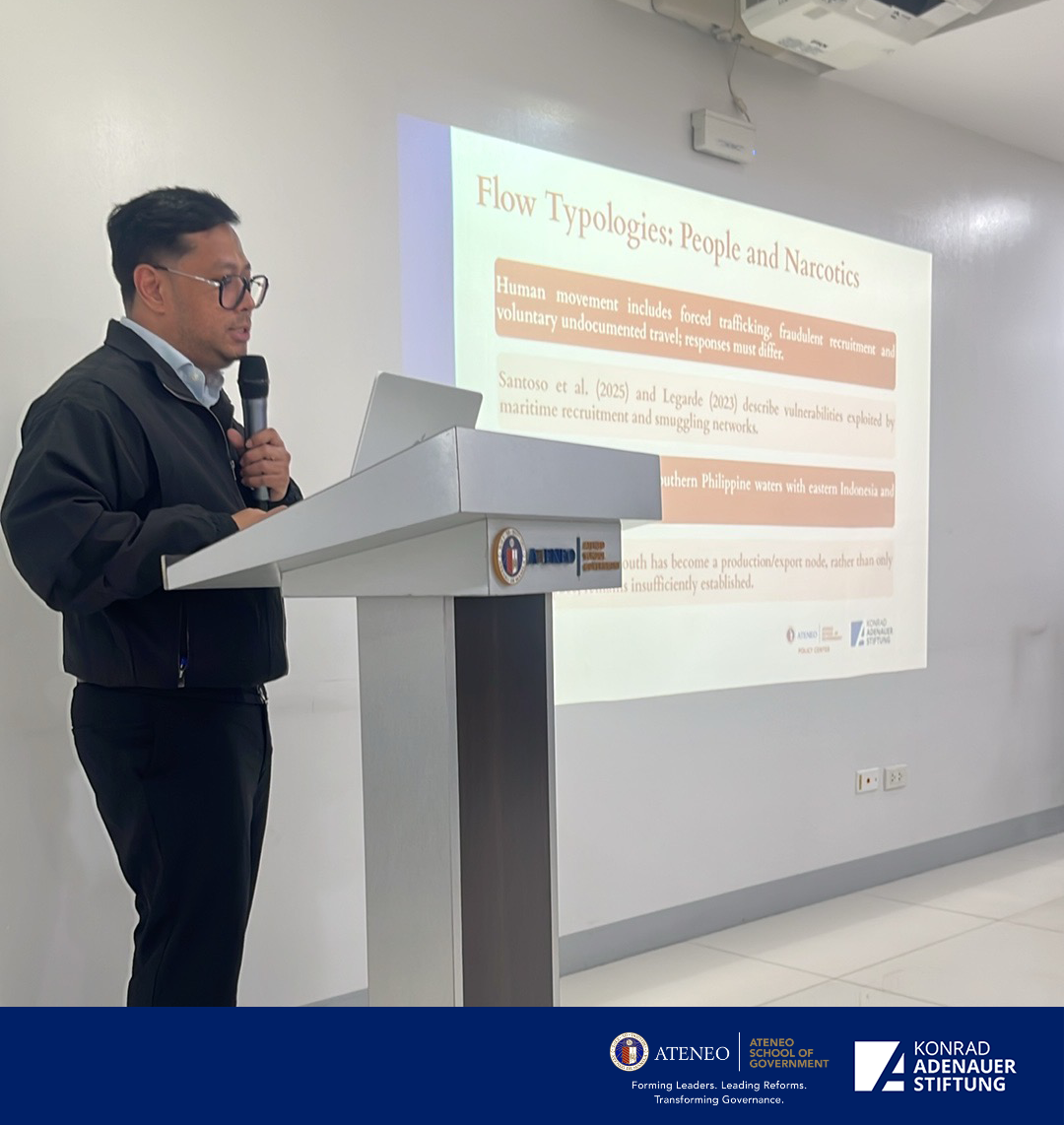
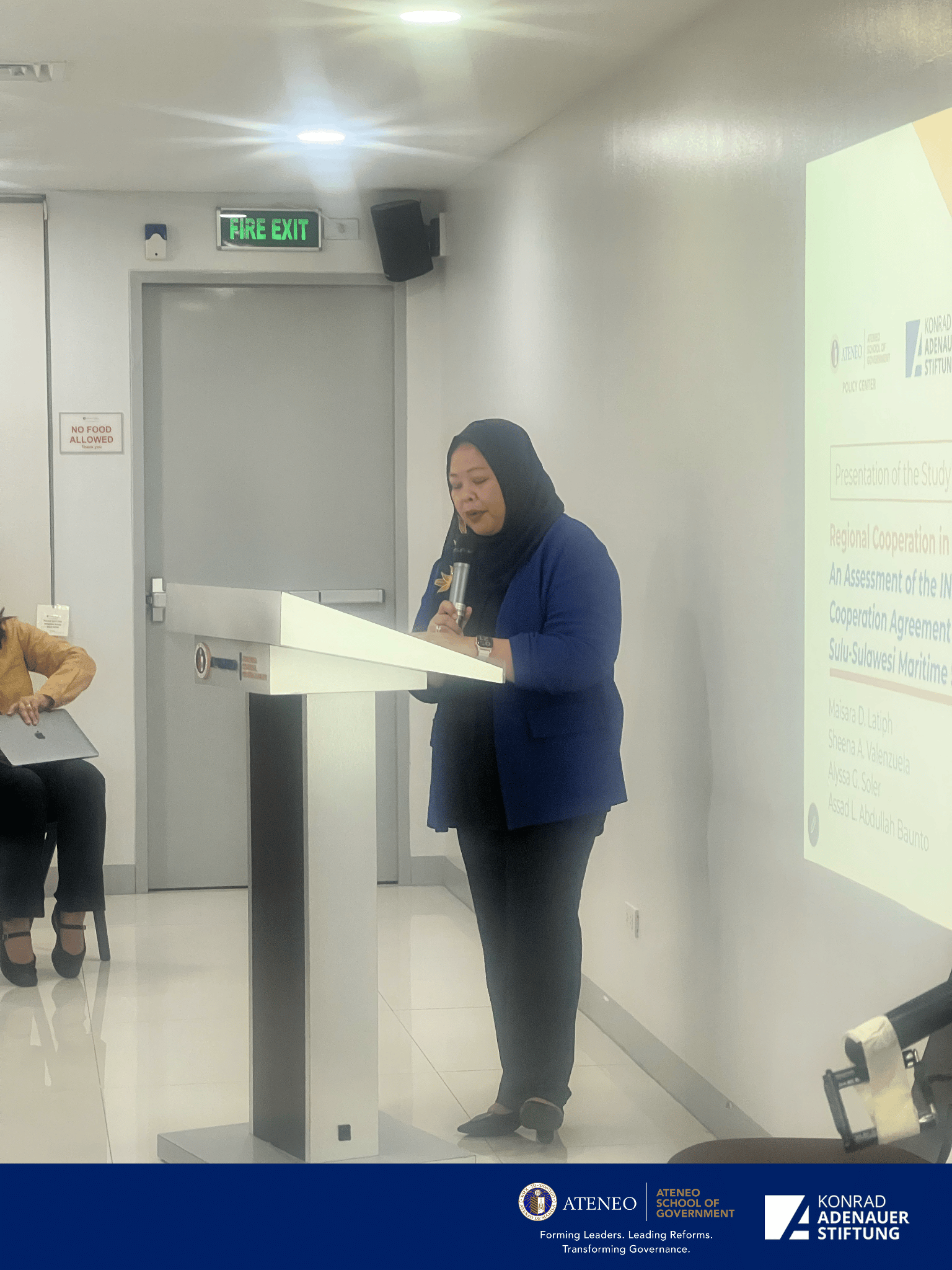
The second study, presented by Atty Maisara D Latiph, assessed the INDOMALPHI TCA in the Sulu Sulawesi seas. The study found that the development of the TCA, alongside national military operations, peacebuilding efforts, and improvements in local governance, led to declining crew abductions. Atty Latiph mentioned that while formal procedures are in place through the TCA, informal trust contributes to the effectiveness of the TCA. She concluded by presenting policy recommendations based on a two-track approach: track one involves implementing institutional changes under existing consent, while track two details the expansion of the TCA.
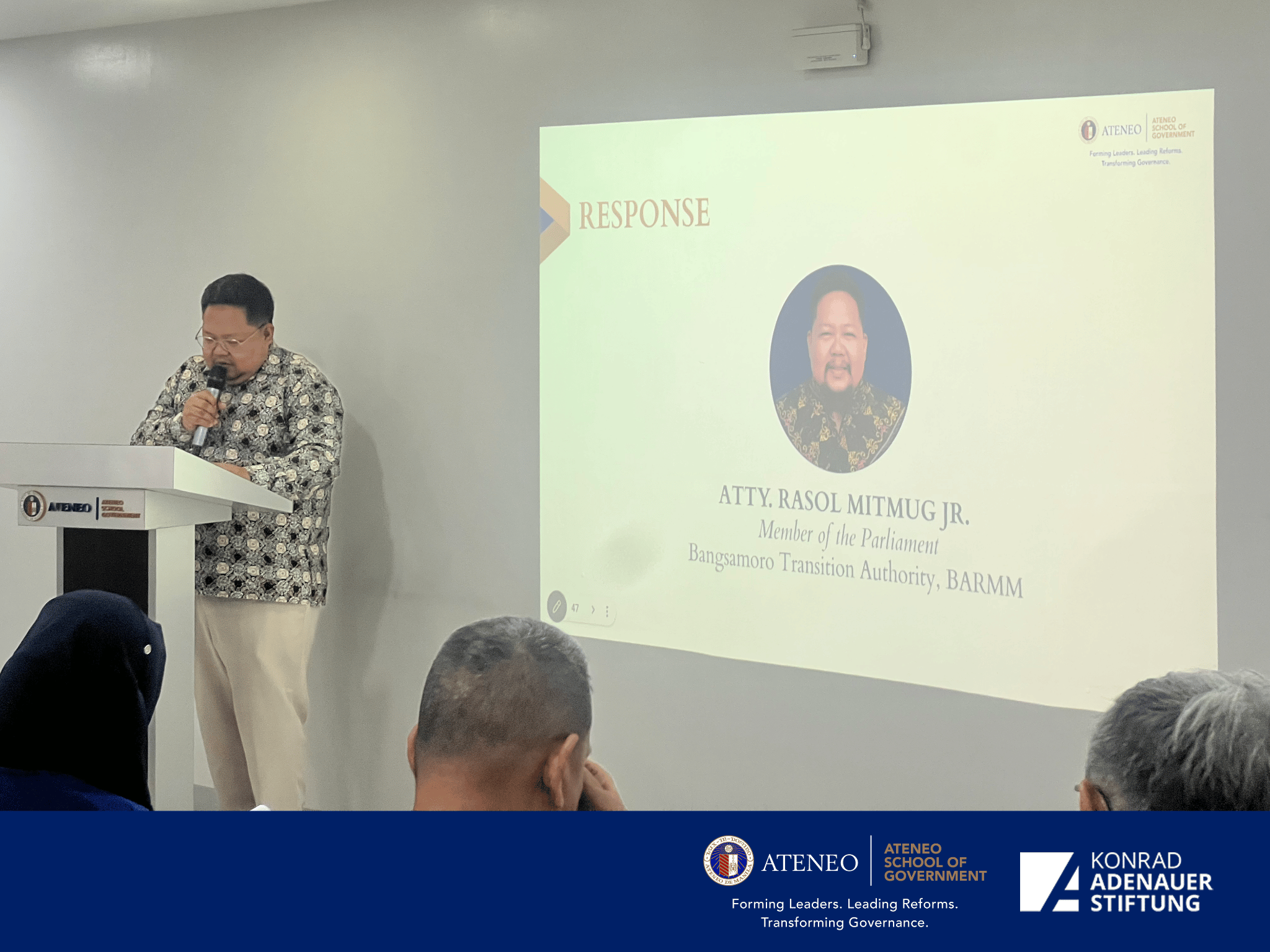
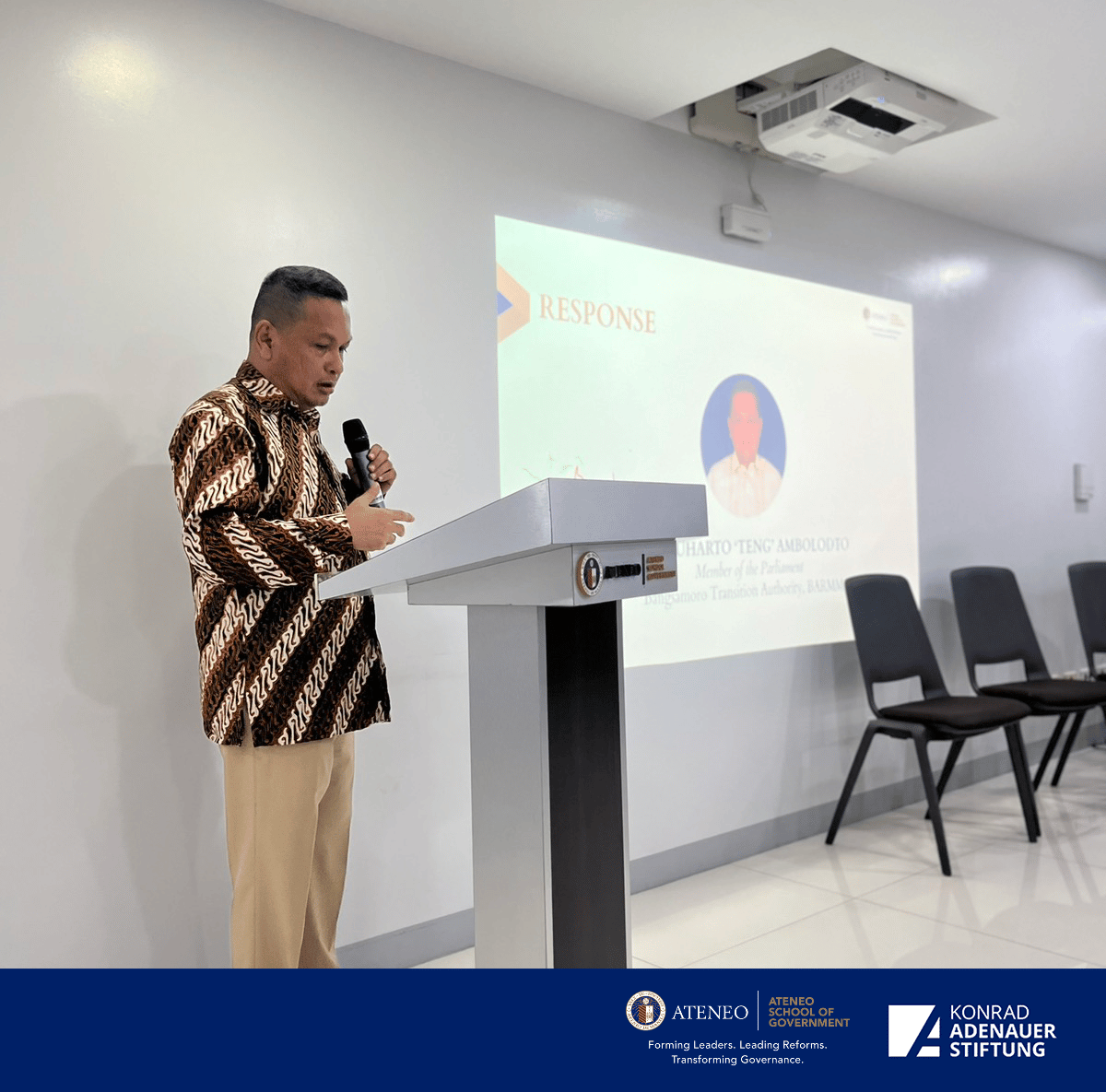
After each presentation, former Members of Parliament Atty Rasol Mitmug, Jr and Atty Suharto ‘Teng’ Ambolodto, shared their reactions and insights to advance the discussion on the Southern Backdoor and TCA. The discussion also explored strengthening the Bangsamoro Autonomous Region in Muslim Mindanao's (BARMM) role in maritime governance, improving coordination with the national government, and identifying future research opportunities.
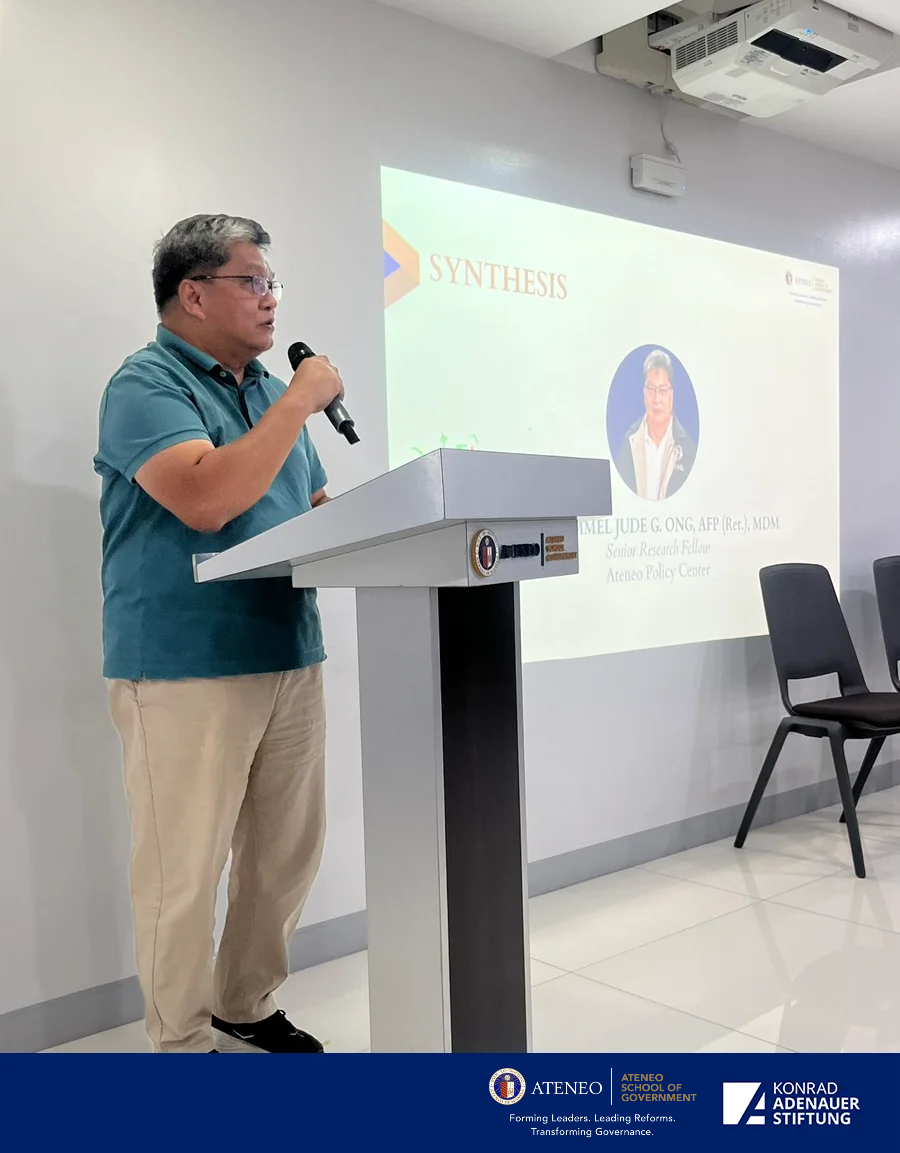
The event concluded with synthesis and closing remarks from ASOG Senior Research Fellow RAdm Rommel Jude G Ong. Drawing from his firsthand experience in implementing the TCA during his time in the Navy, he emphasized that insecurity must be understood within its historical and socioeconomic context and also advocated for BARMM’s ownership of the TCA.
Recent News
You may also like these articles
Updating of Medical Records Second Semester SY 2026-2027
14 November 2026 TO: Undergraduate and Graduate Students FROM: Higher Education Office of Health Services-College SUBJECT: Updating of Medical Records Second Semester SY 2026-2027 Please

Promotion of Faculty in the Senior High School (Memo U2627-050)
(Memo # U2627-050) I am pleased to announce that upon the recommendation of the Senior High School Committee on Faculty Rank and Permanent Appointment and the endorsement of the Vice President for Basic Education, I am approving the promotion of the following faculty members in the Senior High School:

Demise of Mr Silvestre P Villarin(Memo U2627-049)
(Memo U2627-049) We extend our condolences to Fr Jose Ramon “Jett” T Villarin SJ and his family on the passing of his father, Mr Silvestre Villarin, on 18 November 2026 at the age of 96. Fr Villarin is the former University President, a faculty member of the Department of Physics, and the Executive Director of the Manila Observatory.

[AGS] National Book Week
Open a Book, Stories Unfold, Wonders Flow Let us come together as one AGS community to celebrate the 92nd National Book Week with the theme

Three Ateneo-incubated startups secure DOST-PCIEERD’s startup grant fund
Last 9 November, during the opening day of Philippine Startup Week 2026, Soolok Properties Inc, Pili AdheSeal Inc, and Saltric Power (PDG Engineering Services), three
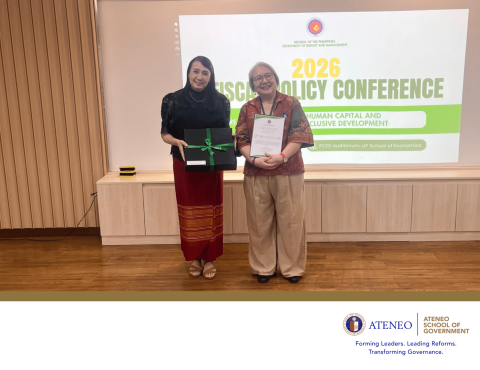
Ateneo Policy Center presents study on local health spending at DBM Fiscal Policy Conference 2026
On 19 October 2026, the Ateneo School of Government, through its research and policy unit, the Ateneo Policy Center (APC), presented findings from a study