Bridging silos in care: The RGL Hub centers collaboration in the second session of Kumilos
06 Oct 2026 | Aliah Gabrielle Pangilinan, Jose Rafael Palomares



The Dr Rosita G Leong Primary Care Hub (RGL Hub), in partnership with the Philippine Society of Public Health Physicians (PSPHP), convened the second session of the Kumilos Series, Collaborating for Care: Teams Across Facilities and LGUs, on 26 September 2026, at the AGSB Rockwell Amphitheater and via Zoom, drawing nearly 1,100 onsite and online participants.
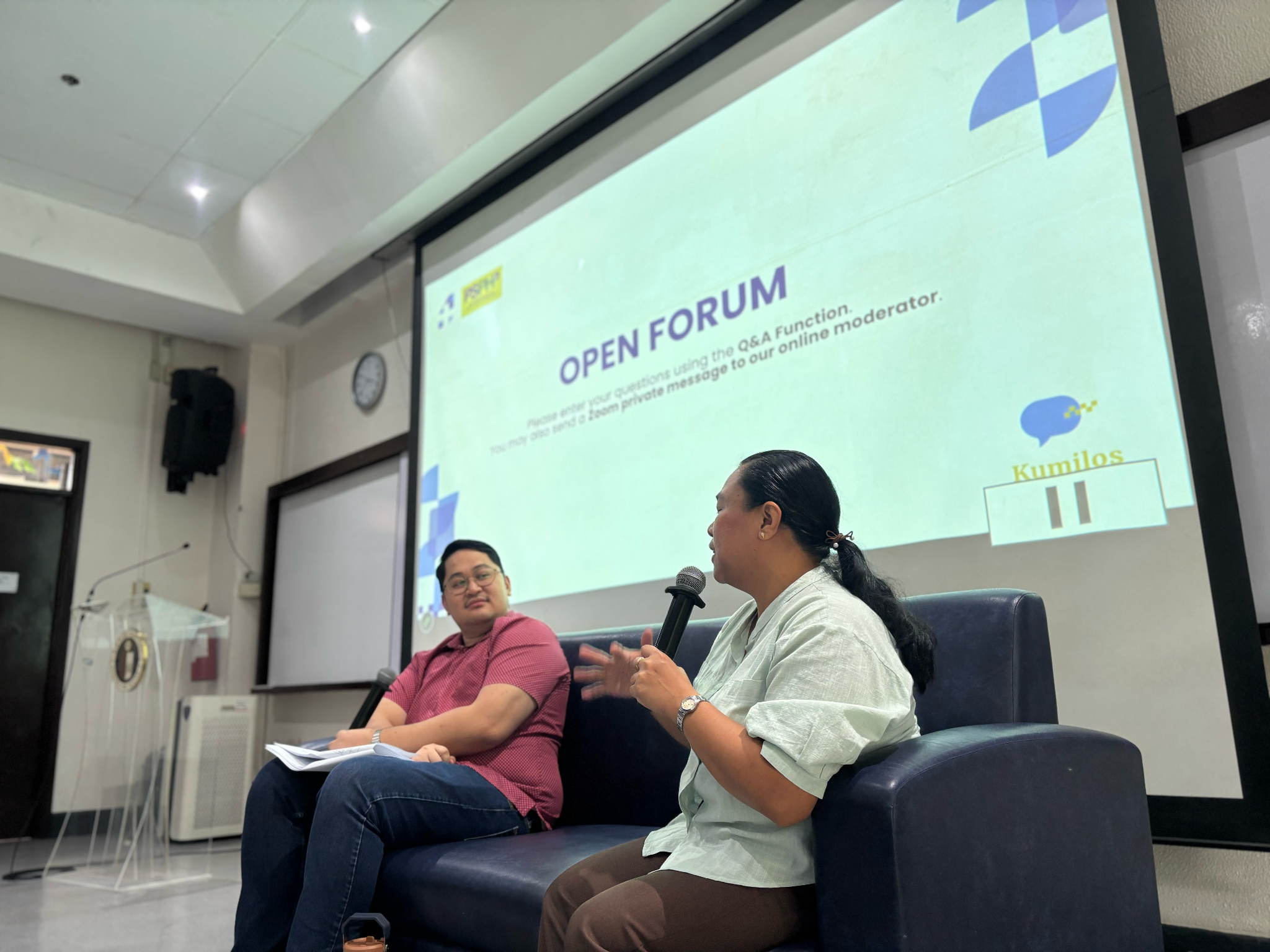
Jacel Francesca “Cheska” de Jesus, MD, MBA (ASMPH 2020), RGL Hub Team Lead, welcomed participants with a brief introduction to the Hub and the series, before RGL Hub Advisory Board member and School of Medicine and Public Health Dean Cenon “Dodie” R Alfonso, MD delivered the opening remarks. Dr Alfonso reflected on the challenge of translating the direction set by the UHC Act into the everyday experience of patients, highlighting the importance of dependable primary care teams, closed-loop referrals, attention to social needs, and measures that capture where fragmentation affects care most. Fellow Advisory Board member Dr Loewe O. Go also joined the gathering. Paulo Remudaro, MD, MBA, MPH (ASMPH 2019) moderated the discussion on behalf of the Philippine Society of Public Health Physicians (PSPHP), the Hub’s partner in the Kumilos Series.
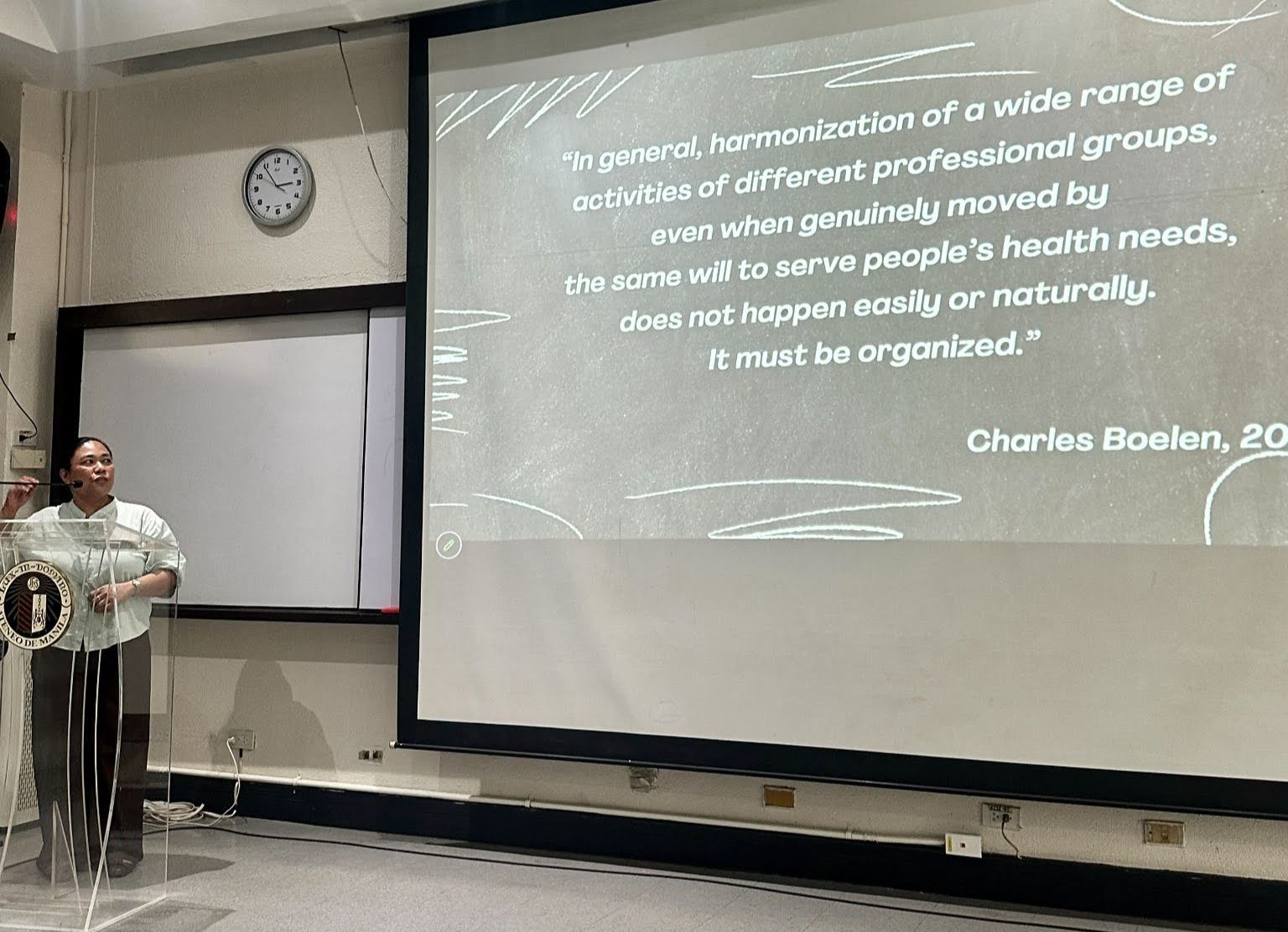
Louricha A Opina-Tan, MD, FPAFP, Associate Professor and physician at the University of the Philippines Manila Department of Family and Community Medicine, led the discussion on collaborative practice, drawing attention to the relationships, structures, and professional cultures that shape healthcare delivery across settings. For Dr Opina-Tan, the need for collaboration begins with a familiar challenge in Philippine health care: fragmentation.
“The purpose of UHC is really integrating the system, because the Philippine experience really has fragmentation.”
Integration, however, cannot be reduced to bringing different professionals into the same facility or referral network. Fragmentation is also shaped by how the health workforce is organized, how responsibilities are distributed across institutions and local governments, and by the social conditions that influence people’s health. Collaborative practice cannot resolve these structural challenges on its own. Yet it remains integral to an effective health system: comprehensive care depends on people across professions and settings being able to coordinate, share responsibility, and respond to needs that no single provider can address alone.
“Collaborative practice can only solve one aspect, but nevertheless we have to solve it.”
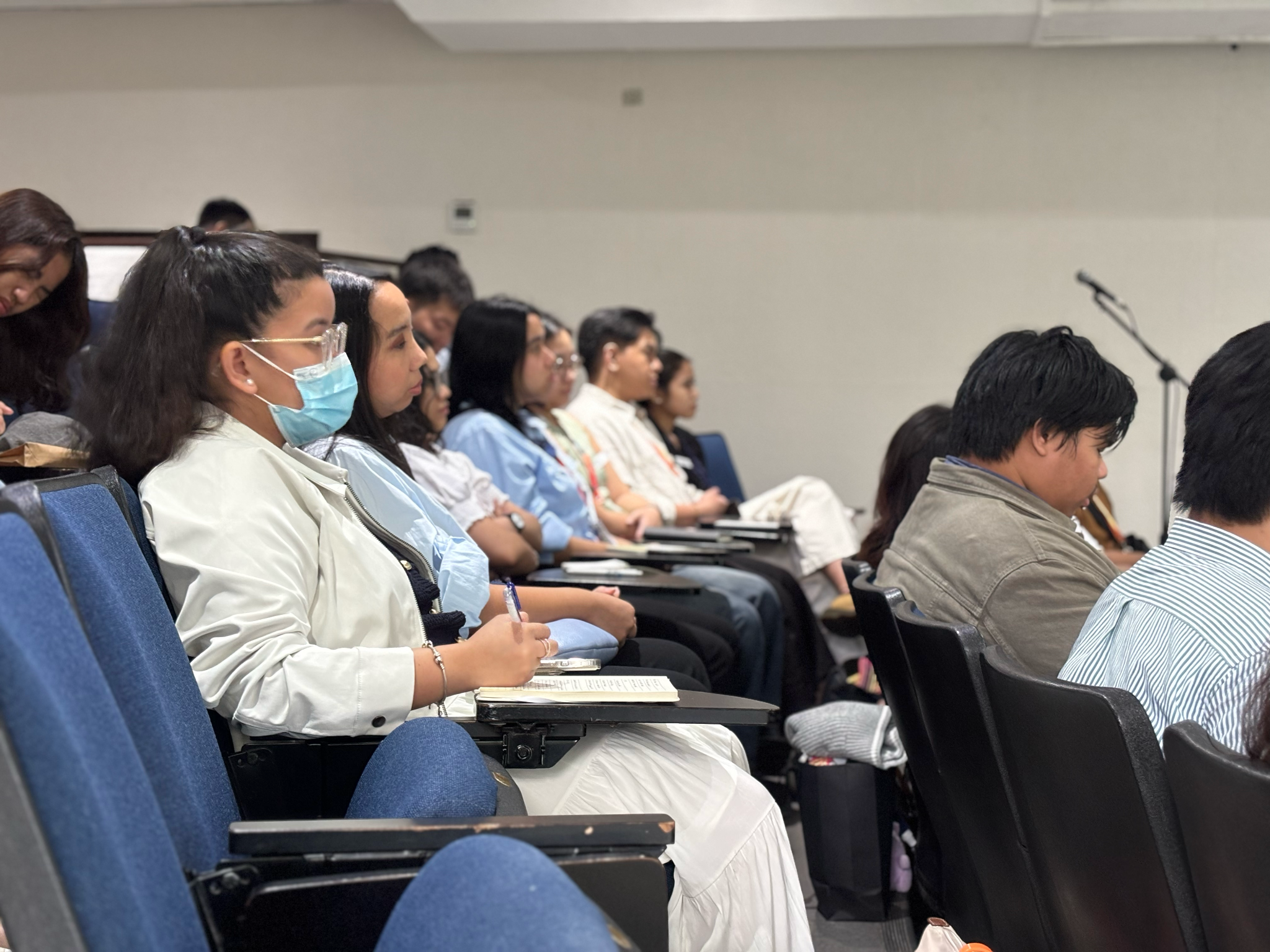
Dr Opina-Tan also emphasized that collaboration, while important, is only one part of a much larger health system response. At its core, collaboration is not an end in itself, but a way of organizing care around the patient, family, and community. This responsibility extends beyond relationships among healthcare professionals. It also requires communities to be recognized as partners—with their own knowledge, priorities, and role in shaping the decisions that affect their health. Integration, then, requires change across multiple parts of the system—from how health professionals are trained and organized to how institutions, local governments, and communities work together. Collaborative practice is only one piece of that larger work, but an essential one if care is to be organized around people rather than remain fragmented across institutions.
As the session came to a close, Dr Opina-Tan returned to the larger work of building an integrated health system:
“Build the puzzle little by little until all pieces are together.”
For Philippine healthcare, those pieces include how professionals are trained to work together, how institutions and local governments sustain partnerships, and how patients and communities are given a meaningful role in decisions that affect their health. Integration will not be achieved through one reform alone, but through the steady work of connecting these parts into a system that can respond more coherently to the people it serves.
The Dr Rosita G Leong Primary Health Care Hub (RGL Hub) is the lead office in Ateneo de Manila University’s network working on strengthening and supporting primary care in the Philippines. For potential partnerships and collaborations with the RGL Hub, interested parties may reach out to Dr Cheska De Jesus via email at rglhub@ateneo.edu.
Recent News
You may also like these articles
Beyond words: ASMPH equips future physicians to bridge healthcare gaps through deaf awareness and sign language
Great medicine begins with understanding, yet for many deaf and hard-of-hearing patients, a visit to the clinic can feel isolating when communication barriers get in
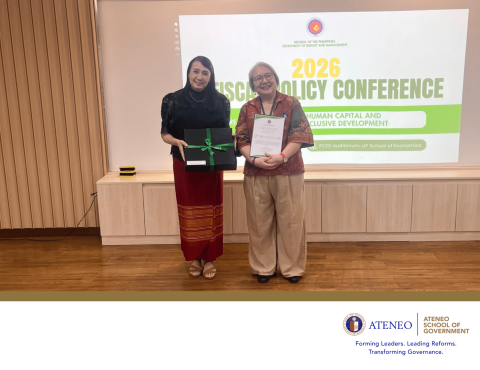
Ateneo Policy Center presents study on local health spending at DBM Fiscal Policy Conference 2026
On 19 October 2026, the Ateneo School of Government, through its research and policy unit, the Ateneo Policy Center (APC), presented findings from a study
Dr Dennis B Batangan joins global panel on commercial determinants of health at PMAC 2027
Dennis B Batangan, MD, Public Health Specialist, Research Program Director, and Research Scientist at the Ateneo de Manila University's Dr Rosita G Leong School of
Ateneo research helps shape Pasig City's landmark health data governance policy
Research developed at Ateneo de Manila University has helped shape a pioneering local government policy that strengthens the secure, ethical, and responsible use of health
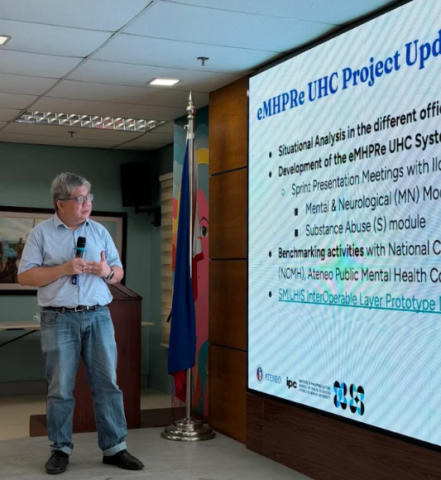
Ateneo advances digital mental health systems through eMHPRe UHC project
Ateneo de Manila University continues to strengthen the use of research and technology in improving public health systems through the Electronic Mental Health Program Registry
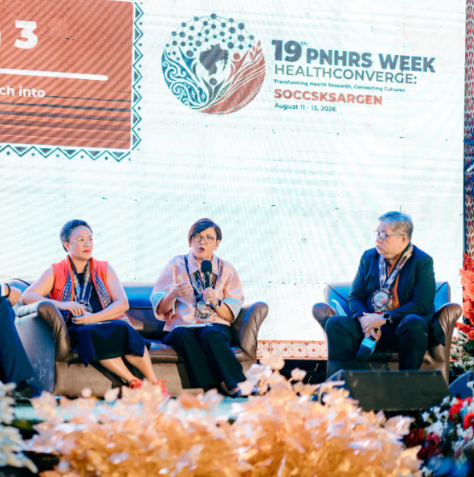
Dr Dennis Batangan highlights research-to-policy Pathways at 19th Philippine National Health Research System Week
Dennis B Batangan, MD, Public Health Specialist, Research Program Director, and Research Scientist at the Dr Rosita G Leong School of Social Sciences (RGLSOSS), Ateneo