AIS hosts second run of gamified climate and disaster resilience learning session
27 Oct 2026 | by Sophia Araneta and Nicolo Da Silva





Together with The Role We Play III: Yesterday, Today, and Tomorrow, an Areté Sandbox Project, the Ateneo Institute of Sustainability (AIS) participated in this year’s Talakayang Alay sa Bayan (TALAB) through a second installment of “Ready, Set, Resilience!”. Building off of its first run in February, the Climate and Disaster Resilience (CDR) program once more introduced students to climate and disaster risk concepts through a series of innovative games. In harmony with this year’s TALAB theme: “Forging Solidarity in Diversity,” the four-hour event sought to instill the value of safeguarding human dignity in the context of the climate crisis, while expressing solidarity with all forms of creation through scenario-building, problem solving, and collaboration. Participants were guided through a total of six different games held simultaneously at the Areté Sandbox Zone on 13 October 2026, with each one featuring its own unique mechanics and learning outcomes.
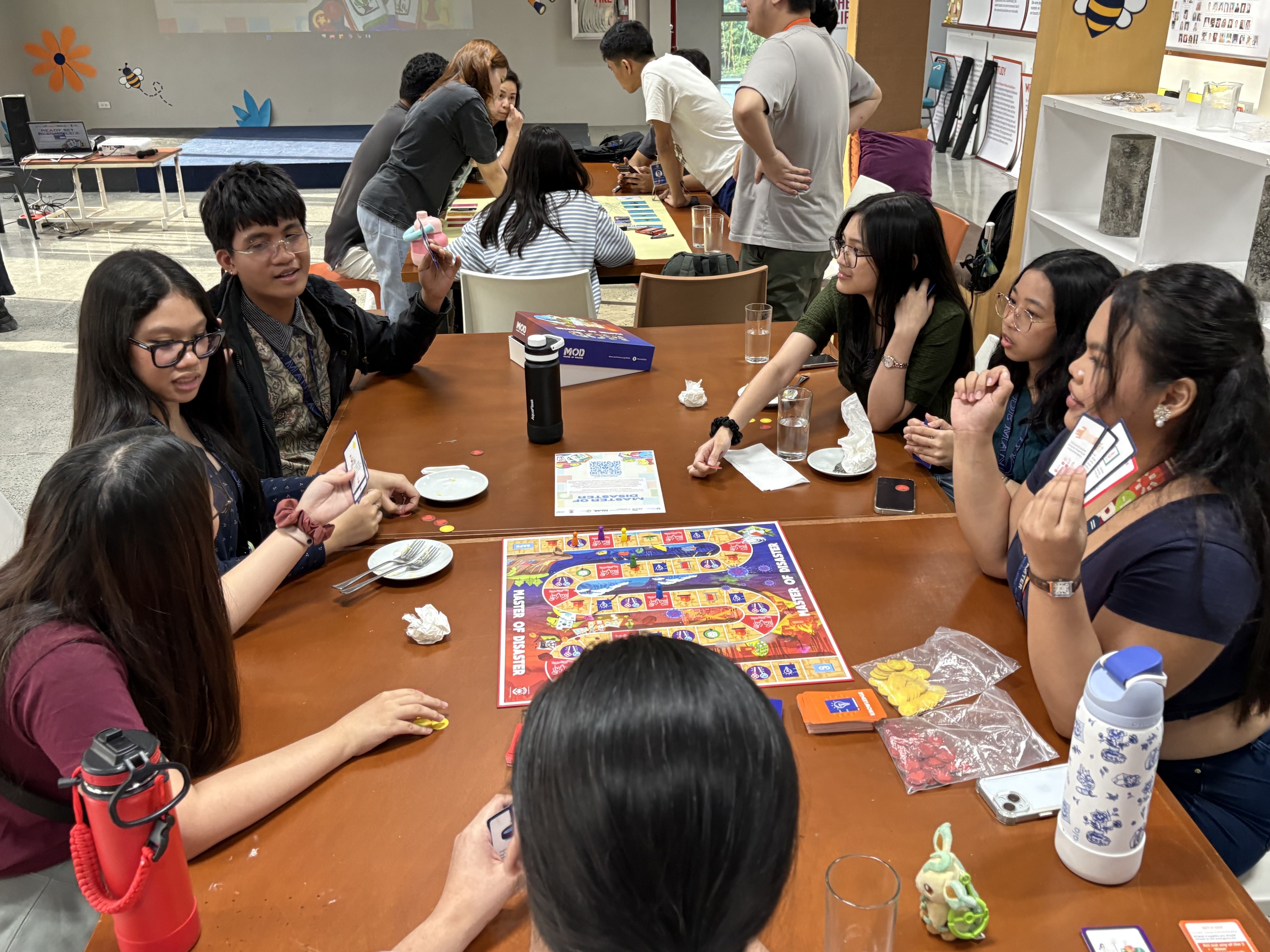
Exploring the relationship between development and sustainability, Resilience: Survive and Thrive placed participants in the roles of community leaders who shared natural resources while competing to develop their respective communities. The game, facilitated by Program Head for CDR Mr Daniel C Ratilla and Department of Environmental Science Instructor Ms Cleodette Lagata, presented the inherent tensions of pursuing development and environmental stewardship, prompting consideration on how resource use and competing priorities can influence a community’s long-term well-being. Complementing this, Master of Disaster focused on preparing for and responding to different hazards, including geohazards, climate-related hazards, and health hazards. The game, facilitated by Department of Environmental Science Instructor Mr Emmanuel Lacadin and CDR interns Ms Ella Roschaine Resurreccion and Mr Miguel Christopher M Delos Reyes, emphasized the importance of appropriate responses but also collaboration in strengthening disaster preparedness and resilience through critical decision-making.
The importance of understanding environmental systems was further explored through Kalikasan and Adaptation Fresk. In Kalikasan, participants created and managed ecosystems that support biodiversity endemic to the Philippines, with gameplay rewarding ecosystem connectivity and habitation patterns observed in nature. The activity, led by CDR interns Mr Knights Macalad and Mr Ambrose James Torreon, highlighted the relationships between biodiversity and ecosystem management, emphasizing the importance of maintaining ecological balance. Meanwhile, Adaptation Fresk, facilitated by Ms Nisha Alicer of Climate Fresk Philippines, examined the factors that shape disaster risk and explored how adaptation depends on the specific contexts in which hazards and vulnerabilities arise. Together, the games connected environmental management with disaster resilience, underscoring the need to understand both natural systems and the conditions that influence communities’ capacity to respond to risks.
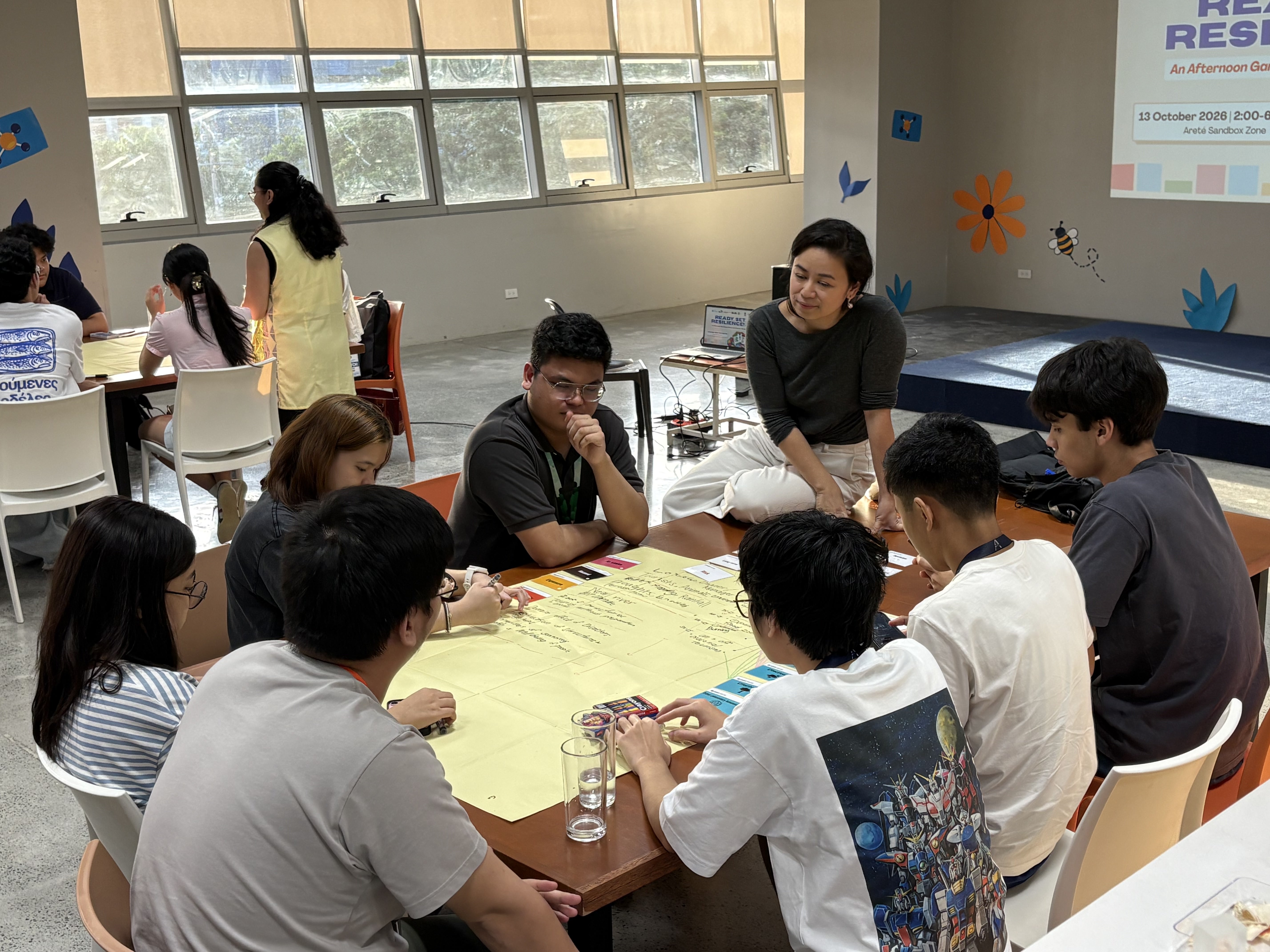
Extending these discussions to the climate crisis and everyday systems, Climate Fresk and Agri’Food Collage explored the interconnectedness of environmental and societal challenges. In Climate Fresk, facilitated by Ms Marimar Baticulon and Ms Ysabel Calderon of Aqo Partners, participants arranged sets of cards featuring concepts and phenomena to map the causes, consequences, and relationships underlying climate change. This process offered a structured way to examine how different factors interact within the climate system. Meanwhile, Agri’Food Collage, facilitated by Mr Sven Romberg of Climate Fresk Philippines, provided an overview of food supply systems and their impacts on climate and society. By bringing these interconnected issues into an interactive learning environment, the games linked climate awareness with broader questions of food systems and societal well-being, reinforcing the value of understanding sustainability challenges through their relationships rather than in isolation.
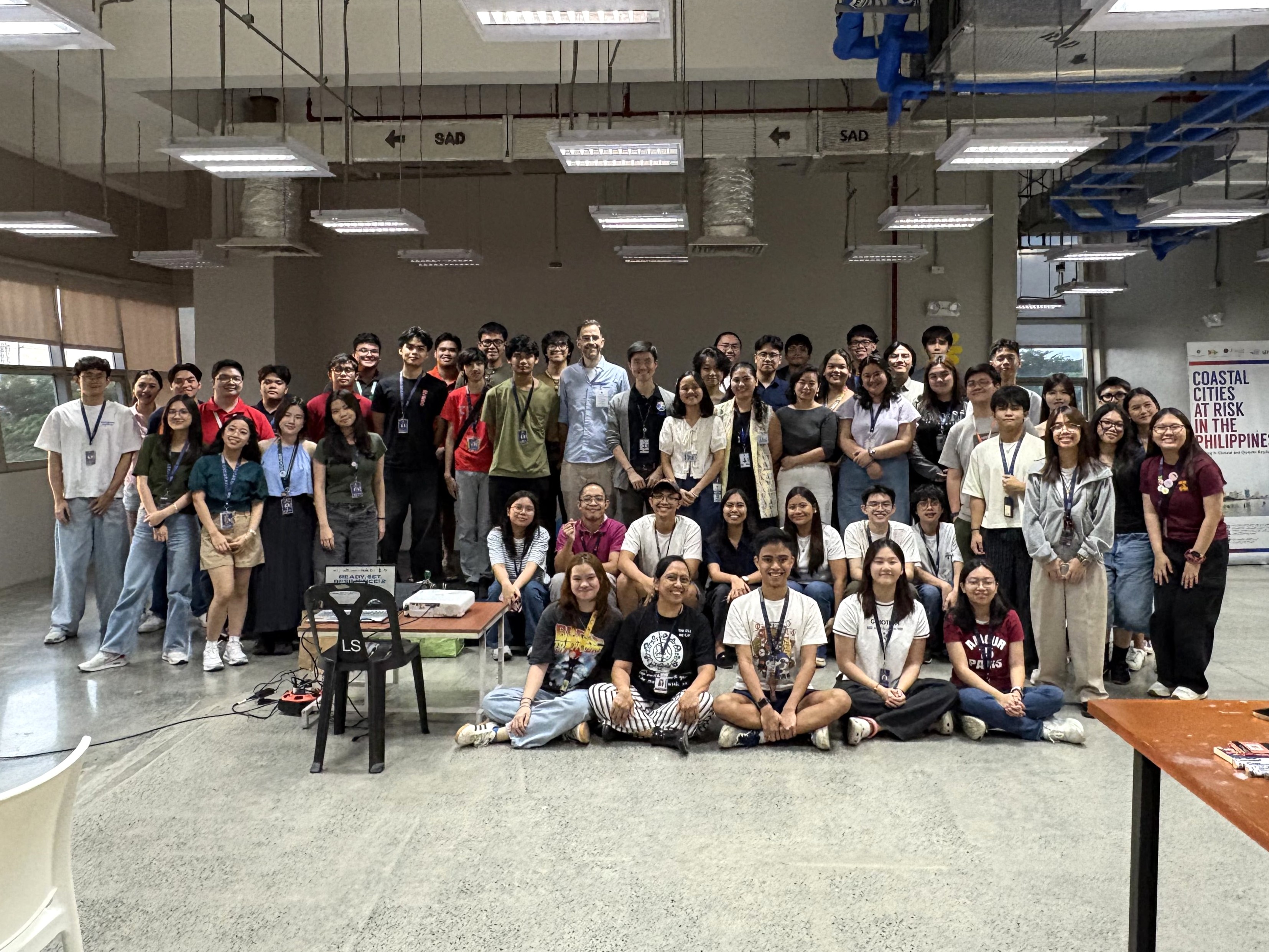
Up until the last second of the event, several tables still had participants on the edge of their seats itching to know who won in their respective rounds and games. Some games required more reflection and a quiet space, while others involved more wit and quick thinking. What was common, though, were the smiles shared among familiar faces, those who were once strangers, and even fierce-competitors-turned-friends from this revamp of “Ready, Set, Resilience!”. Through this year’s TALAB, AIS and its partners further explored how experiential learning offers a way to bridge the gap between understanding environmental challenges and navigating their real-world complexities. By placing participants in situations that call for critical thinking, resource management, and collaborative decision-making, interactive activities can make abstract concepts more tangible to everyday realities. This approach is particularly relevant to climate and disaster resilience, where risks are interconnected and effective responses depend on understanding both environmental conditions and societal vulnerabilities. Through gameplay, these complexities become opportunities to examine relationships between human decisions, community well-being, and Earth, our common home with all of creation.
Recent News
You may also like these articles

Growing with purpose: How Mekeni Food Corporation turns adversity into shared value
From a small backyard operation in Porac, Pampanga, to an internationally recognized food brand exporting to 25 countries, Mekeni Food Corporation's journey demonstrates how businesses

Three Ateneo-incubated startups secure DOST-PCIEERD’s startup grant fund
Last 9 November, during the opening day of Philippine Startup Week 2026, Soolok Properties Inc, Pili AdheSeal Inc, and Saltric Power (PDG Engineering Services), three

Ateneo de Manila Grade 2 students are the little Earth helpers
It was a great day for saving the world when Ateneo Institute of Sustainability (AIS) came to Ateneo Grade School to give a session on

JGSOM representatives complete green finance training in Poland, sets sights on 2027 micro-credential launch
Representatives of Ateneo de Manila University's John Gokongwei School of Management (JGSOM) completed the second phase of their Erasmus+ Green Finance international mobility activities at

JGSOM Representatives Participate in Green Finance Training at the University of Twente
Enschede, Netherlands | October 15–16, 2026 Representatives of Ateneo de Manila University's John Gokongwei School of Management (JGSOM) participated in a specialized Green Finance training

Professor Emeritus Dr Emma Porio highlights climate resilience and biodiversity at international conferences
Emma E Porio, PhD, Professor Emeritus of Ateneo de Manila University and Principal Investigator of Ateneo's Manila Observatory Center for Climate Resilience and Public Health