Can AI help bridge the public health gap?
25 Sep 2026 | Danika Geronimo, Ateneo Research Communications






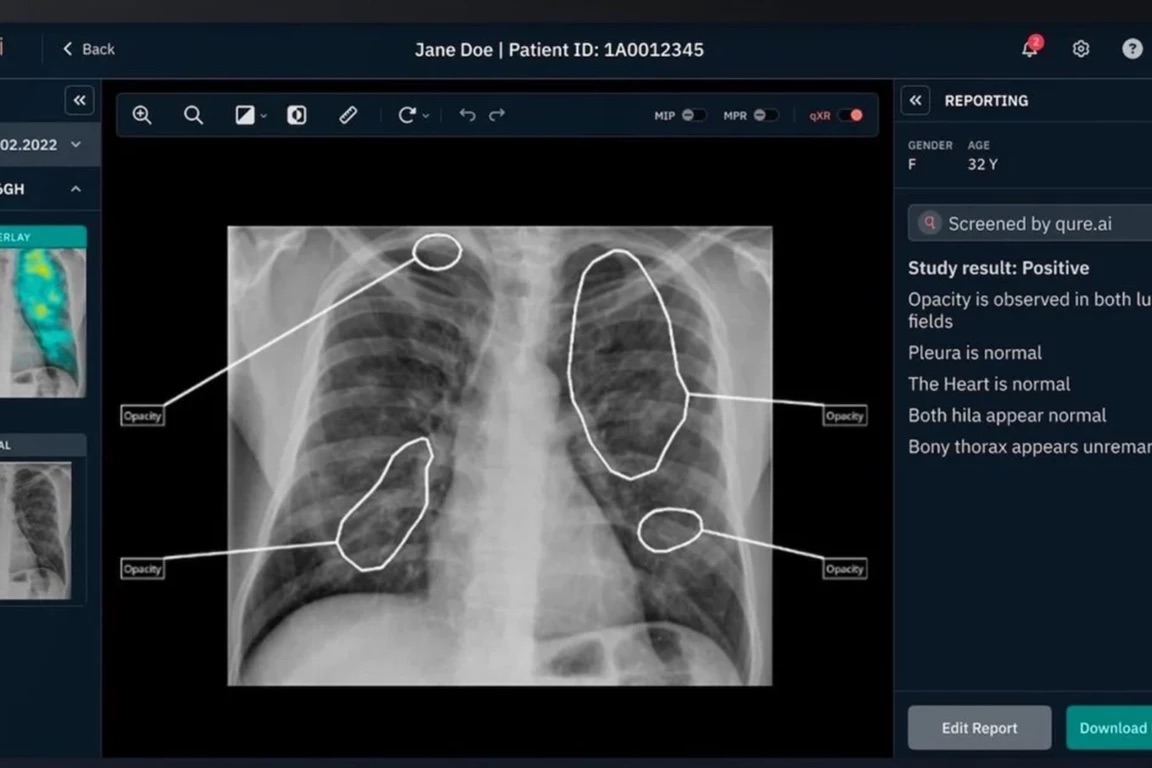
PHOTO: Chiu et al., 2026
In the Philippines, public healthcare remains inaccessible to many due to a variety of factors, including the high cost and limited availability of medical experts.
A new study by Ateneo researchers explores how artificial intelligence (AI) can help address this gap by looking at the cost-effectiveness of AI-assisted chest radiograph (X-ray) interpretation.
This is particularly vital for people with tuberculosis (TB), as finding the disease early can mean receiving the care they need before it becomes severe and causes irreversible damage. According to the World Health Organization, in 2024 alone an estimated 739,000 people in the Philippines developed tuberculosis, accounting for 6.8% of the 10.8 million TB cases worldwide.
As with most other diseases, early detection is essential. In geographically isolated or disadvantaged communities and rural health units, even if a patient is lucky enough to have an X-ray taken, waiting for a radiologist or teleradiology services to interpret it may take a long time. For some, that wait can mean another trip to a health facility, additional expenses, time away from work, or a missed opportunity for continued care.
Dr. Harold Chiu, Dr. Bryan Lao, and Dr. Gloanne Adolor developed a decision-analytic model based on a theoretical annual cohort of 1,000 presumptive TB patients undergoing chest radiography in rural health units. The analysis considered costs and outcomes over five years, including AI software and operating expenses, radiologist reading fees, and confirmatory GeneXpert testing.
Based on the study’s model-based projections, the AI-assisted strategy would entail an estimated annual cost of Php 877,330, compared with Php 1.14 million for manual interpretation. Divided across the 1,000 individuals screened, this translated to about Php 877 per person with AI-assisted interpretation, versus about Php 1,142 per person using manual interpretation. The use of AI promised to be economical.
Accessibility beyond efficiency
But the researchers suggest that the significance of AI goes beyond its capability to read an X-ray efficiently.
“For resource-constrained communities, the most important question is therefore not whether AI can outperform or assist an expert reader, but whether it can extend expert-level support to places where expertise is scarce in a way that is affordable, sustainable, and equitable,” the researchers said.
The researchers note that, if properly integrated into existing TB programs through portable digital X-rays and systems that can operate with limited connectivity, AI could help bring TB screening closer to underserved communities.
The goal, they emphasize, should not be to introduce another high-tech tool into healthcare, but to narrow existing geographic disparities.
Importance of local conditions
However, the findings also highlight the importance of local conditions. When a lower manual or teleradiology reading fee was used, or when diagnostic performance estimates from a Philippine scenario were applied, AI remained more effective but was no longer necessarily cost-saving.
The study is based on a theoretical cohort and assumptions about costs and diagnostic accuracy, while AI-assisted findings would still require confirmatory testing. Rather than immediate nationwide adoption, the researchers recommend starting with targeted pilot implementation in underserved rural health units, alongside local validation, quality assurance, monitoring, and budget assessment.
For a country that carries a significant share of the world’s tuberculosis burden and struggles to provide universal healthcare to its citizens, the question may ultimately be less about bringing the newest technology into healthcare and more about where that technology can help deliver expertise to meet the realities of people with the least access to it.
SOURCE: https://archium.ateneo.edu/gsb-pubs/87/
Harold Henrison Chiu, Bryan Christopher Lao, and Gloanne C. Adolor published their research, Cost-effectiveness evaluation of artificial intelligence-assisted chest radiograph interpretation for tuberculosis screening in rural health units in the Philippines , in the August 2026 issue of the BMC Health Services Research journal.
For interview requests and other information about the research, please contact Dr. Bryan Lao at bryan.christopher.lao@student.ateneo.edu and/or Dr. Harold Henrison Chiu at harold.henrison.chiu@student.ateneo.edu .
For other inquiries and concerns, please email media.research@ateneo.edu . Visit archium.ateneo.edu for more information about our latest research and innovations.
Recent News
You may also like these articles
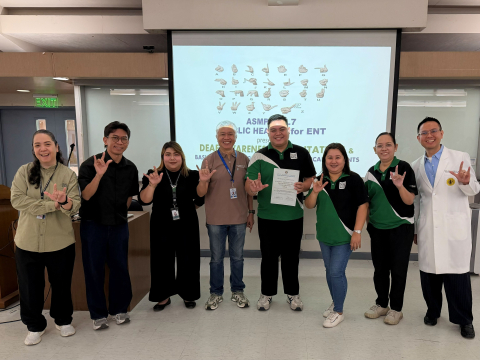
Beyond words: ASMPH equips future physicians to bridge healthcare gaps through deaf awareness and sign language
Great medicine begins with understanding, yet for many deaf and hard-of-hearing patients, a visit to the clinic can feel isolating when communication barriers get in
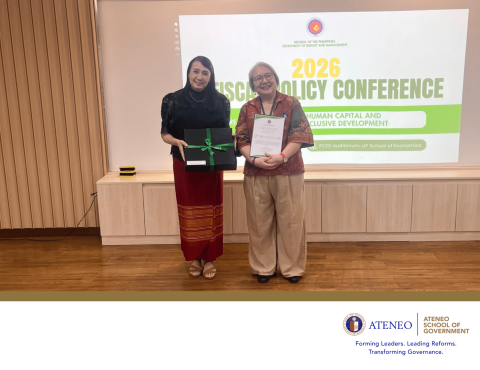
Ateneo Policy Center presents study on local health spending at DBM Fiscal Policy Conference 2026
On 19 October 2026, the Ateneo School of Government, through its research and policy unit, the Ateneo Policy Center (APC), presented findings from a study

Dr Dennis B Batangan joins global panel on commercial determinants of health at PMAC 2027
Dennis B Batangan, MD, Public Health Specialist, Research Program Director, and Research Scientist at the Ateneo de Manila University's Dr Rosita G Leong School of
Ateneo research helps shape Pasig City's landmark health data governance policy
Research developed at Ateneo de Manila University has helped shape a pioneering local government policy that strengthens the secure, ethical, and responsible use of health
Ateneo advances digital mental health systems through eMHPRe UHC project
Ateneo de Manila University continues to strengthen the use of research and technology in improving public health systems through the Electronic Mental Health Program Registry
Dr Dennis Batangan highlights research-to-policy Pathways at 19th Philippine National Health Research System Week
Dennis B Batangan, MD, Public Health Specialist, Research Program Director, and Research Scientist at the Dr Rosita G Leong School of Social Sciences (RGLSOSS), Ateneo